Separate Test Inconsistency From Intent
An inconsistent audiogram, or a mismatch between behavioral thresholds and electrophysiologic results, calls for further evaluation. Neither finding alone proves malingering or establishes why the results differ.
The DSM-IV-TR framing described by Psychiatric Times defines malingering as intentionally producing false or greatly exaggerated symptoms for an external incentive, such as avoiding work or seeking financial compensation. The article distinguishes pure malingering, in which a person feigns a condition that is absent; partial malingering, in which an existing condition is exaggerated; and false imputation, in which symptoms are attributed to a different cause. These are descriptions of possible behavior, not conclusions that an audiometric test can establish. Psychiatric Times’ overview of malingering
For adjusters and attorneys, the practical question is whether the test findings are reliable and how they fit with the medical record, work and noise-exposure history, and other evidence. An ASSR comparison can help assess estimated hearing sensitivity, but the study of adults comparing ASSR with behavioral thresholds did not test for deception or intent. The adult ASSR threshold study
Our physicians assess hearing claims in that wider context, distinguishing a validity concern from a conclusion about a worker’s account. Injured workers, insurers, and counsel should look for documented testing conditions, relevant medical explanations, and exposure evidence before treating inconsistency as proof of intentional exaggeration.
Apply OSHA Testing Requirements
 OSHA’s general-industry noise standard, 29 C.F.R. § 1910.95, requires covered employers to provide audiometric testing for workers exposed to noise at or above an 8-hour time-weighted average of 85 dBA. The standard sets minimum hearing-conservation requirements; it does not make an abnormal audiogram evidence of intentional underperformance.
Employers generally must obtain a baseline audiogram within six months of a worker’s first exposure at or above the action level. When a mobile test van is used, the deadline may extend to one year. Annual audiograms are required after the baseline. Before the baseline test, the worker must have at least 14 hours without workplace noise exposure; hearing protectors may be used to meet this requirement. See our related explanation of OSHA audiometry for hazardous noise.
If an annual audiogram shows a standard threshold shift, the employer may obtain a retest within 30 days. This retest is an opportunity to check the result, not a malingering test. Keep the separate federal claims guidance in its proper context: it recommends at least 16 hours without significant occupational noise before testing to reduce the possibility of a temporary threshold shift, which is distinct from OSHA’s baseline requirement.
For a disputed claim, workplace audiograms help establish the testing history, but they do not by themselves resolve whether a reported loss is valid or work-related. NorCal Medical Consulting evaluates occupational hearing-loss claims through independent assessments, including ASSR testing from 500 Hz to 4,000 Hz, and reviews findings alongside the record and exposure history.
Understand ASSR as a Cross Check
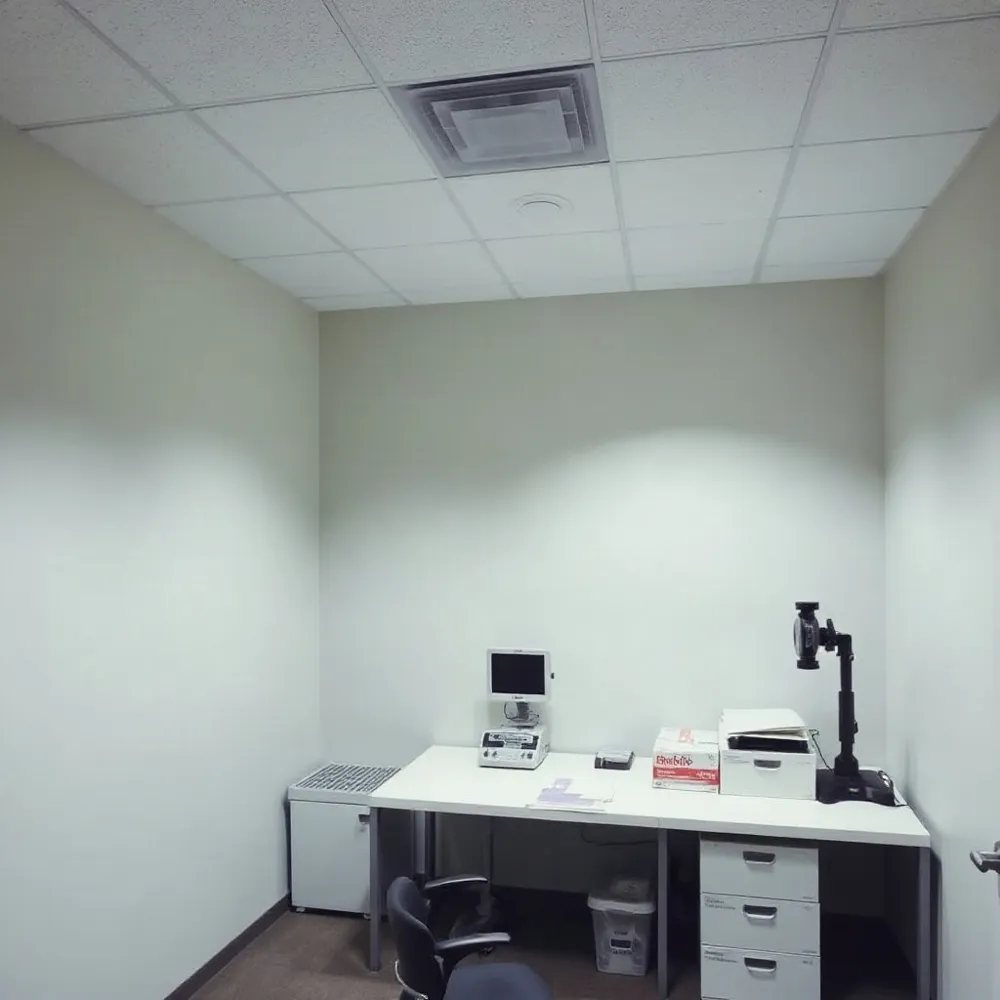 Auditory steady-state response (ASSR) is an electrophysiologic test that uses auditory stimuli and an automatic response-detection algorithm to estimate hearing sensitivity at specific frequencies. Electrodes record the response, so the estimate does not depend solely on a person signaling when a tone is heard.
When behavioral audiometry is difficult to interpret, incomplete, or needs corroboration, a clinician can compare ASSR estimates with the audiogram, speech testing, examination findings, and relevant medical and occupational records. NorCal Medical Consulting conducts ASSR testing from 500 Hz through 4,000 Hz, including 3,000 Hz, a frequency included in the U.S. Department of Labor’s Sixth Edition Schedule for Rating Permanent Impairments. That rating schedule informs impairment assessment; it does not make ASSR a test for malingering.
A study of 54 adults referred to an audiology clinic in Tehran found associations between ASSR and behavioral thresholds in groups with sensorineural and conductive hearing loss. The study was not conducted with workers’ compensation claimants and did not assess intent, claim validity, or occupational causation. Its findings support threshold estimation as a cross-check, not a conclusion about a claimant’s honesty or eligibility for benefits. The adult ASSR study did not establish universal cutoffs, and its study-derived values should not be treated as general standards.
ASSR and behavioral thresholds are not expected to match exactly. Differences can vary by frequency and hearing-loss severity, and interpretation should account for the equipment, protocol, recording conditions, and possible artifacts. ASSR methods also differ among manufacturers, so a report should identify the approach used and explain meaningful discrepancies. ASSR testing guidance describes the cross-check principle and cautions against treating ASSR as a stand-alone determination.
ASSR alone does not establish the cause of a hearing loss, whether it is work-related, the degree of disability, or a person’s credibility or intent. Our physicians interpret the results alongside the full record and state what the test can and cannot support.
For a broader explanation of the method, see our discussion of ASSR testing fundamentals.
Compare ASSR With ABR
ASSR and auditory brainstem response (ABR) testing both record electrical activity triggered by sound, so neither depends on a person signaling when a tone is heard. Their methods differ, however, and each provides a distinct part of the audiologic picture.
ASSR uses statistical detection of response signals to estimate hearing thresholds at specific frequencies. Depending on the equipment and protocol, it can assess several frequencies at once. ABR commonly involves an examiner’s interpretation of recorded waveforms and can provide complementary information about auditory neural responses. These differences are described in this ASSR and ABR overview.
The tests are not interchangeable, and neither identifies intent. A difference between ASSR, ABR, and behavioral audiometry is a finding to investigate, not proof of malingering. Interpret results alongside the audiogram, medical history, examination findings, and other relevant evidence.
For occupational claims, NorCal Medical Consulting’s auditory evaluations can include ASSR measurements from 500 Hz through 4,000 Hz, including 3,000 Hz when required by the applicable rating schedule. Our physicians consider those findings within the broader clinical and claim record rather than treating any single test as conclusive.
Assess Exposure and Audiogram Findings
Repeated exposure to hazardous noise is the most common cause of occupational hearing loss, but an audiogram alone cannot establish where or why the loss developed. Claims reviewers should assess exposure history, test findings, hearing protection, and possible non-work contributors together.
Risk depends on sound intensity, exposure duration and frequency, and the effectiveness of noise controls and hearing protection. Review the worker’s job history and exposure circumstances, then compare them with available baseline and later audiograms. Repeated hazardous-noise exposure is one part of that assessment, not a substitute for examining other possible causes.
Age, medical conditions, medications, and noise exposure outside work may also contribute. NorCal Medical Consulting’s auditory evaluations consider the reported history alongside frequency-specific testing, including ASSR from 500 Hz through 4,000 Hz, rather than treating a single threshold or audiogram pattern as proof of occupational causation.
A mild hearing loss describes threshold findings, not cause or compensability. A commonly used range is about 25–40 dB HL, although classification cutoffs vary. Because an audiogram plots thresholds by frequency and ear, the degree and pattern can differ between ears and pitches.
Mild loss may make soft speech or conversation in background noise harder to hear, even when ordinary conversation in quiet settings remains manageable. The full test record should be interpreted in context; a particular configuration or asymmetry does not, by itself, establish unreliable reporting or intentional deception.
Investigate Inconsistent Test Results
When hearing-test results conflict, compare behavioral pure-tone and speech findings with objective measures such as auditory brainstem response (ABR) or auditory steady-state response (ASSR), then review the medical history, records, and test conditions. A mismatch is a reason to investigate, not proof of intentional misrepresentation.
What tests can help evaluate inconsistent or nonorganic hearing-test results?
Consider what each measure assesses. Acoustic reflexes and otoacoustic emissions can add information about auditory function, while ABR and ASSR provide electrophysiologic evidence to compare with behavioral thresholds. A mismatch may have an organic explanation, including a problem elsewhere in the auditory pathway. ASSR can help estimate frequency-specific thresholds, but it cannot determine a person’s intent; research on ASSR threshold estimation supports its use as a cross-check, not a substitute for a full evaluation.
For federal employee claims submitted to OWCP, the supplied guidance asks for comparisons such as speech reception threshold and pure-tone average, a statement about whether results are valid and representative, complete audiograms, and an explanation of discrepancies. Those are OWCP-context requirements, not universal procedures for every jurisdiction. NorCal Medical Consulting reviews relevant records and test findings together when preparing medical-legal opinions. See our discussion of investigating inconsistent test results.
What is the Stenger test, and when may it be used in a hearing evaluation?
The Stenger test is a behavioral option when reported thresholds differ substantially between ears. It presents the same tone to both ears at different levels; because the louder tone is perceived, a person may not respond when the tone in the better ear is louder than the one in the poorer ear. A positive result calls for further assessment, but does not establish deception or explain the cause of the difference. The test is generally not useful for suspected bilateral loss. Our physicians interpret such findings alongside the audiogram, history, and other appropriate evidence, and document limitations rather than treating one test as decisive.
Build a Cautious Evidence-Based Opinion
 A defensible opinion states what was tested, how and under what conditions, and whether the results agree. Identify the behavioral and electrophysiologic methods, equipment, relevant test conditions, and any limitations. If findings conflict, describe the discrepancy without treating it as proof of intentional underperformance.
ASSR thresholds are estimates, not direct measurements of a person’s intent, and protocols differ across equipment. A study of 54 adults found that ASSR and behavioral thresholds were associated, but their values were not identical; its proposed cutoffs were specific to that sample, not universal clinical or compensation standards. Reports should explain the protocol and correction method used, and recommend further evaluation when needed. The adult ASSR study supports using the test as a cross-check, not a stand-alone validity decision.
Review relevant prior records and collateral information alongside the examination and test results. General clinical guidance on malingering emphasizes considering the full evidence rather than relying on one observation or test, while noting that the guidance is not audiology-specific. Psychiatric Times’ discussion also cautions that a malingering label carries stigma and calls for careful assessment.
NorCal Medical Consulting prepares medical-legal reports that distinguish measured findings, interpretation, and limitations. Keep the evaluator’s clinical opinion separate from a legal decision about credibility, and avoid accusatory language unsupported by the record. For a practical reporting approach, see documenting ASSR in a claim.
Keep Disability Ratings In Their Legal Context
No. A 30% hearing-loss rating does not automatically qualify someone as disabled under every law or benefit program. Its effect depends on the governing standard and how the rating was calculated.
For a federal Longshore and Harbor Workers’ Compensation Act claim, hearing loss is evaluated under the Act’s specific schedule and qualifying audiometric evidence. A rating may affect scheduled benefits, but it does not by itself establish eligibility for another disability program or prove particular work restrictions. NorCal Medical Consulting evaluates auditory loss with ASSR testing from 500 Hz through 4,000 Hz, including the 3,000 Hz frequency required under the Department of Labor’s Sixth Edition schedule.
Review the applicable legal standard, the underlying audiogram, and the method used to calculate the rating. Then consider evidence of functional impact separately. An inconsistency between audiometric tests may call for clinical explanation, but it does not determine the rating or establish the worker’s credibility. For related context on LHWCA hearing-loss compensation claims, keep the rating tied to the governing framework.
Let the Evidence Support the Finding
An inconsistent or unreliable audiogram warrants careful interpretation, not an automatic finding of intentional malingering. ASSR can add an objective, frequency-specific cross-check, but a difference between behavioral and electrophysiologic thresholds does not establish why the results differ.
A sound opinion explains the test methods and conditions, considers audiometric and medical findings alongside noise exposure history, and identifies the limits of the available evidence. It should also apply the standards governing the specific claim, including the Longshore and Harbor Workers’ Compensation Act or Defense Base Act where relevant.
NorCal Medical Consulting’s auditory evaluations use ASSR across 500 Hz to 4,000 Hz, including the 3,000 Hz frequency required by the Department of Labor’s Sixth Edition impairment schedule. Clear reasoning lets decision-makers assess the evidence without treating uncertainty as proof.