Understanding the Role of ASSR in Modern Auditory Assessment
Overview of ASSR as a Diagnostic Tool
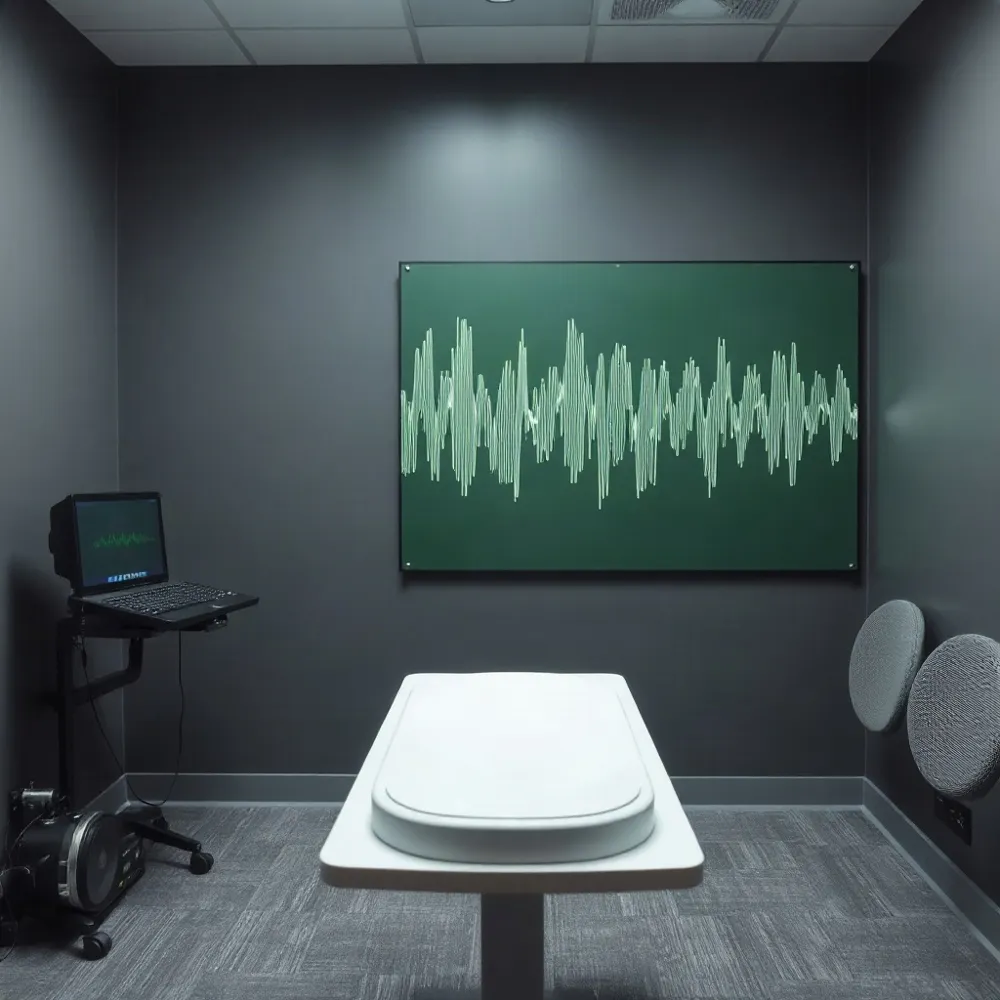
The Auditory Steady-State Response (ASSR) is an objective electrophysiological technique used to estimate hearing thresholds. Unlike traditional behavioral audiometry, ASSR relies on the brain's electrical activity in response to continuous modulated auditory stimuli, allowing frequency-specific assessment across a wide range of hearing levels. The test uses electrodes placed on the scalp and presents sound stimuli through earphones, facilitating simultaneous multi-frequency and binaural testing. This method generates reliable audiogram-like results efficiently, often within 20-25 minutes for multiple frequencies.
Importance of Objective Testing in Hearing Loss Diagnosis
Objective hearing tests like ASSR are crucial, especially when behavioral responses are unreliable or unavailable. These tests eliminate patient cooperation bias and provide statistically valid threshold measurements using signal processing techniques such as Fast Fourier Transform (FFT) and statistical F-tests. ASSR further excels by allowing accurate detection of conductive, sensorineural, and mixed hearing loss types, aiding timely interventions and hearing aid fittings. Its objectivity improves early diagnosis, particularly in pediatric populations.
Populations Benefiting from ASSR
ASSR is especially valuable for infants, young children, and individuals with developmental disabilities who cannot participate reliably in conventional hearing assessments. It also aids patients with inconsistent cooperation or those unable to undergo lengthy testing. The test supports early intervention by providing detailed auditory profiles that guide clinical management. Additionally, ASSR's applicability extends to patients with neurological disorders where auditory processing assessment is essential but subjective testing is challenging.
The Fundamentals of Auditory Steady-State Response Testing
What is ASSR and how does it function in hearing assessment?
Auditory Steady-State Response (ASSR) is an objective electrophysiological hearing test used to estimate hearing thresholds by measuring brain activity in response to continuous, frequency-specific sound stimuli. Unlike traditional behavioral audiometry, ASSR records neural responses via electrodes placed on the scalp, providing reliable data even in populations unable to cooperate with behavioral tests, such as infants and individuals with developmental disabilities.
Basic Principles of ASSR
ASSR employs continuous modulated tones—usually amplitude, frequency, or mixed modulation—that evoke steady-state responses characterized by synchronized neural firing. These electrical signals correspond to specific frequency ranges, allowing frequency-specific hearing threshold estimation. The test offers simultaneous multifrequency assessment for both ears, improving efficiency compared to other electrophysiological methods.
Electrophysiological Basis and Neural Generators
The ASSR waveform reflects neurophysiological activity generated at multiple levels along the auditory pathway. Lower frequency stimulations (~below 20 Hz) predominantly evoke responses from cortical generators, whereas mid-frequency ranges (20-60 Hz) recruit auditory cortex, midbrain, and thalamic structures. Higher modulation frequencies (above 60 Hz) predominantly activate brainstem nuclei such as the superior olivary complex and inferior colliculus. This multi-level origin contributes to the robust nature of ASSR signals as described under Neural Generators of ASSR Waveforms.
Comparison to Auditory Brainstem Response (ABR) and Other Tests
While ASSR shares similarities with the Auditory Brainstem Response (ABR), it offers several advantages. ASSR enables simultaneous testing of multiple frequencies in both ears, reducing test duration substantially. Also, unlike ABR's brief click or tone-burst stimuli, ASSR uses continuous modulated tones that provide more frequency-specific and threshold-relevant information. Statistical, objective algorithms analyze ASSR data, reducing subjective interpretation variability.
Frequency-Specific Hearing Threshold Estimation
ASSR delivers a precise audiogram-like profile by estimating thresholds at distinct frequencies across the audible spectrum. This fine resolution aids in differentiating types of hearing loss—conductive, sensorineural, or mixed—and grading severity. This capability is crucial for early diagnosis, hearing aid fitting, and intervention planning, particularly in challenging testing populations, as outlined in ASSR Threshold Estimation Techniques.
In summary, ASSR is a sophisticated, objective tool that bridges electrophysiological measurement with clinical audiometric needs, offering rapid, reliable, and frequency-specific hearing assessment essential in modern audiology. See additional ASSR hearing test advantages and procedure details for more information.
Clinical Indications and Patient Populations for ASSR Testing

Who are the primary candidates for Auditory Steady-State Response (ASSR) Testing?
Auditory Steady-State Response (ASSR) testing is primarily indicated for populations unable to provide reliable behavioral hearing responses. These include infants and young children, particularly those under the age of two weeks where behavioral audiometry is often unreliable or infeasible. It is also valuable for individuals with cognitive or physical disabilities, and patients who demonstrate inconsistent cooperation during traditional hearing assessments.
Use in infants and young children
Since Auditory Steady-State Response (ASSR) is an Objective electrophysiological hearing test, it circumvents the need for patient cooperation, making it ideal for infants and young children. The test can be performed while the patient is asleep or sedated, providing frequency-specific hearing threshold estimations essential for early diagnosis of hearing loss and timely intervention.
Testing in individuals with disabilities or uncooperative patients
For patients with developmental disabilities or those who cannot cooperate with conventional audiometry due to behavioral or cognitive challenges, ASSR offers a reliable alternative. It facilitates accurate assessment of hearing function, enabling clinicians to formulate appropriate management plans.
Advantages over conventional audiometry
Auditory Steady-State Response (ASSR) allows simultaneous multifrequency testing in both ears, reducing testing duration significantly compared to conventional methods like Auditory Brainstem Response (ABR) testing. It provides statistically objective and reproducible results across a wider range of hearing levels, including severe to profound hearing loss, contributing to enhanced diagnostic precision.
Early diagnosis and hearing aid fitting
The detailed frequency-specific audiograms produced by Auditory Steady-State Response (ASSR) are crucial for early identification of hearing impairment. This facilitates timely fitting of hearing aids or other rehabilitative devices, optimizing auditory development and speech outcomes, especially in pediatric populations.
Overall, ASSR testing addresses the limitations posed by conventional audiometry in special populations, providing efficient, objective, and comprehensive evaluation critical for early diagnosis and intervention.
Technological Advancements Enhancing ASSR Accuracy and Efficiency

How have recent technological developments improved ASSR testing?
Recent technological developments have substantially enhanced the accuracy and efficiency of Auditory Steady-State Response (ASSR) testing. One major improvement comes from Next Generation ASSR detection algorithms that analyze both amplitude and phase across multiple harmonics. This advanced approach increases sensitivity, enabling more precise threshold detection at various hearing frequencies.
Simultaneous multifrequency testing allows clinicians to examine multiple frequencies in both ears concurrently. This innovation reduces the total examination time to around 20 minutes—a significant advantage for pediatric and non-cooperative patients who benefit from shorter, less taxing diagnostic sessions.
The adoption of mixed modulation stimuli, combining amplitude and frequency modulations, optimizes neural response amplitude and maintains frequency specificity. This leads to clearer, more reliable ASSR waveforms, improving the clinician's ability to differentiate hearing levels accurately.
Moreover, automated statistical analysis methods, including Fast Fourier Transform (FFT) and F-test algorithms, objectively evaluate response presence. These tools allow consistent, time-efficient interpretation of ASSR data without subjective bias, further enhancing diagnostic reliability.
Together, these advances facilitate rapid, frequency-specific hearing assessments, supporting early intervention strategies and improved hearing loss management.
Methodology and Procedure in ASSR Testing
What is the typical procedure involved in conducting an ASSR test?
The Auditory Steady-State Response (ASSR) test involves several precise steps designed to objectively estimate hearing thresholds. Initially, electrodes are strategically placed on the scalp in a configuration similar to that used in Auditory Steady-State Response (ASSR) testing. These electrodes record the brain's electrical activity in response to sound stimuli.
Auditory stimuli are delivered through headphones and typically consist of continuous modulated tones. The most common types of modulation used are amplitude modulation (AM), frequency modulation (FM), and mixed modulation (MM). Of these, mixed modulation is often preferred because it elicits higher response amplitudes while maintaining good frequency specificity.
The recorded neural responses undergo detailed analysis using frequency domain techniques such as Frequency Analysis in ASSR. Statistical tests, particularly the F-test, help objectively determine the presence of a neural response correlated to the stimulus frequency. This robust analytical approach enhances the accuracy and repeatability of the threshold estimation.
A typical ASSR test session lasts between 20 to 60 minutes. The duration depends on factors such as the number of frequencies assessed simultaneously and the subject's level of cooperation. Multiline Audiometric Testing with ASSR allows simultaneous assessment of multiple frequencies in both ears, reducing total test time compared to other evoked potential methods.
The procedure is entirely non-invasive electrophysiological hearing test and safe, making it especially suitable for sensitive populations, including infants, young children, and individuals unable to provide reliable behavioral responses. Because of its objective nature and efficiency, ASSR testing is a valuable tool for early hearing assessment, aiding in diagnosis and intervention planning.
Advantages of ASSR Compared to Traditional Audiologic Tests
What are the advantages of ASSR over other hearing tests like ABR?
The Auditory Steady-State Response (ASSR) offers several distinct advantages over traditional auditory tests such as the Auditory Brainstem Response (ABR) and behavioral audiometry. ASSR uses continuous modulated tones at specific frequencies, enabling it to provide frequency-specific threshold estimates. This frequency specificity is superior to ABR, which relies on clicks or tone bursts that are less precise for determining hearing thresholds across different frequencies.
Another major advantage is ASSR's ability to conduct multifrequency and binaural simultaneous testing. This capability significantly reduces the total examination time compared to sequential testing in ABR, making it particularly useful for clinical settings with infants or patients who have limited tolerance for long tests.
Unlike behavioral audiometry, which requires active patient participation, ASSR is an objective test that does not depend on the patient's cooperation or behavioral responses. This makes it ideal for testing infants, young children, and individuals with disabilities or inconsistent cooperation.
ASSR demonstrates enhanced sensitivity in detecting severe-to-profound hearing loss, providing detailed hearing profiles critical for decisions such as cochlear implant candidacy. Moreover, ASSR employs automated statistical algorithms to analyze responses, increasing consistency and decreasing the subjectivity inherent in ABR waveform interpretation.
These features collectively make ASSR an efficient, reliable, and comprehensive tool for hearing threshold estimation, expanding diagnostic capabilities beyond those of traditional audiologic assessments.
Interpreting ASSR Results: Audiogram Creation and Hearing Loss Differentiation
Producing Audiogram-Like Graphs from ASSR Data
ASSR testing] provides objective, frequency-specific hearing threshold data by measuring brain responses to continuous modulated tones. These responses are translated into audiogram-like graphs that visually represent hearing sensitivity across various frequencies. Such detailed audiograms aid clinicians in identifying hearing capabilities without relying on patient cooperation, making them particularly useful in pediatric and non-cooperative patients.
Distinguishing Conductive, Sensorineural, and Mixed Hearing Loss
The ASSR audiogram] assists in differentiating types of hearing loss. Conductive loss generally relates to outer or middle ear dysfunction, sensorineural loss stems from inner ear or neural pathway issues, and mixed hearing loss involves a combination of both.
By analyzing response patterns and comparing air and bone conduction results, ASSR helps establish the specific nature of hearing impairment, guiding subsequent treatment choices such as amplification or surgery.
Threshold Variations and Physiological Considerations
ASSR thresholds typically register slightly higher than those found via behavioral audiometry, particularly in individuals with mild hearing loss. This discrepancy can result from physiological factors including neural synchrony disruptions and auditory recruitment phenomena. These influences cause ASSR to overestimate thresholds to some degree, which is clinically accounted for during interpretation and hearing aid fitting.
Challenges Interpreting Infant Responses
ASSR responses in infants] younger than one year are characteristically smaller and less reliable. The auditory system’s immaturity, especially prior to two weeks of age, affects signal strength and neural synchrony. Consequently, ASSR results in neonates necessitate cautious integration with other tests such as [Otoacoustic Emission (OAE)] and [Auditory Brainstem Response (ABR)] to achieve accurate diagnosis.
Limitations in Auditory Neuropathy Spectrum Disorder (ANSD)
ASSR shows limited accuracy in cases of auditory neuropathy spectrum disorder, where neural synchrony along the auditory pathway is compromised. The test's correlation with behavioral thresholds is poor in ANSD patients, resulting in potential false negatives or inconclusive assessments. For such diagnoses, an integrated test battery including ABR and behavioral evaluations remains essential.
Integration of ASSR Testing in Occupational Hearing Loss Evaluation
How does ASSR testing contribute to occupational hearing loss evaluation?
Auditory Steady-State Response (ASSR) testing plays an emerging role in the evaluation of occupational hearing loss by providing objective, frequency-specific hearing thresholds. Unlike traditional behavioral audiometry, ASSR does not rely on patient cooperation, which is particularly useful for individuals unable to complete reliable hearing tests due to age, cognitive impairments, or other factors.
In workplace assessments, ASSR can supplement standard audiometric tests by detecting hearing thresholds accurately across multiple frequencies simultaneously. This capability helps identify standard threshold shifts (STSs), defined as a worsening of at least 10 dB in hearing sensitivity at key frequencies (2, 3, and 4 kHz), which are critical markers of early noise-induced hearing loss.
Licensed health care professionals and audiologists utilize ASSR data alongside clinical and exposure histories to evaluate whether hearing loss is work-related. This objective electrophysiological testing enhances diagnostic certainty, especially when standard tests are inconclusive or when workers present inconsistent cooperation.
ASSR integration supports compliance with Occupational Safety and Health Administration (OSHA) audiometric testing standards by improving the precision of hearing monitoring programs. It helps employers detect early auditory damage, facilitating timely interventions such as hearing conservation measures or workplace accommodations to prevent further deterioration and reduce injury risks associated with hearing impairments.
Overall, ASSR testing offers a reliable and efficient adjunct to conventional audiometry in occupational health settings, strengthening accuracy in hearing loss detection, work-relatedness determinations, and regulatory adherence.
Advanced ASSR Applications Beyond Hearing Threshold Estimation
What advanced clinical and research applications does ASSR have besides threshold estimation?
The ASSR hearing test advantages extends well beyond its primary function of estimating hearing thresholds. It plays a crucial role in the identification and characterization of auditory processing disorders (APDs), enabling clinicians to pinpoint dysfunctions at various stages along the auditory pathway, from the ear to the auditory cortex. This capability is particularly valuable when traditional tests are inconclusive.
Additionally, ASSR testing is employed to monitor the effectiveness of hearing aids and auditory training programs. By observing neural responses to sound stimuli, clinicians can objectively assess how well hearing interventions improve auditory processing, guiding personalized treatment plans.
In the realm of neurodegenerative diseases, ASSR serves as a tool to detect early auditory decline associated with conditions such as Alzheimer’s disease. This application assists in monitoring neural synchrony degradation, offering insights into the progression of cognitive and auditory deficits.
Emerging research explores the use of ASSR in brain-computer interface technologies. By leveraging precise auditory neural profiling through ASSR, innovative auditory prosthetics and rehabilitation methods are being developed, potentially transforming auditory healthcare and enhancing quality of life for individuals with hearing impairments.
Challenges and Limitations in ASSR Testing and Interpretation
What are the limitations and challenges associated with ASSR testing?
Auditory Steady-State Response (ASSR) Testing, while valuable for Objective Hearing Threshold Estimation, faces several challenges. One major limitation is the occurrence of false-positive results caused by stimulus artifacts. Such artifacts can mimic neural responses, demanding strict statistical analyses and defined stopping criteria to accurately distinguish genuine auditory responses from noise.
ASSR responses are notably smaller and more variable in infants younger than one year, which complicates result interpretation. This age-related variability necessitates cautious evaluation, particularly in neonatal testing where Auditory steady-state responses (ASSR) alone may be insufficient.
Moreover, ASSR shows limited effectiveness in diagnosing auditory neuropathy spectrum disorder (ANSD). In ANSD cases, ASSR thresholds often poorly correlate with behavioral audiometry, reducing reliability for this condition.
Due to these challenges, ASSR is not recommended as a standalone test in infants or complex cases. Instead, it should be combined with complementary assessments such as Auditory Brainstem Response (ABR) and Otoacoustic Emissions (OAE). This integrated approach ensures a comprehensive evaluation by capturing both neural and cochlear function, enhancing diagnostic accuracy and guiding appropriate intervention strategies.
Future Directions and Innovations in ASSR Technology
What future advancements are anticipated in ASSR testing technology?
Auditory Steady-State Response (ASSR) testing is poised for significant technological advancements that will enhance its diagnostic capability and accessibility. One major development is the integration of AI integration in ASSR interpretation. AI algorithms will improve the precision and efficiency of response detection, reducing subjective variance and expediting clinical decision-making.
portable ASSR devices and tele-audiology are another innovation on the horizon, broadening the reach of objective hearing assessments. These compact units, paired with tele-audiology platforms, will enable remote testing in diverse settings, improving access for patients in underserved or rural areas.
Improvements in stimulus design and analysis are also underway. Enhanced stimuli such as the narrow band CE-Chirp stimuli in ASSR and multi-harmonic modulations have demonstrated better neural synchronization and larger response amplitudes. These advancements contribute to more sensitive threshold detection and reduced testing times Evaluation of Speed and Accuracy of ASSR.
Future ASSR technology will also focus on personalized auditory profiling by utilizing sophisticated signal processing and response analysis algorithms. This approach allows for detailed frequency-specific hearing assessments tailored to individual auditory processing characteristics, supporting customized treatment and rehabilitation strategies ASSR hearing test advantages.
In summary, AI-enhanced interpretation, portable testing options, refined stimulus protocols, and personalized auditory profiling are driving the future evolution of ASSR testing, promising improved accuracy, accessibility, and clinical utility across various patient populations.
The Transformative Impact of Advanced ASSR Testing in Auditory Healthcare
The Benefits and Clinical Relevance of ASSR
Auditory Steady-State Response (ASSR) testing revolutionizes hearing assessment by providing objective, frequency-specific measurement of auditory thresholds. Unlike traditional methods, ASSR is non-invasive and highly effective for patients unable to cooperate with behavioral audiometry, including infants, young children, and individuals with developmental disabilities. Its ability to simultaneously test multiple frequencies reduces examination time significantly, making it especially valuable in busy clinical settings.
Early Diagnosis and Intervention
ASSR facilitates early detection of hearing loss, critical for timely intervention and optimal developmental outcomes. By providing reliable hearing thresholds when behavioral responses are unreliable, ASSR supports early hearing aid fitting and rehabilitation efforts, aligning with pediatric hearing screening goals. This early intervention is essential in minimizing speech and language delays in children and improving long-term auditory function.
Importance for Diverse Patient Populations
The objective nature of ASSR testing makes it indispensable for evaluating newborns, individuals with cognitive or physical impairments, and other non-cooperative patients. It also contributes to diagnosing and monitoring auditory processing disorders and neurodegenerative conditions affecting hearing. ASSR complements other diagnostic tools, ensuring comprehensive auditory assessment across varied clinical scenarios.
Technological Evolution and Future Outlook
Advancements in ASSR technology, such as multi-frequency simultaneous stimulation, automated statistical analysis, and portable devices, enhance test accuracy and accessibility while shortening test durations. Integration with artificial intelligence and tele-audiology services promises expanded clinical applications and personalized auditory profiling. Ongoing research continues to refine ASSR's diagnostic capabilities, solidifying its role as a cornerstone in modern auditory healthcare.