The 85 dBA Action Level
Under OSHA’s general-industry standard, 29 CFR 1910.95, employers must establish a hearing conservation program when an employee’s noise exposure reaches or exceeds an 8-hour time-weighted average (TWA) of 85 dBA. This is the action level that triggers program duties, including monitoring, audiometric testing, hearing protection, and training.
The 85 dBA action level is not the permissible exposure limit (PEL). OSHA’s exposure calculation does not subtract the attenuation provided by hearing protectors, so wearing earplugs does not by itself remove an employee from action-level coverage. The specific requirements appear in 29 CFR 1910.95.
For employers and claims professionals, the distinction matters: workplace compliance records show what the employer measured and did, but do not alone determine whether a worker has occupational hearing loss. That assessment requires individual evidence, including audiograms, exposure history, and relevant medical findings. OSHA’s hearing conservation overview describes the program’s prevention purpose and worker protections.
Action Level and Permissible Exposure Limit
 OSHA’s 85 dBA action level and 90 dBA permissible exposure limit (PEL) serve different purposes. Under general-industry standard 29 CFR 1910.95, exposure at or above an 8-hour time-weighted average (TWA) of 85 dBA triggers a hearing conservation program, while the PEL sets the maximum permitted exposure for an 8-hour workday. Hearing-protector attenuation is not subtracted when calculating whether the action level has been reached.
The standard uses a 5 dBA exchange rate: each 5 dBA increase halves the allowable exposure time. For example, the limits are 95 dBA for four hours and 100 dBA for two hours. These levels and durations come from OSHA’s occupational noise standard; they are exposure rules, not a diagnosis of an individual worker’s hearing condition.
When exposure exceeds the limits in Table G-16, employers must use feasible engineering or administrative controls. If those measures do not reduce exposure enough, employers must provide and require hearing protection as the standard specifies. The regulation also requires employers to reassess controls when workplace changes could affect noise exposure or protector adequacy.
Section 1910.95 is OSHA’s general-industry noise standard, and other workplace settings may be governed by different standards. For a claim review, the applicable rule provides context, but exposure records and audiometric evidence are needed to assess an individual’s circumstances. NorCal Medical Consulting evaluates occupational hearing-loss claims through independent medical examinations and chart-based reviews, considering the record rather than treating a regulatory threshold as proof of diagnosis or causation.
For a related discussion of how these thresholds trigger employer duties, see OSHA noise thresholds and program requirements.
Monitoring and Program Components
Under 29 CFR 1910.95, a hearing conservation program includes noise monitoring, audiometric testing, hearing protectors, employee training, access to relevant information, and recordkeeping. Monitoring is required when available information indicates that an employee may reach or exceed an 85 dBA, 8-hour time-weighted average (TWA). Its purpose is to identify employees who need program coverage and help select suitable protectors. OSHA’s noise standard sets out these duties.
When workers move between areas, sound levels change, or impulse noise is present, representative personal sampling may be needed if area monitoring would not capture exposure accurately. Measurements must integrate continuous, intermittent, and impulsive sound from 80 to 130 dB, and instruments must be calibrated. Employers must repeat monitoring after changes in production, processes, equipment, or controls that could bring additional employees to the action level or reduce the effectiveness of existing protectors. OSHA does not set a routine monitoring interval for stable conditions.
Affected employees must receive monitoring results, and employees or their representatives must have an opportunity to observe measurements. Employers must provide suitable hearing protectors at no cost to employees at or above the action level, train them in fitting, use, and care, and assess whether the protectors adequately reduce exposure in the specific work environment. OSHA’s hearing conservation guidance also points employers to individual fit testing as a resource for evaluating protector fit.
A standard program may not address every safety and communication need of a worker with existing hearing impairment. Emergency response, working near machinery, communicating with coworkers, and receiving training may require individual attention. For claims review, NorCal Medical Consulting’s auditory evaluations include ASSR testing from 500 Hz to 4,000 Hz, including 3,000 Hz. For related program duties, see our overview of hearing conservation program components.
Baseline and Annual Audiograms
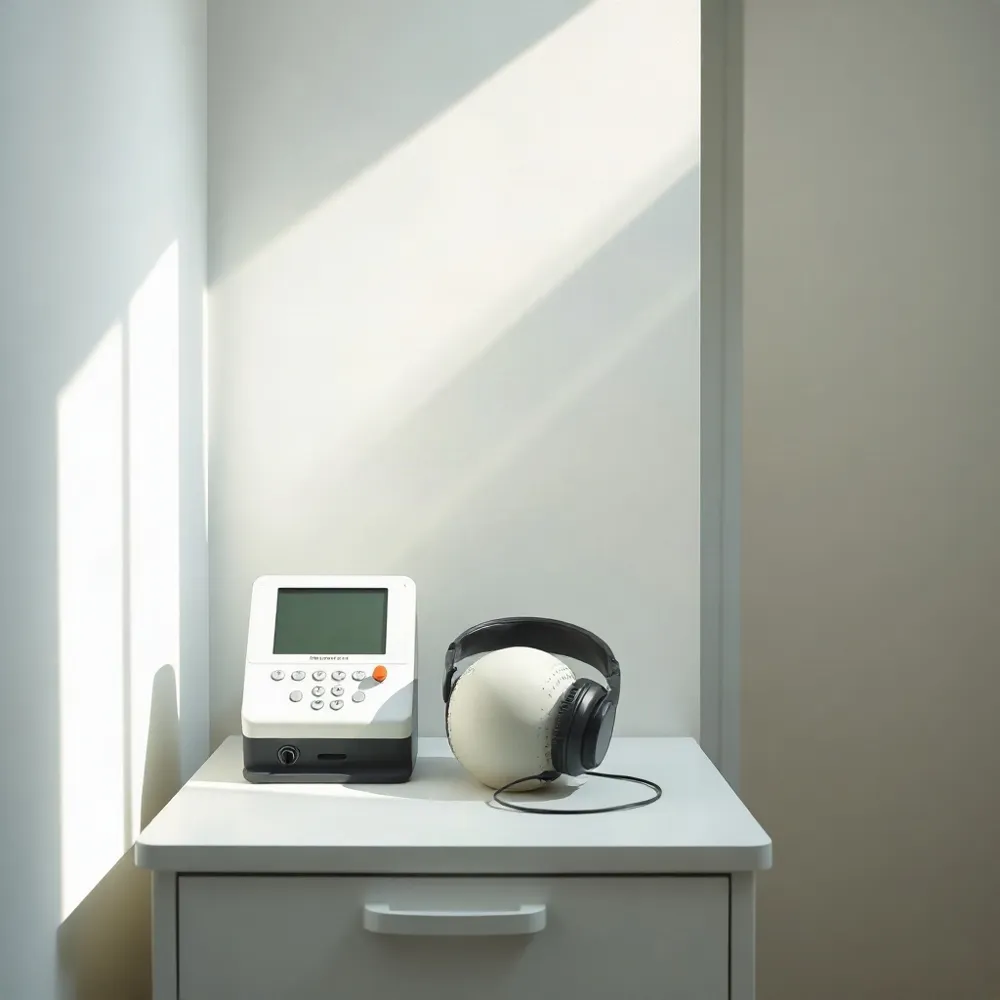 Employees covered by a hearing conservation program must be offered audiometric testing at no cost. Under 29 CFR 1910.95, testing must be performed by a licensed or certified audiologist, otolaryngologist, or physician, or by a qualified technician working under one of those professionals’ responsibility.
A valid baseline audiogram is generally due within six months of an employee’s first exposure at or above the action level. If a mobile test van is used, the deadline extends to one year; when the test occurs after the first six months, the employee must wear hearing protectors until the baseline is obtained.
Before baseline testing, the employee must have at least 14 hours without workplace-noise exposure. Hearing protectors may substitute for that quiet period, and the employee should be advised to avoid high non-work noise as well.
How often must employees in an OSHA hearing conservation program receive audiometric testing? Employers must obtain a baseline and provide follow-up audiograms at least annually, comparing each annual test with the baseline. A standard threshold shift is an average change of at least 10 dB at 2,000, 3,000, and 4,000 Hz in either ear. The employer must notify the employee in writing within 21 days and arrange appropriate follow-up, which may include refitting and training on hearing protectors or clinical evaluation.
OSHA compliance audiometry tests each ear separately at 500, 1,000, 2,000, 3,000, 4,000, and 6,000 Hz. These workplace surveillance requirements should not be confused with a separate federal impairment-rating schedule. For claims review, our physicians at NorCal Medical Consulting assess the relevant audiometric record in the context of the applicable rating criteria and the worker’s exposure history.
Annual Training and Worker Needs
Under 29 CFR 1910.95(k), employers must ensure covered employees participate in hearing-conservation training at least annually. The rule specifies what training must cover, but not a particular format; employers must make the standard and applicable training materials available to employees or their representatives (29 CFR 1910.95).
Training must explain noise’s effects on hearing; hearing-protector types, advantages, disadvantages, and attenuation; protector selection, fitting, use, and care; and the purpose and procedures of audiometric testing. For claims review, attendance records and training materials can help establish what instruction workers received, rather than relying only on a general statement that training occurred.
Training also needs to make sense in the work setting. OSHA cautions that standard programs may not address every communication and safety need of workers with existing hearing impairment, including understanding emergency signals or communicating around machinery. These concerns may call for individual attention, but OSHA does not present a complete accommodation checklist within the hearing-conservation standard (OSHA hearing-conservation guidance).
The required instruction should not be confused with optional best practices. OSHA and the National Hearing Conservation Association have discussed individual fit testing as a resource for assessing protector fit; it is not listed as a universal training mandate. When a claim involves hearing changes despite protector use, our team can assess the audiometric evidence alongside the worker’s exposure and documented protection.
Records in a Hearing Loss Claim
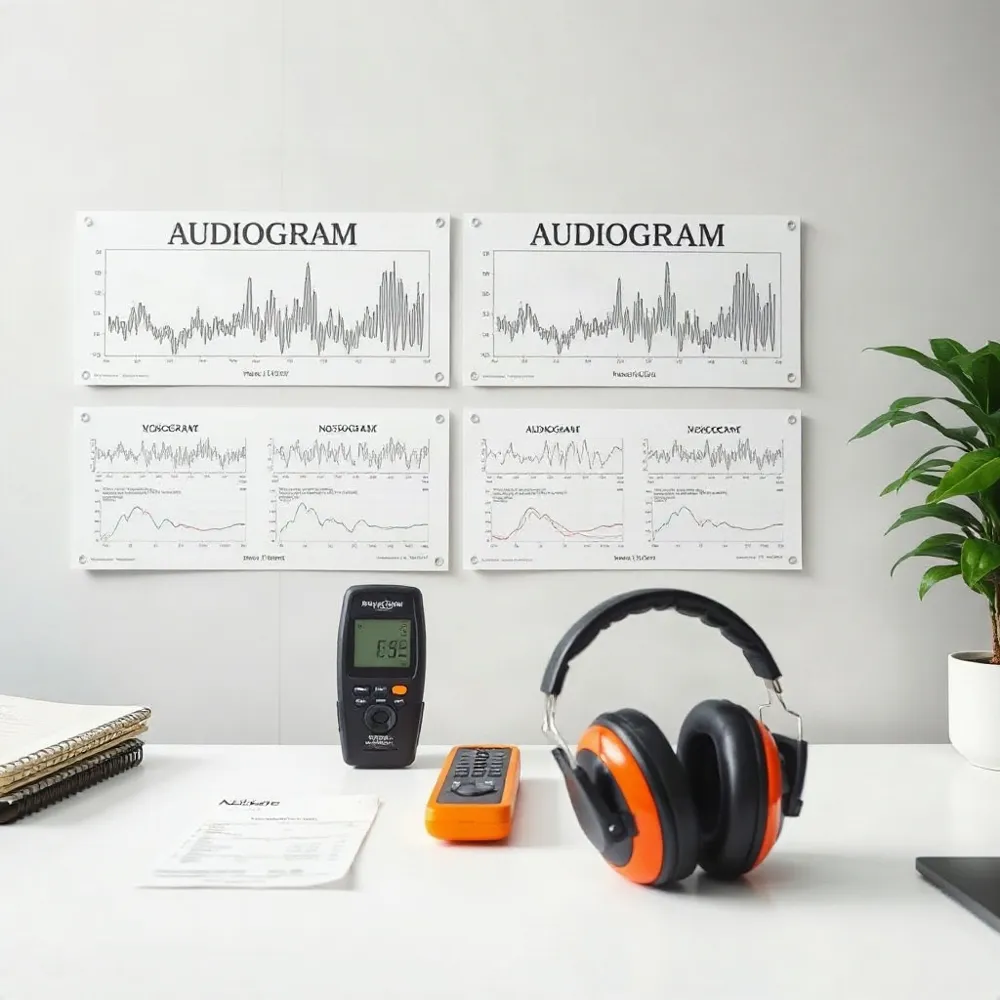 Occupational hearing-loss records help reviewers assess noise exposure and changes in hearing over time, but no single document proves that a claim is work-related. Noise measurements, serial audiograms, hearing-conservation records, and documentation of hearing-protector use or fit testing provide evidence to compare with the worker’s job and medical history.
Under 29 CFR 1910.95, employers must retain noise-exposure measurement records for two years and audiometric test records for the affected employee’s period of employment. Audiometric records include the employee’s name and job classification, test date, examiner, the audiometer’s most recent calibration date, and the latest noise-exposure assessment. Employers must also maintain background sound-pressure measurements for audiometric test rooms.
A careful review compares testing dates and conditions, methods and results, work history, medical history, and non-work noise exposure. Missing or inconsistent records may limit what can be concluded, while a pattern across records can help assess exposure, hearing change, causation, and the extent of loss.
NorCal Medical Consulting conducts impartial auditory evaluations and chart-based case reviews, considering audiograms alongside exposure documentation and relevant medical history. OSHA compliance records inform that analysis, but they do not by themselves determine a workers’ compensation outcome. For related documentation issues, see workplace hearing assessments and noise-exposure records.
Compliance and Individual Evidence
OSHA compliance records document an employer’s prevention program; they do not, by themselves, decide whether an individual hearing-loss claim is work-related or establish a compensation rating. The action level and permissible exposure limit are workplace standards, not medical diagnoses or rating rules.
A record that brings together noise measurements, audiograms, training, and hearing-protection measures helps adjusters, attorneys, employers, and injured workers assess the exposure and hearing timeline. The requirements for covered workplaces are set out in 29 CFR 1910.95.
NorCal Medical Consulting evaluates the individual evidence through independent auditory assessments, including ASSR testing across 500 Hz to 4,000 Hz, and reviews whether the findings support the questions presented in a claim. That medical-legal analysis remains distinct from an employer’s OSHA program duties.