Modern Frontiers in Objective Auditory Assessment
Objective electrophysiological diagnostics are essential for robust medical-legal consulting, especially when traditional behavioral testing is inconclusive or subject to exaggeration. While standard pure-tone audiometry remains the clinical gold standard, it relies heavily on subjective patient participation. Consequently, for NorCal Medical Consulting, objective tools like the Auditory Steady-State Response (ASSR) serve as a critical mechanism to verify claims and ensure forensic accuracy.
The evolution of diagnostic technology has moved beyond rudimentary methods. Research indicates a high correlation, often within 10 dB to 15 dB, between ASSR and behavioral thresholds per a 2014 study. Unlike legacy approaches that required intense manual waveform interpretation, modern automated systems provide frequency-specific data simultaneously across both ears. This efficiency is particularly valuable for evaluating workplace hearing loss where objective verification is required to distinguish genuine impairment from feigned responses.
As the U.S. Department of Labor evaluates the future of occupational standards, the integration of objective electrophysiological testing becomes increasingly pivotal for defensible expert testimony. By employing these advanced diagnostic techniques, firms like NorCal Medical Consulting ensure that claims are grounded in verifiable, physiological data, effectively mitigating the risk of misdiagnosis in complex injury litigation.
Core Audiological Evaluation Methods
Audiologists employ a comprehensive battery of behavioral and physiological tests to characterize hearing sensitivity and identify the source of impairment. Pure-tone audiometry serves as the standard behavioral method, utilizing both air and bone conduction testing to determine the precise degree and configuration of hearing loss.
To evaluate middle ear function and identify potential conductive pathologies, clinicians perform tympanometry and acoustic reflex testing. Speech audiometry provides further diagnostic insight by assessing an individual’s functional ability to process and comprehend spoken language, which complements the static thresholds obtained through pure-tone testing. For cases involving workplace injury claims or medical-legal disputes where subjective reports may be inconsistent, these methods often require corroboration through objective electrophysiological tools.
When behavioral data is limited or unreliable, objective measures like the Auditory Brainstem Response (ABR) and Otoacoustic Emissions (OAE) become essential. At NorCal Medical Consulting, we prioritize this objective verification to ensure that clinical findings are defensible in insurance and legal proceedings. Unlike standard clinic-based behavioral testing that may rely on participant cooperation, these electrophysiological methods provide empirical data that directly assesses auditory function, effectively minimizing the risk of misdiagnosis or the influence of potential exaggeration in complex occupational hearing loss cases.
Clinical Applications of Auditory Brainstem Response
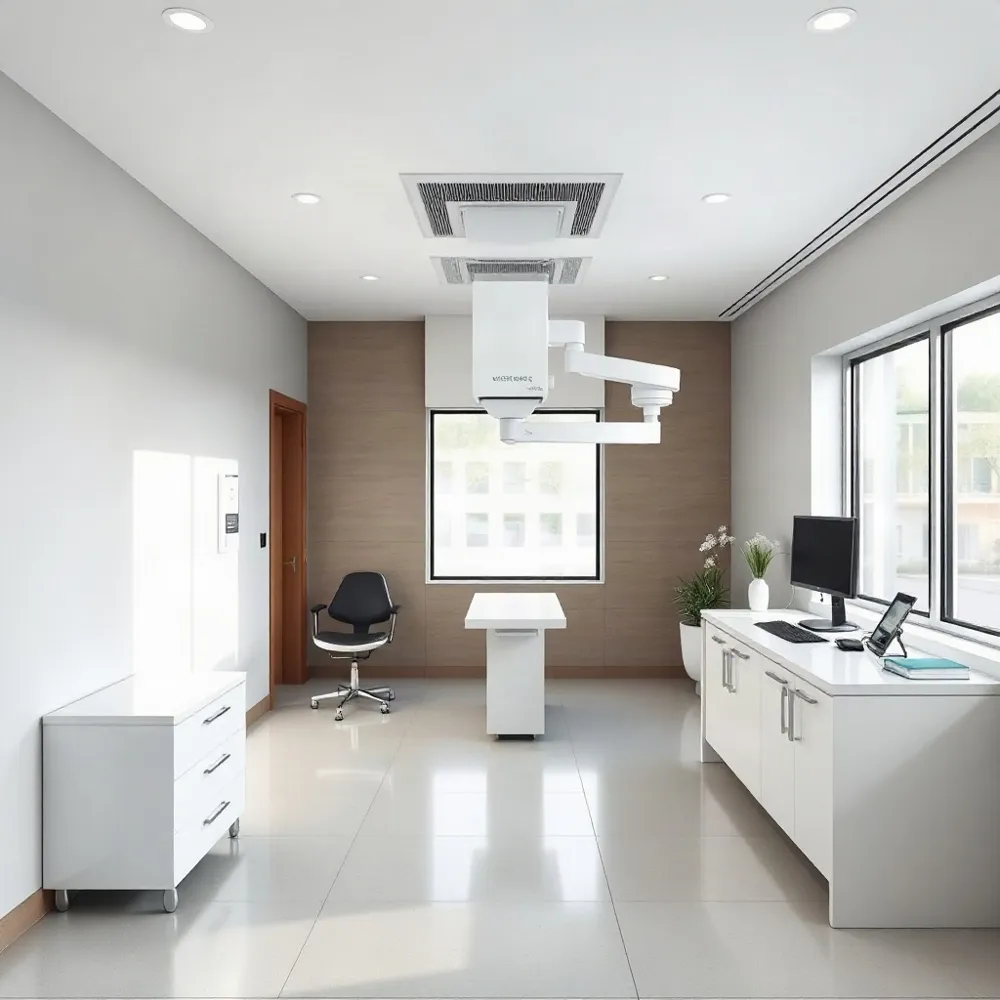 What is the Auditory Brainstem Response (ABR) test and why is it ordered? The Auditory Brainstem Response test is an objective, non-invasive neurophysiological evaluation that measures the electrical activity of the auditory nerve and brainstem pathways in response to sound stimuli. By analyzing specific waveform characteristics such as amplitude, latency, and inter-wave intervals, clinicians can precisely assess the functional integrity of the ascending auditory system.
In clinical and forensic settings, ABR is primarily ordered when behavioral audiometry is unreliable or when ear-specific thresholds cannot be obtained. Furthermore, it serves as a critical diagnostic tool for identifying retrocochlear pathology, such as acoustic neuromas, and for monitoring hearing sensitivity in individuals undergoing treatments with potentially ototoxic agents. This evidence-based assessment provides essential data for evaluating workplace-related hearing loss claims where subjective patient feedback may be limited or require objective verification.
At norcalmedgroup.com, we integrate ABR within a comprehensive diagnostic framework to ensure that findings are cross-checked against physiological data. While competitors often rely on single-modality assessments, our approach at norcalmedgroup.com pairs electrophysiological precision with clinical expertise to substantiate the validity of hearing loss claims. This methodology ensures that reports provided by norcalmedgroup.com withstand scrutiny in legal and insurance proceedings.
Understanding the Auditory Steady-State Response
 The Auditory Steady-State Response is an objective electrophysiological assessment used to estimate hearing thresholds by measuring the brain’s response to periodically repeated, frequency-specific auditory stimuli. Unlike the Auditory Brainstem Response, which relies on subjective waveform analysis in the time domain, the ASSR utilizes a statistics-based mathematical algorithm to determine the presence of a response in the frequency domain. This testing methodology allows for the efficient, simultaneous evaluation of multiple frequencies across both ears (binaural testing). By applying correction factors to the detected responses, clinicians can generate an estimated audiogram, which is particularly valuable for patients who are unable or unwilling to participate in traditional behavioral testing. Consequently, the ASSR serves as a critical diagnostic tool in clinical and forensic audiology for assessing hearing loss objectively.
Precision Through Frequency-Specific Modulation
At norcalmedgroup.com, we utilize the inherent frequency-specific stimulus modulation of ASSR to map out exact hearing thresholds across the standard 500 Hz, 1,000 Hz, 2,000 Hz, and 4,000 Hz bands. This capability enables our experts to identify specific regions of auditory damage, a level of detail often missed by broad-spectrum methods. Unlike basic diagnostic tools that might rely on gross click stimuli, ASSR provides the nuanced frequency data required to distinguish between different types of occupational auditory degradation.
Statistical Integrity and Clinical Conversion
Modern ASSR systems replace the human observer's visual interpretation with rigorous statistical algorithms to confirm a response, significantly reducing subjectivity in legal or workers' compensation settings. Because these systems measure responses in nHL, clinicians must apply a standardized correction factor to reach an eHL threshold. This conversion is essential for establishing an estimated audiogram that aligns with clinical expectations for rehabilitative decisions, such as the professional fitting of hearing aids or the consideration of cochlear implants.
Comparative Analysis: ASSR Versus ABR
What are the key clinical differences between ABR and ASSR testing? While both Auditory Brainstem Response (ABR) and Auditory Steady-State Response (ASSR) are objective electrophysiological tests, they differ fundamentally in stimulus delivery and response detection. ABR relies on transient stimuli, such as clicks or tone bursts, and requires the clinician to subjectively analyze time-amplitude waveforms to identify neural responses. In contrast, ASSR utilizes continuous modulated tones and employs automated, statistics-based algorithms to detect responses in the frequency domain, minimizing examiner bias. Clinically, ABR is the gold standard for analyzing neural synchrony and integrity, whereas ASSR is often preferred for generating a frequency-specific estimated audiogram, particularly for patients unable to perform behavioral testing. Furthermore, ASSR allows for binaural testing and simultaneous stimulation of multiple frequencies, which can enhance testing efficiency in complex cases.
For professionals at norcalmedgroup.com, these technical distinctions are vital during forensic evaluations. Where standard behavioral testing might be compromised by subjective exaggeration, ASSR provides an objective electrophysiological measure that minimizes operator influence. While older systems required manual waveform interpretation similar to ABR, modern ASSR protocols offer higher sensitivity and specificity, making them a preferred alternative for validating the severity of occupational hearing loss.
Efficiency remains a defining advantage of modern ASSR implementations. By measuring multiple frequencies across both ears simultaneously, the test reduces total examination time compared to sequential ABR methodologies. This throughput is especially beneficial in high-stakes legal and insurance settings where precise, defensible data is required to distinguish between genuine physiological impairment and non-organic hearing loss.
Forensic Standards and Degree Classification
 In a forensic context, medical professionals should utilize both Auditory Brainstem Response (ABR) and Auditory Steady-State Response (ASSR) as objective tools to validate auditory thresholds, particularly when subjective test reliability is in question due to potential exaggeration of hearing loss. While ABR provides essential diagnostic data through time-domain waveform analysis, ASSR offers superior frequency-specific threshold prediction by employing objective, statistics-based mathematical algorithms. Because research indicates a very high correlation (r = 0.96) between pure-tone audiometry and ASSR across multiple frequencies, it is often more reliable for precise impairment quantification in medico-legal settings. Clinicians at norcalmedgroup.com leverage these independent benchmarks to ensure the accuracy of findings presented in legal or insurance claim proceedings.
The American Speech-Language-Hearing Association (ASHA) utilizes a classification system to categorize the severity of hearing loss based on decibels in hearing level (dB HL). These categorical distinctions are essential when evaluating the impact of impairment, as norcalmedgroup.com uses these standardized thresholds to support evidence-based medical-legal claims.
| Degree of Loss | Threshold Range (dB HL) | Forensic Significance |
|---|---|---|
| Normal | -10 to 15 | Baseline confirmation |
| Slight | 16 to 25 | Minor impact noted |
| Mild | 26 to 40 | Speech clarity reduction |
| Moderate | 41 to 55 | Intervention required |
| Moderately Severe | 56 to 70 | Significant functional deficit |
| Severe | 71 to 90 | Cochlear implant consideration |
| Profound | 91+ | Total reliance on visual cues |
Future Directions in Objective Auditory Diagnostics
Regulatory frameworks are shifting toward greater reliance on physiological evidence. The U.S. Department of Labor is currently evaluating the integration of objective tools like the Auditory Steady-State Response into official impairment determinations. This transition underscores the necessity of the cross-check principle, which mandates that clinicians corroborate electrophysiological findings with behavioral data to ensure diagnostic accuracy.
For complex medicolegal claims, norcalmedgroup.com provides specialized expertise by synthesizing these objective metrics. While systems used by some clinical facilities may lack the precision required for high-stakes insurance litigation, our approach ensures that every assessment accounts for variables such as patient age and potential artifacts. By prioritizing evidence-based integration, we help legal and insurance professionals establish defensible causation and mitigate risks associated with subjective testing limitations.