Introduction to Auditory Loss and Its Occupational Relevance
Definition of Auditory Loss
Auditory loss, commonly referred to as hearing loss, is the partial or total inability to hear sounds in one or both ears. It is classified into three main types: sensorineural, conductive, and mixed hearing loss. Sensorineural loss involves damage to the inner ear, cochlea, or auditory nerve, while conductive loss results from obstruction or malfunction in the outer or middle ear structures.
Causes Related to Workplace Injuries
Occupational auditory loss often arises from prolonged exposure to high-intensity noise, commonly encountered in industrial or construction environments. Noise-induced hearing loss (NIHL) is a major occupational hazard, resulting from damage to hair cells in the cochlea due to excessive noise levels. Additionally, physical trauma to the head or ear, chemical exposure, and repeated ear infections in work settings may also contribute to auditory impairment.
Importance of Accurate Diagnosis in Occupational Settings
Precise diagnosis of hearing loss is vital in workplace contexts to identify the extent and type of injury, ensuring appropriate interventions and legal documentation. Objective audiological assessments like the Auditory Steady-State Response (ASSR) test provide accurate, frequency-specific hearing thresholds in individuals unable to participate in traditional audiometry. This is particularly important for medico-legal evaluations and insurance or workers' compensation claims, where objective evidence supports fair adjudication and early intervention to mitigate long-term disability.
Comprehensive Assessment Approaches in Diagnosing Occupational Auditory Loss
What types of assessments and evaluations are typically performed to diagnose occupational auditory loss?
Diagnosing occupational auditory loss requires a multi-faceted approach combining behavioral and objective audiological tests.
Overview of audiological tests used in diagnosis
Standard testing protocols include pure-tone audiometry, speech audiometry, tympanometry, otoacoustic emissions (OAEs), and auditory brainstem response (ABR). These tests assess different components of hearing function:
- Pure-tone audiometry: Evaluates hearing thresholds across key frequencies (250–8000 Hz) to identify degree and pattern of hearing loss.
- Tympanometry: Measures middle ear function to detect conditions like fluid buildup or ossicular chain issues.
- Speech audiometry: Assesses speech recognition and processing, important for real-world communication impact.
- Otoacoustic emissions (OAEs): Tests cochlear outer hair cell function, indicating cochlear health.
- Auditory brainstem response (ABR): Objective test measuring neural conduction through auditory pathways, useful in patients unable to perform behavioral tests.
Behavioral and objective hearing assessments
Behavioral hearing tests depend on patient responses and are the gold standard for adults, while objective tests like Auditory Steady-State Response (ASSR) and ABR provide frequency-specific thresholds independent of cooperation. This is especially valuable for assessing patients with disabilities, infants, or those exposed to occupational noise who may lack reliable responses.
Role of pure-tone audiometry, tympanometry, ABR, and OAE
These tests together help distinguish sensorineural , conductive, and mixed hearing losses. Pure-tone audiometry identifies threshold shifts caused by noise exposure. Tympanometry assesses middle ear status to exclude conductive components. ABR and OAEs complement behavioral tests by confirming auditory nerve and cochlear integrity, essential for comprehensive diagnosis.
Importance of medical and exposure history review
A thorough medical history including occupational noise exposure, symptom onset, tinnitus, and other risk factors is indispensable. This contextual information guides test interpretation and helps differentiate occupational hearing loss from other etiologies, ensuring appropriate legal and clinical management.
Through this integrated diagnostic strategy, clinicians can accurately characterize occupational auditory loss and tailor intervention plans effectively.
Understanding Auditory Steady-State Response (ASSR) Testing
What is Auditory Steady-State Response (ASSR)?
ASSR is an Objective electrophysiological test for hearing thresholds that estimates hearing thresholds by measuring the brain's electrical response to rapid auditory stimuli. Unlike traditional behavioral audiometry, ASSR does not require active participation, making it particularly suitable for infants, young children, or individuals unable to cooperate with standard hearing tests.
How Did ASSR Develop Over Time?
First described in 1981, ASSR initially required awake adults for testing. Subsequently, adaptations enabled ASSR testing during sleep or sedation during ASSR, facilitating its use in pediatric ASSR testing populations and uncooperative patients. This evolution has expanded ASSR's clinical applications significantly.
Where Do ASSR Responses Originate in the Brain?
ASSR responses arise from various Neural generators of ASSR depending on the stimulus frequency. Frequencies below 20 Hz primarily activate the auditory cortex ASSR responses, mid-range frequencies (20-60 Hz) engage the auditory cortex along with midbrain and thalamus ASSR structures, while higher frequencies above 60 Hz elicit responses predominantly from brainstem ASSR activity.
How Does ASSR Compare to Auditory Brainstem Response (ABR) Testing?
Unlike ABR, which analyzes amplitude and latency in the time domain for single-frequency stimulation, ASSR uses Fast Fourier Transform analysis focusing on amplitude and phase, allowing Simultaneous multifrequency testing with ASSR of both ears. This results in reduced examination time and statistically valid threshold estimation.
What Role Does ASSR Play in Hearing Evaluation?
ASSR provides rapid, objective, ear-specific hearing thresholds across multiple frequencies. It is especially valuable for early auditory assessment in infants using ASSR and patients who cannot provide reliable behavioral responses. Its ability to estimate thresholds in severe to profound hearing loss supports timely intervention such as early hearing aid fitting or cochlear implant fitting. Moreover, ASSR complements other Comprehensive audiology evaluation assessments within a Comprehensive audiological evaluation framework.
Clinical Applications of ASSR in Hearing Loss Evaluation
Use in patients unable to perform behavioral tests
The Auditory Steady-State Response (ASSR) test is particularly beneficial for patients who cannot cooperate with traditional behavioral audiometry, such as infants, young children, or individuals with cognitive or physical disabilities. By objectively measuring neural responses to auditory stimuli, ASSR estimates hearing thresholds without the need for patient participation, thus increasing diagnostic accuracy in these difficult-to-test populations.
Simultaneous multifrequency testing
ASSR offers the advantage of simultaneous multifrequency assessment, allowing for testing at frequencies such as 500 Hz, 1,000 Hz, 2,000 Hz, and 4,000 Hz in both ears concurrently. This feature significantly reduces examination time compared to auditory brainstem response (ABR) testing, which typically evaluates one frequency and ear at a time. The multifrequency capability provides detailed frequency-specific data imperative for precise audiometric profiling. See also Simultaneous multifrequency testing with ASSR.
Detection of sensorineural and conductive hearing loss
ASSR effectively distinguishes between types of hearing loss by employing both air conduction and bone conduction stimuli. This dual approach enables clinicians to identify sensorineural, conductive, or mixed hearing loss patterns objectively. Moreover, high-intensity stimuli in ASSR testing allow assessment of severe to profound hearing impairments, providing valuable information for comprehensive hearing evaluations. See Evaluating sensorineural and conductive hearing loss with ASSR and Hearing loss evaluation tests.
Role in early diagnosis and hearing aid fitting
In pediatric audiology, ASSR facilitates early diagnosis of hearing loss even in neonates and infants, including those in neonatal intensive care units. Early and accurate threshold estimation supports timely fitting of hearing aids or cochlear implants, which is critical for optimal speech and language development. The ability to perform ASSR during natural sleep or sedation enhances testing feasibility in this sensitive group. See Early auditory assessment in infants using ASSR and Early intervention and the '1-3-6' plan for hearing loss.
Application in medico-legal and workplace injury cases
ASSR serves an essential role in medico-legal contexts, including workers’ compensation and insurance claims related to hearing impairment. It provides objective, statistically valid hearing threshold data that help differentiate true sensorineural loss from non-organic hearing disorders. For occupational noise-induced hearing loss assessments, ASSR offers reliable frequency-specific threshold estimates, supporting both clinical diagnosis and legal verification of auditory damage incurred in the workplace. See ASSR testing for hearing disorders and Medico-legal applications of ASSR in occupational hearing loss.
Understanding auditory loss and workplace injuries
Auditory loss, often permanent, can result from workplace injuries involving repetitive or acute exposure to hazardous noise levels, typically above 85 dBA. Such noise exposure leads to sensorineural damage within the auditory system. The objective data yielded by ASSR testing provide critical evidence for evaluating these injuries and planning appropriate medical and legal interventions. For additional context, see Hearing loss in U.S. adults and Assessment of hearing loss.
Technical Procedures and Interpretation in ASSR Testing
Electrode Placement and Stimulus Delivery
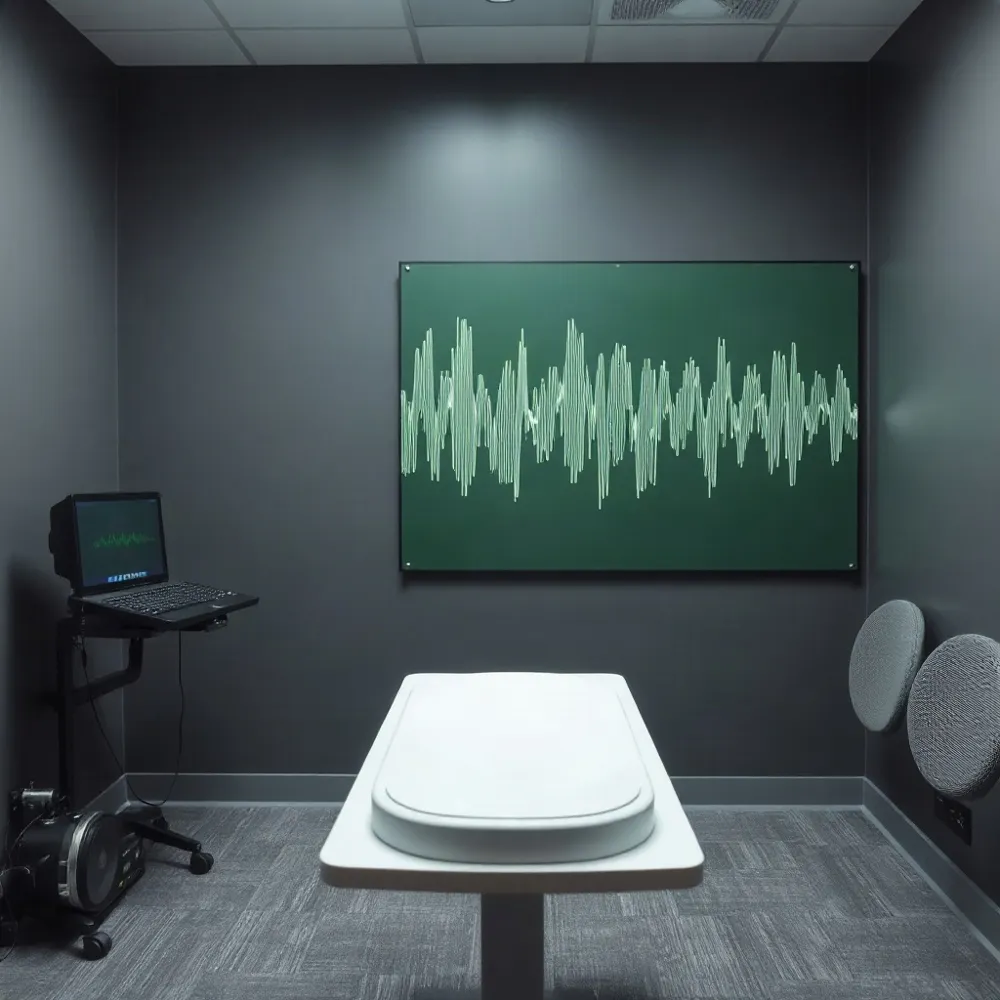
ASSR testing involves placing electrodes on the scalp to record neural responses. Typically, the active electrode is positioned near the vertex (Cz), with reference electrodes on the mastoid or earlobe, and a ground electrode on the forehead (Fpz). Insert earphones or supra-aural headphones deliver the auditory stimuli efficiently and safely. This setup closely resembles that used in Auditory Brainstem Response (ABR) testing.
Types of Auditory Stimuli Used (AM, FM, MM)
ASSR employs modulated auditory stimuli that include Amplitude Modulation (AM), Frequency Modulation (FM), and Mixed Modulation (MM) tones. These stimuli produce steady-state neural responses phase-locked to the modulation frequency. Carrier frequencies typically span standard audiometric frequencies (500 Hz, 1,000 Hz, 2,000 Hz, and 4,000 Hz), allowing targeted stimulation across the hearing spectrum.
Frequency-Specific Threshold Estimation
A principal advantage of Auditory Steady-State Response (ASSR) testing is its capacity to estimate hearing thresholds at multiple frequencies simultaneously, making it more time-efficient than traditional methods. The responses originate from different neural generators depending on modulation frequency, with brainstem sources predominant at modulation rates above 60 Hz. This permits accurate, frequency-specific assessment, including for severe-to-profound hearing loss levels.
Statistical Analysis and Use of FFT
ASSR responses are analyzed in the spectral domain using Fast Fourier Transform (FFT) to identify energy peaks at stimulus modulation rates and harmonics. Statistical detection algorithms, such as F-tests, evaluate whether recorded responses significantly differ from noise, facilitating objective and reproducible threshold determination.
Comparison with Behavioral Audiograms and Correction Considerations
ASSR thresholds generally correlate within 10 to 15 dB of behavioral audiometric thresholds but may differ depending on hearing loss severity and patient age. Correction tables are applied to translate ASSR thresholds into estimated audiograms suitable for clinical interpretation. Because ASSR is an objective test, it is particularly valuable for patients unable to cooperate with traditional audiometry, such as infants or those with disabilities.
Advantages and Limitations of ASSR in Auditory Evaluations
What are the advantages of ASSR for auditory testing?
ASSR offers rapid and objective multi-frequency testing, enabling simultaneous assessment of several key frequencies (500 Hz, 1000 Hz, 2000 Hz, and 4000 Hz). This multifrequency hearing test capability reduces examination time significantly compared to traditional auditory brainstem response (ABR) testing, which typically measures one frequency at a time. The use of spectral analysis in ASSR focusing on amplitude and phase allows for statistically valid estimation of hearing thresholds.
Importantly, ASSR is highly suitable for infants and young children, and patients who cannot reliably participate in behavioral audiometry due to age, developmental challenges, or medical status. Testing can be performed during natural sleep or sedation, making it accessible and less stressful for pediatric populations.
What are the limitations of ASSR?
Despite its strengths, ASSR has limitations, particularly in very young infants (under 2 weeks to 1 year), where neural maturation affects response reliability and size, as reported in Limitations of ASSR testing. The test is also not suitable for diagnosing auditory neuropathy spectrum disorder (ANSD), as responses may be falsely normal or unreliable in such cases.
Interpretive challenges include stimulus artifacts and non-neural origins of responses, which may lead to false-positive results. Careful electrode placement for ASSR and artifact rejection during ASSR protocols are necessary to reduce these issues. Additionally, ASSR thresholds may differ from behavioral thresholds by 8-15 dB and require correction tables for ASSR thresholds for accurate clinical interpretation.
What challenges exist in assessing workplace-related hearing loss?
In occupational hearing loss evaluations, differentiating noise-induced hearing loss (NIHL) from age-related or medical causes—like ear infections or ototoxic chemical exposure—is complex. ASSR provides objective audiometric data valuable in such cases, especially when patients are unable or unwilling to provide reliable behavioral responses.
Interpreting audiograms requires attention to characteristic patterns, such as the prominent 4 kHz notch associated with noise exposure. Comprehensive evaluation must rule out confounding factors including cerumen impaction and middle ear pathologies through adjunctive tests like tympanometry and otoacoustic emissions (OAEs).
A multidisciplinary approach involving audiologists, otolaryngologists, and occupational medicine specialists, supported by objective ASSR data, ensures accurate determination of causality and assists in legal or insurance proceedings.
| Aspect | Advantages | Limitations | Clinical Implications |
|---|---|---|---|
| Testing Speed | Simultaneous multifrequency assessment | None significant | Reduces testing time, improves efficiency |
| Population Suitability | Effective in infants, children, uncooperative patients | Less reliable in infants <1 year | Enables early intervention for pediatric cases |
| Diagnostic Scope | Objective threshold estimation | Not suitable for ANSD diagnosis | Must supplement with other tests |
| Result Interpretation | Statistical spectral analysis | Potential artifacts and false positives | Requires experienced interpretation |
| Medico-legal Use | Supports workplace injury claims with objective data | Requires comprehensive multidisciplinary assessment | Supports legal validity of hearing loss claims |
The Importance of Expert Consultation in Auditory Injury Claims

Why is expert consultation important for workplace auditory injury claims?
Expert consultation is vital because auditory injuries often involve complex and subtle impairments, such as sensorineural hearing loss, which require specialized knowledge to accurately assess. Experienced audiologists and occupational health professionals provide detailed evaluations that quantify the degree and permanence of hearing loss. These expert assessments ensure that all medical aspects are thoroughly examined and presented objectively. This scientific backing enhances the credibility of workplace hearing loss claims, minimizing disputes related to the injury’s nature or severity. Ultimately, expert consultation helps ensure fair compensation by supporting legal and insurance processes with precise, evidence-based medical information.
How do healthcare consulting firms support legal and insurance claims involving workplace auditory injuries?
Healthcare consulting firms play a pivotal role in bridging medical expertise and legal requirements. They conduct comprehensive auditory assessments using objective tests such as Auditory Steady-State Response (ASSR) and Auditory Brainstem Response (ABR), which are crucial when behavioral tests are unreliable or impossible. These firms prepare thorough medical and legal reports detailing diagnosis, prognosis, and the expected impact on the individual’s quality of life.
Moreover, consulting firms collaborate closely with attorneys, insurers, and rehabilitation specialists to develop life care plans and support litigation efforts. Their expert reports often include evidence-based evaluations to aid in establishing liability and the extent of damages. By providing accurate, scientifically grounded analyses, healthcare consultants strengthen claim validity, expedite claim processing, and support just compensation decisions. This multidisciplinary approach ensures injured workers receive appropriate recognition and care for their auditory injuries.
Integrating ASSR Testing in Multidisciplinary Hearing Evaluations

Role of the Interprofessional Team in ASSR Testing
The successful implementation of Auditory Steady-State Response (ASSR) testing often relies on a coordinated interprofessional ASSR evaluation team. This team typically includes audiologists who conduct the tests, otorhinolaryngologists (ENT specialists) who evaluate and interpret results alongside clinical findings, and anesthesia providers who manage sedation protocols, especially for pediatric patients. Nurses and support staff also play critical roles in patient preparation and monitoring during testing.
Complementary Use with Other Audiological Tests
ASSR is most effective when integrated with other hearing assessments such as Auditory Brainstem Response (ABR) testing, Otoacoustic Emissions (OAEs), and tympanometry. While ASSR offers rapid, frequency-specific thresholds, ABR provides detailed neural pathway evaluation, and OAEs assess cochlear outer hair cell function. Combining these methods enhances diagnostic accuracy by addressing different auditory components and ruling out disorders like auditory neuropathy spectrum disorder, which ASSR alone cannot reliably detect.
Testing Conditions: Sedation and Natural Sleep
ASSR can be conveniently performed during natural sleep or with sedation, making it especially valuable in infants and uncooperative patients. Sedation during ASSR administered under careful medical supervision allows for extended testing periods and minimal patient movement, which improves reliability. This adaptability facilitates early hearing diagnosis and intervention, particularly in pediatric audiology.
Enhanced Diagnostic Accuracy Through Test Complementarity
Integrating ASSR with ABR and OAEs enables a comprehensive audiology evaluation. ASSR provides objective, ear-specific hearing threshold measurement data quickly, ABR assesses neural conduction integrity, and OAEs confirm cochlear health. This combined approach helps differentiate sensorineural hearing loss and conductive hearing loss effectively and can improve outcomes in complex cases such as asymmetric hearing loss or severe-to-profound impairment.
Application Across Pediatric and Adult Populations
While ASSR is especially advantageous in pediatric ASSR testing, including newborns and infants, its applications extend to adult patients who cannot reliably participate in behavioral testing, such as those with cognitive impairments or in medico-legal contexts. In adults, ASSR supports the evaluation of noise-induced hearing loss (Medico-legal applications of ASSR in occupational hearing loss) and aids in verifying hearing levels for legal, insurance, or occupational health cases. This multidisciplinary and multi-test strategy ensures comprehensive hearing assessment across ages and clinical scenarios.
Conclusion: The Value of ASSR in Modern Auditory Loss Assessment
Comprehensive Benefits and Clinical Utility
Auditory Steady-State Response (ASSR) testing offers a fast, reliable, and objective method for estimating hearing thresholds across multiple frequencies simultaneously. It is particularly valuable for patients unable to participate in conventional behavioral audiometry, such as infants, children, and individuals with cognitive or physical limitations. Its ability to provide ear-specific, frequency-specific data supports accurate diagnoses of sensorineural and conductive hearing losses, aiding timely intervention like hearing aid or cochlear implant fittings.
Role in Occupational Health and Legal Settings
ASSR’s precision and objectivity have made it an important tool in occupational noise-induced hearing loss evaluations and medico-legal contexts. It enhances the credibility of hearing assessments for workplace injury claims by objectively verifying hearing thresholds, thus helping differentiate true impairment from non-organic loss. This contributes to fair adjudication and informed decision-making in compensation and insurance cases.
Need for Continued Research and Standardization
Despite its advantages, ASSR testing carries limitations including reduced reliability in very young infants and inability to diagnose auditory neuropathy spectrum disorder. Ongoing research is essential to refine protocols, improve normative data, and standardize clinical application for consistent, widely accepted use. Collaboration among audiologists, otolaryngologists, and other healthcare providers is vital for optimizing test accuracy and integration.
Future Directions
Looking forward, ASSR holds promise as a cornerstone in comprehensive auditory evaluations. Advancements in technology and analytic software will likely enhance its efficiency and diagnostic power. Incorporating ASSR into routine hearing assessment protocols can lead to better management of hearing loss, ultimately improving patient outcomes and quality of life across various populations.