Objective Hearing Testing Defined
Scope. A hearing test qualifies as objective when it does not depend on the patient's active response, providing a measurable physiological reading of auditory function. Subjective testing, by contrast, relies on the patient's voluntary feedback, such as raising a hand when a tone is heard. NorCal Medical Consulting's ASSR testing, including the objective Auditory Steady-State Response (ASSR) evaluation, falls squarely in the objective category.
Integration. Incorporate these objective results into your claims documentation to address the Daubert standard and Federal Rule of Evidence 702. While subjective tests like pure-tone audiometry can be affected by patient effort or malingering, objective ASSR provides a verifiable measure. This integration is critical in legal evaluations, where objective data strengthens the reliability of your claim.
Intelligence. Objective tests offer a deeper level of intelligence by revealing the actual auditory thresholds, including the 3,000 Hz frequency required under the Department of Labor's Sixth Edition rating schedule. This is a distinct advantage over subjective methods, which may be swayed by external factors. Our team routinely explains these findings in written reports and testimony, ensuring impartial and defensible conclusions.
For a claims professional, the distinction shapes every part of the evaluation. If you rely on subjective responses, a claimant's hearing loss might be understated or exaggerated, complicating the compensation process. Objective tests like ASSR offer a verifiable threshold, which is why our team at norcalmedgroup.com incorporates them into our evaluations. Unlike traditional subjective methods, ASSR testing at 500Hz-4000Hz provides a direct measurement of auditory nerve function, aligning with OWCP standards for LHWCA and DBA claims.
Consider how this plays out in practice. A subjective audiogram might show a mild loss, but ASSR reveals a more significant impairment, changing the compensation outcome. Our physicians at NorCal Medical Consulting use these results to build evidence that withstands Daubert challenges, ensuring that your claim rests on solid, objective ground.
| Test Type | Input | Example | Output |
|---|---|---|---|
| Objective | Physiological response | ASSR, OAE, ABR | Measure of neural/cochlear function |
| Subjective | Patient response | Pure-tone audiometry, speech tests | Voluntary behavioral threshold |
Objective vs. Subjective Hearing Tests
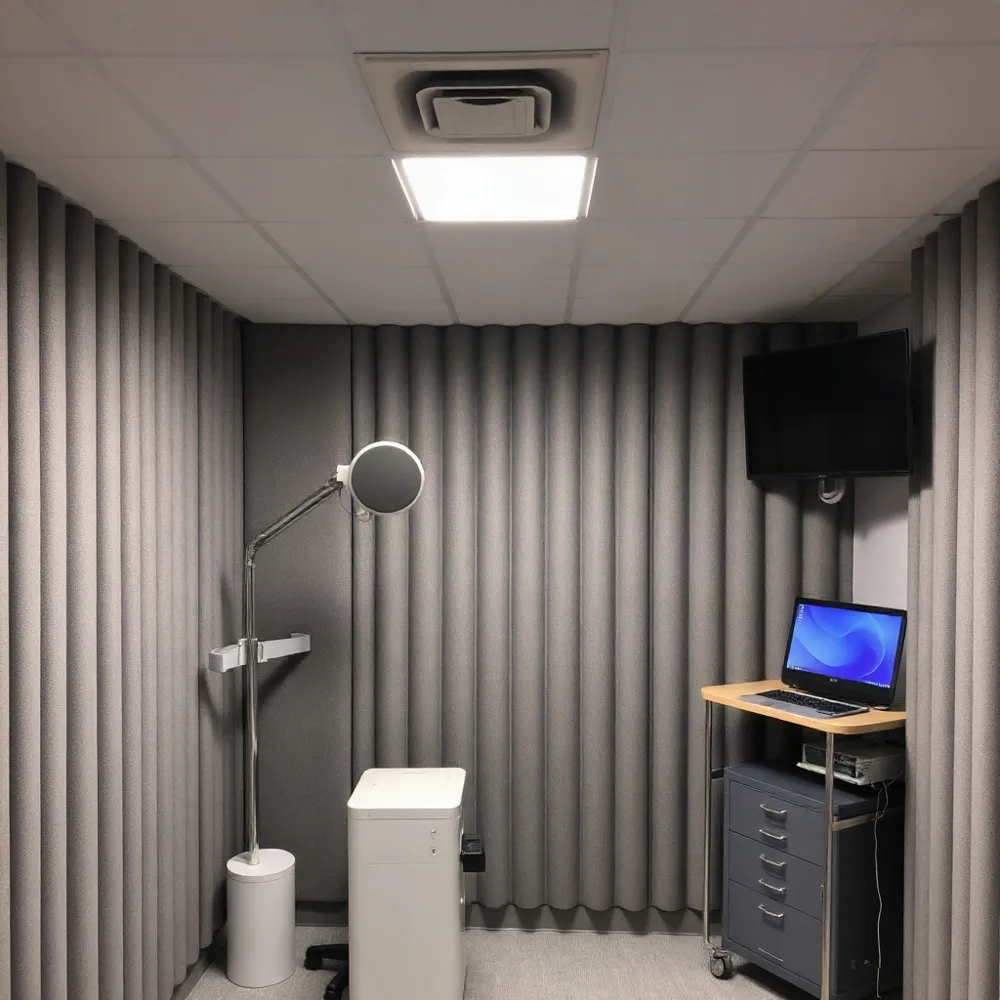 Objective hearing tests measure auditory function without relying on the patient's active response, while subjective tests depend on the patient's report of what they hear. This distinction matters because subjective tests can be influenced by motivation, attention, or malingering, whereas objective tests provide a physiological measure of hearing thresholds.
Subjective hearing tests, such as pure-tone audiometry and speech audiometry, require the patient to press a button or repeat words when they perceive a sound. These tests are the clinical standard, but they leave room for error when a patient exaggerates hearing loss for workers' compensation or personal injury claims. Objective tests, including Auditory Steady-State Response (ASSR) and Otoacoustic Emissions, bypass the need for a behavioral response by measuring electrical or acoustic activity from the inner ear and auditory nerve.
Common Subjective Hearing Tests
Pure-tone audiometry is the most familiar subjective test. It uses a handheld or booth-based device to present tones at varying frequencies and intensities, and the patient signals when they hear each tone. Speech audiometry evaluates the ability to hear and repeat words in quiet or noise, providing a measure of word recognition that complements the audiogram.
Subjective tests are efficient and inexpensive, but their validity depends entirely on the patient's cooperation. When a claimant has financial incentive to exaggerate, hearing thresholds can be inconsistent with the physical exam or other medical records. This is why forensic audiologists often pair subjective results with an objective measure before drawing conclusions about permanent impairment.
Objective Assessment Methods
Objective hearing tests provide a cross-check against subjective reports. The Auditory Steady-State Response (ASSR) is a frequency-specific test that measures brainwave activity in response to amplitude-modulated tones. It can reliably estimate hearing thresholds across the range used for legal assessments, including the 3,000 Hz frequency specified in the Department of Labor's Schedule for Rating Permanent Impairments.
Another common objective tool is Otoacoustic Emissions (OAEs), which measure the ear's own ability to produce low-level sounds in response to stimulation. OAEs reflect outer hair cell function and are useful to rule out damage at the cochlear level. Together, ASSR and OAE results provide an objective baseline that can support or refute a claimant's subjective audiogram.
ASSR. Delivers frequency-specific thresholds without patient cooperation, making it ideal for verifying claims in legal and insurance contexts.
OAE. Reflects cochlear outer hair cell health and can help identify true hearing loss versus functional hearing loss.
Auditory Brainstem Response (ABR). Measures neural transmission through the auditory pathway and can be used to estimate thresholds in difficult-to-test patients.
When subjective and objective results align, the evidence is stronger. When they do not, the discrepancy itself becomes information. A claim that depends solely on subjective responses may be vulnerable to challenge under the Daubert standard, which requires that expert testimony be based on reliable methods applied reliably. Objective measures like ASSR meet that bar when administered and interpreted correctly.
NorCal Medical Consulting routinely incorporates ASSR and other objective measures into medical-legal evaluations, pairing them with a careful review of the claimant's occupational history and prior records. This approach helps our team distinguish genuine hearing loss from exaggeration or malingering, and it produces documentation that withstands scrutiny in workers' compensation and Federal Employer Liability Act cases.
ASSR and Its Unique Advantages
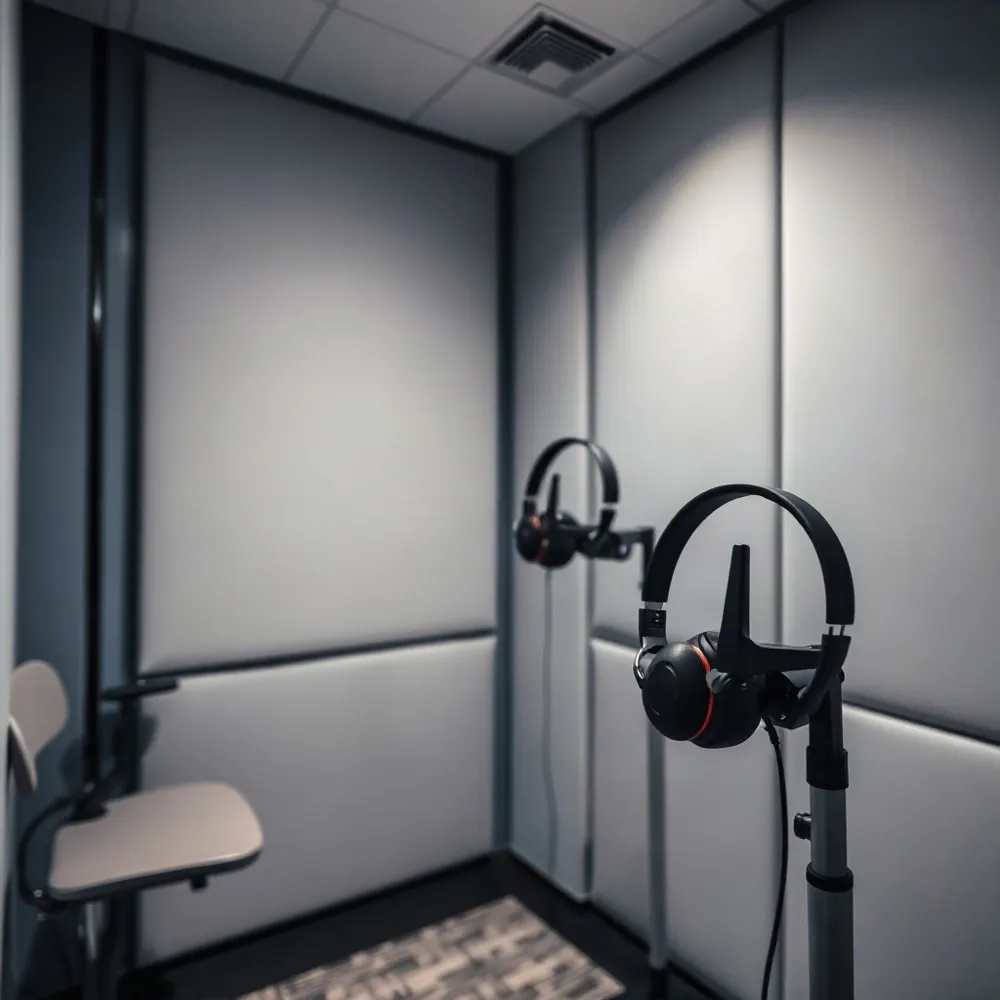 ASSR testing relies on specialized equipment that delivers amplitude-modulated or frequency-modulated stimuli at high repetition rates, then captures the brain's electrophysiologic response. Because the test is objective and does not require active patient participation, it works well for adults who cannot consistently respond to behavioral testing, including those with malingering concerns or severe cognitive impairments.
Before scheduling an ASSR evaluation, our team reviews the patient's medical history, prior audiograms, and the specific claim context. Candidacy typically requires the ability to sit still for the test session, which lasts 30 to 60 minutes, and the absence of significant middle ear or conductive pathology that would confound the results. Clean ear canals and normal tympanometry are checked first.
Test Environment and Electrode Placement
ASSR testing uses three to four surface electrodes placed on the scalp, typically at the high forehead and mastoids or earlobes, to record the auditory steady-state response. The test is performed in a sound-treated booth to minimize ambient noise, and the patient is instructed to relax or sleep during the recording. The automated nature of the response detection reduces inter- and intra-examiner variability.
Stimuli are delivered through insert earphones or high-fidelity transducers to preserve frequency-specific information. The equipment presents pure-tone stimuli at frequencies such as 500, 1000, 2000, and 4000 Hz, and modern systems also evaluate the 3000 Hz range required for certain occupational claims under the Department of Labor's Schedule for Rating Permanent Impairments.
Frequency-Specific Testing and the 3000 Hz Case
Most standard audiometry stops at 2000 or 4000 Hz, but ASSR protocols can be extended to include 3000 Hz without added patient effort. This frequency matters in claims where hearing loss patterns, such as noise-induced damage, may affect mid-to-high frequencies in ways that alter the calculated impairment. By capturing 3000 Hz directly, ASSR provides a more complete audiometric profile for the rating.
The ASSR test itself is well documented in peer-reviewed literature as a reliable objective method for estimating hearing thresholds in populations that cannot complete subjective testing. Its frequency-specific nature is one of its clearest advantages over auditory brainstem response (ABR) testing, which typically offers less frequency resolution.
Equipment Standards and Calibration
ASSR systems must meet the calibration standards of relevant national and international guidelines, and our team verifies that equipment performance is within specifications before each evaluation. Proper calibration, along with validated test protocols, ensures that the recorded responses are reproducible and legally defensible. Mismatched or miscalibrated equipment can produce false results, which is why we follow the preferred practice patterns for audiology set by the American Speech-Language-Hearing Association.
Who Is a Good Candidate for ASSR?
Adults. Adults who cannot or will not participate in behavioral testing, including those with suspected exaggeration or malingering, benefit most from ASSR. It removes the response bias entirely.
Pediatric patients. Children who are too young or developmentally unable to respond reliably to behavioral audiometry are ideal candidates, though sedation or natural sleep is often needed.
Workers' compensation. Employees with occupational noise exposure who need objective documentation of hearing thresholds for claims under LHWCA or DBA often undergo ASSR when other tests are inconsistent.
Forensic cases. Legal settings, including injury claims, benefit from ASSR's objective data that can be compared against subjective reports, reducing the opportunity for dispute.
NorCal Medical Consulting provides ASSR evaluations as part of independent medical examinations and chart reviews for federal claims. We offer comprehensive auditory testing that can be tailored to the specific frequencies and documentation requirements of each case.
Our team is familiar with the need to correlate objective test results with subjective symptoms, and we present findings in a clear format suitable for adjusters, attorneys, and judges. We also educate patients about what to expect during the test to reduce anxiety and promote cooperation.
Limitations to Keep in Mind
ASSR is not a replacement for the full audiologic test battery in all cases. It does not test speech perception, and it may underestimate or overestimate behavioral thresholds in patients with certain retrocochlear or central auditory disorders. A skilled clinician reviews the ASSR results alongside other measures to reach a defensible conclusion.
Adherence to the Daubert standard for expert testimony requires that the testing methods be reliable and generally accepted in the field. By following established test protocols and documenting methodology step by step, our evaluations meet that threshold for admissibility in workers' compensation hearings and civil litigation.
| Frequency | Behavioral Threshold | ASSR Estimate |
|---|---|---|
| 500 Hz | 20 dB HL | 20-25 dB HL |
| 1000 Hz | 15 dB HL | 20 dB HL |
| 2000 Hz | 25 dB HL | 25-30 dB HL |
| 3000 Hz | 30 dB HL | 30-35 dB HL |
Objective Testing in Federal Claims
Federal claims under the Longshore and Harbor Workers' Compensation Act (LHWCA) and the Defense Base Act (DBA) often turn on a single, non-negotiable requirement: objective hearing testing that meets the [Department of Labor's Schedule for Rating Permanent Impairments](https://www.norcalmedgroup.com/blog/using-assr-testing-for-accurate-auditory-loss-diagnosis-in-injury-claims). That schedule specifically requires an audiometric threshold at 3,000 Hz. If your file lacks this frequency, the claim may be denied or undervalued regardless of how compelling the patient's story is.
Auditory steady-state response (ASSR) testing is the objective tool that meets this standard. Unlike subjective tests such as pure-tone audiometry, ASSR measures the brain's electrical response to sound, providing reliable and repeatable threshold estimates even when the patient cannot or will not respond consistently. NorCal Medical Consulting administers ASSR testing at 500Hz–4000Hz, including the 3,000 Hz frequency, and aligns every evaluation with OWCP documentation standards from the outset.
The Statutory Basis for Objective Testing
The LHWCA and DBA both require that hearing loss be documented objectively. The Sixth Edition of the Schedule for Rating Permanent Impairments specifies which frequencies must be tested and how thresholds are averaged. Missing the 3,000 Hz point is not a minor oversight; it is a gap in the medical evidence that can trigger a defense challenge or a request for re-evaluation, delaying compensation that would otherwise be payable.
ASSR testing provides exactly the kind of evidence federal judges and administrative law judges expect. Because ASSR does not rely on the patient's subjective report, it holds up well under Daubert scrutiny, and it gives our objective hearing assessments the weight they need in contested claims.
Common Problems When 3,000 Hz Is Missing
Several recurring issues appear in federal hearing claims:
- An audiogram that stops at 2,000 Hz or skips 3,000 Hz entirely.
- Test results that can't be verified or repeated on a second evaluation.
- The claimant's report conflicts with the objective findings, leaving the file open to attack.
These problems often emerge during a records-based review, when a file is missing a complete ASSR battery. Our physicians review the entire file, confirm that the 3,000 Hz threshold is present, and flag any gaps before a claim is submitted to OWCP or the district director. Early identification prevents costly delays later.
How NorCal Medical Consulting Handles These Cases
NorCal Medical Consulting adminis
Court Admissibility and Daubert Standards
When evaluating a hearing loss claim, the distinction between objective and subjective tests can determine whether your evidence holds up in court. Objective tests like Auditory Steady-State Response (ASSR) and Auditory Brainstem Response (ABR) measure the auditory system's physical response, while subjective tests like pure-tone audiometry rely on the patient's active participation and self-report. This difference matters because subjective tests can be influenced by the patient's motivation or malingering, whereas objective tests provide data that is less susceptible to manipulation.
Objective tests. These measure physiological responses that occur automatically in the auditory system, independent of the patient's conscious effort. Examples include ASSR, ABR, and Otoacoustic Emissions (OAEs). Because they do not depend on the patient pressing a button or saying "I hear it," they are harder to fake and provide a more reliable measure of true hearing ability. In claims, this objectivity supports stronger legal standing, especially under the Daubert standard for expert testimony.
Subjective tests. These include standard behavioral hearing tests like pure-tone audiometry, where the patient responds to tones. The results rely on the patient's cooperation and honesty. While these tests are common and cost-effective, they are vulnerable to exaggeration or feigned hearing loss, which can undermine a claim's credibility if not corroborated by objective measures.
For claims adjusters and attorneys, the practical implication is clear: subjective tests alone may be insufficient to prove or disprove a hearing loss claim, especially when psychogenic or exaggerated factors are suspected. Objective tests, particularly ASSR testing, offer a way to verify the existence and severity of hearing loss with data that courts have recognized as more reliable. This is why our team at NorCal Medical Consulting incorporates ASSR and ABR testing into every auditory evaluation, ensuring that the evidence we provide meets the rigorous standards for admissibility.
Why Objective Tests Strengthen Your Case
Objective tests produce concrete, verifiable data that juries and judges can understand without relying on a witness's subjective recollection. This is particularly important in injury claims where the patient may have a financial incentive to exaggerate hearing loss. By using objective measures, our physicians can provide expert testimony that is not only accurate but also defensible against challenges to its credibility.
In legal settings, the Daubert standard requires that expert scientific evidence be both relevant and reliable. Objective tests like ASSR meet this threshold because they are based on peer-reviewed research, can be tested, and have a known error rate. This makes them admissible in court, as explained in our article on court admissibility and Daubert standards. Without objective backing, a hearing loss claim can be dismissed as subjective opinion, which is why we always include them in our evaluations.
When to Use Each Test
The choice between objective and subjective tests isn't always either/or. Often, a combination provides the most comprehensive picture. Subjective tests are quick and inexpensive for screening, but they should be followed by objective verification when the stakes are high. For example, in a workers' compensation claim where the disability rating depends on the hearing threshold, an ASSR test can confirm the pure-tone audiometry results, reducing the risk of a dispute.
- Use subjective tests for initial screenings or when patients are cooperative and no secondary gain is suspected.
- Use objective tests when there are inconsistent responses, suspicion of malingering, or when the claim will be legally challenged.
Our team at NorCal Medical Consulting provides both types of evaluations, but we prioritize objective testing in medical-legal cases to ensure the evidence is bulletproof. For a deeper understanding of how ASSR testing differs from other methods, see our guide on objective hearing testing for a professional perspective.
How NorCal Medical Consulting Assists
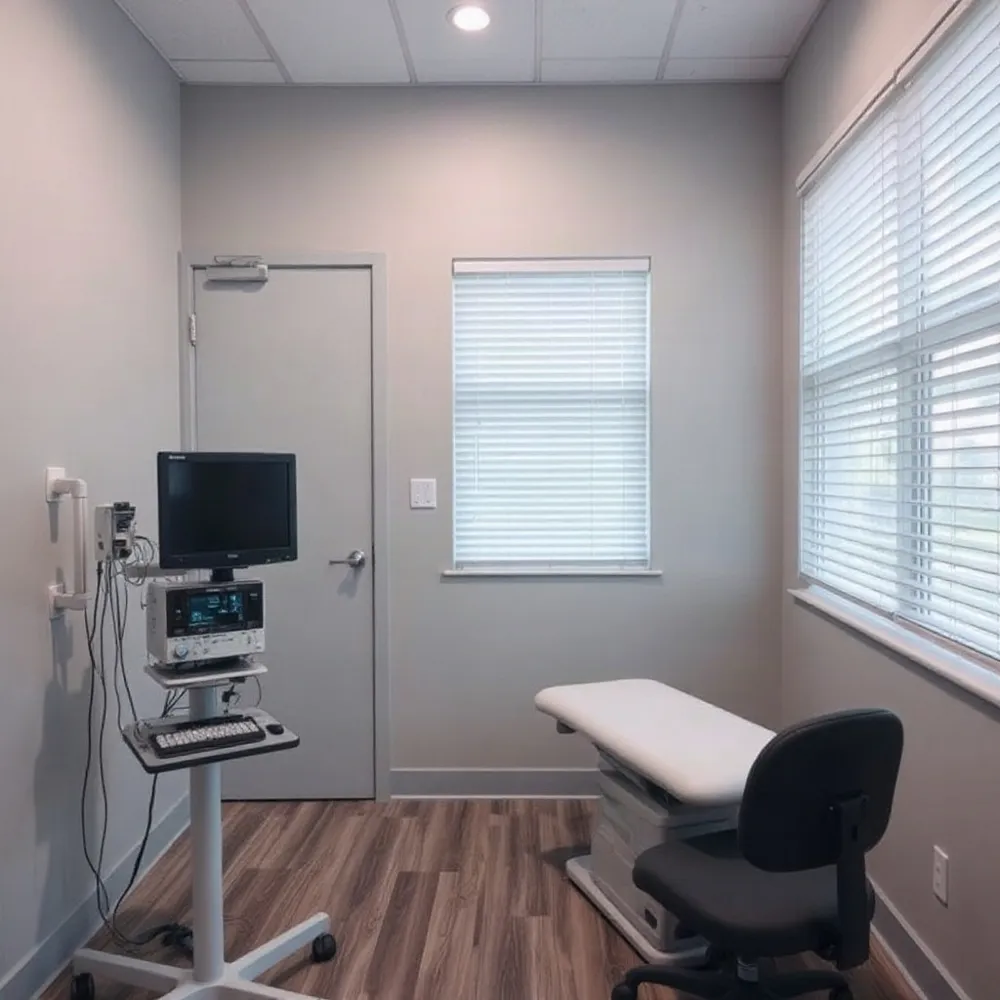 When it comes to proving hearing loss for a compensation claim, the type of test you undergo can make or break your case. Objective hearing tests measure the auditory system's physical response without requiring your active participation, whereas subjective tests depend on your responses to tones. For claims under the Longshore and Harbor Workers' Compensation Act (LHWCA) or the Defense Base Act (DBA), understanding this distinction is the first step toward building an airtight claim.
What Makes a Hearing Test Objective or Subjective?
Subjective tests, like traditional pure-tone audiometry, require you to raise your hand or press a button each time you hear a tone. Your responses drive the results, which means your effort, understanding, and even your motivation to perform well can influence the outcome. In a claims context, an evaluator may question whether you gave your best effort, especially if the results don't match the documented injury or noise exposure history.
Objective tests, by contrast, measure physiological responses your body produces automatically. Auditory Steady-State Response (ASSR) testing tracks your brain's electrical response to tones presented through earphones, while Auditory Brainstem Response (ABR) and Otoacoustic Emissions (OAEs) offer similar physiological measurements. Because these tests don't rely on your judgment or cooperation, they provide data that's harder to fake and easier to defend in front of an examiner, judge, or jury.
Subjective (behavioral). Requires your active response to tones. Examples: pure-tone audiometry, speech audiometry. Results can vary with effort and understanding.
Objective (physiological). Measures automatic body responses. Examples: ASSR, ABR, OAE. Results are less affected by effort and provide a more reliable threshold estimate.
Why Objectivity Wins in Claims Work
For a claims adjuster or an attorney, the appeal of objective testing is straightforward: it reduces ambiguity. When a claimant's subjective audiogram shows a hearing loss that doesn't quite match the noise exposure history, an objective test like ASSR can confirm or refute the audiogram's findings. Evidence for the Necessity of Objective Hearing Tests in medicolegal contexts is now well established, as subjective tests alone may be influenced by a patient's motivation to exaggerate or minimize their impairment.
That's why NorCal Medical Consulting uses ASSR testing at 500Hz–4000Hz, including the 3,000 Hz frequency required under the Sixth Edition of the Department of Labor's Schedule for Rating Permanent Impairments. When you schedule an IME or chart review with our team, you get objective, evidence-based threshold estimates that hold up under scrutiny, whether we're evaluating workplace injury claims or occupational hearing loss. Our ASSR testing protocols align with OWCP standards from the outset, giving you a defensible foundation for settlement or trial.
When Subjective Tests Fall Short
Subjective tests have their place, but they carry a significant risk in litigation: they can be attacked as
For example, a claimant may report a moderate-to-severe high-frequency hearing loss after years of working in a noisy shipyard. A purely subjective audiogram might show that pattern, but it can't distinguish between true organic loss and a patient who simply fails to respond accurately. An ASSR test provides a frequency-specific threshold that correlates with the audiogram, either confirming the diagnosis or revealing a malingering pattern that undermines the claim. In our experience at NorCal Medical Consulting, objective testing frequently uncovers discrepancies that change the outcome of a case.
How Our Team Integrates Both Approaches
We don't believe in pitting objective against subjective. Instead, our physicians combine both types of testing to build a complete picture. A thorough hearing evaluation includes a detailed case history, a physical exam of the ears, and a battery of tests that may include pure-tone audiometry, word recognition, and ASSR. When the behavioral results are consistent with the objective findings, we can confidently opine on the degree of impairment. When they conflict, we dig deeper to determine why, which is exactly the type of independent, evidence-based analysis that NorCal Medical Consulting provides.
This approach matters because a judge or examiner will ultimately weigh the credibility of the evidence. If you can point to objective ASSR data alongside a consistent audiogram, your case is far stronger than one built solely on subjective responses. And if you're an adjuster or attorney, you need a medical evaluation that can withstand cross-examination. Our ASSR testing services give you that confidence.
| Test Type | What It Measures | Reliance on Patient? | Typical Use in Claims |
|---|---|---|---|
| Pure-tone audiometry | Behavioral hearing thresholds | Yes, requires response | Screening and baseline |
| Speech audiometry | Word recognition | Yes, requires response | Communication impact |
| ASSR | Auditory brainstem response | No, autonomic | Confirming thresholds, malingering detection |
| ABR | Neural response to sound | No, autonomic | Retrocochlear screening |
| OAE | Outer hair cell function | No, autonomic | Cochlear integrity |
| Tympanometry | Middle ear function | Minimal, passive | Conductive loss evaluation |
Daubert standard. A legal precedent that requires scientific testimony to be based on reliable methods and principles. Objective testing like ASSR helps meet this standard by providing verifiable data.
Malingering detection. The process of identifying when a patient exaggerates or feigns hearing loss. ASSR's objective nature makes it a valuable tool for this purpose.
When you need a hearing evaluation that stands up to legal and medical scrutiny, objective testing is non-negotiable. Our team at NorCal Medical Consulting specializes in ASSR testing and comprehensive IMEs across Northern California and beyond, serving injured workers, employers, and attorneys. Whether you're building a case or defending against a claim, call our office at 530-928-9505 or visit our workplace injury assessments page to schedule a consultation.
Secure Your Claim with Objective Evidence
The legal and medical communities have shifted toward objective hearing tests as the standard of care, and the evidence supports this move. Research in the Indian Journal of Otolaryngology and Head & Neck Surgery highlights how objective measures, including Auditory Steady-State Response (ASSR) testing, provide reliable, verifiable data that subjective reports cannot match. This shift has direct implications for injured workers and the professionals representing them.
Subjective tests depend on the patient's active response, such as raising a hand when they hear a tone. These tests are vulnerable to exaggeration, malingering, and simple error. Conversely, objective tests measure the ear's physiological response directly, eliminating much of this variability. This is why the American Speech-Language-Hearing Association (ASHA) includes such procedures in its preferred practice patterns for audiology. This same reliability is why courts and hearing officers increasingly expect objective data in disputed claims.
The Legal Weight of Objective Measures
The evidentiary value of objective testing is rooted in the Daubert standard, which requires that expert testimony meet basic standards of reliability and relevance. Objective tests produce measurable, repeatable data that can be scrutinized and cross-examined. This is a key reason why ASSR has become a preferred method in hearings before the Office of Workers' Compensation Programs (OWCP) and in civil litigation. Our team at NorCal Medical Consulting frequently reviews cases where a subjective hearing test was later contradicted by a more reliable objective measure.
When an insurance adjuster or attorney requests a medical evaluation, they need confidence in the results. Subjective tests, while valuable for screening, can be manipulated. For instance, a worker may unconsciously or deliberately exaggerate a hearing loss. An ASSR test measures the brainstem's response to a tone, providing a hearing threshold that is not under the patient's voluntary control. This makes it a powerful tool for uncovering inaccurate claims and confirming genuine hearing loss.
ASSR: A Deeper Look at Objective Testing
ASSR testing is a specific type of objective audiometry that is increasingly used in medical-legal evaluations. It measures the brain's electrical response to modulated tones at specific frequencies. Its value is particularly pronounced at high-fidelity frequencies. According to a study published in the Indian Journal of Otolaryngology and Head & Neck Surgery, ASSR correlates well with audiometric thresholds, making it a reliable predictor of actual hearing ability. This becomes critical in claims for occupational hearing loss, where the frequency of loss must be documented for compensation.
The ASSR test is conducted across a range of frequencies, typically from 500 Hz to 4000 Hz, which is a standard range for evaluating speech understanding. This aligns with the testing requirements of the Sixth Edition of the Department of Labor's Schedule for Rating Permanent Impairments. Our practice, NorCal Medical Consulting, uses this method to provide independent and evidence-based evaluations for occupational hearing loss claims.
Subjective vs. Objective: A Practical Comparison
To understand the practical difference, consider a worker who reports a severe hearing loss. A subjective test requires them to consistently respond to tones, and they could easily exaggerate their threshold by simply not responding until the tone is very loud. In contrast, an objective test such as ASSR measures the physiological response, which is involuntary. Audiologists as expert witnesses often rely on this distinction to provide objective hearing tests that withstand scrutiny.
This contrast is why objective testing has become the standard for legal and forensic hearing evaluations. It provides a clear, defensible baseline that is less susceptible to manipulation. Our team at NorCal Medical Consulting uses this approach to ensure that injured workers receive fair compensation based on accurate measurements, not just subjective reports.
NorCal Medical Consulting's Approach
We provide objective hearing evaluations using ASSR testing, including the 3000 Hz frequency often required for compensation claims. Our protocols are designed to align with OWCP standards from the outset, ensuring that the evidence we produce is admissible and persuasive. For instance, our 500Hz–4000Hz ASSR testing provides comprehensive data with objective precision, which overcomes the limitations of subjective reports.
Our team conducts independent medical evaluations (IMEs) for a wide range of injuries affecting hearing, including noise-induced hearing loss, which is a common occupational condition. We also handle cases involving head trauma and other factors that can affect auditory pathways. Each evaluation is designed to withstand the Daubert challenge, relying on peer-reviewed research and objective data rather than assumption.
The Cost of Inaccurate Subjective Testing
The consequences of relying on subjective tests in a compensation claim can be significant. If a claim overstates a hearing loss, the cost can be inflated, leading to increased premiums and employer costs. Conversely, if a claim understates the loss, the injured worker may not receive the compensation they deserve. Both outcomes are consequential, but the latter is particularly troubling when it leaves an injured person without proper support.
For example, a worker may have a real hearing loss, but the standard audiogram (a subjective test) shows a loss that is not severe enough to trigger compensation benefits. A well-conducted ASSR test might reveal that the loss is actually more profound at certain frequencies, which could make them eligible for benefits. This is why our diagnostic evaluations using ASSR testing are critical in determining true hearing thresholds, especially in legal contexts.
The Bottom Line for Legal Professionals
For attorneys and adjusters, the message is clear: when a case hinges on hearing loss, objective testing is the most reliable way to establish the facts. We provide impartial, evidence-based assessments that help you determine the true value of a claim and avoid disputes down the line. Our understanding of ASSR test results and their implications for compensation ensures that the evaluations we produce are both medically sound and legally defensible.
We invite you to contact our team to discuss how we can assist with your next case. We have extensive experience conducting objective hearing tests and providing expert testimony that stands up in court. We are here to ensure that your cases are decided based on accurate, reliable evidence, not guesswork.
| Aspect | Subjective Testing | Objective (ASSR) Testing |
|---|---|---|
| Basis | Patient response | Physiological response |
| Manipulation risk | High | Minimal |
| Standard | Screening only | Diagnostic/legal |
| Examples | Audiogram, speech test | ASSR, ABR |
| Admissibility | Often challenged | Daubert-compliant |