Introduction to ASSR and Its Relevance in Injury Claims
Definition and Purpose of Auditory Steady-State Response (ASSR)
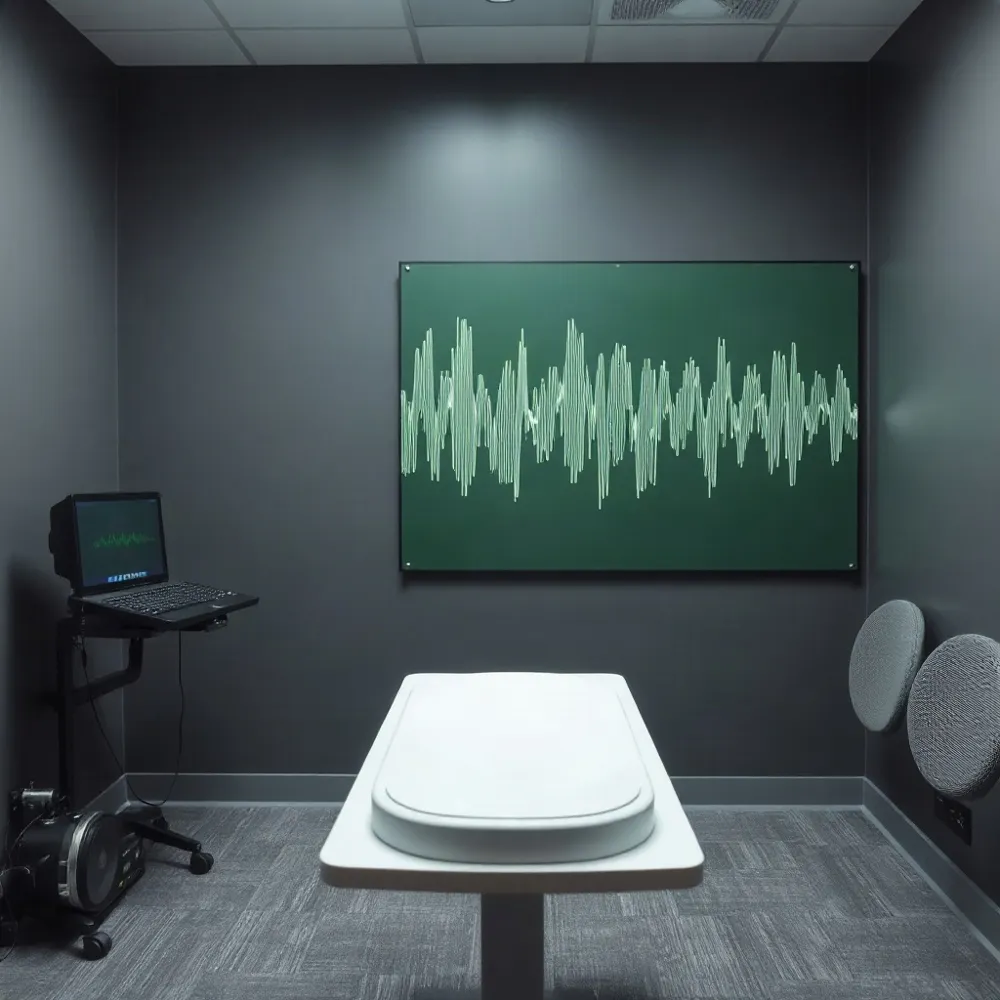
Auditory Steady-State Response (ASSR) is an objective electrophysiological test that measures the brain's response to rapid auditory stimuli. Unlike traditional behavioral hearing tests, ASSR provides frequency-specific hearing threshold estimates by using statistical algorithms to analyze brainwave patterns. It can test multiple frequencies simultaneously and is particularly valuable for patients who cannot reliably participate in conventional hearing assessments, such as infants, sedated individuals, or those involved in legal and insurance claims.
Importance of Accurate Hearing Loss Diagnosis in Workplace Injury Claims
Accurate diagnosis of hearing loss is critical in occupational injury evaluations. ASSR offers an objective measure that can reliably estimate hearing thresholds, even in cases of severe-to-profound hearing loss, making it essential for medico-legal assessments. It helps differentiate noise-induced hearing loss from other causes and supports decisions regarding workers’ compensation and rehabilitation. The ability to quantify frequency-specific hearing deficits supports fair and evidence-based injury claims.
Overview of Hearing Loss Types and Prevalence in the U.S.
Hearing loss affects over 10% of the U.S. population, including approximately one-third of adults over 65. The main types include conductive, sensorineural, and mixed hearing loss. Causes range from aging and noise exposure to infections and genetic factors. Early identification through comprehensive testing, including ASSR, facilitates timely intervention with hearing aids or cochlear implants, improving outcomes for affected individuals.
Understanding Auditory Steady-State Response (ASSR) Testing
What is auditory steady-state response (ASSR)?
The Auditory Steady-State Response (ASSR) is an objective electrophysiological hearing test designed to estimate hearing thresholds by capturing the brain's responses to rapid auditory stimuli. It involves placing electrodes on the scalp to detect neural activity elicited by amplitude, frequency, or mixed modulation tones typically in the 75-110 Hz range. ASSR produces reliable threshold estimations within 10-15 dB of traditional behavioral audiometry results. This test is independent of the subject's active participation, making it highly valuable when testing infants, young children, or individuals unable or unwilling to cooperate with behavioral assessments. Furthermore, its objective nature supports legal and insurance claim evaluations by providing quantifiable evidence of hearing impairment.
What is the difference between ASSR and auditory brainstem response (ABR)?
While both ASSR and ABR are electrophysiological tests measuring brain activity in response to sound, they differ in important ways. Auditory Steady-State Response (ASSR) uses continuous, repetitive auditory stimuli allowing simultaneous multifrequency assessment and binaural testing, thereby reducing testing time. In contrast, ABR uses brief sounds presented sequentially at a lower repetition rate and requires detailed analysis of waveform components such as amplitude and latency. ABR provides information about the neural pathways up to the brainstem, useful for neurological diagnosis, whereas ASSR focuses predominantly on frequency-specific hearing threshold estimation.
How does ASSR technically assess hearing?
ASSR can test multiple frequencies simultaneously—commonly ASSR frequencies: 500 Hz, 1,000 Hz, 2,000 Hz, 4,000 Hz—and assess both ears at the same time (Multifrequency and binaural testing in ASSR). This multifrequency and binaural capability enables efficient and comprehensive hearing evaluations in a shorter time frame compared to other tests. The stimuli used, such as CE-chirp® tones, stimulate different cochlear regions more uniformly, generating robust brainstem responses. The test is often done while the patient is asleep or sedated, which is particularly beneficial for children and individuals unable to participate actively in testing.
What are the advantages of ASSR in hearing threshold estimation?
- Objectivity: ASSR provides objective frequency-specific hearing thresholds without relying on behavioral responses.
- Reliability: Results correlate strongly with pure-tone audiometry, with thresholds typically within ±15 dB.
- Efficiency: Multifrequency and binaural testing in ASSR reduce assessment time.
- Applicability: Effective for severe-to-profound hearing loss ranges and supports ASSR for cochlear implant candidacy.
- Clinical Utility: Can be combined with other tests like ABR and otoacoustic emissions to improve diagnostic confidence.
Why is ASSR especially relevant for individuals unable to cooperate with behavioral tests?
ASSR testing is invaluable for populations such as newborns and NICU infants, young children, and adults with cognitive impairments or non-cooperation. Traditional audiometry requires subject responses, which may be unreliable or impossible in these groups. ASSR provides objective data even during sleep or sedation, allowing accurate hearing threshold determination. This makes ASSR an essential tool in pediatric audiology, medico-legal cases, and insurance claim scenarios where evidence-based hearing assessment is crucial.
| Aspect | ASSR | ABR | Pure-Tone Audiometry |
|---|---|---|---|
| Nature of test | Objective electrophysiological hearing tests | Objective electrophysiological | Subjective behavioral test |
| Stimulus type | Continuous modulated tones | Brief click or tone burst stimuli | Pure tones at individual frequencies |
| Frequencies assessed simultaneously | Multiple frequencies (binaural) | One frequency at a time (usually) | One frequency at a time |
| Patient cooperation required | Minimal (works during sleep/sedation) | Minimal | Active patient participation |
| Typical clinical use | Objective hearing assessment with ASSR | Neural pathway assessment, tumor detection | Standard hearing assessment in cooperative patients |
| Testing time | Shorter due to simultaneous testing | Longer due to sequential testing | Variable, usually longer |
ASSR’s Critical Role in Diagnosing Hearing Loss for Injury Claims
What conditions can an ASSR test diagnose?
ASSR (Auditory Steady-State Response (ASSR)) testing objectively diagnoses both conductive and sensorineural hearing loss by estimating frequency-specific hearing thresholds across key frequencies such as 500 Hz, 1000 Hz, 2000 Hz, and 4000 Hz. It is especially effective when behavioral audiometry cannot be performed, including in infants, children, or individuals unwilling or unable to cooperate with traditional tests. Conductive losses, which affect sound transmission through the middle ear, and sensorineural deficits, involving cochlear or neural damage, are both detectable. ASSR results closely approximate pure-tone audiometry, providing an electrophysiological audiogram applicable for legal and insurance claims.
How accurate and reliable is frequency-specific threshold estimation?
Studies consistently show ASSR estimates are highly correlated with behavioral pure-tone audiometry, with correlation coefficients approaching 0.96 and typical threshold differences within ±15 dB. Accuracy is maintained across mild to profound hearing loss levels, enabling precise cochlear implant candidacy and hearing aid fittings. The method’s binaural, multi-frequency simultaneous testing reduces assessment time while providing objective, statistically validated results, facilitating decisions on auditory rehabilitation in clinical and medicolegal contexts (Objective hearing assessment with ASSR; Statistical algorithms in ASSR.
How does ASSR compare to other hearing tests?
ASSR compares favorably with pure-tone audiometry and auditory brainstem response (ABR) testing. Unlike ABR, which focuses on waveform latency and amplitude, ASSR analyzes frequency-specific amplitude and phase responses, enabling clearer threshold identification across multiple frequencies. Behavioral audiometry remains the gold standard but requires patient cooperation, unlike ASSR. Additionally, ASSR is more efficient than ABR and remains useful in difficult-to-test populations, including infants and cognitively impaired adults, with studies confirming strong positive correlation to behavioral thresholds (ASSR and behavioral audiometry correlation; Frequency-specific peripheral auditory sensitivity).
Why is ASSR valuable in legal and insurance settings?
ASSR provides objective, quantifiable data required in medicolegal and workers’ compensation claims, especially for noise-induced and occupational hearing loss (ASSR test for noise-induced hearing loss; medicolegal hearing loss assessment). Its ability to document auditory function objectively helps verify claims in cases where subjective behavioral tests may be unreliable or disputed. Using ASSR improves the accuracy of disability evaluations and supports fair adjudication by offering reproducible evidence of auditory thresholds relevant to hearing-related injury claims (Legal and insurance hearing loss evaluation; ASSR suitability for medicolegal injury claims.
What are the challenges and limitations of ASSR?
Although highly effective, ASSR may be less reliable in very young infants (under one year) or in diagnosing auditory neuropathy spectrum disorders (ASSR testing in newborns and NICU patients. High modulation rates used in some ASSR protocols can reduce test reliability in older adults due to neural processing changes. Variability may also arise from patient movement or the need to adjust correction factors by age and hearing loss severity. Consequently, ASSR should be integrated with complementary audiological assessments for a comprehensive hearing evaluation, ensuring accurate diagnosis and treatment planning (Limitations of ASSR as a sole diagnostic tool; Algorithmic correction factors in ASSR testing).
Comparative Accuracy and Advantages of ASSR Over Traditional Hearing Tests
Correlation of ASSR with Pure-Tone and Behavioral Audiometry
Auditory Steady-State Response (ASSR) shows a strong correlation with pure-tone audiometry (r = 0.96) and behavioral audiometry, providing accurate frequency-specific hearing thresholds. Clinical studies demonstrate that ASSR results differ by less than 5 dB from behavioral thresholds in mild to severe hearing loss cases, establishing its reliability even when behavioral responses are poor or absent.
Statistical Algorithms Enhancing ASSR Reliability
ASSR uses advanced statistical algorithms in ASSR focused on frequency, phase, and spectral peak detection rather than amplitude and latency. This objective analysis reduces test variability and eliminates the subjective bias found in pure-tone audiometry, improving threshold detection accuracy, especially in challenging patient populations such as infants and uncooperative individuals.
Simultaneous Multifrequency and Binaural Testing
One significant advantage of ASSR is its ability to test multiple frequencies (ASSR frequencies: 500 Hz, 1,000 Hz, 2,000 Hz, 4,000 Hz simultaneously and binaurally (Binaural simultaneous frequency evaluation, which substantially reduces testing time (Reduced testing time with ASSR. This efficiency contrasts with traditional methods that assess frequencies sequentially and unilaterally, improving patient comfort and enabling more rapid, comprehensive hearing evaluations.
ASSR's Sensitivity and Specificity in Occupational Noise-Induced Hearing Loss
Studies involving workers exposed to occupational noise highlight ASSR test for noise-induced hearing loss’s high sensitivity (up to 92%) and strong correlation with behavioral audiograms. This makes ASSR a valuable tool for early detection and monitoring of noise-induced hearing loss (NIHL). Its objective nature supports reliable medico-legal assessments and injury claims, underscoring its clinical utility in occupational health settings.
Role in Cochlear Implant Candidacy and Programming
ASSR provides frequency-specific thresholds critical for determining candidacy for cochlear implantation, particularly in severe-to-profound sensorineural hearing loss. The detailed audiometric data ASSR supplies guide cochlear implant programming, optimizing device fitting and predicting patient benefit, which traditional behavioral tests may not reliably deliver.
What is the most accurate test for assessing hearing loss?
The gold standard remains pure-tone audiometry with an audiometer performed by a trained audiologist. However, ASSR complements this by offering objective, frequency-specific data critical when behavioral testing is impractical. Together, these tests form a comprehensive and precise audiological framework that supports accurate diagnosis, effective treatment planning, and legal or insurance evaluations related to hearing impairment.
Preventing and Identifying Noise-Induced Hearing Loss (NIHL) in the Workplace
What are the 4 P's of hearing loss?
The 4 P's of hearing loss are that it is Painless, Progressive, Permanent, and most importantly, Preventable. Hearing loss often develops gradually over time due to prolonged exposure to hazardous noise levels, especially in occupational settings.
How does occupational noise exposure cause hearing loss?
Prolonged exposure to loud noise in the workplace is a primary cause of noise-induced hearing loss (NIHL). Sounds exceeding safe thresholds damage the delicate hair cells of the inner ear, leading to permanent sensory hearing impairment if untreated.
How is ASSR used in early detection of NIHL for injury claims?
Auditory Steady-State Response (ASSR) testing is an objective, electrophysiological method that can assess frequency-specific hearing thresholds efficiently even in individuals unable to perform traditional audiometry. ASSR’s high correlation with behavioral audiometry and its ability to measure multiple frequencies simultaneously make it valuable for early detection of NIHL. This is particularly relevant for medico-legal contexts and workers’ compensation claims where reliable and objective hearing assessments are crucial.
Why are hearing conservation programs and protective devices important?
Hearing conservation programs incorporate regular hearing assessments, workplace noise evaluations, and the use of protective equipment like electronic earmuffs or flat attenuators. These devices reduce noise exposure, preventing hearing damage. Proper selection and consistent use of hearing protection are essential for effective prevention (Types of hearing tests).
What are employers’ responsibilities and legal implications for workplace auditory injury assessments?
Employers must ensure compliance with occupational safety standards, implement hearing conservation programs, and provide protective devices to employees exposed to hazardous noise levels. Accurate and objective auditory evaluations, including the use of ASSR testing when appropriate, support legal assessments of workplace injury claims and help determine eligibility for compensation. Failure to adhere can result in legal consequences and increased liability (Legal and Injury-Related Inner Ear Tests).
Comprehensive Hearing Assessment Protocols for Accuracy and Legal Validity
What is the best way to detect hearing loss?
The most effective detection of hearing loss relies on a comprehensive audiological evaluation performed by qualified professionals. Pure-tone audiometry remains the gold standard, assessing the faintest sounds a person can perceive across critical speech frequencies. Complementing this, speech audiometry measures a patient's capacity to understand spoken words at varying volumes, an essential element in functional hearing assessment.
Objective tests such as tympanometry and otoacoustic emissions (OAE) further enhance diagnosis by evaluating middle ear function and cochlear health, respectively. Auditory Brainstem Response (ABR) and Auditory Steady-State Response (ASSR) tests provide objective, frequency-specific information, optimizing hearing threshold estimation, especially in populations unable to engage in behavioral tests.
An otolaryngologic examination is also crucial, enabling direct visualization and physical assessment of ear structures, which adds essential clinical insight for accurate diagnosis.
What is the purpose of Rinne's and Weber's tests?
Rinne's and Weber's tests are simple, bedside tuning fork examinations that help distinguish between conductive and sensorineural hearing loss. Rinne's test compares air conduction to bone conduction of sound to identify middle ear pathologies. A positive Rinne test (air conduction greater than bone conduction) suggests sensorineural hearing loss, while a negative Rinne test indicates conductive issues.
Weber's test localizes hearing impairment by placing a vibrating tuning fork on the forehead; sound lateralization to one ear points toward the type of hearing loss present. Together, these tests provide an initial clinical screening before advanced audiological and imaging investigations.
Which diagnostic test is better, CT scan or MRI, for evaluating hearing loss?
The choice between computed tomography (CT) and magnetic resonance imaging (MRI) depends on the suspected etiology of hearing loss. CT scans excel in visualizing bony anatomy, detecting fractures, ossicular chain abnormalities, and temporal bone conditions that can cause conductive hearing loss.
MRI offers superior soft tissue resolution and is preferred when evaluating inner ear structures, cochlear nerve integrity, or retrocochlear pathologies such as acoustic neuromas or demyelinating lesions.
For cochlear implant candidacy evaluations, MRI is typically favored to delineate neural pathways, while CT complements by detailing the bony cochlear architecture. Selecting the appropriate imaging modality is critical for precise diagnosis and treatment planning.
Importance of combining objective tests with clinical examination for reliable disability determinations
Reliable hearing assessments for disability and legal claims require an integrated approach combining objective electrophysiological tests (ASSR), ABR, audiometric evaluations, and clinical examination by ENT specialists. This combination enhances diagnostic accuracy, especially in challenging cases involving uncooperative patients or suspected non-organic hearing loss.
Objective tests offer quantifiable, reproducible data independent of patient effort, while physical examinations identify anatomical or pathological contributors. Such thorough evaluations support valid, evidence-based disability determinations and insurance claims.
Timeliness and thoroughness of assessments to support insurance and legal processes
Prompt and comprehensive hearing assessments are essential in medico-legal and insurance contexts to ensure accurate diagnosis and fair adjudication. Advanced diagnostic protocols integrating audiometry, objective electrophysiological measurements, and imaging reduce testing time while maximizing diagnostic yield.
This comprehensive methodology enables sound clinical decisions, supporting timely interventions like hearing aid fitting or cochlear implant placement. Documentation of thorough assessments strengthens medico-legal reports and workers’ compensation claims involving occupational noise-induced hearing loss or trauma.
Applying ASSR Testing in Legal and Insurance Claims for Hearing Loss
Use of ASSR to objectively validate hearing loss in workplace injury claims
The auditory steady state response test is a valuable tool in objectively measuring hearing loss, particularly in occupational injury claims. Unlike subjective behavioral tests, ASSR provides statistically derived data on hearing thresholds, which is reliable even when individuals are uncooperative or unable to participate fully in standard audiometry. This objectivity supports legal and insurance processes by providing unbiased evidence of auditory damage.
Comparison with subjective behavioral tests and potential malingering detection
ASSR hearing assessment method offers notable advantages over traditional behavioral audiometry. Behavioral tests depend on active patient responses, which may be influenced by malingering or inconsistent participation. ASSR bypasses this limitation by recording electrical brain responses to sound stimuli, enabling clinicians to detect genuine hearing loss more accurately. It enhances credibility in cases where non-organic hearing loss or feigning is suspected.
Benefits of multifrequency and binaural ASSR testing for efficient and detailed evaluation
ASSR can simultaneously assess multiple frequencies (ASSR frequencies: 500 Hz, 1,000 Hz, 2,000 Hz, 4,000 Hz in both ears, dramatically reducing testing time and increasing efficiency. This frequency-specific information is critical for detailing the precise nature and extent of hearing loss, allowing comprehensive evaluations that are particularly important in medico-legal settings.
Role in supporting disability claims, workers’ compensation, and medico-legal documentation
Due to its objective and reproducible results, ASSR test for noise-induced hearing loss is widely accepted in medico-legal evaluations, supporting disability claims and workers' compensation cases. Its ability to quantify hearing loss supports legal documentation requirements and aids in unbiased adjudications concerning occupational noise-induced hearing loss and other auditory injuries.
Importance of early and accurate assessment to determine treatment eligibility such as hearing aids or cochlear implants
Early and precise hearing threshold identification through Auditory Steady-State Response (ASSR) facilitates timely intervention decisions, including hearing aid fitting or cochlear implant candidacy. This capability ensures that claimants receive appropriate rehabilitation promptly, improving outcomes and minimizing long-term impairment in occupational hearing loss contexts.
Conclusion: ASSR as a Pillar of Accurate Auditory Loss Assessment in Injury Claims
Objective, Frequency-Specific Hearing Assessment
Auditory Steady-State Response (ASSR) testing stands out as a reliable, objective method capturing frequency-specific auditory thresholds without the need for patient cooperation. This electrophysiological test efficiently evaluates multiple frequencies simultaneously (500 Hz, 1,000 Hz, 2,000 Hz, and 4,000 Hz), providing statistically valid data even in populations unable to participate in conventional behavioral testing, such as newborns, NICU infants, or individuals with cognitive impairment.
Role in Diagnosing Occupational Auditory Injury
ASSR has emerged as an essential tool for medicolegal evaluations, especially in assessing noise-induced hearing loss (NIHL) within occupational settings. Its high sensitivity and correlation with behavioral audiometry and cortical evoked potentials enable objective confirmation of auditory deficits relevant to workers’ compensation and legal claims. Moreover, ASSR assists in differentiating organic from non-organic hearing loss, which is critical in legal contexts.
Importance of Prevention and Early Detection
Incorporation of ASSR into comprehensive audiological evaluations supports early identification of hearing loss, facilitating timely intervention. Preventive strategies combined with ASSR-based assessments help reduce the risk of progressive auditory damage linked to occupational noise exposure.
Future Directions
Continued refinement of ASSR testing protocols and wider adoption in clinical and legal audiology practices will enhance diagnostic accuracy and efficiency. Integration of ASSR within a multimodal assessment framework—alongside pure-tone audiometry, ABR, and otoacoustic emissions—promises more thorough evaluations, supporting tailored rehabilitation plans and credible injury claim documentation.