What an Expert Witness Does in Auditory Injury Cases
Federal injury claims under the Longshore and Harbor Workers' Compensation Act (LHWCA) and the Defense Base Act (DBA) demand a clear division of labor between testifying and consulting experts. The testifying expert is the one who appears at deposition and trial, submits a written report, and delivers opinions subject to cross-examination. The consulting expert, by contrast, works behind the scenes to prepare the case, often shielded by work-product protection.
A testifying expert must satisfy the Daubert Standard for admissibility: the U.S. Supreme Court's Daubert decision requires that expert testimony be both relevant and reliable, based on sufficient data, valid methods, and proper application to the facts. Our team at NorCal Medical Consulting prepares every report with this bar in mind, building expert witness services that align with Federal Rule of Evidence 702's reliability requirements, regardless of the case's forum.
Scope. Testifying experts opine on record and face cross-examination, so their opinions are limited to what they state at deposition or trial. Consulting experts operate entirely outside the record unless they are later converted to testifying roles, which is common in complex auditory injury cases.
Work product. Communications with a consulting expert are typically protected from discovery, while a testifying expert's draft reports and underlying data are discoverable. In LHWCA and DBA claims, early consultation lets our physicians identify missing medical evidence and compile objective test results without exposing their preliminary analysis.
Independence. Courts afford greater weight to experts who remain impartial. A consulting expert who lacks independence may be disqualified or have testimony excluded under Daubert challenges. NorCal Medical Consulting documents every finding and limitation so that our testifying experts retain credibility when opposing counsel probes their methodology.
Practical Consequences for Your Case
The distinction matters most at the federal level. Under the Defense Base Act, which extends LHWCA benefits to contractors and subcontractors on overseas military bases, experts must establish a causal link between a specific noise exposure and audiometric changes. Testing that relies on ASSR at 500Hz–4000Hz, including the critical 3,000 Hz frequency from the Sixth Edition of the Department of Labor's Schedule for Rating Permanent Impairments, requires an expert who can explain the audio metric in court.
How Courts Qualify and Screen Expert Witnesses
 Before an expert witness ever steps onto the stand, the medical record is the evidence that will be scrutinized. In every case we review, our physicians begin by auditing the complete occupational and post-injury treatment history, because gaps in that record are where Daubert challenges are born. A chart that lacks serial audiograms, for instance, or that fails to document the acoustic environment, cannot support a credible opinion about causation or permanency.
What the Audit Covers
Testing Methods. We verify the audiometric technique actually used, whether conventional audiometry or Auditory Steady-State Response (ASSR) testing, and confirm the frequencies and intensities match the claimed noise exposure.
Baseline Data. We look for a valid pre-employment or early-posting baseline audiogram. Without it, it is nearly impossible to distinguish a pre-existing hearing loss from an occupational one.
Causation Links. We trace the documented noise exposure history, including any hearing conservation program, and correlate it with the onset and progression of the loss.
Common Deficiencies That Undermine Credibility
- Missing serial or periodic audiograms that would show progression over time.
- Audiograms without calibration data or without documentation of the testing environment, which violates OSHA standards.
- Failure to include the 3,000 Hz frequency required under the Sixth Edition of the Department of Labor's Schedule for Rating Permanent Impairments when assessing occupational hearing loss.
- Inconsistent histories taken by different providers that conflict on the date or severity of exposure.
When these holes exist, our team documents exactly what is missing and why it matters to the legal standard. That preparation ensures our written reports and testimony address the Daubert factors head-on, rather than inviting a challenge for unsupported methodology. We do this work not only for plaintiffs, but also for employers and insurance adjusters who need to know whether a claim will survive a Daubert challenge.
For hearing-loss cases specifically, objective auditory testing is central. We bring hands-on experience conducting those evaluations and translating the results for a jury, as described in our work on objective auditory testing in legal proceedings. That objectivity is what separates a defensible opinion from one that gets excluded under Federal Rule of Evidence 702.
Gatekeeping Under Daubert and Rule 702
 When an expert witness takes the stand, the judge acts as a gatekeeper who decides whether the testimony meets the Daubert Standard before a jury hears it. Named after the 1993 Supreme Court case Daubert v. Merrell Dow Pharmaceuticals, this standard governs the admissibility of expert testimony in federal courts and many state courts. The judge's role is to screen out unreliable or irrelevant expert opinions before they can influence a verdict.
Under Daubert, the judge must assess several factors when evaluating proposed expert testimony. These include whether the underlying theory or technique can be and has been tested, whether it has been subjected to peer review and publication, its known or potential error rate, and whether it is generally accepted in the relevant scientific community. In medical-legal cases, the analysis often turns on whether the physician's methodology is sound and whether it has been applied consistently to the facts of the case.
For auditory injury claims, Daubert challenges frequently focus on the reliability of hearing loss evaluations. Objective testing methods, such as Auditory Steady-State Response (ASSR) testing, are often more defensible because they do not rely on the claimant's subjective responses. As noted in Understanding Auditory Testing Methods: ASSR vs Traditional Audiometry, ASSR provides a physiologically based measure that can support a robust expert opinion at the 500Hz–4000Hz range required for claims under the Longshore and Harbor Workers' Compensation Act.
Burden of Proof and the Preponderance Standard
In addition to the Daubert factors, the burden of proof in most civil and administrative claims is the preponderance of the evidence standard. This lower threshold than the criminal standard means that expert testimony must show that the injury or condition is more likely than not causally related to the claimed exposure or event. For compensability determinations under federal claims, this often requires connecting the specific mechanism of injury to the diagnosed condition with reasonable medical probability.
NorCal Medical Consulting's physicians align their reports and testimony with this standard from the outset, ensuring that conclusions are stated in terms of reasonable medical probability rather than mere possibility. When an expert opinion rests on speculative causation, it invites a successful Daubert challenge. Our team therefore focuses on distinguishing objective, verifiable findings from subjective complaints, a distinction that carries significant weight under the Daubert Standard.
The Gatekeeper's Role in Auditory and Injury Cases
The judge's gatekeeping role under Daubert applies equally to both sides. Whether the expert testifies for the claimant or the defense, the Daubert Standard demands that the judge assess the validity of the underlying methodology, not just the expert's qualifications. In practice, this means a medical expert must be prepared to defend every step of their analysis, from the initial consultation to the final written report.
NorCal Medical Consulting explicitly factors Daubert admissibility into every evaluation we prepare. Our reports document the scientific basis for each conclusion, cite supporting literature where appropriate, and clearly articulate the methodology used to rule out alternative causes. This proactive approach, as outlined in our benefits of expert witness services, helps ensure that our findings are both persuasive and legally admissible.
| Daubert Factor | What It Means | Auditory Injury Example |
|---|---|---|
| Testability | The theory must be falsifiable | ASSR results can be compared against known auditory thresholds |
| Peer Review | The technique should be published in scientific literature | ASSR research published in audiology and otology journals |
| Error Rate | Known potential error must be disclosed | Measuring physiological response variability across test sessions |
| General Acceptance | The method must be accepted in the relevant field | ASSR is widely accepted in occupational audiology |
Why Hearing Loss Claims Need Medical Experts
For expert testimony to reach a jury in a hearing loss case, it must first clear a strict admissibility threshold. The default federal standard comes from the Supreme Court's decision in Daubert v. Merrell Dow Pharmaceuticals, which directs judges to act as gatekeepers and evaluate whether an expert's methodology is both relevant and reliable. The standard is codified in Federal Rule of Evidence 702, and a Daubert challenge often becomes the pivotal pretrial battleground in occupational noise exposure and auditory injury claims.
State courts apply either the Daubert standard or the older Frye standard, which asks whether the method is generally accepted in the relevant scientific community. For our purposes, what matters is that an expert's qualifications alone are not enough. The court must also see that the underlying reasoning and methodology are sound. As the Daubert Standard | Wex - Law.Cornell.Edu explains, the judge ensures that the expert's testimony is based on scientific knowledge, not subjective belief or unsupported speculation.
Why Hearing Loss Claims Need Medical Experts
Auditory injuries present a particular challenge for courts because the relationship between the acoustic trauma and the resulting hearing loss is rarely visible on a standard exam. Noise-induced hearing loss typically develops gradually and symmetrically, while other causes like ototoxic medications, infections, or age-related presbycusis can mimic or overlap with it. This makes it difficult for a lay fact-finder to distinguish between a compensable work-related hearing loss and one that stems from other causes. That is why the Expert Witness | Wex definition highlights that an expert's role is to help the trier of fact understand evidence that is beyond the ken of the average person.
In the auditory context, this means relying on objective testing methods that can document and quantify hearing loss without depending on the claimant's subjective response. Our team routinely uses Auditory Steady-State Response (ASSR) testing, which measures electrical activity in the auditory system at specific frequencies. One critical advantage of ASSR is that it can evaluate the 3,000 Hz frequency, the exact frequency required under the Sixth Edition of the Department of Labor's Schedule for Rating Permanent Impairments. As described in Understanding Auditory Testing Methods, ASSR provides an objective threshold that is more difficult to manipulate than a subjective audiogram, making it particularly valuable in litigated claims.
Beyond the technology itself, the expert's opinion must be grounded in the specific facts of the claim. A thorough analysis should include a review of the worker's occupational noise exposure history, serial audiograms, corroborating medical records, and consultation with an audiologist trained in causation. The Legal Information Institute describes the expert witness as someone who, by virtue of education, skill, or training, can assist the fact-finder. In hearing loss cases, that assistance only becomes meaningful when the expert can tie the audiometric findings to a specific incident or cumulative exposure pattern, and rule out other causes with reasonable scientific certainty.
The reliability analysis in auditory cases also frequently turns on the distinction between traditional pure-tone audiometry, which depends on patient cooperation, and objective methods like ASSR or auditory brainstem response (ABR). Defense counsel may argue that a claimant's audiogram is exaggerated or that the hearing loss is not as severe as claimed. An expert who can present a reliable, objective assessment and explain why the results are consistent with the alleged exposure can successfully counter this attack. The Daubert Standard guide notes that challenges often focus on methodology, and in auditory cases the methodology must be demonstrated as scientifically valid for the specific purpose for which it is offered.
Three Types of Experts in Auditory Injury Cases
Audiologist. An audiologist is the most common expert in hearing loss claims. They evaluate and document the degree and pattern of hearing loss, often using ASSR or traditional audiometry. Their testimony typically establishes the extent of the impairment and the cause of the hearing loss, and they can opine on the need for amplification devices or other rehabilitation.
Otolaryngologist. An otolaryngologist (ENT) is a physician who can provide a medical diagnosis of the underlying ear disorder, such as noise-induced hearing loss, sudden sensorineural hearing loss, or cholesteatoma. Their role becomes crucial when the claim involves a surgical issue, a progressive condition, or a differential diagnosis between occupational and non-occupational causes. As ENT expert witness roles explain, an ENT's testimony often forms the foundation for linking the acoustic trauma to a specific anatomical finding.
Occupational Medicine Physician. An occupational medicine physician, sometimes working through a practice like NorCal Medical Consulting, focuses on the causal connection between the work environment and the injury. They assess the claimant's noise exposure history, identify any contributing non-occupational factors, and provide a causation opinion that can withstand Daubert scrutiny. Their impartial analysis is especially valuable in claims under the Longshore and Harbor Workers' Compensation Act and the Defense Base Act, where the worker may have had multiple employers or a long gap between exposure and diagnosis.
Meeting the Daubert Challenge in Auditory Cases
A Daubert challenge in a hearing loss case rarely attacks the mere fact that hearing loss exists. Instead, it typically attacks the expert's methodology, such as the use of a loudness discomfort level (LDL) test that is not generally accepted, or the failure to rule out non-occupational noise exposure from hobbies like shooting or loud music. The expert must be prepared to explain the scientific basis for their chosen testing protocol, the reason they selected certain frequencies, and the significance of the presence or absence of a noise notch. This preparation is critical, and the Daubert challenge guide for experts emphasizes that the proffered testimony must be based on sufficient facts and data, and reliably applied to the facts of the case.
Another frequent battleground is the differential diagnosis. The court will allow the expert to testify if they can rule out the most probable alternative causes with a reasonable degree of medical certainty. In a case where the worker also has a history of diabetes or cardiovascular disease, the defense will argue that the hearing loss is vascular in origin. The expert must therefore be thoroughly familiar with the medical literature on those conditions and be able to articulate why, on the balance of probabilities, the occupational noise exposure is the proximate cause. The McNicholas Law firm's overview of expert witnesses in personal injury cases correctly notes that the expert's opinion is only admissible if it is based on sound reasoning and reliable data.
Why NorCal Medical Consulting Stands Apart
At NorCal Medical Consulting, our team brings a focused expertise in auditory injury that is rare in a general medical-legal practice. We specialize exclusively in occupational hearing loss, and our staff includes audiologists and occupational medicine physicians who are experienced in performing objective ASSR testing and interpreting the results for legal purposes. Our approach is built on the same evidence-based standards that the court expects: we base our opinions on peer-reviewed literature, regulatory standards, and a systematic differential diagnosis. This is why our expert witness services are trusted in Defense Base Act claims and Longshore Act cases, where the rules of evidence are applied strictly and the financial stakes are often high.
Unlike a general practitioner who may occasionally testify in a hearing loss case, our physicians deal with these injuries day in and day out. We understand that the 3,000 Hz notch, the pattern of hearing loss, and the noise exposure history must all align to support a compensable claim. When challenges arise, we are prepared to defend our methodology in a Daubert hearing, explain the science to a judge who may know little about audiology, and ultimately provide a clear, defensible opinion that helps the fact-finder reach a fair outcome. Whether you are an adjuster evaluating a claim, an attorney preparing for trial, or an injured worker seeking a credible expert, our expertise stands ready to assist.
The Daubert standard ensures that junk science never reaches a jury. In auditory injury cases, that standard is met by true specialists who can demonstrate the scientific validity of their testing and the reliability of their causation analysis. Given the complexity of auditory injury and the frequency of Daubert challenges, retaining a medical expert who is not only qualified but also well-versed in the specific evidentiary framework is essential to the success of your case.
Testifying Experts vs. Consulting Experts
The effectiveness of expert testimony often hinges on preparation behind the scenes. Courts hold experts to rigorous standards, and understanding how your expert prepares directly affects admissibility and credibility under the Daubert standard. This section explains what our team does before, during, and after your case moves forward.
Pre-Trial Preparation and File Review
Our physicians begin by reviewing the complete medical record, imaging, audiological test results (including ASSR evaluations at 500Hz–4000Hz), and employment or exposure history. This mirrors the role of a consulting expert, who helps identify strengths and weaknesses before formal opinions are finalized. As noted in guidance on expert witness roles, consulting experts help vet and prepare, while testifying experts provide opinions and face cross-examination; our team can serve either function depending on your needs.
Testimony and Cross-Examination
When we testify, we explain medical findings in plain language for the jury while maintaining scientific accuracy. For auditory injury cases, we rely on objective hearing tests rather than subjective complaints, which strengthens reliability. Traditional audiometry identifies hearing loss levels, but ASSR provides objective verification that endures scrutiny better in adversarial settings. Courts frequently admit expert testimony under the Federal Rules of Evidence, provided the expert demonstrates proper qualifications and methodology.
Ongoing Support and Settlement Guidance
Beyond trial, our team supports settlement negotiations and mediation. We prepare written reports that clearly outline causation, disability ratings, and future medical needs. In federal claims under the LHWCA or Defense Base Act, aligning documentation with OWCP standards from the outset helps avoid delays and challenges. Our expert witness services include impartial findings that hold up whether you resolve early or proceed to trial.
| Phase | What We Do | Why It Matters |
|---|---|---|
| File Review | Review records, imaging, and test results | Identifies strengths and gaps early |
| Testing | Conduct or interpret ASSR and audiometry | Provides objective, court-admissible evidence |
| Report Writing | Draft clear, standards-compliant reports | Facilitates settlement and Daubert review |
| Deposition/Trial | Explain findings and withstand cross-examination | Enhances credibility with judge and jury |
| Consultation | Advise on claims strategies and rebuttal | Keeps the case on track and well-prepared |
Daubert Standard. Applies to federal cases and many states; requires expert testimony to be relevant and reliable. Our methods follow established audiological science.
Junk Science Challenges. Opposing counsel often attack reliability under Daubert. Objective testing and thorough documentation minimize such challenges.
Consulting vs. Testifying. We can act as a consulting expert (preparing your attorney) or a testifying expert (delivering opinions in court). Both roles require different preparation and protections against disclosure.
The Practical Value of Active Clinical Practice
Objective Testing's Role in Verifying Auditory Loss
Determining the extent and cause of hearing loss requires more than a patient's reported symptoms. Objective auditory testing methods provide measurable, reproducible data that help confirm whether a true injury exists and how severe it is. These methods are especially valuable in legal contexts where subjective complaints can be challenged or exaggerated.
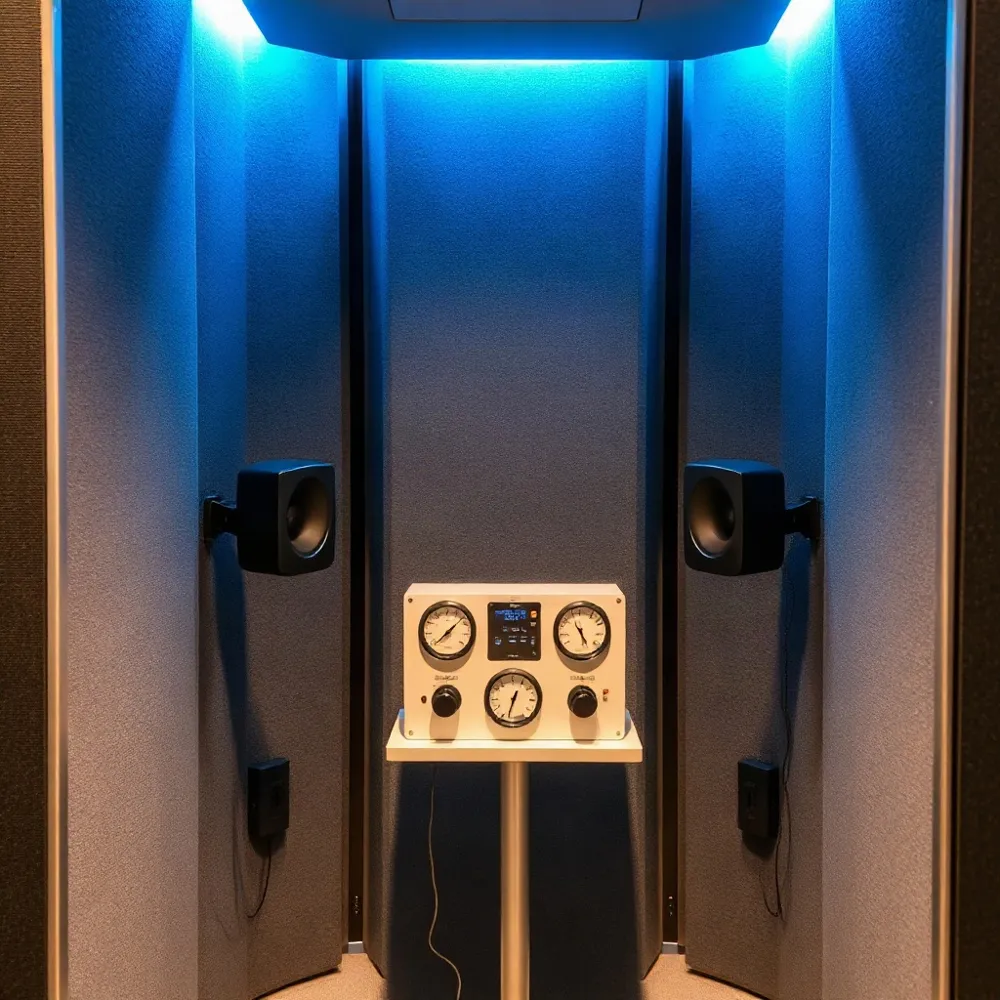
Among the most reliable tools is Auditory Steady-State Response (ASSR) testing, which measures the brain's electrical response to modulated tones across specific frequencies. Unlike traditional behavioral audiometry, which depends on the patient's active participation and honesty, ASSR can evaluate hearing thresholds even in difficult-to-test populations, including young children or individuals with cognitive impairments. This makes it a strong complement to standard testing in both clinical and forensic settings.
For claims under federal programs like the Longshore and Harbor Workers' Compensation Act (LHWCA) or the Defense Base Act (DBA), the need for objective verification is even greater. The Department of Labor's Schedule for Rating Permanent Impairments, Sixth Edition, requires assessment at 3,000 Hz, a frequency often affected by noise exposure. ASSR testing at 500Hz through 4000Hz, including that critical 3,000 Hz point, provides the kind of precise, evidence-based data that supports a credible impairment rating.
Scope. ASSR testing covers a broad frequency range, specifically 500Hz to 4000Hz, ensuring that the 3,000 Hz threshold required under the Sixth Edition is addressed. This breadth allows for a complete picture of auditory function rather than a limited snapshot.
Reliability. Objective methods like ASSR reduce the influence of patient effort or malingering. Because the measurements are derived from brainstem and cortical responses, they offer a level of objectivity that pure-tone audiometry alone cannot match, making them highly defensible in litigation.
Legal Weight. When paired with expert testimony, ASSR results meet the standards for scientific evidence under Daubert and Federal Rule of Evidence 702. The methodology is widely recognized in the audiology community, which bolsters its admissibility in both federal and state courts.
Our team at NorCal Medical Consulting incorporates ASSR testing as part of a comprehensive evaluation strategy, particularly for clients with occupational noise exposure or suspected auditory trauma. By aligning the testing protocol with OWCP and DOL requirements from the outset, we ensure that the evidence we produce not only documents the injury but also holds up under cross-examination.
Expert Testimony on Auditory Testing
Presenting auditory testing results in court is not simply about reading numbers. An expert witness must explain the methodology, interpret the findings in the context of the specific injury, and address any challenges to the testing's validity. This requires a blend of clinical knowledge and an ability to communicate complex audiometric concepts to a lay jury or judge.
The Daubert standard, which governs the admissibility of expert testimony in federal courts, requires that the expert's methods be reliable and generally accepted in their field. Daubert challenges to expert testimony often focus on whether the testing was performed correctly and whether the interpretation is supported by the evidence. Our experts are prepared to address these points directly, providing thorough documentation and clear explanations that withstand scrutiny.
In addition to testifying about the auditory results themselves, our physicians can explain the clinical significance of the findings. For example, a 20-decibel hearing loss at 3,000 Hz may be substantial for a worker exposed to loud machinery, even if it doesn't meet the typical threshold for a general hearing loss diagnosis. Understanding these nuances is critical for both claims adjusters and attorneys who need to establish the full extent of damages.
Practical Benefits for Claim Evaluation
For attorneys and claims professionals, engaging an expert who is well-versed in objective auditory testing can streamline the evaluation process. A thorough, well-documented auditory assessment can resolve disputes early, potentially avoiding costly and time-consuming litigation. It also provides a solid foundation for settlement negotiations, as the evidence is compelling and difficult to refute.
Consider a scenario where an injured worker claims severe hearing loss but has not undergone appropriate testing. A subjective evaluation alone might lead to under- or over-compensation. By using objective methods like ASSR, our team can provide a definitive assessment that aligns with the worker's actual condition, ensuring fair outcomes.
- ASSR testing provides objective data that is less susceptible to bias
- It covers frequencies relevant to occupational claims, including 3,000 Hz
- The results support admissibility under F.R.E. 702 and Daubert
- Expert testimony helps explain complex findings to a judge or jury
What Expert Witnesses Cost and Why It Matters
An expert witness in an auditory injury case is a qualified professional who helps judges and juries understand complex hearing science, audiological testing, and how occupational noise exposure caused a specific injury. Unlike a treating physician who simply reports findings, this expert interprets objective data, explains the mechanism of injury, and forms opinions that can make or break a claim under federal or state law.
In practice, the expert reviews medical records, analyzes auditory test results, and evaluates whether the injury is consistent with the alleged exposure or trauma. This often involves assessing whether hearing loss is sensorineural, conductive, or mixed, and whether it falls within the ranges compensable under standards like the Department of Labor's Sixth Edition Schedule for Rating Permanent Impairments.
Working With Expert Witnesses in Auditory Injury Claims
In contested auditory injury cases, the expert witness on the stand can determine whether a claim results in a six-figure settlement or a defense verdict. Juries and judges weigh medical opinions against the Daubert standard, which requires that expert testimony be both relevant and reliable. For a 2026 guide to the standard, see this overview of the Daubert Standard.
Competent expert witnesses must demonstrate specific qualifications under Federal Rule of Evidence 702, including relevant education, training, and professional experience. Courts also scrutinize the methodology used to reach an opinion, as outlined in the Daubert Standard on Wex and discussed in this legal overview.
The Role of the Auditory Expert Witness
An auditory expert witness evaluates the nature and extent of hearing loss and links it to a workplace injury or toxic exposure. This involves reviewing medical records, conducting objective tests, and producing a written report that withstands cross-examination. For a detailed look at the scope of this work, review how audiologists provide expert testimony in legal cases.
Our team at NorCal Medical Consulting pairs board-certified physicians with expertise in occupational hearing loss, including the Auditory Steady-State Response (ASSR) testing at 500Hz–4000Hz, which meets the Department of Labor's Schedule for Rating Permanent Impairments, Sixth Edition. We ensure that every report aligns with OWCP documentation standards from the outset, saving you time and reducing the risk of Daubert challenges.
Quantifying Damages in Hearing Loss Claims
Expert witnesses are essential for accurately valuing economic and non-economic damages, such as past medical expenses, future audiological care, and loss of earning capacity. In a personal injury case, the expert's testimony often determines the jury's award. The American Bar Association's expert witness page explains how courts evaluate expert opinions, and this resource on expert witnesses in personal injury cases details the types of damages that require specialized testimony.
In federal claims under the Longshore and Harbor Workers' Compensation Act (LHWCA) and the Defense Base Act (DBA), the stakes are particularly high because these claims often involve long-term disability benefits. NorCal Medical Consulting has specialized experience in these federal statutes, providing impartial findings that hold up under Daubert and Rule 702 scrutiny. Our written reports and expert testimony are designed to withstand the most rigorous cross-examination, as outlined in this guide to expert witness roles in legal claims.
The Impact of Credible Testimony
A well-qualified expert witness can move a case from arbitration to trial or convince an adjuster to tender policy limits during negotiations. In auditory injury cases, where subjective symptoms are common, objective testing provides the evidence needed to support a claim. The importance of objective auditory testing in legal proceedings cannot be overstated, as it forms the foundation of a credible medical opinion.
For claims involving workplace trauma or toxic exposure, expert testimony also addresses causation and the permanency of the injury. Our team at NorCal Medical Consulting works with both plaintiff and defense attorneys, providing expert witness services that include file review, deposition preparation, and trial testimony. For a comprehensive list of benefits, see the benefits of expert witness services in injury cases.
Why NorCal Medical Consulting Stands Out
In contrast to expert witnesses who lack direct clinical experience, our physicians are actively practicing audiologists and ENT specialists. This hands-on experience allows us to testify with authority on the latest diagnostic techniques and treatment protocols. We also understand the nuances of the Daubert standard for expert witnesses, ensuring that our testimony is admitted and persuasive.
Causation. Our reports clearly link the auditory injury to the specific workplace event or exposure, satisfying the legal requirement of medical certainty.
Permanency. We use objective tests, including ASSR, to document the permanent nature of the hearing loss, which is critical for calculating future damages.
Future Care. We provide detailed cost projections for ongoing audiological care, hearing aids, and potential vocational rehabilitation, helping juries award appropriate compensation.
Admissibility. Our expert reports and testimony are meticulously prepared to pass the Daubert standard and Rule 702, reducing the risk of exclusion.
The Financial Impact of an Expert Witness
In a case where an injured worker faces a lifetime of hearing loss, the difference between a $50,000 settlement and a $500,000 award often hinges on the quality of the expert testimony. Our team at NorCal Medical Consulting has been involved in cases where objective auditory testing was the deciding factor. For more information on how we can support your case, contact our team to schedule a case review.
Preparing for Trial and Deposition
When a case proceeds to trial, our experts are prepared to defend their opinions under cross-examination. We provide expert witness services that stand up in court, including visual aids and simplified explanations for juries. We also work directly with attorneys to ensure that deposition questions are phrased to elicit testimony that supports the claim.
Whether you are an adjuster evaluating a claim or an attorney preparing for trial, the credibility of your expert witness is paramount. NorCal Medical Consulting provides the expertise and thoroughness needed to…