Medical Record Reviews: The Foundation of Insurance Settlement Decisions
A medical record review is the systematic evaluation of a patient's health documentation to support insurance claims processing — determining coverage, verifying injury claims, and establishing the basis for settlement decisions. This process sits at the intersection of clinical data, legal authorization, and insurance decision-making.
This article explains how medical record reviews drive settlement outcomes and offers practical guidance for navigating the process to achieve faster, fairer resolutions.
What Does It Mean When a Claim Is in Review?
 When an insurance claim is in review, the insurer is evaluating it against policy terms, coverage limits, and contractual obligations before issuing a decision. This means the adjuster is assessing the claimed loss, checking applicable exclusions, and verifying that your documentation meets proof-of-loss requirements.
A standard review typically takes 30 to 60 days from submission. A prolonged review — especially one that stretches beyond that window with only vague status updates — may signal that the insurer is building a case for denial or stalling to pressure you into a lower settlement. Some states impose specific deadlines: insurers must acknowledge a claim within 15 to 30 days, complete an investigation within 30 to 45 days, and issue a payment decision within 30 to 60 days of receiving medical records.
Incomplete submissions are the most common cause of avoidable delay. Missing records, illegible handwriting, or disorganized files force the adjuster to send multiple requests for additional information, resetting the review clock each time. Submitting a complete, chronologically organized set of records — including treatment history, physician notes linking injuries to the accident, diagnostic results, and billing statements — helps the claim move through this stage faster. An organized record set also gives our team at NorCal Medical Consulting a clearer starting point when we perform a case review and consultation.
If the review extends past 60 days without a clear timeline or specific document requests, escalation may be warranted. Request a written status update, cite any applicable state deadlines, and, if the delay appears tactical, consider filing a complaint with the state insurance commissioner or pursuing a bad-faith claim. An independent medical evaluation can also help by providing objective documentation that forces the adjuster's hand — or supports a denial appeal if the claim is ultimately rejected.
Who Conducts Claims Medical Review?
 Claims medical review is conducted by a mix of in-house insurer medical staff, third-party medical consulting practices, and outsourced independent review organizations. The reviewer's qualifications directly affect the strength and defensibility of the final determination.
Our team at NorCal Medical Consulting performs Independent Medical Evaluations (IMEs) and chart-based case reviews for workplace injury and occupational hearing loss claims. For federal claims under the Longshore and Harbor Workers' Compensation Act (LHWCA) and the Defense Base Act (DBA), our physicians align documentation with OWCP standards from the start and conduct specialized auditory loss evaluations using Auditory Steady-State Response testing at 500Hz–4000Hz, including the 3,000 Hz frequency required under the Sixth Edition of the Department of Labor's Schedule for Rating Permanent Impairments.
Our reports are built to withstand the Daubert standard and Federal Rule of Evidence 702. AI-powered platforms can assist with chronologies, deduplication, and billing summaries, but they cannot replace the clinical judgment of a board-certified physician. Only a qualified medical expert can author a defensible report on causation, standard of care, and prognosis.
The Five-Step Structured Review Process
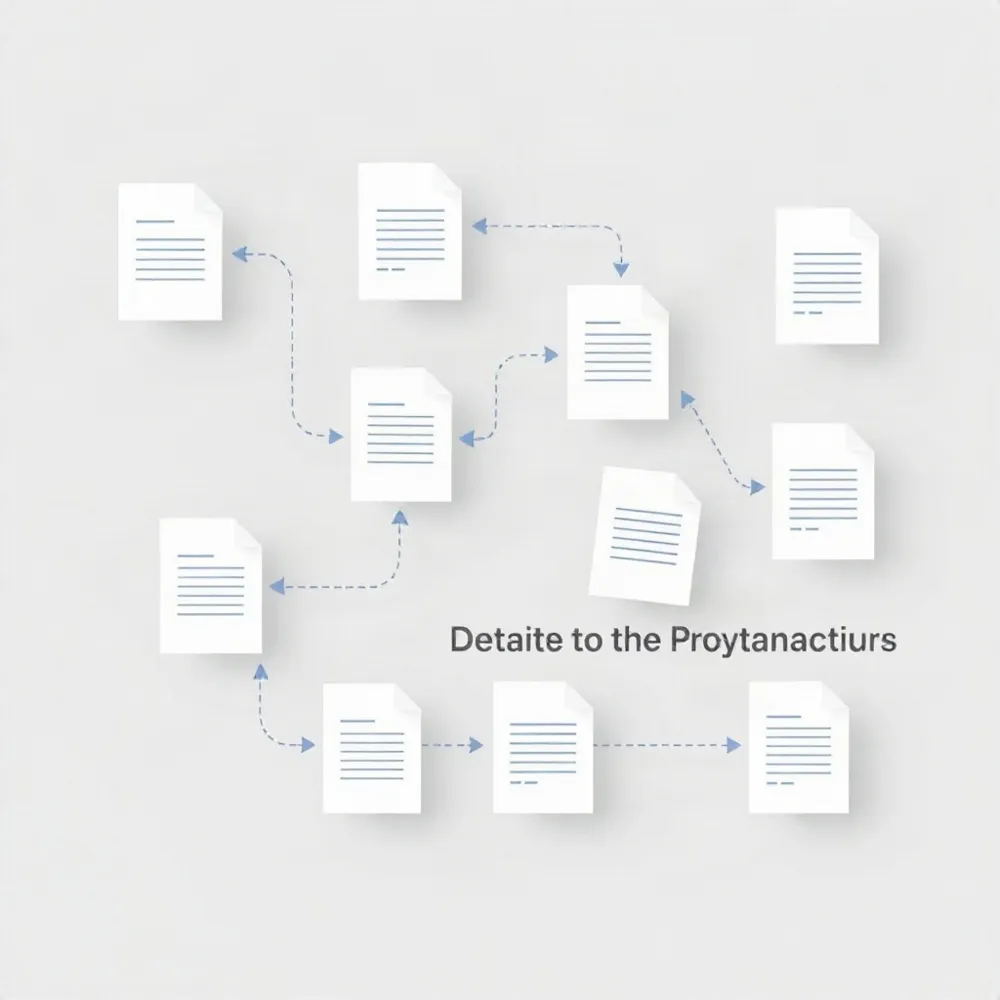 A structured five-step process — deduplication, medical record indexing, chronological sorting, summarization, and hyperlinking — turns raw, often chaotic medical records into an organized, defensible foundation for claim decisions. Each step directly improves accuracy and efficiency, giving adjusters and attorneys a clear picture of the case without wading through thousands of redundant pages.
Deduplication. The first step is identifying and removing duplicate records that accumulate when multiple providers — a primary care physician, a specialist, a hospital — submit overlapping documents. Deduplication lets reviewers focus on unique information rather than re-reading the same clinic note five times.
Medical Record Indexing. After deduplication, the remaining documents are categorized into logical sections: doctor's notes, imaging reports, surgical history, medication logs, and billing statements. Indexing gives anyone opening the file a clear map of where to find specific clinical information.
Chronological Sorting. Every document is then placed into a timeline of medical events. In insurance and legal cases, the sequence of care can either strengthen or weaken a claim — a delayed diagnosis or a gap in treatment becomes obvious only when records are presented in chronological order.
Summarization. The most critical information — diagnoses, treatments, outcomes — is distilled from hundreds or thousands of pages into concise summaries. Decision-makers such as claims adjusters, attorneys, and physicians can then grasp the case's substance without sacrificing accuracy.
Hyperlinking. Finally, links are embedded within the summary or indexed sections so that a click takes the reviewer directly to the supporting record — a specific physician note, a diagnostic test, or an operative report. Hyperlinking makes the structured file fully navigable.
This structured process is what separates a manageable claim file from an overwhelming stack of paper. By following these five steps, our team at NorCal Medical Consulting produces organized, court-ready case materials that align with OWCP standards under the Longshore Act and Defense Base Act. The same workflow supports settlement negotiations by giving both sides a verified timeline and causation analysis they can rely on, and prepares experts with a completely indexed, referenced record set for deposition or trial.
For a deeper look at how each of these steps functions in a real claim workflow, including the best practices for deduplication and indexing that help adjusters review records faster, consult the full process guide. When records arrive organized — deduplicated, indexed, sorted, summarized, and hyperlinked — the reviewer can focus on substance rather than data wrangling.
Timelines: How Long Do Adjusters Have to Review Records?
There is no single federal deadline that dictates how long you, as an adjuster, have to review medical records. The timeframe depends on the jurisdiction, the type of claim (state workers' compensation, LHWCA / Defense Base Act, or general liability), and the specific insurance contract or state regulations.
For claims under the Longshore and Harbor Workers' Compensation Act and the Defense Base Act, you must comply with OWCP standards requiring timely decisions based on complete medical evidence. For state workers' compensation claims, you often have statutory deadlines ranging from 14 to 30 days to accept or deny after receiving sufficient records. Under general liability, no fixed period exists, but you may challenge unreasonable delays through bad-faith statutes.
Several factors affect review speed: the volume and complexity of medical records, your workload, requests for additional information, and whether an Independent Medical Evaluation is ordered. When you request an IME, the review clock typically resets or pauses until those records are received.
Submitting complete, well-organized records from the start can help expedite the process. A medical chronology (MedChron) that displays treatment history in clear order allows you to review more efficiently. Including detailed physician notes that directly link injuries to the accident, along with diagnostic results and billing statements, reduces the likelihood that you will need to request additional information and helps move the claim toward a timely decision.
Settlement Timeline and the Role of Medical Evidence
From the time a demand package lands on an adjuster's desk, most standard claims see an initial settlement offer within about 30 days. But getting to that point takes much longer. Before a demand letter can be drafted, your legal team must wait for complete medical records and billing — a process that typically requires 45 to 60 days after treatment ends.
Attorneys then need time to analyze those records, spot causation links, and quantify damages before assembling a demand letter. At this stage, the quality of the underlying medical record review directly shapes both the strength of the demand and the speed of the adjuster's response. Submitting a clear, organized medical chronology lets the adjuster verify facts faster and can reduce the 30-day review window.
Under federal claims governed by the Longshore and Harbor Workers' Compensation Act (LHWCA) or the Defense Base Act, timelines shift due to specific OWCP documentation requirements and benefit payment schedules. Once an offer arrives, negotiations can stretch weeks or months depending on injury complexity, evidence strength, and liability acceptance.
Our team at NorCal Medical Consulting produces evidence-based reports structured from the outset to align with federal and state standards, helping move claims through review faster. By organizing records chronologically, flagging causation evidence, and summarizing findings plainly, our physicians give adjusters the verified information they need to make decisions earlier in the timeline.
Documentation Standards: The 5 C's and the Golden Rule
The golden rule in medical record documentation is simple: if it was not documented, it was not done. This principle is the standard auditors, payers, and courts apply — any service or finding absent from the chart is presumed not to have occurred, regardless of whether it actually took place. Proper records must be completed at the time of service, not reconstructed later.
The 5 C's of medical record entries give providers and reviewers a framework for defensible documentation:
- Clarity — Use accepted medical terminology, standard abbreviations, and proper grammar so the record is unambiguous.
- Conciseness — Keep notes brief and to the point, avoiding lengthy irrelevant descriptions that clutter the file.
- Completeness — Document all findings, diagnoses, and treatment plans at the time of the visit with no gaps between entries.
- Confidentiality — Protect all patient information per HIPAA standards; this is non-negotiable in any claims or legal setting.
- Credibility and chronological accuracy — An accurate timeline of events supports causation analysis and withstands cross-examination.
When our team at NorCal Medical Consulting prepares case reviews for LHWCA, DBA, or state workers' compensation claims, this standard is non-negotiable. Thorough, contemporaneous documentation is what makes a record defensible under Daubert scrutiny and cross-examination. Without it, even the strongest clinical findings can lose their evidentiary weight.
Common Challenges and How to Overcome Them
Medical record reviews are rarely straightforward. The volume, complexity, multi-format data, and inconsistencies across provider notes create substantial obstacles that can delay settlements and weaken case positions if not handled correctly.
Records can span years and multiple healthcare systems, arriving as dense PDFs, scanned handwritten notes, multi-column lab reports, and medication tables. Standard OCR tools often struggle with this variety, forcing reviewers to manually sift through thousands of pages. Red flags — such as conflicting diagnoses, gaps in care, or billing for services not reflected in clinical notes — are easy to miss in this chaos.
Missing records compound the problem. When key documents are not provided, adjusters and attorneys cannot build a complete timeline, and causation arguments weaken. In workers' compensation and personal injury cases, an incomplete record set can trigger requests for additional information that stretch review timelines from 30 days to 60 or 90 days.
Practical strategies address these challenges directly. Organizing records into a clear medical chronology (MedChron) allows reviewers to spot inconsistencies and gaps at a glance. Using professional chronology services improves accuracy and saves time, especially in voluminous cases. Our team at NorCal Medical Consulting applies these methods alongside Case Review & Consultation Services — we index, chronologically sort, and summarize records to isolate the medically relevant data before delivering an independent evaluation.
AI tools add another layer of efficiency. Platforms such as Wisedocs and InPractice can process thousands of pages in minutes, flag key medical events, and allow filtering by provider or body part. These tools automate deduplication and early chronology creation, freeing reviewers to focus on clinical analysis. Rather than replacing human judgment, AI acts as a supportive tool that helps teams complete tasks more accurately and swiftly.
Consulting medical experts — such as our physicians — ensures that unfamiliar clinical jargon, ambiguous abbreviations, and causation links are interpreted correctly. Expert consultation strengthens case theories and prepares attorneys for deposition or trial by flagging issues before they become surprises.
By combining structured organization, professional review services, and AI-assisted sorting, claims professionals can turn record chaos into a clear, defensible foundation for settlement decisions.
What Scares Insurance Adjusters?
Insurance adjusters are most concerned by well-documented claims supported by concrete medical evidence and expert opinions. This removes their ability to minimize payouts through subjective interpretation.
When injured workers or their attorneys present thorough medical records, diagnostic imaging, and independent medical evaluations from qualified providers, adjusters lose the leverage to offer lowball settlements based on incomplete information.
The presence of experienced legal counsel also raises the stakes significantly, signaling that the claim will be pursued aggressively through litigation if necessary.
Adjusters also fear claimants who clearly understand the full value of their damages — including future medical costs and lost earning capacity — rather than accepting quick, inadequate offers.
In federal claims under the LHWCA or Defense Base Act, adjusters are particularly wary of reports that align with OWCP standards from the outset and are built to withstand Daubert challenges. NorCal Medical Consulting prepares its written reports with the Daubert standard and Federal Rule of Evidence 702 in mind, providing an independent, evidence-based foundation that leaves little room for dispute.
A well-structured demand letter highlighting key medical evidence can accelerate the review process and strengthen settlement negotiations. Submitting complete and organized records — including a clear medical chronology — allows adjusters to review them more efficiently and reduces their ability to delay based on missing or disorganized documentation.
Key Pitfalls: What Not to Say to a Claim Adjuster
One careless sentence can derail weeks of careful documentation. Adjusters are trained to listen for language that shifts blame, minimizes damages, or contradicts the medical record. Knowing what not to say is as important as knowing what evidence to present.
Never apologize or admit fault. Saying "I'm sorry" or "I didn't see them" can be treated as an admission under comparative negligence rules, reducing your claim value even if you were not at fault. Stick to the facts of what happened without assigning blame.
Avoid downplaying your injuries. Saying "I'm fine" or "It's nothing serious" may feel polite in conversation, but many conditions — soft tissue damage, concussions, delayed-onset pain — appear days later. An adjuster can use that early statement to argue that your later complaints are unrelated to the incident.
Do not guess or speculate about accident details. Phrases like "I think I was going 35" become a credibility problem if evidence later shows a different speed. If you do not know the answer, say so. Guessing creates contradictions that weaken your position.
Never offer a diagnosis without medical backup. Let your physicians document your conditions. Simply state that you are still being evaluated. If asked about specific symptoms, describe what you feel — pain, stiffness, limited motion — without labeling it.
Do not agree to a recorded statement without consulting legal counsel first. A recorded statement locks in your words permanently. Any misspeaking, hesitation, or correction can be replayed months later at deposition or trial. Let your attorney decide whether and when a statement is appropriate.
Our team at NorCal Medical Consulting works with attorneys and adjusters to ensure medical documentation tells an accurate, defensible story — so that what you say and what the records show align from the start. When the records are clean, the conversation is simpler.
Turn Medical Records Into a Settlement Advantage
A strategic, well-organized medical record review turns raw documentation into leverage. It accelerates settlements by giving adjusters and attorneys a clear, defensible foundation for case valuation.
Partnering with a qualified medical-legal consulting practice like NorCal Medical Consulting ensures your documentation meets the Daubert standard and Federal Rule of Evidence 702 from the start. Our physicians provide independent, evidence-based IMEs and chart reviews built to withstand scrutiny.
Contact NorCal Medical Consulting today to turn your medical records into a settlement advantage.