An Objective Estimate, Not a Claim Decision
Auditory steady-state response (ASSR) testing estimates hearing thresholds by recording electrical responses to sound, rather than relying on a patient’s spoken or behavioral response. It can add objective, frequency-specific information when adjusters, attorneys, and injured workers review an occupational hearing-loss claim.
ASSR is evidence about estimated hearing sensitivity, not a decision about why hearing loss occurred or whether work caused it. A 2009 study found that ASSR estimates tracked pure-tone thresholds in adults with sensorineural hearing loss, but its participants were not compensation claimants, and the study did not test 3,000 Hz the study’s findings.
The result alone does not establish an impairment rating, entitlement to benefits, or the legal merits of a claim. NorCal Medical Consulting conducts ASSR evaluations from 500 Hz through 4,000 Hz, including 3,000 Hz, alongside broader medical-legal review. Interpret the findings with the full audiologic and exposure record.
How ASSR Measures Hearing Thresholds
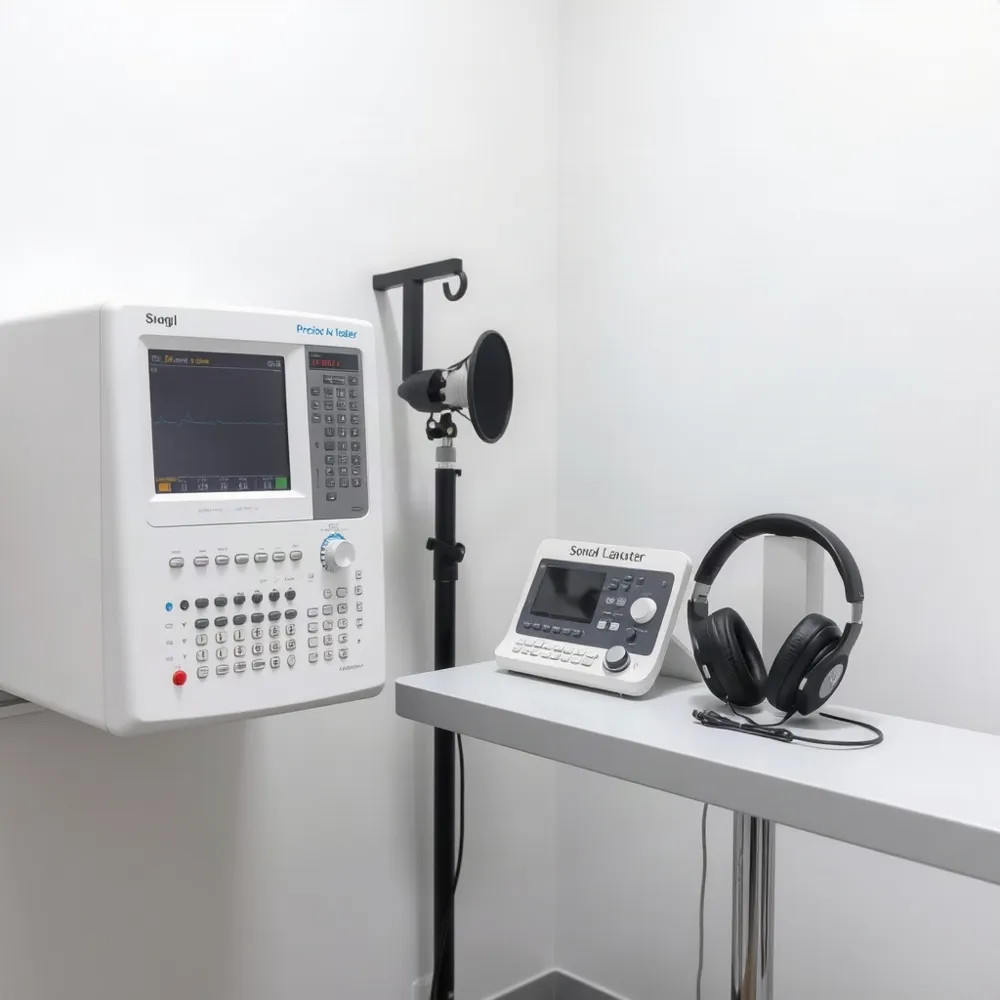 An auditory steady-state response (ASSR) test estimates hearing thresholds by recording the auditory system’s electrical responses to sound. Tones are delivered through earphones while small electrodes placed on the scalp record responses; automated analysis looks for patterns that repeat in step with the regularly modulated tones.
Common carrier frequencies are 500, 1,000, 2,000, and 4,000 Hz. Depending on the equipment and protocol, an evaluation can test several frequencies in both ears. NorCal Medical Consulting conducts specialized ASSR evaluations across 500–4,000 Hz, including 3,000 Hz, which is required under the Sixth Edition of the Department of Labor’s Schedule for Rating Permanent Impairments.
ASSR analyzes response activity in the frequency domain, while auditory brainstem response (ABR) assessment examines waveforms over time. These methods produce different forms of evidence, and neither result alone substitutes for a complete hearing evaluation. A 2009 comparison of ASSR and ABR found that ASSR estimates tracked pure-tone thresholds in the adults studied, but participants were not compensation claimants.
ASSR estimates are not identical to behavioral audiometric thresholds. Equipment, stimulus and recording settings, correction factors, and patient circumstances can affect results, and protocols do not follow one universal standard. For that reason, our physicians interpret the estimate alongside other test findings and document how the threshold was obtained. For a closer look at the testing method, see how ASSR measures hearing thresholds.
What the Evidence Can Support
ASSR can add objective, frequency-specific threshold estimates to an occupational hearing-loss evaluation, but it cannot decide the claim. The evaluator should compare the estimates with behavioral audiometry, medical records, exposure history, and other relevant evidence, while considering the test protocol, equipment, reliability information, and any correction factors.
A prospective 2009 study by Lin, Ho, and Wu examined 142 adults with sensorineural hearing loss, or 284 ears. Participants received testing at 500, 1,000, 2,000, and 4,000 Hz, with pure-tone audiometry serving as the behavioral reference. ASSR estimates were within 15 dB of pure-tone thresholds in 71% of cases and within 25 dB in 89%; correlations ranged from 0.89 at 500 Hz to 0.97 at 4,000 Hz. ABR showed weaker agreement in this sample, as reported in the study. These results describe the studied group, not guaranteed accuracy for an individual.
The participants were hospital outpatients, not compensation claimants. The study did not test 3,000 Hz, and it does not validate ASSR as a standalone tool for claimants or show that a claimant is exaggerating. For a discussion of the study’s limits and how its findings fit an evaluation, see what the evidence can support.
NorCal Medical Consulting evaluates ASSR thresholds from 500 Hz through 4,000 Hz, including 3,000 Hz, alongside the broader clinical and claim record. ASSR estimates are not automatically interchangeable with behavioral audiogram results, and they do not independently establish causation, an impairment percentage, or entitlement to benefits.
The Schedule Determines Required Frequencies
 An ASSR evaluation may include 3,000 Hz because the U.S. Department of Labor’s Sixth Edition of the Schedule for Rating Permanent Impairments includes that frequency in its federal hearing-loss methodology, alongside 500, 1,000, and 2,000 Hz. Confirm the schedule that governs the claim before deciding which thresholds to obtain. The 3,000 Hz point in hearing-loss evaluation explains why schedule-specific requirements matter.
Frequency-specific testing supplies threshold estimates; the schedule’s method determines how those findings enter an impairment calculation. An ASSR threshold at a required frequency does not independently establish the final rating. NorCal Medical Consulting conducts ASSR evaluations from 500 Hz through 4,000 Hz, including 3,000 Hz, to provide frequency-specific data for review under the applicable schedule.
Published descriptions of common ASSR testing typically list 500, 1,000, 2,000, and 4,000 Hz. The 2009 comparison study tested those four frequencies, and the Hearing Review overview describes the same common set. Neither supports a conclusion about ASSR accuracy at 3,000 Hz.
For a federal evaluation, verify the governing schedule and document the method and results at each required frequency. Keep the threshold estimates distinct from the calculation and explain how the findings were applied.
Building a Complete Federal Hearing Record
 Federal hearing impairment evaluations follow the program and rating standard that apply to the claim. For a Longshore and Harbor Workers’ Compensation Act (LHWCA) claim, the medical record should provide the findings needed to apply the relevant U.S. Department of Labor schedule, rather than assume that one federal system’s method governs every case.
A useful record brings the test results together with the claimant’s prior and current audiograms, work and noise-exposure history, treatment, and relevant medical history. The report should identify the testing methods, describe the hearing-loss pattern, address consistency across results, and explain the medical basis for any opinion about work-relatedness, including other possible causes.
Federal hearing-loss guidance issued in 2016 calls for audiologic and otologic information, exposure and medical history, and documentation of testing, with discrepancies addressed. That guidance does not discuss ASSR or establish it as a replacement for audiometry. NorCal Medical Consulting conducts ASSR evaluations across 500 Hz to 4,000 Hz, including 3,000 Hz, and can place those findings within a broader medical-legal record.
An injured worker can expect the evaluator to review relevant records, discuss symptoms, treatment, work history and noise exposure, and perform hearing-specific testing or examination. The evaluator compares the findings with the applicable rating criteria. Bring requested records and describe exposure and symptoms accurately; the written report should explain how the findings support its rating.
The 2016 guidance is specific to federal claims and should not be treated as a universal rule for every program. For an LHWCA file, our physicians can review the audiologic evidence alongside exposure and medical records and explain how the findings relate to the applicable schedule.
A medical impairment rating is evidence, not a decision about work capacity, benefit eligibility, or claim value. Those questions depend on the applicable law and the full claim record, not the rating alone.
For related discussion of the documentation used in occupational hearing evaluations.
Claim Value and Maritime Coverage Are Separate Questions
There is no single average payout that reliably predicts the value of a hearing-loss claim. The governing law, supported permanent loss, benefit rates, statutory limits, and claim-specific facts all matter. An impairment evaluation provides medical evidence, but it does not set the award.
Under the [Longshore and Harbor Workers’ Compensation Act (LHWCA)](https://www.dol.gov/agencies/oalj/PUBLIC/LONGSHORE/REFERENCES/REFERENCE_WORKS/2002_LHWCA_TOPIC_813), permanent hearing loss may qualify for scheduled benefits. The calculation depends on the measured loss and applicable compensation rate; covered medical care may also be relevant. NorCal Medical Consulting’s ASSR evaluations can contribute threshold evidence, while exposure history, prior records, and benefit rules remain part of the claim review. See how claim value and maritime coverage differ.
The LHWCA generally provides no-fault compensation for eligible maritime workers who are not covered as seamen under the Jones Act. A qualifying seaman may instead bring an employer-negligence suit under the Jones Act. Seaman status and LHWCA coverage involve different work, vessel-connection, and injury-location considerations, so counsel and claims professionals should assess employment status and circumstances before selecting a framework.
Use ASSR as Part of the Record
ASSR can add objective, frequency-specific threshold estimates, but it does not establish exaggeration, replace required audiometry, or decide causation, impairment ratings, or benefits. A 2009 study found agreement with pure-tone thresholds in adults with sensorineural hearing loss, but its participants were not compensation claimants (study findings.
For a federal claim, NorCal Medical Consulting evaluates ASSR from 500 Hz to 4,000 Hz, including 3,000 Hz, alongside the applicable schedule and the broader record. Adjusters, attorneys, and injured workers should confirm the governing schedule, required frequencies, test protocol, and supporting audiologic and exposure evidence.