Start With the Applicable Rating Rules
When the governing federal schedule calls for a 3,000 Hz result, omitting that frequency can leave a hearing evaluation incomplete or harder to verify. Confirm the schedule and claim requirements before testing or rating, rather than assuming that a general audiogram answers every legal question.
Different standards serve different purposes. OSHA’s hearing-conservation criteria assess workplace noise effects and define a Standard Threshold Shift using thresholds at 2,000, 3,000, and 4,000 Hz; that surveillance rule is not an impairment-rating formula (OSHA Technical Manual). Clinical guidance addresses diagnosis, while a compensation schedule governs the rating method.
The available OSHA, ASHA, and AMA materials support careful frequency-specific assessment, but do not establish the Department of Labor Sixth Edition’s specific testing requirement or rating formula. ASHA notes that additional frequencies, including 3,000 Hz, can help characterize hearing for diagnostic purposes (ASHA adult hearing-loss guidance. For federal claims, NorCal Medical Consulting’s auditory evaluations cover 500 Hz through 4,000 Hz, including 3,000 Hz; verify the applicable schedule and claim instructions before drawing rating conclusions.
What a Permanent Hearing Rating Measures
 A permanent impairment rating for occupational hearing loss estimates lasting hearing-function loss after the condition has stabilized. It may draw on audiometric thresholds and, where appropriate, speech-discrimination findings, but an audiogram alone does not establish work-relatedness or determine benefits.
The medical assessment and the compensation decision function as separate steps. A physician describes the impairment under the authority that applies to the claim; the governing statute or claims system determines how that assessment affects benefits. NorCal Medical Consulting provides independent evaluations and written reports for federal Longshore and Defense Base Act claims, documenting the findings without treating a medical rating as a benefits determination.
The American Medical Association identifies the AMA Guides to the Evaluation of Permanent Impairment, Sixth Edition, 2025 as its current Sixth Edition version, posted December 2, 2025. The update includes minor revisions to Chapter 11, covering the ear, nose, throat, and related structures. Evaluators using that chapter should consult the current materials, while recognizing that the AMA Guides do not automatically govern every claim. The AMA’s 2025 update advises checking jurisdictional requirements.
For a federal hearing-loss claim, confirm the applicable Department of Labor schedule rather than assuming the AMA Guides and the DOL schedule are interchangeable. The available sources here do not provide the DOL Sixth Edition’s rating formula. Our physicians can review audiometric records and identify the basis and limits of an impairment assessment; permanent impairment ratings likewise require their own analysis apart from causation and benefit decisions.
Why 3,000 Hz Adds Useful Information
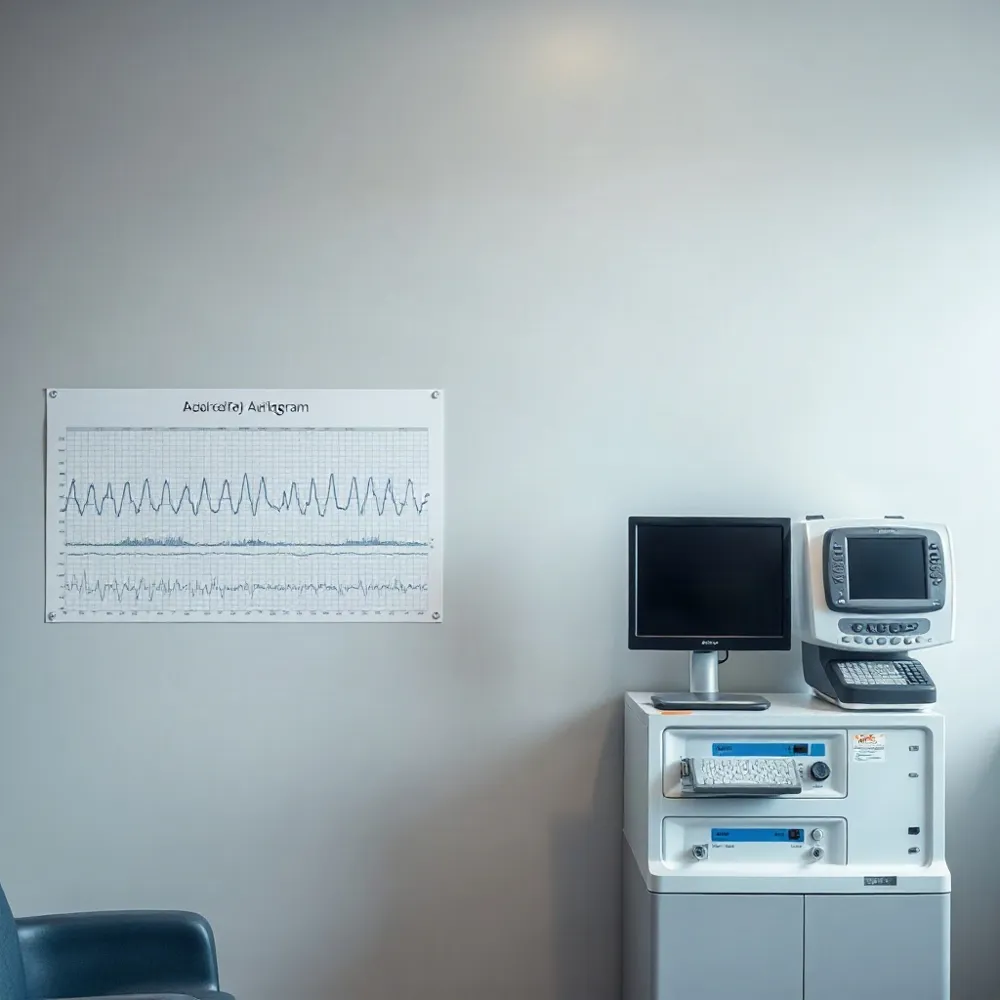 A 3,000 Hz threshold helps show how hearing sensitivity changes across frequencies, adding clinical detail to an audiogram. The American Speech-Language-Hearing Association’s adult hearing-loss guidance says that including 3,000 Hz and 6,000 Hz in routine air-conduction testing may provide a more complete diagnostic profile.
Noise-related hearing loss often first affects high-frequency sensitivity. OSHA describes a characteristic audiometric notch between 3,000 and 6,000 Hz, most often at 4,000 Hz, and identifies the regions detecting 3,000 to 4,000 Hz as among the earliest affected by noise exposure (OSHA Technical Manual).
That pattern is a clinical clue, not proof that workplace noise caused a particular person’s loss. Age-related hearing changes can affect the upper frequencies too, and other medical causes may contribute. Evaluators should consider exposure history, prior audiograms, alternative causes, and whether the test results are reliable.
For a federal claim, first confirm the governing schedule’s exact testing and rating requirements. The clinical sources above explain why 3,000 Hz can inform a diagnostic profile, but they do not establish the Department of Labor Sixth Edition’s specific rule or weighting. NorCal Medical Consulting conducts auditory evaluations using ASSR across 500 Hz to 4,000 Hz, including 3,000 Hz, and documents findings for federal Longshore and Defense Base Act reviews.
If the applicable schedule requires a 3,000 Hz result, including it helps make the rating record verifiable. The measurement documents hearing sensitivity at that frequency; it does not, by itself, establish occupational causation or determine compensation.
Read Audiograms in Their Full Context
 An audiogram records the quietest sounds a person detects at tested frequencies, with frequency plotted against sound intensity. Thresholds help describe the degree and configuration of hearing loss, but they do not establish its cause by themselves.
For an occupational claim, compare available audiograms over time and review them alongside exposure history, prior hearing conditions, medical records, age, test conditions, and the reliability of the results. As discussed in our guide to reading audiogram findings, the pattern needs clinical and case context before it can support conclusions about causation.
Noise-related hearing loss is generally sensorineural and may first affect high-frequency thresholds. OSHA describes a characteristic notch that can appear between 3,000 and 6,000 Hz, but a similar high-frequency pattern is not proof of workplace causation. Age-related hearing loss and noise-related loss may occur together, and OSHA also identifies viruses, congenital conditions, and some medications as possible causes of sensorineural loss (OSHA Technical Manual.
When behavioral testing is unreliable, ear-specific thresholds cannot be obtained, or findings remain unclear, ASHA’s adult hearing-loss guidance describes Auditory Steady-State Response (ASSR) as an objective method for estimating frequency-specific behavioral thresholds. That guidance does not establish ASSR as required under a Department of Labor rating schedule.
For relevant federal claims, NorCal Medical Consulting’s auditory evaluations use ASSR across 500 to 4,000 Hz, including 3,000 Hz. The findings should still be considered with the full record, rather than treated as a standalone answer about occupational causation.
Keep OSHA Surveillance Separate From Ratings
An OSHA Standard Threshold Shift (STS) identifies a change from a worker’s baseline audiogram for hearing-conservation purposes. It is not a DOL impairment rating, and an STS alone does not establish that workplace noise caused the change.
Under OSHA’s general-industry standard, an STS is an average threshold change of at least 10 dB at 2,000, 3,000, and 4,000 Hz in either ear compared with that ear’s baseline. Assess each ear separately. The standard’s age-correction procedure may apply; follow its requirements when evaluating the shift.
OSHA’s hearing-conservation guidance explains this surveillance measure. For related workplace documentation, see OSHA surveillance and noise exposure.
Recordability is a separate test. Under 29 CFR 1904.10, a case is recordable when a work-related STS occurs in an ear and that ear’s overall hearing level is at least 25 dB above audiometric zero, averaged at the same three frequencies. The case must meet both conditions. Assess work-relatedness under 29 CFR 1904.5, applying the relevant age-correction rules.
Do not carry OSHA’s three-frequency comparison over as the DOL Sixth Edition rating method. They serve different purposes, so reports should identify which rule each calculation addresses. NorCal Medical Consulting’s federal claim evaluations can document auditory findings within the applicable Longshore and Defense Base Act framework, rather than treating an OSHA surveillance result as a compensation rating.
Exposure Context Matters to the Evaluation
Hazardous noise depends on both sound level and exposure duration. Under OSHA’s general-industry standard, the permissible exposure limit is 90 dBA over an eight-hour time-weighted average (TWA), while hearing-conservation enrollment begins at 85 dBA over eight hours. These are separate thresholds, and an employee may require program coverage without reaching the permissible exposure limit.
At higher sound levels, allowable exposure time falls. A single sound-level reading cannot establish a worker’s full exposure history; repeated or impulsive noise, the length and pattern of exposure, and the standard used to assess it all matter. OSHA’s noise exposure guidance provides context for evaluating occupational noise hazards.
Under 29 CFR 1910.95, covered general-industry employees exposed at or above an 85 dBA eight-hour TWA must receive a baseline audiogram and annual audiograms. Audiometry tracks hearing changes and helps assess the effectiveness of the hearing-conservation program; the test itself does not prevent hearing loss. Construction and mining have separate requirements.
For a claim evaluation, our team considers audiometric findings alongside the documented exposure pattern and relevant alternative or contributing causes. The hearing test informs the analysis, but it does not establish occupational causation on its own.
Verify the Governing Schedule Before Rating
Before relying on a hearing-loss rating, identify the claim system and confirm the instructions that govern it. Adjusters, attorneys, and injured workers should check whether the report includes the required frequencies and testing methods, rather than assuming that one schedule applies across every claim.
OSHA’s Standard Threshold Shift criteria address workplace surveillance, while clinical guidance helps characterize hearing and testing. Neither establishes the Department of Labor’s Sixth Edition rating formula. The OSHA STS rule, the AMA Guides, and state rating rules are not interchangeable with federal schedule requirements.
For relevant federal claims, NorCal Medical Consulting performs ASSR evaluations across 500 Hz to 4,000 Hz, including 3,000 Hz. That describes the practice’s testing services, not proof that a regulation mandates a particular method; verify the applicable instructions for the claim before drawing that conclusion.