Why Standard Hearing Tests Fail to Capture Full Occupational Injury
Routine hearing screenings often provide a deceptive sense of security in workplace injury claims. While these brief tests are adequate for preliminary monitoring, they lack the clinical rigor required for forensic documentation. Unlike a comprehensive hearing test, a basic screening cannot quantify the specific degree or configuration of impairment necessary to substantiate a legal case.
Many occupational claims rely on pure-tone audiometry, which measures sensitivity to quiet sounds in controlled environments. This methodology often fails to detect hidden hearing loss, a condition where individuals struggle to process speech in noisy environments despite appearing to have normal hearing thresholds. Because standard audiograms prioritize detecting clinical pathology over real-world functional impairment, they frequently underestimate the impact of noise exposure on an employee's professional capability per recent research on noise-exposed individuals.
Expert forensic assessments at NorCal Medical Consulting go beyond standard thresholds to address these diagnostic gaps. We integrate specialized evaluations, such as speech-in-noise testing and electrophysiological measurements, to establish the definitive nexus between workplace conditions and auditory deficits. By leveraging comprehensive diagnostic batteries instead of relying solely on baseline audiograms, we provide the precise medical evidence required to support robust legal and insurance claims, ensuring that subtle yet debilitating injuries are accurately represented.
Clinical Definitions and Thresholds for Impairment
 In clinical practice, moderate to severe hearing loss is defined by a hearing threshold ranging from 41 to 70 dB HL, per standard diagnostic hearing evaluations. Individuals within this classification typically struggle to perceive both consonant and vowel sounds, which severely impairs the ability to follow speech in both personal interactions and telephonic communications. Without the use of hearing aids or other assistive listening devices, environmental sounds such as light traffic or quiet conversations become increasingly challenging to detect. This level of impairment creates a substantial barrier to effective communication, often necessitating professional intervention to improve functional auditory performance.
Accurate diagnosis requires formal assessment by a licensed audiologist, who utilizes standard diagnostic hearing evaluations to map an individual's specific hearing thresholds across various frequencies. While standard audiograms measure peripheral sensitivity, they often fail to capture complex functional deficits, which is why norcalmedgroup.com prioritizes a comprehensive diagnostic battery over basic screening. Unlike some diagnostic firms that rely solely on static pure-tone results, our approach aligns with the AMA Guides to the Evaluation of Permanent Impairment, ensuring that every claim accounts for the full spectrum of auditory functionality and its subsequent impact on daily living.
Regulatory frameworks such as Oregon Administrative Rule 436-035-0250 emphasize the necessity of these standardized measurements to distinguish between occupational injury and age-related changes. Whereas competitors may offer simplified reporting that leaves room for insurer disputes regarding pre-existing conditions, norcalmedgroup.com provides detailed clinical documentation that isolates work-related trauma from external variables. By adhering to strict ANSI S3.6-2010 standards during every evaluation, we ensure that the threshold data provided is robust enough to withstand legal scrutiny and support equitable settlement valuations.
Standard Audiometric Testing Methodologies
Medical evaluations for workplace injuries rely on a tiered approach to ensure objective data collection. Standard pure-tone audiometry measures the softest sounds an individual can perceive across various frequencies, creating the foundational audiogram required for legal records. To pinpoint the specific site of impairment, clinicians employ bone conduction testing, which bypasses the outer and middle ear to stimulate the inner ear directly. This distinction is necessary to isolate whether a deficit is conductive or sensorineural in nature, as specified in Oregon Administrative Rule 436-035-0250.
Beyond basic thresholds, comprehensive assessments must integrate functional evaluations. Tympanometry provides an analysis of middle ear health by measuring eardrum compliance, while speech recognition testing assesses a patient's word recognition performance in both quiet and noisy environments. This is particularly important for standard diagnostic hearing evaluations, as standard pure-tone results often fail to reflect the actual difficulties a claimant experiences during everyday professional interactions.
Advanced Diagnostic Procedures
When behavioral testing yields ambiguous results or when deeper neuro-diagnostic clarity is requested, professionals turn to objective measures. The Auditory Brainstem Response (ABR) test measures neural activity along the auditory nerve in response to auditory stimuli, offering a reliable metric for cases involving potential brain injury or when subjective responses are inconsistent. Complementing this, Otoacoustic Emissions (OAE) testing evaluates the health of outer hair cells within the cochlea, which serves as a sensitive indicator of inner ear integrity. While some general practices rely solely on basic screenings, the expert assessments provided through norcalmedgroup.com utilize this full diagnostic battery to ensure that documentation meets the rigorous standards of forensic and insurance claims.
Addressing the Hidden Hearing Loss Phenomenon
 Traditional clinical assessments often fail to capture the full scope of auditory impairment because they rely on pure-tone audiometry, which primarily measures peripheral sensitivity in quiet environments. Many individuals suffer from hidden hearing loss, a condition where inner hair cell damage persists despite standard thresholds appearing within normal limits. Because these cells transmit the vast majority of sound input to the brain, their loss creates functional deficits that basic screenings simply ignore.
The discrepancy between clinical results and patient experience often stems from the brain's central gain compensation mechanism. When peripheral signals weaken due to nerve damage, the central auditory system increases its internal volume to amplify these signals before they reach the cortex. While this allows a patient to pass a basic hearing threshold test, it frequently contributes to secondary complications like tinnitus or hyperacusis, as the brain struggles to process incoming sound correctly.
To accurately document the functional impact of such injuries for legal and insurance purposes, forensic evaluations must prioritize speech-in-noise perception. Unlike a static audiogram, testing an individual's ability to distinguish language amidst background noise provides a concrete metric of their true auditory capacity in real-world environments. Comprehensive assessments at norcalmedgroup.com incorporate these diagnostic layers to ensure that legitimate occupational injuries are not dismissed by the limitations of conventional, narrow-scope testing methods.
Mitigating Inaccuracies in Forensic Auditory Assessments
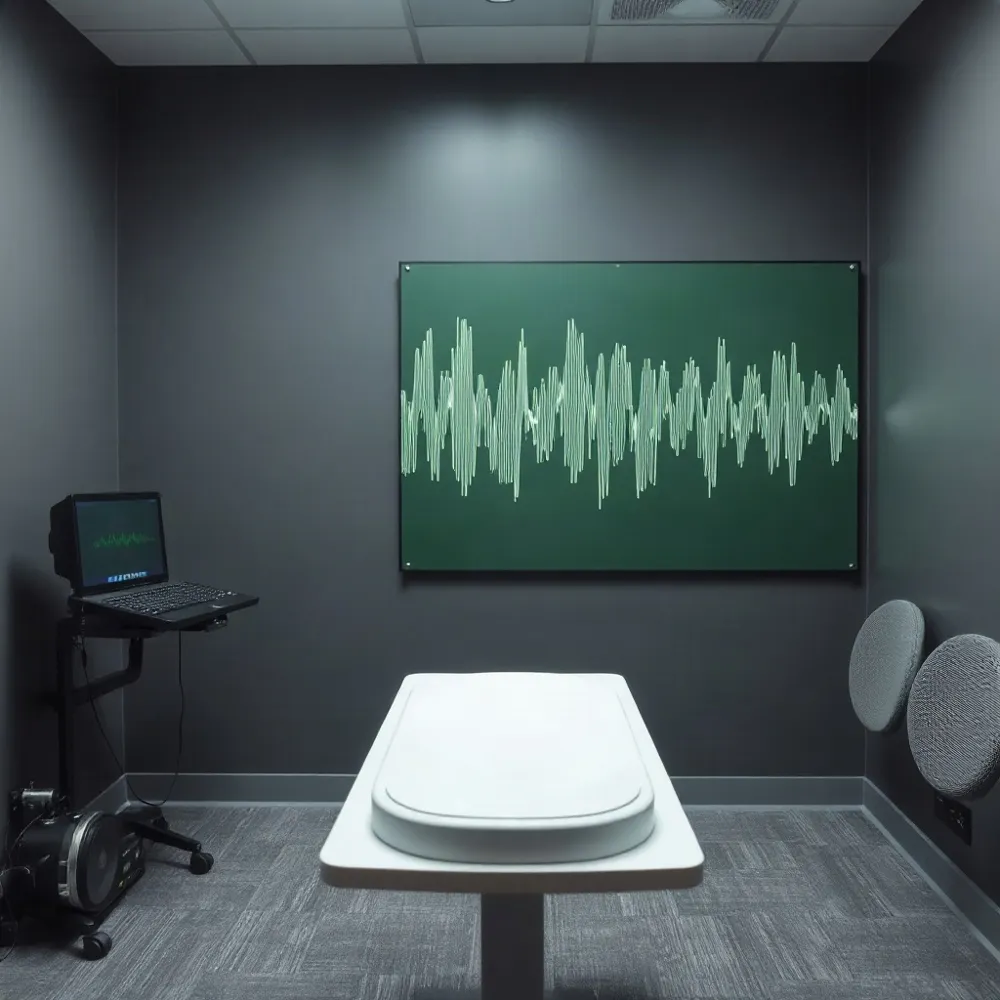
 Hearing tests can yield inaccurate results due to variables such as equipment calibration errors, patient fatigue, or intentional malingering by the examinee. In medical-legal settings, these potential inaccuracies are mitigated through rigorous testing protocols that prioritize objective verification over purely subjective patient feedback, such as the standards established by ANSI S3.6-2010 for calibrated instrumentation. While basic screening tools often fail to account for ambient noise, professional forensic evaluations require soundproof environments to maintain the integrity of standard diagnostic hearing evaluations.
Audiologists employ consistency checks, such as test-retest reliability measures and speech discrimination tasks, to identify discrepancies in reported thresholds. Unlike standard clinics that may prioritize throughput, NorCal Medical Consulting emphasizes detailed forensic documentation to reconcile subjective complaints with physiological realities. By integrating these precise protocols, we provide a scientifically sound foundation to validate or refute claims of hearing impairment that often stall in less rigorous settings.
Objective diagnostic tools like Auditory Brainstem Response and Otoacoustic Emissions testing provide physiological data that does not rely on active patient participation. This objective approach is vital for overcoming the inherent limitations of pure-tone audiometry, which can be influenced by central gain or hidden hearing loss. Synthesizing these objective measurements with comprehensive clinical history allows legal experts to build a defensible narrative regarding the nexus between employment conditions and auditory outcomes.
Defining Forensic Audiology for Legal Resolution
Forensic audiology applies clinical expertise to legal and insurance matters, bridging the gap between auditory science and the justice system. Professionals in this specialized field conduct rigorous, evidence-based assessments that go beyond basic screenings to address the complexities of noise-induced hearing loss or specific workplace acoustic incidents. At NorCal Medical Consulting, we deliver these advanced diagnostic reviews to substantiate causation, offering the objective data required to navigate disputed injury claims effectively.
When analyzing incident dynamics, a forensic audiologist examines variables such as sound pressure levels, environmental attenuation, and room acoustics. These factors are critical in determining whether an individual could have perceived a specific auditory signal or sustained damage from an exposure event. Unlike standard clinical reports, which may focus solely on pathology, forensic documentation focuses on the nexus between workplace conditions and observed functional deficits. This level of scrutiny is often the deciding factor in causation disputes where employers or insurers contest the origin of hearing damage.
Expert witness services serve as the foundation for resolving high-stakes litigation. While other firms may rely on generalized audiograms that fail to account for central auditory processing disorders, NorCal Medical Consulting utilizes a comprehensive test battery that isolates physiological failures. By providing detailed testimony on how acoustic exposures impact long-term earning capacity and daily functioning, we assist legal teams in building robust, defensible cases that standard, low-rigor evaluations often overlook.
Legal Classification and Settlement Valuation Factors
The valuation of workplace hearing loss settlements relies on a blend of clinical evidence and statutory requirements. There is no universal payout, as compensation often hinges on the documented degree of permanent impairment established through standard diagnostic hearing evaluations. At norcalmedgroup.com, we specialize in translating these complex clinical metrics into the objective documentation required by workers' compensation statutes, ensuring that both the intensity of noise exposure and the claimant's long-term functional capacity are accurately reflected in the record.
Hearing loss is classified as a compensable disability when it meets specific clinical thresholds that hinder functional capacity. While basic audiograms capture raw decibel loss, they often miss the functional impact that specialized expert evaluations are designed to identify. Per the American Academy of Otolaryngology-Head and Neck Surgery, these evaluations serve as the bedrock for disability filings. Unlike standard screenings, our approach at norcalmedgroup.com utilizes a comprehensive diagnostic battery to quantify deficits in word recognition and speech-in-noise perception, which are often the primary drivers of vocational impairment.
Settlement outcomes are further complicated by pre-existing conditions, which insurers frequently use to contest liability. A claimant must demonstrate how workplace exposure has aggravated prior hearing issues, a process requiring historical audiometric records and expert medical interpretation. When pursuing third-party claims against manufacturers or subcontractors, claimants may seek recovery for non-economic damages beyond the standard wage replacement limits of typical workers' compensation frameworks. Providing precise, evidence-based assessments allows counsel to build stronger arguments regarding the nexus between employment conditions and the resulting auditory trauma.
Building a Robust Case Through Expert Medical Consulting
Standard hearing screenings often fail to provide the diagnostic depth required for legal evidence, as they rely on pure-tone testing that may overlook central auditory processing deficits or inner ear damage. These limitations mean that routine results frequently underestimate the impact of noise exposure on professional capabilities. To successfully secure fair outcomes in workplace injury claims, claimants must utilize a comprehensive diagnostic battery that exceeds basic screening standards.
Expert forensic evaluations at norcalmedgroup.com bridge this gap by incorporating specialized tests such as speech testing in noise and otoacoustic emissions. While general providers may offer limited data, our medical-legal experts provide the clinical rigor necessary to prove the nexus between workplace hazards and impairment. By moving beyond conventional thresholds, we ensure that every facet of auditory loss is documented with the scientific precision required to withstand insurance scrutiny.