Why Multidisciplinary Evaluations Matter
A multidisciplinary injury evaluation delivers a truly comprehensive functional assessment by uniting orthopedic, neurological, and vocational expertise. Orthopedic clinicians quantify musculoskeletal integrity, range of motion, and strength; neurologists identify sensory, motor, and cognitive deficits; vocational specialists translate these findings into job‑specific capacities, matching residual abilities with workplace demands and labor‑market realities. By linking objective medical data to measurable work capacity, the report creates a clear causation chain that supports accurate loss‑of‑earning calculations and appropriate accommodation recommendations. This integrated approach also enhances legal and insurance credibility: courts and adjusters view unified, evidence‑based reports as more reliable than isolated opinions, reducing disputes and accelerating claim resolution. The synergy of specialties ensures that every impairment is documented, quantified, and contextualized for compensation purposes, ultimately protecting injured workers and streamlining the adjudication process.
Building the Team: Orthopedic, Neurological, and Vocational Experts
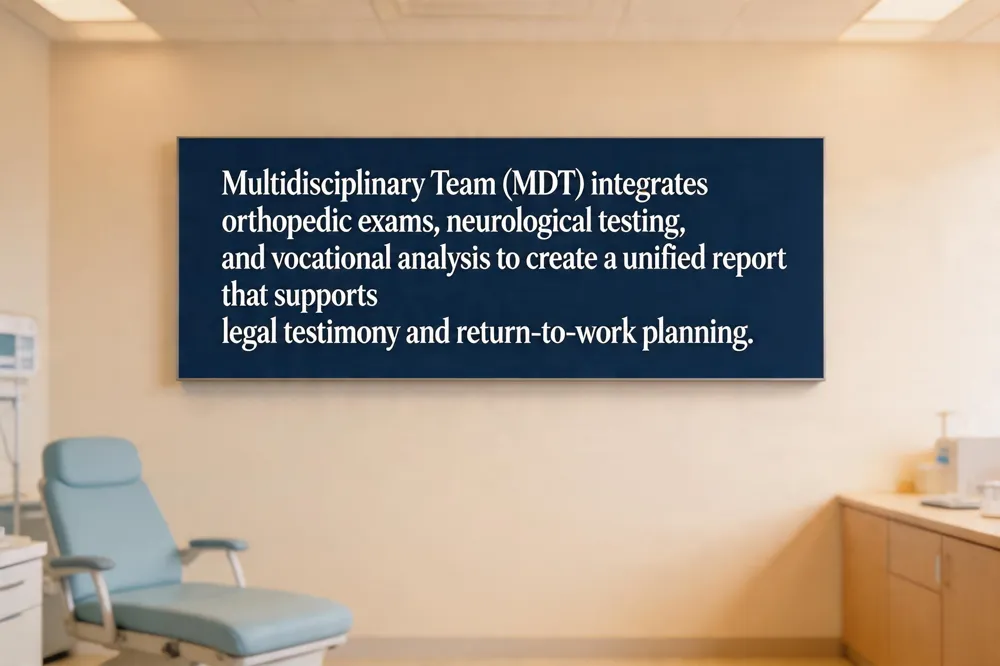 A Multidisciplinary Team is the cornerstone of modern workplace‑injury rehabilitation. Orthopedic specialists begin with a detailed physical examination, measuring range of motion, strength, and joint stability, and supplement findings with imaging such as X‑ray, MRI, or CT. Neurological testing follows, employing neuropsychological batteries, nerve‑conduction studies, EMG, vestibular assessments, and functional imaging when indicated to uncover sensory, motor, or cognitive deficits. Vocational professionals then translate these medical insights into work‑related capacity. They conduct job‑analysis, compare the injured worker’s residual abilities to the Department of Labor’s physical‑demand categories, and use labor‑market data (e.g., O*NET) to identify feasible job matches, necessary accommodations, or retraining pathways. Effective team communication is essential; regular case conferences and shared electronic reports ensure that orthopedic, neurological, and vocational findings are reconciled into a single, coherent narrative. This integrated report not only strengthens expert testimony in legal and insurance settings but also accelerates return‑to‑work planning. What does MDT stand for in rehabilitation? MDT stands for Multidisciplinary Team in the context of rehabilitation. It is a coordinated group of specialists—such as physicians, physical therapists, occupational therapists, audiologists, psychologists, and case managers—who collaborate to develop a comprehensive, patient‑centered treatment plan. By integrating the expertise of each discipline, an MDT ensures that all aspects of a patient’s injury, including functional, auditory, and psychosocial factors, are addressed simultaneously. This collaborative approach improves communication, reduces treatment gaps, and often leads to faster recovery times and higher satisfaction for both patients and insurers. In workplace‑injury cases, especially those involving hearing loss, an MDT can streamline the documentation needed for legal and insurance claims while delivering the highest quality of care.
Navigating the Workers' Compensation Process
 What should you avoid saying to a Workers' Compensation adjuster?
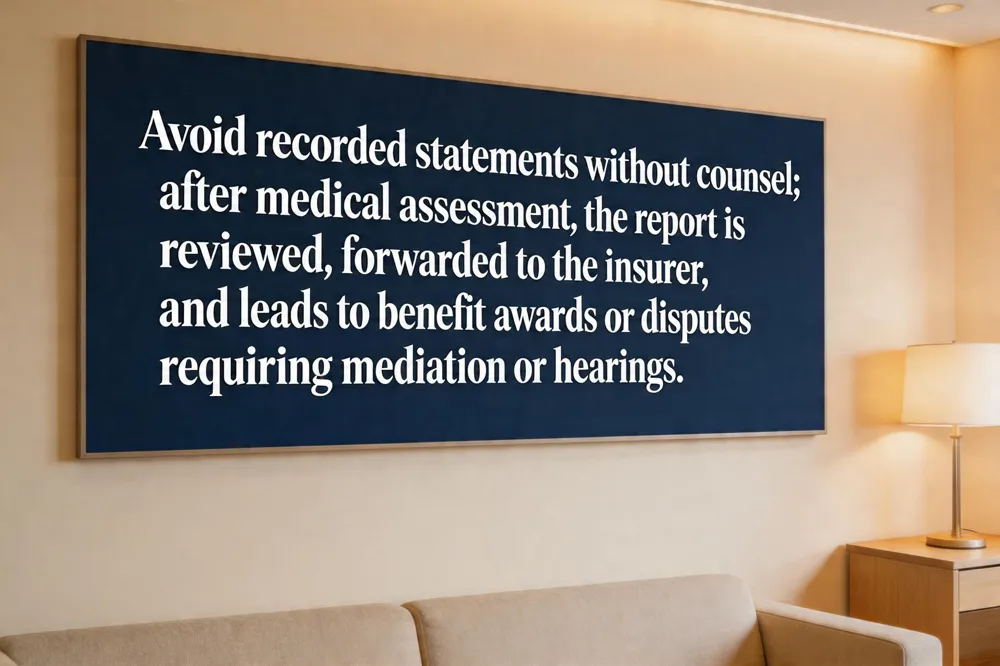
When speaking with a Workers’ Compensation adjuster, never agree to give a recorded statement without first consulting your attorney. Avoid speculating, guessing, or offering opinions—if you’re unsure, simply say you don’t know or can’t recall. Do not exaggerate pain, symptoms, or the impact of the injury; stick strictly to the factual details of the incident. Refrain from discussing unrelated medical history, family health issues, or any information that isn’t directly asked. And never admit fault or suggest that a pre‑existing condition caused the injury, as those statements can be used to diminish your claim.
What should you avoid saying to a Workers' Compensation adjuster?
When speaking with a Workers’ Compensation adjuster, never agree to give a recorded statement without first consulting your attorney. Avoid speculating, guessing, or offering opinions—if you’re unsure, simply say you don’t know or can’t recall. Do not exaggerate pain, symptoms, or the impact of the injury; stick strictly to the factual details of the incident. Refrain from discussing unrelated medical history, family health issues, or any information that isn’t directly asked. And never admit fault or suggest that a pre‑existing condition caused the injury, as those statements can be used to diminish your claim.
What happens after a medical assessment for a workers' compensation claim? The physician’s findings are compiled into a detailed medical report that becomes part of the workers’‑compensation file. Your attorney—or the consulting firm you retained—reviews the report, explains its implications, and decides whether additional evidence or a second opinion is required. The report is then forwarded to the employer’s insurer or the claims adjuster, who uses it to evaluate injury severity and determine the appropriate benefit level. If the insurer accepts the assessment, they will issue a benefit award or settlement offer. If they dispute it, the case may proceed to mediation, a hearing, or a request for further medical evaluation. Throughout, you will receive guidance on required paperwork, deadlines, and appeal procedures.
Understanding Medical Milestones: Maximum Medical Improvement
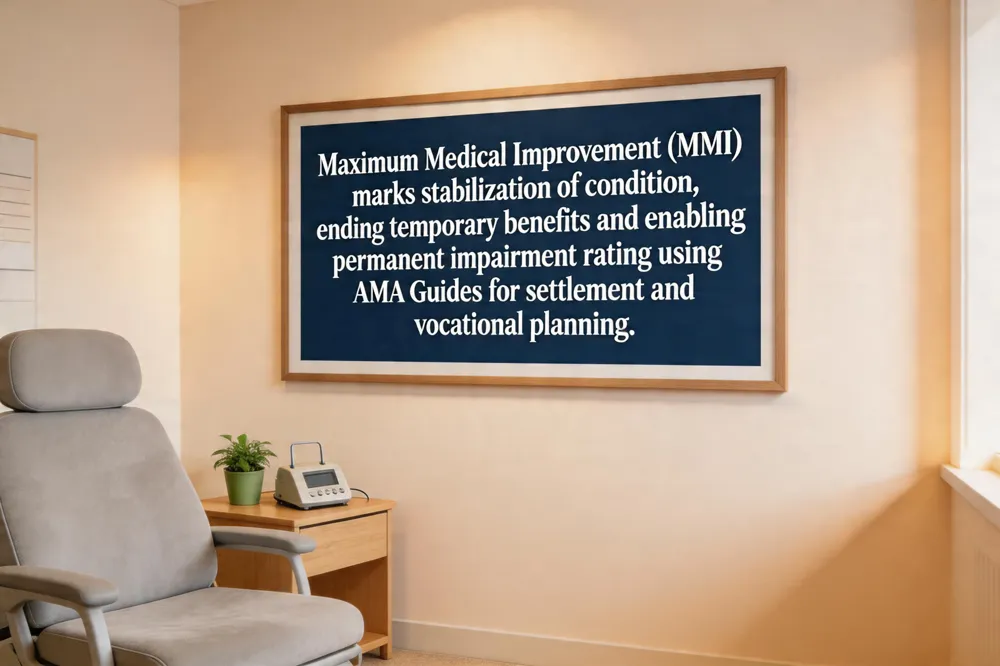 Maximum Medical Improvement (MMI) is the point at which a treating physician determines that a patient’s condition has stabilized and further significant medical improvement is unlikely. Once MMI is reached, temporary disability benefits generally cease, and the claim moves toward permanent benefits, vocational rehabilitation, or settlement negotiations. At this stage a permanent impairment rating is calculated, often using the AMA Guides, which quantifies the degree of functional loss and establishes any lasting work restrictions. These restrictions guide the vocational expert’s analysis of transferable skills, suitable job accommodations, and loss‑of‑earning calculations.
Is reaching Maximum Medical Improvement (MMI) beneficial? Yes. Achieving MMI provides a legally recognized benchmark that ends temporary benefits, enables a permanent impairment rating, and clarifies work limitations, thereby allowing the injured worker and insurer to negotiate lasting compensation, vocational plans, or a settlement with greater certainty.
Vocational Evaluation Explained
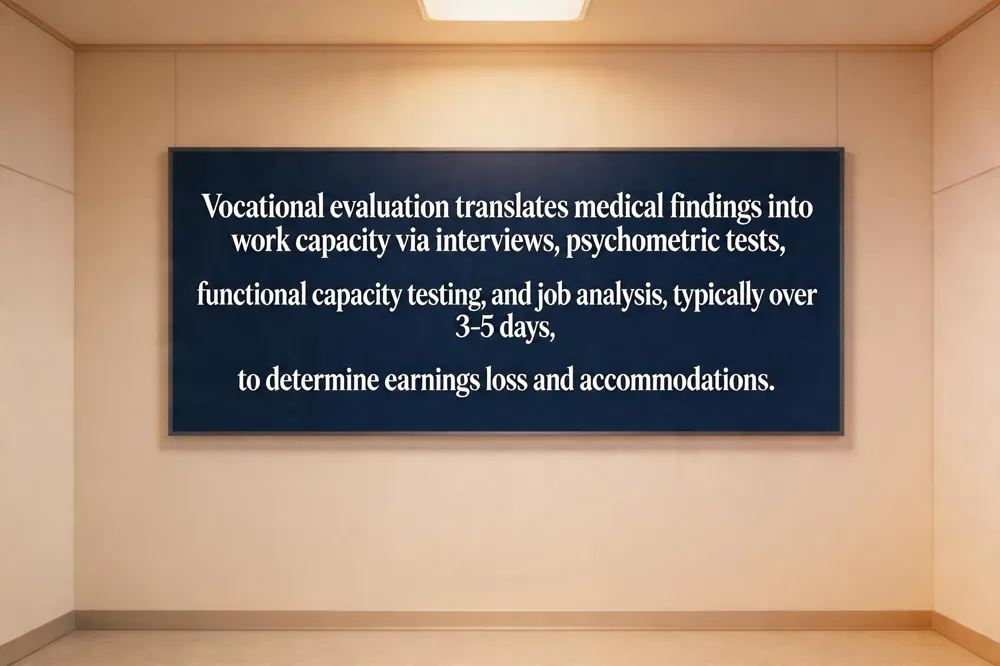 A vocational evaluation is a systematic, evidence‑based process that translates medical findings into work‑related capabilities. Its primary purpose is to determine an injured worker’s realistic earning capacity, identify transferable skills, and recommend accommodations or retraining that support a timely return to work and substantiate workers’ compensation claims.
Assessment steps and tools – The evaluator conducts a structured interview, reviews medical and employment records, and administers psychometric questionnaires (e.g., vocational interest inventories, achievement tests). Functional capacity testing, work‑sample simulations, and job‑analysis tools such as the U.S. Department of Labor’s Revised Handbook for Analyzing Jobs or O*NET data are used to match residual abilities with job demands. Orthopedic and neurological findings (range‑of‑motion, strength, cognitive testing) are integrated to ensure that both physical and cognitive limitations are reflected in the vocational analysis.
Duration and schedule – Typically the evaluation spans three to five consecutive days, with each day consisting of approximately four hours of testing and observation. This schedule allows for intake, cognitive and skill assessments, hands‑on work samples, and career‑exploration activities while simulating a regular workday. Simpler cases may be completed in fewer days; complex cases may require the full five‑day period.
Purpose and outcomes – The final report outlines feasible job options, required accommodations, and any training or retraining needs. It provides a quantitative estimate of loss of earning capacity and supports legal or insurance claims by linking medical impairments to functional work limitations.
Eligibility and qualifications – To qualify, an individual must have a documented physical, mental, or cognitive impairment that substantially limits employment. The impairment must be diagnosed by a qualified physician and verified through a thorough medical‑legal review. The evaluator must hold a master's degree or higher, possess at least three years of vocational rehabilitation experience, and be certified (e.g., NBCC) to meet California’s statutory requirements.
What can I expect during a vocational assessment? You will meet with a licensed vocational‑rehabilitation counselor who will guide you through questionnaires, skill‑related tests, and a review of your résumé, certifications, and medical reports. The process typically lasts one to two hours for the interview, followed by a detailed evidence‑based report with career recommendations and suggested accommodations.
How long does a vocational evaluation typically take? The full evaluation usually occupies three to five days, four hours per day, balancing thoroughness with efficiency.
What qualifications are required for vocational rehabilitation? A documented impairment that limits essential job functions, physician verification, and demonstrated benefit from rehabilitation services are required.
What is the purpose of a vocational evaluation? To assess skills, aptitudes, interests, and work history to determine suitable employment options and support claims for rehabilitation or disability benefits.
Recovering from Traumatic Brain Injury
 Facilitating recovery after a traumatic brain injury (TBI) requires a coordinated approach that blends rest, gradual activity, sleep hygiene, nutrition, social support, and professional resources.
How can I facilitate brain injury recovery? Begin with quiet rest for the first few days, then slowly re‑introduce light activity such as short walks while monitoring symptoms. Maintain a consistent sleep schedule, keep the bedroom dark and quiet, limit screen time and loud noises before bed to promote restorative sleep. Eat a balanced diet rich in protein, whole grains, fruits, vegetables, and stay well‑hydrated to support neural healing. Stay socially connected and seek emotional support from family, friends, or counseling, as anxiety and depression can impede progress. Follow your healthcare provider’s recommendations, avoid activities that risk another head injury, and use employee‑assistance programs or brain‑injury support groups to aid a safe return to work.
What activities should I avoid after a traumatic brain injury? Refrain from heavy lifting, vigorous housework, or intense exercise until cleared by a medical professional. Limit tasks that demand prolonged mental concentration—such as detailed financial work, extensive reading, or prolonged screen time—to prevent headaches and fatigue. Avoid contact sports, high‑impact activities, and high‑speed amusement rides that could cause another concussion. Do not drive, operate heavy machinery, or ride a bicycle until reaction time and judgment are fully restored. Finally, reduce exposure to bright lights, loud noises, and crowded environments, as these can trigger dizziness, nausea, and cognitive strain.
Financial Outcomes and Impairment Ratings
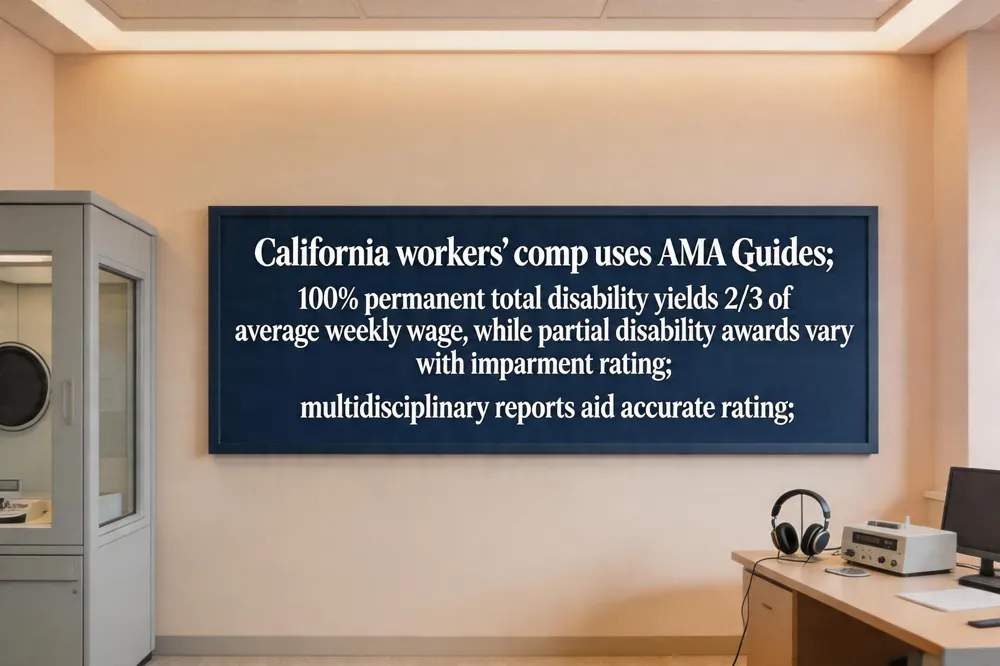 In California workers’ compensation, impairment payouts are governed by the state’s statutory guidelines and the American Medical Association (AMA) Guides. A claimant with a 100 % permanent total disability typically receives two‑thirds of the average weekly wage for the remainder of life, while partial permanent disability awards are calculated on a sliding scale based on the impairment rating—often resulting in weekly benefits ranging from $160 to $290. The distinction between permanent and partial disability is crucial: permanent total disability reflects a complete loss of earning capacity, whereas permanent partial disability acknowledges residual functional ability and thus a lower compensation figure. Multidisciplinary injury reports—integrating orthopedic, neurological, and vocational assessments—play a pivotal role in valuation. By linking medical findings to functional limitations and labor‑market data, these reports provide the objective evidence needed to assign accurate impairment percentages, support the appropriate payout tier, and reduce disputes during claim adjudication.
The Future of Integrated Injury Care
Continued evidence‑based collaboration among orthopedists, neurologists, and vocational specialists will deepen the precision of functional assessments. By adopting shared data platforms, clinicians can synchronize imaging, neuropsychological results, and labor‑market analyses in real time, reducing redundancies and ensuring consistent terminology. Technology‑enabled assessments—such as wearable motion sensors, tele‑neurocognitive testing, and AI‑driven job‑matching algorithms—expand objective measurement while speeding data collection. These advances translate into clearer, quantifiable links between medical findings and work capacity, allowing insurers and tribunals to resolve claims faster and with greater confidence. Ultimately, integrated care improves return‑to‑work rates, lowers litigation costs, and supports equitable compensation for injured workers nationwide today.