Introduction
Regulatory drivers for emergency drills come from OSHA’s mandate that manufacturing plants maintain an Emergency Action Plan and conduct regular evacuation, fire, and lockout/tagout exercises, with non‑compliance risking fines and penalties. Unplanned downtime costs are staggering: NIST reports losses of thousands of dollars per minute, amounting to roughly 11 % of annual turnover for Fortune 500 manufacturers—about $1.5 trillion each year. To safeguard production, drills are scheduled during low‑activity windows such as shift changes, early mornings, or planned maintenance, minimizing disruption while preserving realism. Short micro‑drills embedded in daily shift briefings or toolbox talks build muscle memory, improve KPI performance (evacuation time, notification speed, accountability) and support continuous improvement. Post‑drill analysis feeds into an improvement cycle, letting managers adjust scenarios, refine communication, and document compliance for auditors.
Regulatory Foundations, Financial Stakes, and Safety Policy
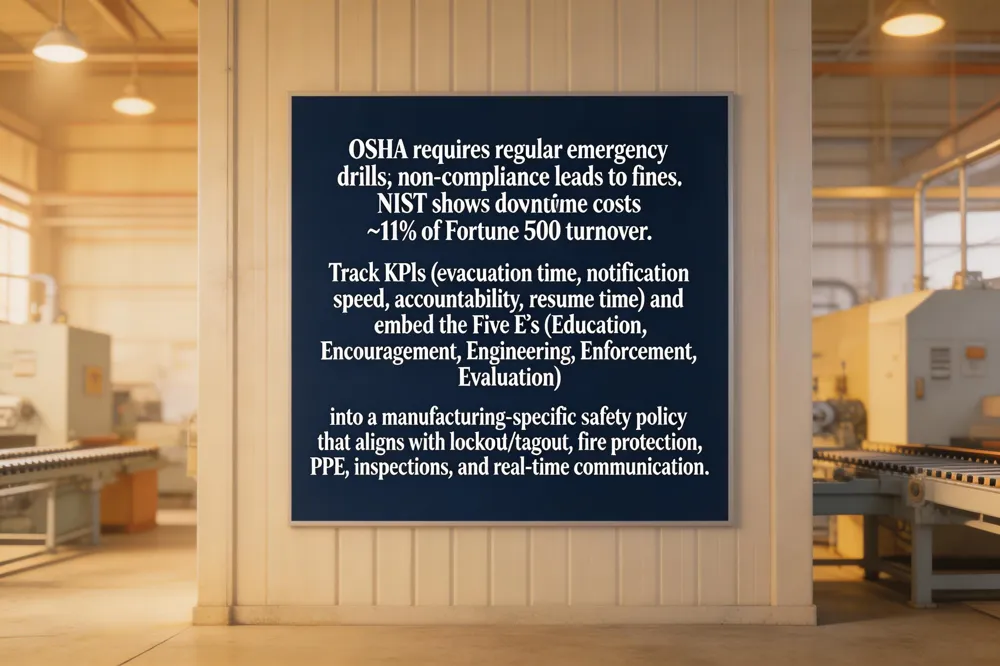 OSHA mandates regular emergency preparedness drills for manufacturing facilities for all manufacturing facilities; failure to comply can trigger fines and legal liability. NIST reports downtime costs thousands per minute — amounting to roughly 11 % of annual turnover for Fortune 500 manufacturers — about $1.5 trillion each year. To evaluate drill effectiveness, key performance indicators (KPIs) such as evacuation time, notification speed, personnel accountability, and time to resume operations are tracked. The Five E’s of workplace safety—Education, Encouragement, Engineering, Enforcement, and Evaluation provide a framework for building a robust safety culture. A manufacturing‑specific safety policy should embed these principles, aligning with OSHA standards on lockout/tagout, fire protection, and PPE, while mandating routine inspections, hazard assessments, and documented corrective actions. The policy must also prescribe clear emergency response procedures, real‑time communication tools, and continuous monitoring of safety metrics. By integrating digital emergency management platforms that capture drill data, companies can demonstrate compliance, reduce injury‑related claims, and support expert witness testimony in legal and insurance matters. Documented drill outcomes also provide medical evaluators with objective evidence, facilitating accurate injury assessments and strengthening legal defense in workers’ compensation and liability claims.
Designing Concise Daily Drill Content
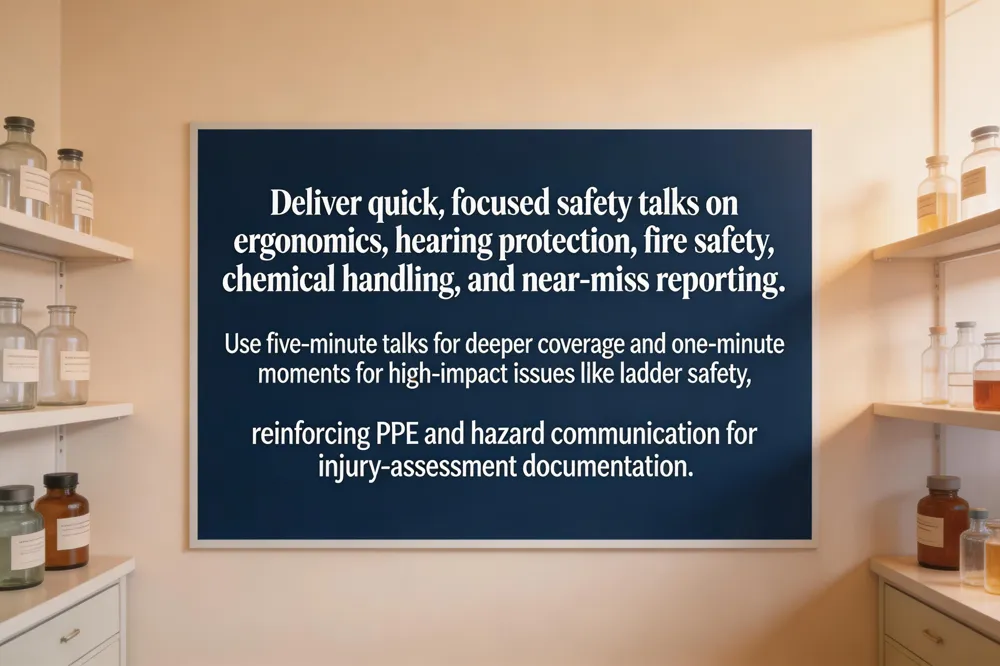 Short safety topics for work can be delivered in quick, focused talks that reinforce key habits and support medical assessments. Begin with ergonomics and posture to prevent musculoskeletal strain, then review hearing‑protection procedures to reduce auditory loss—critical evidence for injury‑evaluation experts and insurance claims. Follow with fire‑safety steps, chemical‑handling protocols, and a reminder to report near‑misses promptly, providing documentation that underpins legal defensibility.
A five‑minute safety talk expands on these themes: emphasize proper earplug/earmuff use, safe lifting techniques, slip‑trip‑fall prevention, ergonomic workstation setup, and a brief drill of evacuation routes. Each point offers a concrete take‑away that can be cited in occupational‑medicine reports and expert testimony.
One‑minute safety moments focus on a single high‑impact issue—such as ladder safety or fire‑extinguisher use—and highlight common mistakes and corrective actions, reinforcing PPE compliance and hazard communication that are essential for injury‑assessment accuracy.
Safety‑moment topics for shift‑start meetings should rotate among PPE use, emergency‑exit routes, hearing‑conservation, seasonal heat‑stress mitigation, and the importance of timely injury reporting. Consistent micro‑training creates a documented safety culture, strengthening regulatory compliance and providing robust evidence for legal and insurance processes.
Shift‑Start Safety Talks and Toolbox Sessions
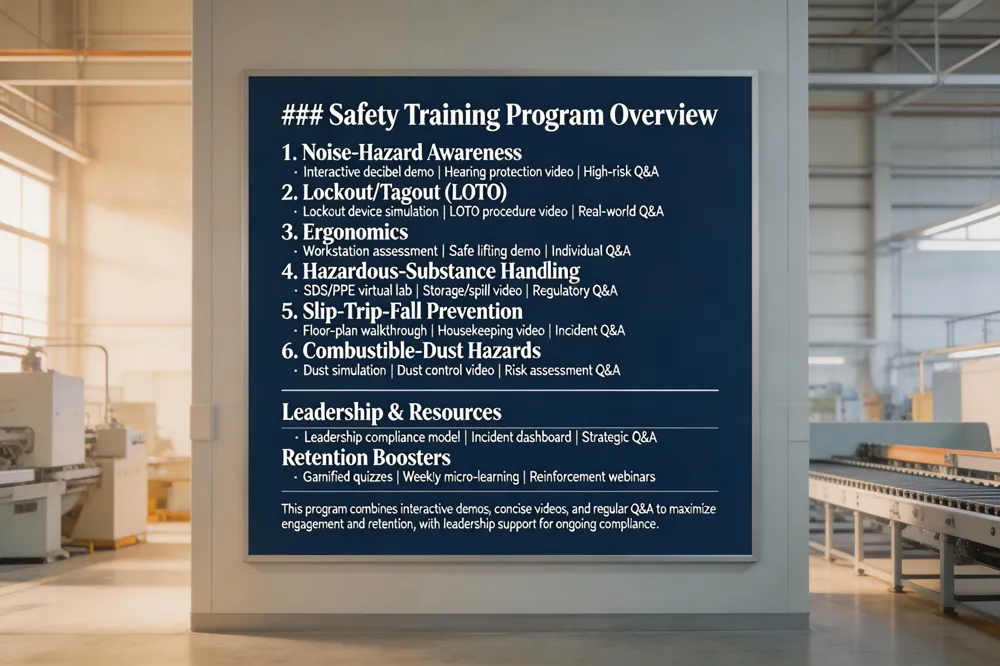 Toolbox topics for manufacturing must address noise‑hazard awareness and hearing‑protection techniques, lockout/tagout procedures, ergonomic lifting and workstation design, hazardous‑substance handling, and basic emergency‑response drills. Covering slip, trip, and fall prevention and combustible‑dust hazards rounds out a comprehensive program.
Interactive safety briefings engage workers through hands‑on demonstrations, short videos, and question‑and‑answer segments, ensuring retention and immediate feedback.
Leadership plays a pivotal role by modeling safety compliance, delivering talks consistently, and allocating resources for technology‑driven drill data and post‑drill analysis. When supervisors act as safety coaches, they reinforce accountability, improve injury‑assessment documentation, and provide the evidence needed for legal and insurance claim processes.
Targeted Drill Themes for Specific Manufacturing Areas
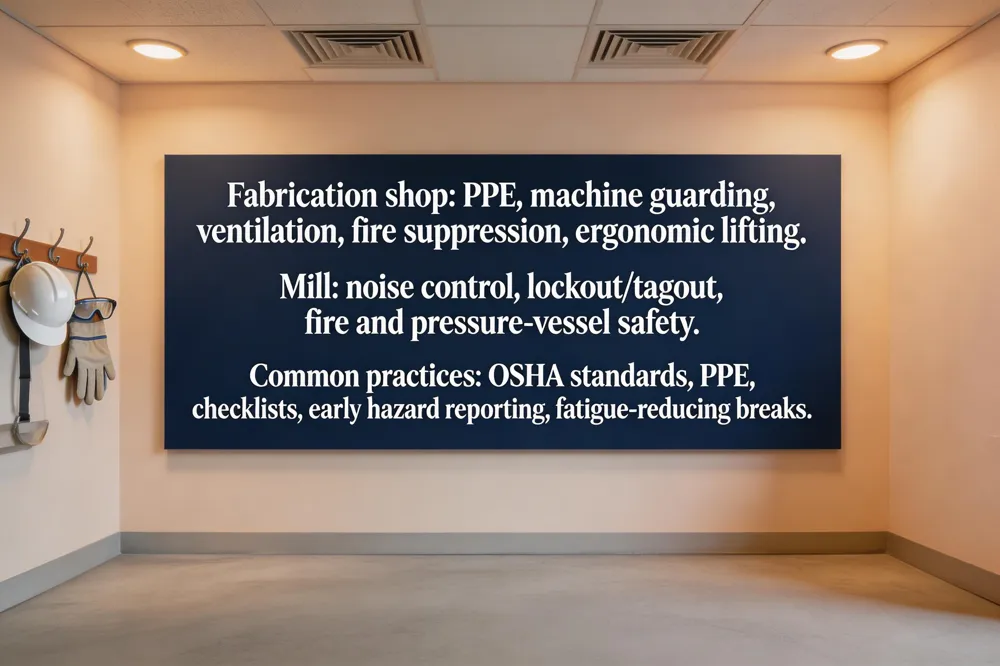 Fabrication shop safety topics
Prioritize PPE (safety glasses, hearing protection, respirators, steel‑toed boots, welding helmets) to guard against burns, cuts, noise‑induced hearing loss, and airborne contaminants. Enforce machine guarding, lockout/tagout, ventilation, dust collection, fire‑suppression, ergonomic lifting, and a documented safety program with inspections and signage.
Mill safety topics
Address excessive noise, unguarded machinery, lockout/tagout failures, fire risks, and pressure‑vessel incidents. Use hearing‑conservation devices and audiometric testing; maintain strict lockout/tagout and machine guarding; conduct routine fire and pressure‑vessel inspections; train staff on emergency response.
Common safety practices in manufacturing
Follow OSHA standards, use PPE (hard hats, safety glasses, gloves, hearing protection), operate equipment per manufacturer guidelines, employ checklists for PPE and emergency procedures, report hazards early, and schedule fatigue‑reducing breaks.
Everyday safety tips
Keep emergency contacts visible, ensure smoke/CO detectors work, maintain clutter‑free walkways, wear appropriate PPE for tools or chemicals, label hazardous materials, and limit loud‑noise exposure with protection.
Safety in the workplace examples
Provide PPE, install machine guarding, lockout/tagout, apply ergonomic adjustments (adjustable workstations, anti‑fatigue mats), implement fall‑prevention (guardrails, harnesses), and enable a retaliation‑free reporting system for early hazard identification.
Digital Resources, PDFs, and Workflow Integration
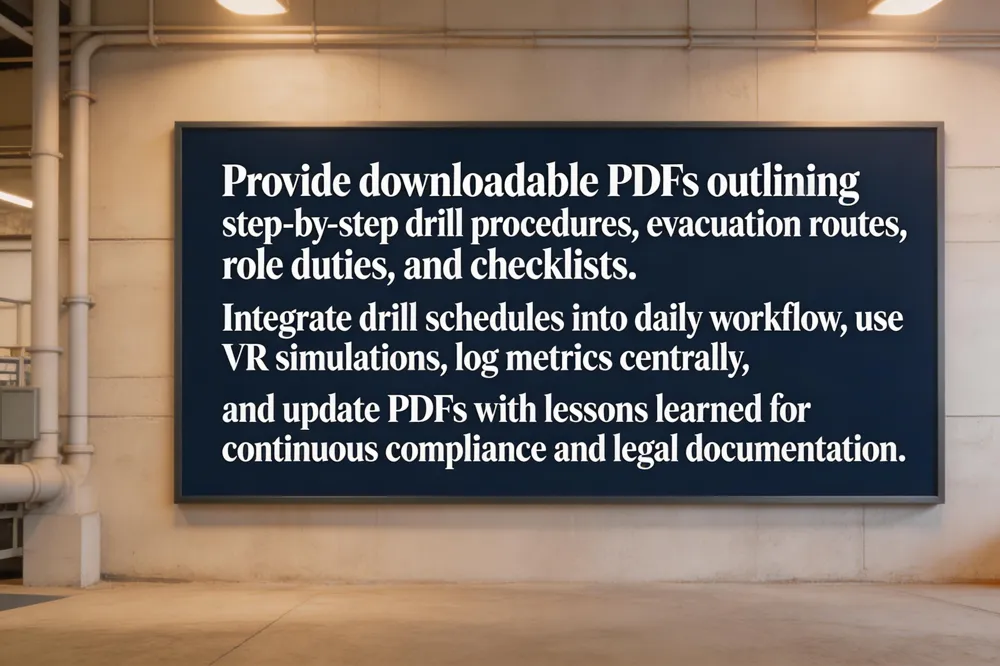 Safety drills for manufacturing teams pdf: A downloadable PDF outlines step‑by‑step procedures for fires, chemical spills, equipment failures, and evacuations. It includes evacuation routes, assembly‑point maps, role‑specific duties, pre‑shift equipment checklists, lock‑out/tag‑out verification, and hearing‑protection enforcement, helping manufacturers meet OSHA compliance and provide evidence for legal or insurance claims.
Integrating safety drills into daily workflow pdf: Create a concise drill schedule aligned with shift patterns and distribute it as a PDF handbook. Use short, realistic simulations (e.g., weekly VR fire drills) that fit production cycles. Record performance metrics in a central log, review them in safety meetings, and update the PDF to reflect lessons learned, ensuring continuous compliance and documentation for auditory‑injury claims.
Safety training topics PDF: Download a comprehensive guide covering personal responsibilities, emergency action plans, fire extinguishers, ergonomics, hazardous materials, and lock‑out/tag‑out. OSHA Toolbox Talk PDFs add focused subjects such as fall protection and electrical safety, all formatted for quick reference during training.
Importance of industrial safety pdf: PDFs consolidate regulatory standards, best‑practice procedures, and hazard‑control checklists in a portable, printable format. They ensure consistent communication across sites, support risk assessments, and provide documented evidence that protects employees from injuries and shields companies from costly legal and insurance claims.
Workplace safety PDF: The “Workplace Safety and Health Manual” PDF includes OSHA rights, hazard mapping, PPE guidelines, and hearing‑loss prevention. Tailored to California and federal standards, it serves as a reference for training, legal documentation, and insurance claims, promoting a healthier, safer work environment.
Comprehensive Training Programs and Online Solutions
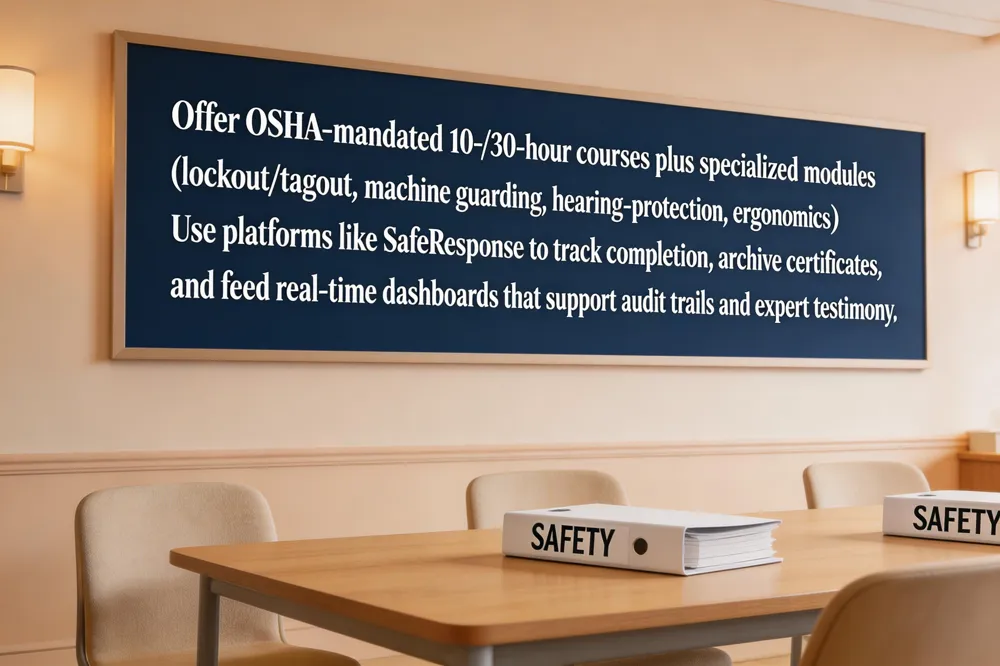 Types of safety training for employees
Employees receive OSHA‑mandated 10‑ or 30‑hour courses, plus specialized modules on lockout/tagout, machine guarding, hearing‑protection fit‑testing, ergonomics, and forklift safety. Each module is documented and refreshed to meet regulatory and legal standards.
Designing a safety training program
NorCal Medical Consulting builds programs that emphasize auditory‑loss prevention, hazard identification, and regular audiometric testing. By aligning curriculum with OSHA and medical‑expert witness requirements, the training creates defensible records that support insurance and legal claims.
Online training platforms
Mobile‑friendly systems such as SafeResponse and Manufacturing Skills Institute deliver OSHA‑compliant content, track completion, and archive certificates for audit trails, reducing downtime while ensuring compliance.
Manufacturing‑specific online courses
Courses cover lockout/tagout, machine guarding, noise‑hearing protection, and chemical‑spill response, all tailored to the high‑risk manufacturing environment.
Integrating training with audit trails
Real‑time dashboards log participation, drill metrics, and injury‑assessment outcomes, providing the evidence needed for expert testimony, claim substantiation, and continuous improvement.
Local On‑Site Training and Expert Support
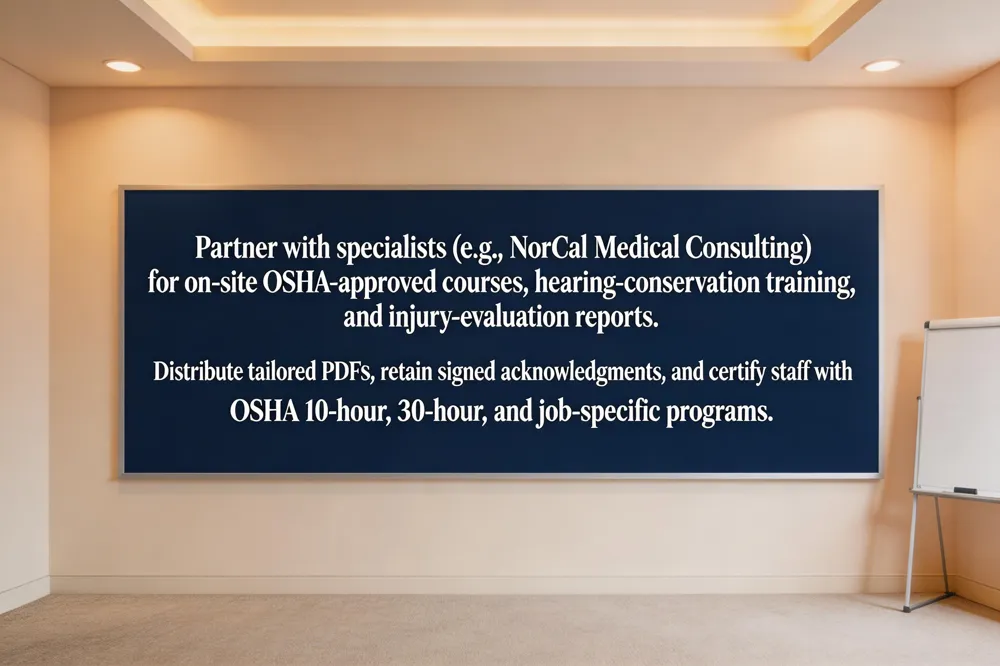 Finding nearby manufacturing safety training is straightforward when you partner with a specialist like NorCal Medical Consulting. We arrange on‑site OSHA‑approved courses—including OSHA 10‑hour General Industry, OSHA 30‑hour Construction, and hearing‑conservation training—customized for your plant’s lock‑out/tag‑out, machine‑guarding, and hazardous‑material procedures. Our certified safety professionals travel throughout the Bay Area and greater Northern California, delivering both in‑person and virtual sessions that meet OSHA and California state standards while also providing injury‑evaluation reports and expert testimony for workers‑compensation or litigation claims.
For quick reference, you can use OSHA‑based PDFs such as the “Construction Safety & Injury Prevention Program” workbook or the University of Maine’s “Basic Safety Training Resource Guide.” Tailor these documents to emphasize auditory‑hazard awareness, noise‑level monitoring, and proper hearing‑protection equipment—key concerns for NorCal Medical Consulting’s medical‑expert services. Distribute the finalized PDFs to all staff and retain signed acknowledgments for compliance and legal support.
Safety team certification should begin with OSHA 10‑hour (workers) and OSHA 30‑hour (supervisors) courses, followed by job‑specific training for high‑risk activities. Given NorCal’s focus on auditory loss claims, a dedicated hearing‑conservation program is essential. Site safety managers should obtain further certifications (e.g., 40‑hour Site Safety Manager, 8‑hour Site Safety Coordinator) and engage in regular refresher drills to embed a continuous safety culture and ensure readiness for legal and insurance evaluations.
Continuous Improvement, Metrics, and Monthly Themes
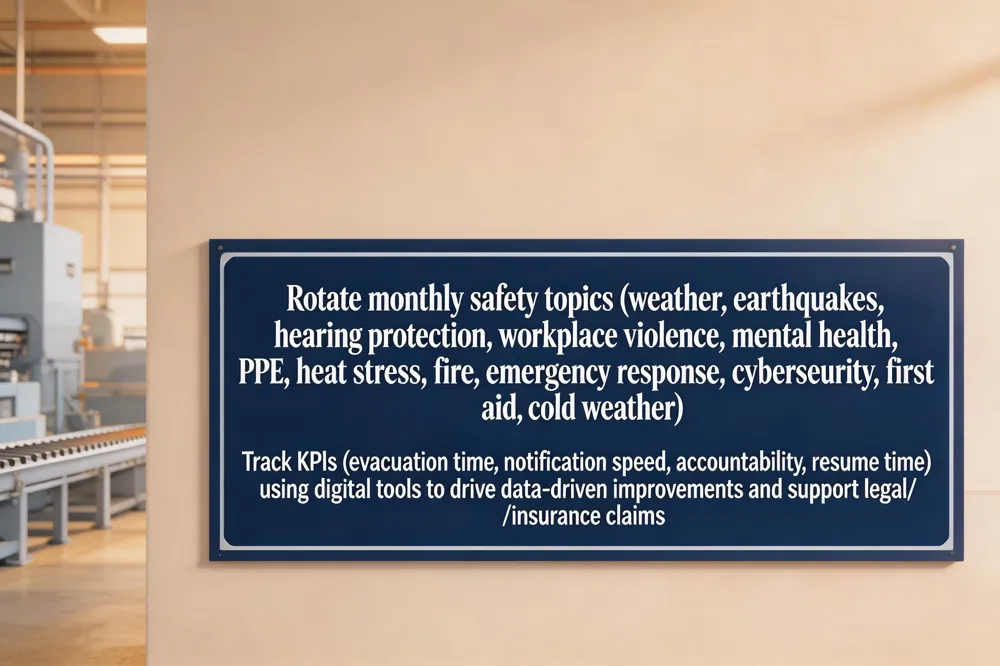 Monthly Safety Topics for the Workplace
- January: Inclement‑weather hazards (icy surfaces, strong winds)
- February: Natural‑disaster preparedness (earthquakes, floods)
- March: Hearing protection and auditory loss prevention
- April: Workplace violence prevention
- May: Mental‑health awareness and stress management
- June: PPE and equipment safety
- July: Heat‑stress prevention
- August: Fire‑prevention
- September: Emergency‑response planning
- October: Cybersecurity
- November: First‑aid basics
- December: Cold‑weather safety
Workplace Safety Improvement Suggestions
- Build a robust safety culture with regular hazard‑recognition training, visible signage, and refresher courses.
- Conduct routine inspections and ergonomic assessments, especially in noisy areas, to mitigate sound‑level, trip‑and‑fall, and machinery hazards.
- Ensure consistent PPE use, especially hearing protectors, through clear policies and compliance checks.
- Foster open reporting (“see something, say something”) and reward proactive safety actions.
- Keep work areas organized, schedule equipment maintenance, and provide stretch breaks to reduce fatigue and musculoskeletal strain.
Safety Tips to Share at Work
- Identify and assess hazards in every area.
- Report incidents and unsafe conditions promptly.
- Follow procedures; never shortcut safety protocols.
- Maintain tidy workspaces and use PPE when noise exceeds safe limits.
- Take regular breaks to prevent fatigue‑related errors.
Evaluation of Drill Performance & KPIs Track evacuation time, notification speed, personnel accountability, and time to resume operations. Use real‑time data from digital systems (e.g., EmergencyOS) to establish baselines, conduct post‑drill analysis, and drive data‑driven improvements that lower injury rates, support medical‑assessment claims, and satisfy OSHA compliance.
Leadership Commitment, Culture, and Documentation
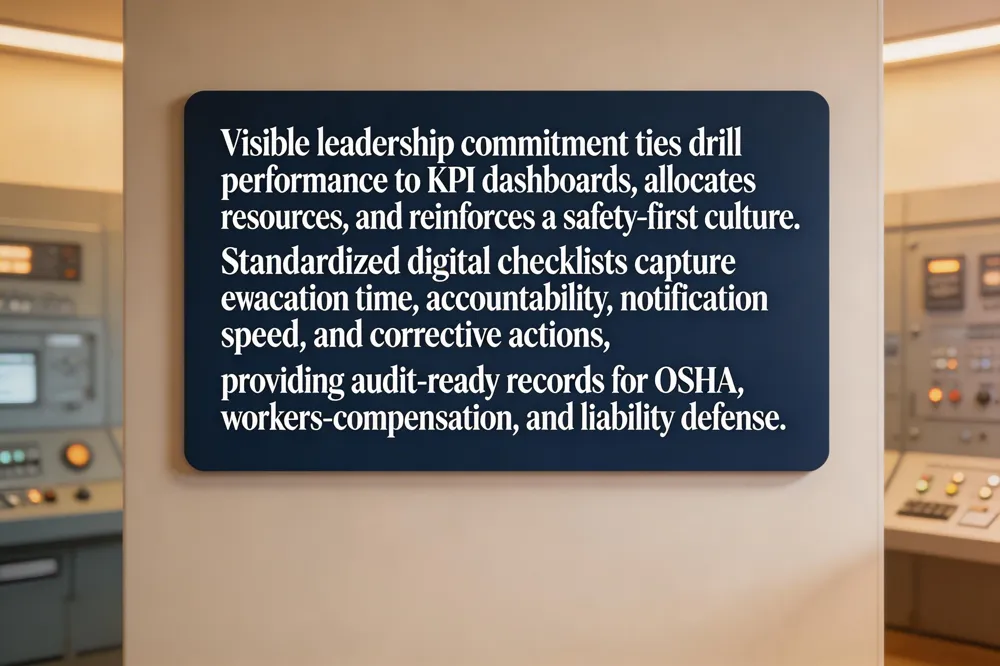 Effective emergency drills begin with visible leadership commitment. Plant managers schedule and attend drills, allocate resources for training, and tie drill performance to KPI dashboards, signaling that safety is a strategic priority. Front‑line supervisors turn briefings into safety moments, using micro‑learning to reinforce lockout/tagout, hearing‑protection and evacuation steps, which boosts employee ownership and reduces complacency. After each exercise, a standardized digital checklist records evacuation time, personnel accountability, notification speed and corrective actions; these data feed real‑time dashboards and are archived for OSHA audits. Detailed records also serve legal and insurance purposes, providing objective evidence that the company maintained a proactive safety program, which can mitigate fines, support workers‑compensation claims and strengthen defense in liability lawsuits. Continuous review ensures ongoing improvement daily.
Conclusion
Daily emergency drills provide a measurable safety net: they cut response times, reinforce muscle memory, and dramatically lower injury rates—benefits documented across OSHA, NIST, and National Safety Council studies. For manufacturers, the next step is to embed short, micro‑drills into every shift, leverage digital platforms for real‑time KPI tracking, and schedule drills during low‑activity windows to protect production. Doing so not only satisfies regulatory mandates but also creates a data‑driven safety culture that minimizes costly downtime. NorCal Medical Consulting can translate this drill data into actionable medical assessments, support workers in claims for auditory or musculoskeletal injuries, and serve as expert witnesses to substantiate the effectiveness of a proactive safety program. Contact NorCal today to align your emergency‑drill strategy with best‑in‑class injury evaluation and legal defense.