Why Immediate Action Matters
In the United States, workers are protected by OSHA and state workers’ compensation statutes that shield them from retaliation when they promptly report a job‑related injury. Immediate medical attention is not only vital for health—preventing complications and documenting the injury’s severity—but also creates an essential contemporaneous medical record that insurers and courts rely on. Early intervention preserves evidence such as photographs, witness statements, and treatment notes, which together establish a clear causal link between the workplace hazard and the harm suffered. Prompt reporting and treatment also limit an insurer’s ability to argue pre‑existing conditions or non‑work‑related causes, thereby increasing the likelihood of a favorable claim outcome. By acting swiftly, injured employees secure their legal rights, ensure accurate medical documentation, and lay the groundwork for a stronger, evidence‑based compensation claim.
Emergency Response and Initial Medical Care
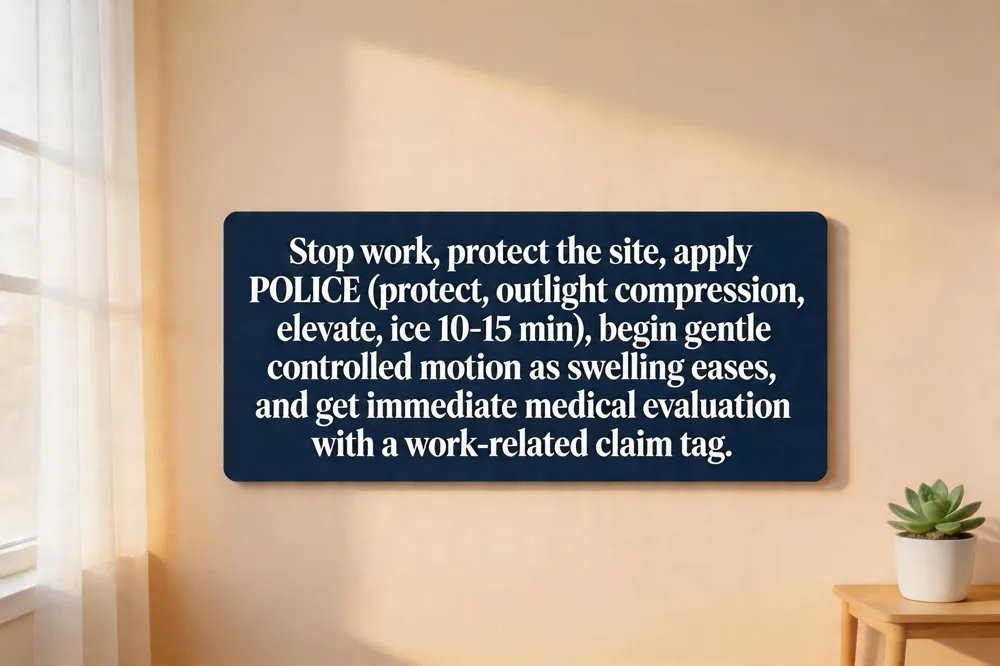 When an injury occurs on the job, the first priority is to stop the activity that caused the harm and protect the area from further damage. Apply a modified POLICE protocol: Protect the site, apply Outlight compression, keep the limb Elevated, and use Ice for 10‑15 minutes in short intervals during the first two hours, followed by gentle Control‑pain range‑of‑motion exercises as swelling allows. Prompt medical evaluation—especially for fractures, severe soft‑tissue injuries, or auditory trauma—is essential; the treating clinician must be told the injury is work‑related so that the medical record is properly tagged for workers’ compensation.
Physiologically, tissue damage triggers an immediate inflammatory response: vasodilation, platelet clot formation, and influx of neutrophils and macrophages produce pain, swelling, redness, and heat. This acute inflammation (the body’s first‑line reaction) initiates debris clearance and sets the stage for the proliferative and remodeling phases of healing. Recent research shows that prolonged rest and excessive icing, as advocated by the classic RICE method, can blunt this necessary inflammation and delay collagen remodeling, leading to stiffness and slower recovery. Modern rehab emphasizes early, protected movement and functional loading while still using compression and elevation to manage swelling.
To limit local tissue damage, ice should be applied for no more than 15 minutes per session, compression bandages must be snug but not restrictive, and elevation should be above heart level. Begin pain‑controlled motion as soon as swelling subsides, avoid long immobilization, and follow any prescribed medication regimen under professional guidance.
Simultaneously, document the incident—date, time, location, witnesses, photos, and equipment involved—and report it in writing to the employer and workers’ compensation carrier within the state‑specified deadline. Maintaining a detailed log of medical visits, expenses, and communications creates a robust evidentiary foundation for claim negotiations or litigation, and expert medical testimony can further substantiate causation and disability severity.
Documenting the Incident and Reporting Requirements
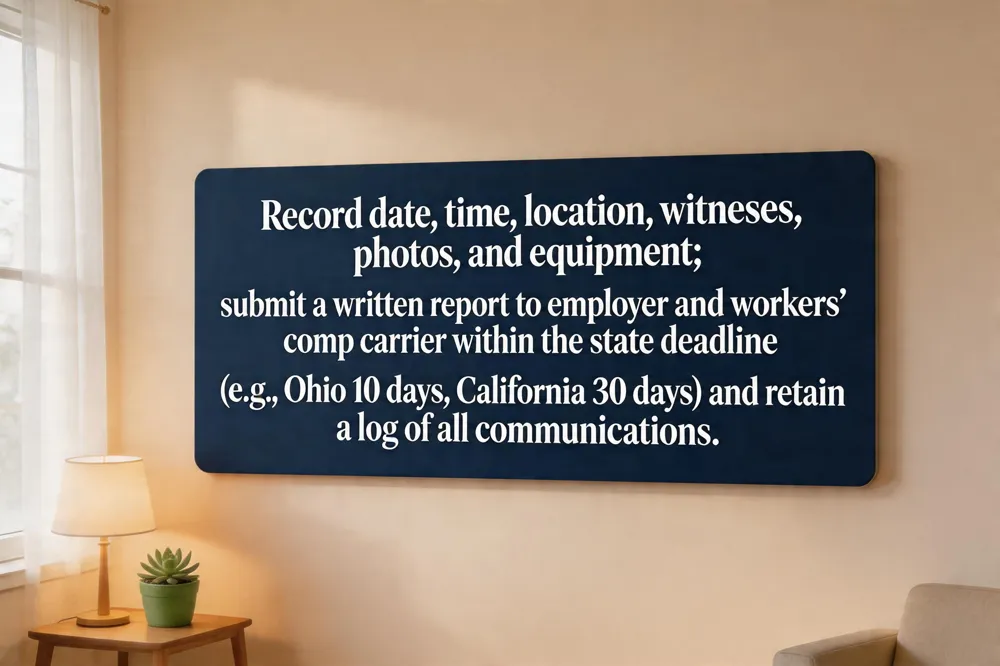 In the United States, each state sets its own deadline for reporting a workplace injury, but the common thread is that the notice must be made promptly to preserve the right to workers’ compensation benefits. For example, Ohio requires a written notice within ten working days, while California gives employees up to 30 days and most states fall in the 10‑to‑30‑day range. The employer must then forward the report to its workers’ compensation insurance carrier—such as NorCal Mutual Insurance Company—within the statutory time frame. (The toll‑free number for NorCal Mutual is 844‑466‑7225.)
Key documentation elements include:
- A written incident description that records the date, time, location, and environmental conditions (e.g., wet floor, faulty equipment).
- Photographs or videos of the scene and any visible injuries, taken as soon as possible while details are fresh.
- Witness contact information and statements that corroborate the worker’s account.
- All medical records, including emergency department notes, physician diagnoses, treatment plans, and any follow‑up appointments.
- A log of communications with supervisors, HR, and insurers, noting dates, times, and content.
Legal protections against retaliation are strong: OSHA and state workers’ compensation statutes forbid employers from demoting, reducing hours, or terminating an employee for filing a claim. Employees who believe they are being retaliated against can file a complaint with OSHA or pursue a separate retaliation lawsuit.
When interacting with a workers’ compensation doctor, avoid down‑playing symptoms or admitting fault. Stick to factual answers about what you feel and what you observed; this helps preserve the credibility of your claim.
Finally, keep the insurance carrier’s contact information (phone, email, claim portal) readily available so you can report the injury, submit the required First Report of Injury (FROI‑1) in Ohio, and follow up on claim status without delay. Timely, thorough documentation and adherence to state‑specific reporting deadlines are the cornerstones of a successful workers’ compensation claim.
Understanding the Inflammatory Process and Healing Phases
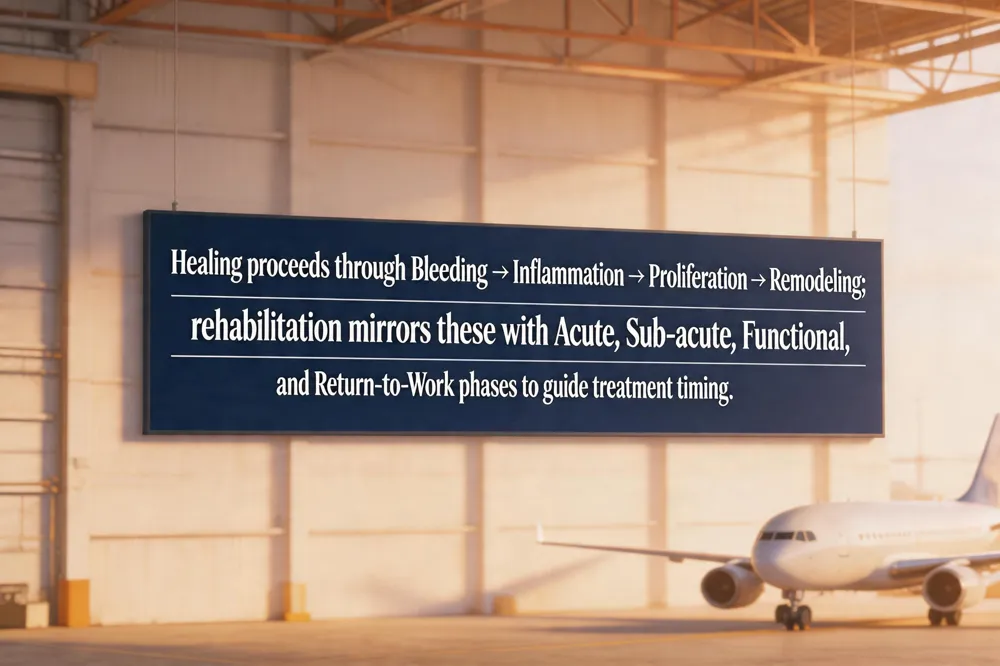 When tissue is damaged, the body initiates a tightly regulated repair sequence that can be divided into four overlapping stages: Bleeding, Inflammation, Proliferation, and Remodeling. Bleeding occurs within the first 24 hours as platelets and clotting factors form a hemostatic plug and clear debris. Inflammation follows, marked by swelling, heat, pain, and loss of function; it delivers oxygen‑rich blood, nutrients, and immune cells that remove damaged tissue. The proliferative phase begins 24‑48 hours after injury and can persist for up to three weeks, during which fibroblasts lay down immature collagen, new blood vessels form, and granulation tissue fills the defect. Finally, remodeling may last months to years, aligning collagen fibers and strengthening the repaired tissue to withstand functional loads.
Injury rehabilitation mirrors these biological stages in four practical phases: Acute/Inflammatory (pain and swelling control via RICE, NSAIDs, and rest), Sub‑acute/Recovery (gentle range‑of‑motion and low‑intensity strengthening), Functional (progressive strengthening, proprioception, and work‑specific drills), and Return‑to‑Play/Work (graded re‑exposure to full duties while monitoring for regression). Each phase requires careful documentation of symptoms, treatments, and functional milestones to support both medical recovery and any workers’ compensation or personal‑injury claims.
Medical Consulting and Legal Support for Workers’ Compensation
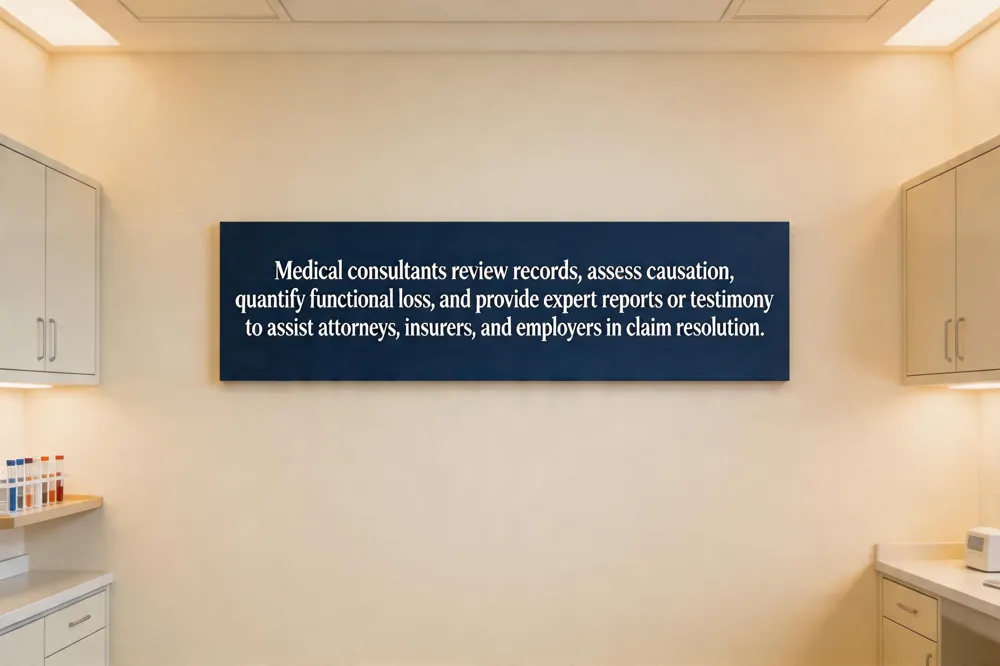 A medical consulting business is a specialized firm that leverages qualified healthcare professionals to analyze clinical information, evaluate injury claims, and provide evidence‑based recommendations. It serves attorneys, insurers, and employers by reviewing medical records, interpreting diagnostics, and determining the validity and extent of workplace injuries—often focusing on conditions such as auditory loss. The consultants translate complex medical data into clear, actionable reports that support legal and insurance settlements while ensuring regulatory compliance.
In a workers’ compensation case, a medical consultant reviews the employee’s complete medical record, including treatment notes, test results, and any audiology studies, to verify that care meets the accepted standard of practice. They assess causation and injury extent, identify gaps or inconsistencies, and prepare a detailed expert report that quantifies functional impact. This report is used by attorneys and insurers to establish liability, calculate benefits, and support or refute claims during negotiations or hearings. The consultant may also testify as an expert witness, explaining conclusions and answering evidentiary questions.
Medical consultancy blends clinical expertise with strategic advisory work. It evaluates case files, applies evidence‑based standards, and provides objective opinions that bridge health care and legal processes, ensuring injured workers receive fair compensation and employers meet their legal obligations.
Permanent Impairment Ratings and Compensation Calculations
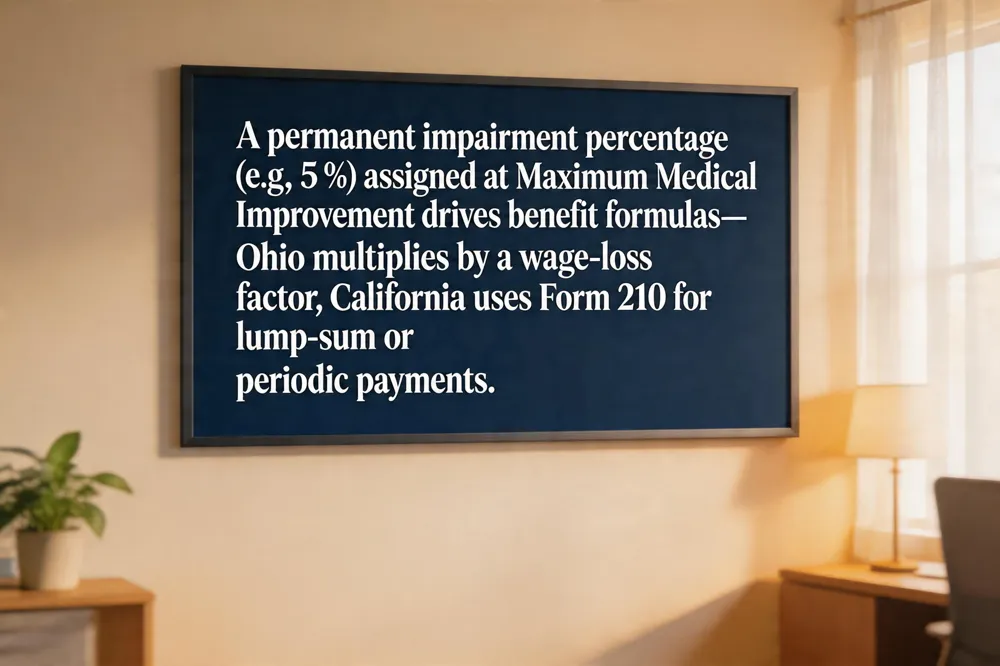 Understanding impairment percentages is the first step in translating a medical finding into monetary relief. A permanent impairment rating expresses the loss of functional capacity of a specific body part as a percentage of its total possible performance, not a fraction of the worker’s overall health.
How Ohio and California systems calculate benefits – Both states use the rating to determine disability payments, but the formulas differ. Ohio applies a schedule of benefits that multiplies the percentage by a state‑defined wage‑loss factor, while California uses the Permanent Disability Rating (Form 210) and a statutory maximum to compute a lump‑sum or periodic payment. In each case the rating must be assigned after the injury reaches Maximum Medical Improvement.
Impact of a 5 % rating on long‑term compensation – A 5 % rating may seem modest, yet it can generate substantial ongoing benefits, especially when the affected body part is essential to the employee’s job (e.g., a hand or ear). The rating becomes the basis for calculating both temporary and permanent wage‑replacement benefits, vocational rehabilitation costs, and, if a settlement is pursued, a proportional share of the total award.
What does a 5 % permanent impairment rating mean? It indicates a permanent loss of five percent of normal function in the injured body part, assigned after medical improvement is complete, and serves as the quantitative foundation for compensation.
Four phases of injury rehabilitation – Acute/Inflammatory (pain and swelling control), Sub‑acute/Recovery (restoring range of motion), Functional (strengthening and work‑specific training), and Return‑to‑Work (gradual duty escalation).
Role of a medical consultant – The consultant reviews the entire medical record, evaluates causation and treatment adequacy, prepares an expert report with quantified functional impact, and may testify to support the worker’s claim or challenge an insurer’s position.
Practical Tips, Common Pitfalls, and Legal Safeguards
 Key Topics to Remember
- Avoiding self‑incriminating statements
- Recognizing and reporting OSHA‑reportable incidents
- Retaliation protections and employer obligations
- When to seek a second medical opinion
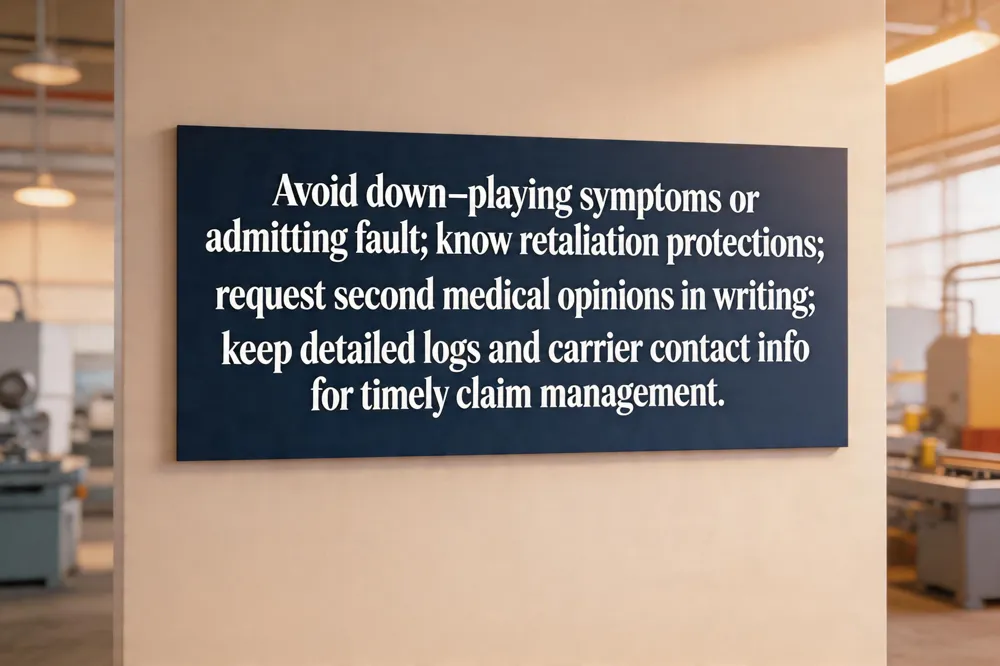
What should I avoid saying to a workers’ compensation doctor? Do not down‑play your symptoms (e.g., “It’s not that bad”) or imply you are fine without treatment. Refrain from admitting fault, guessing at the cause of the injury, or giving vague descriptions of pain. Stick to factual, specific answers about what you felt, when it began, and how it limits your activities. This protects the credibility of your claim and prevents insurers from arguing the injury is minor or pre‑existing.
What does the term “medical consultancy” mean? Medical consultancy is a professional service that blends clinical expertise with strategic advisory work. Practitioners evaluate medical records, conduct examinations, and apply evidence‑based standards to determine causation, severity, and appropriate treatment for workplace injuries. Their objective opinions are used to support legal proceedings, insurance negotiations, and employer decision‑making, especially in complex cases such as auditory loss or multi‑system trauma.
Practical Safeguards
- Report any OSHA‑reportable incident within the statutory window (often 8‑24 hours).
- Document the injury scene, witnesses, and medical care promptly.
- Keep a written log of all communications with supervisors, insurers, and medical providers.
- If you doubt the treating physician’s assessment, request a second opinion in writing and retain copies of the request.
- Know that retaliation for filing a claim is prohibited; document any adverse employment actions and consult an attorney immediately.
These steps help preserve rights, ensure proper medical documentation, and strengthen any future legal or compensation claim.
Putting It All Together: A Structured Path Forward
The first 24‑48 hours after a workplace injury are decisive. Seek prompt medical care, tell every provider the injury is work‑related, and keep a detailed symptom diary. Immediately notify your supervisor in writing, secure witness statements, and photograph the scene to create an unchallengeable factual record. These steps preserve your right to workers’ compensation and protect against insurer arguments that the injury is pre‑existing or unrelated to work.
Expert medical consulting—such as the audiometric and functional assessments offered by NorCal Medical Consulting—provides objective, independent evidence of causation, severity, and future treatment needs. An expert report can thwart insurance adjusters’ attempts to down‑play the claim and serves as a cornerstone for any appeal or third‑party lawsuit.
Next actions for the injured worker: (1) file the First Report of Injury with your employer and the state board within the statutory deadline, (2) attend all follow‑up appointments and follow prescribed therapy, (3) retain every medical invoice, communication log, and piece of evidence, and (4) consult a workers’ compensation attorney early—most work on contingency—to negotiate with insurers, handle appeals, and ensure full compensation for medical costs, lost wages, and pain‑and‑suffering.