Introduction
The Defense Base Act (DBA) extends federal workers’ compensation to civilian contractors performing U.S. government work abroad, providing medical treatment, wage‑loss benefits, and death benefits. Strategic planning is essential for overseas contractors because strict reporting deadlines, complex jurisdictional rules, and the "zone of special danger" doctrine can affect claim eligibility and benefit amounts. Early, accurate medical evaluation—preferably by a board‑certified specialist—creates the contemporaneous evidence insurers rely on to rebut insurer disputes and to substantiate permanent impairments. NorCal Medical Consulting offers expert assessments, audiometric testing, and detailed medical reports that satisfy OWCP requirements, strengthen DBA filings, and support attorneys in negotiations and hearings, ultimately maximizing entitled compensation for injured workers.
Understanding Coverage and Eligibility
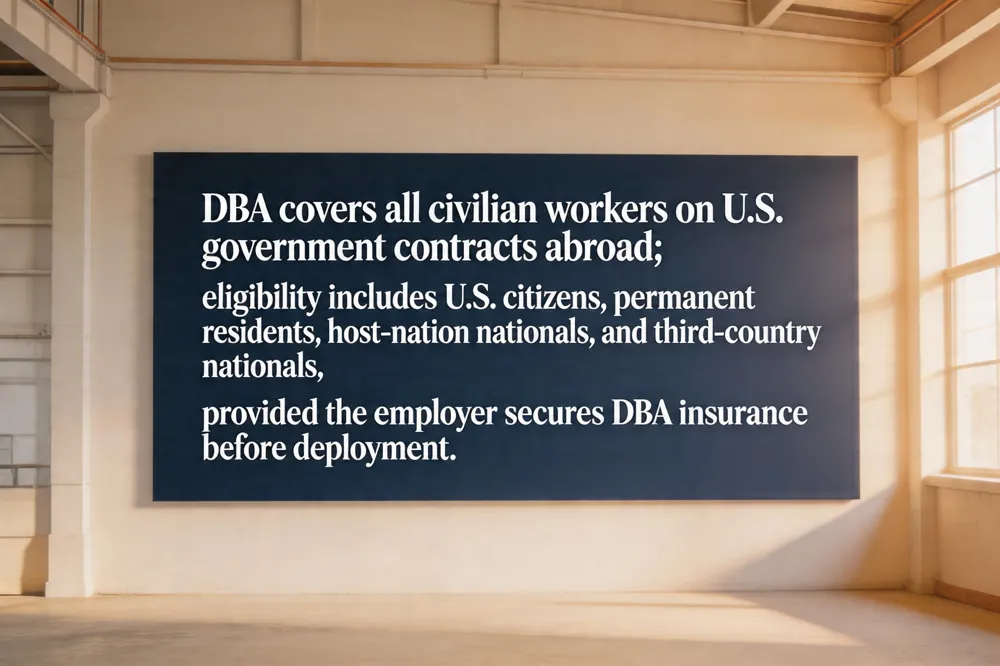 The Defense Base Act (DBA) mandates workers’ compensation for any civilian performing work under a U.S. government contract outside the continental United States. Coverage extends to employees on military bases, U.S.-funded public‑works projects, and contractors or subcontractors who provide services for national‑security purposes. In practice, anyone—U.S. citizens, permanent residents, host‑country nationals, or third‑country nationals—who is hired by a U.S.-based contractor to work abroad is covered, provided the employer has secured DBA insurance before the employee sets foot on the overseas site.
Contractors may work internationally as independent , but they must remain classified as self‑employed (e.g., filing Form W‑8BEN for non‑U.S. persons) and comply with local labor and tax regulations. A U.S. citizen can also provide services to a U.S. firm from another country, as long as they possess the proper work‑authorisation in the host nation and keep detailed records of contracts, invoices, and pay stubs.
To obtain DBA workers’ compensation the three essential steps are: (1) promptly report the injury to the employer within 30 days; (2) submit thorough medical documentation linking the condition to the work; and (3) cooperate with any independent medical examination arranged by the insurer. Failure to meet these requirements can jeopardize benefits, underscoring the importance of early legal and medical expert involvement.
Initiating a Claim: Key Steps and Timelines
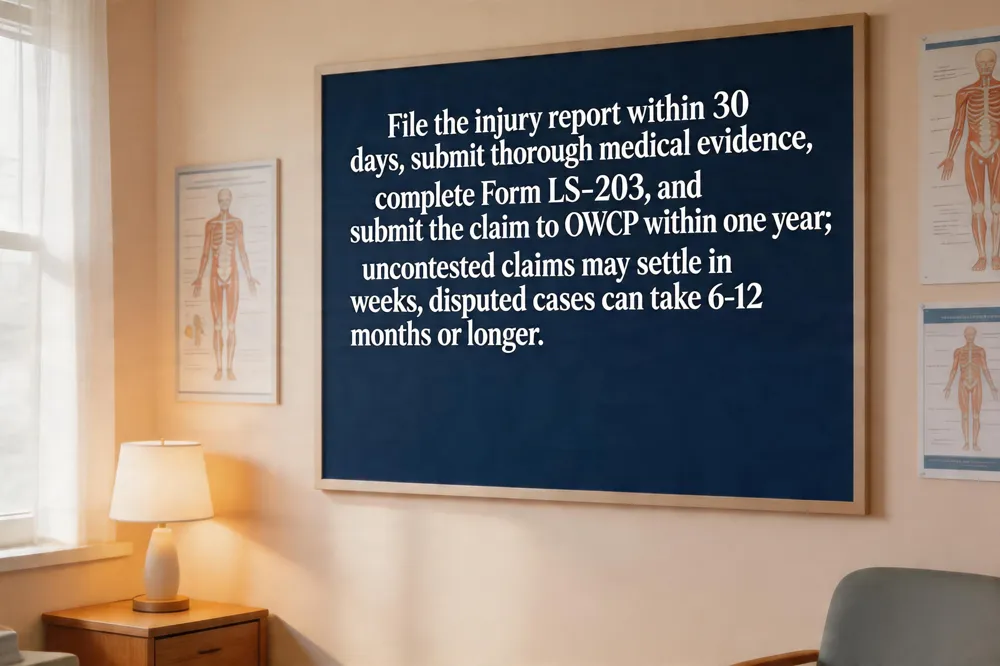 How to file a Defense Base Act claim? Report injury within 30 days, obtain and document medical care, gather evidence, complete Form LS‑203, and submit it to OWCP within one year.
DBA claim status – The claim’s status reflects its position in the OWCP review process (pending, approved, denied, or awaiting documentation). Status can be confirmed by contacting the DLHWC district office that received the report.
Defense base act application – Contractors submit a detailed application to an authorized DBA carrier, including contract information, employee classifications, loss history, and any waivers, to obtain the required workers‑compensation policy.
How long does DBA claim take – Uncontested claims may resolve in a few weeks; disputed claims often require several months, and cases reaching a law can extend to six‑twelve months or longer. Early, complete provide and experienced DBA counsel can shorten the timeline.
Medical Documentation and Expert Support
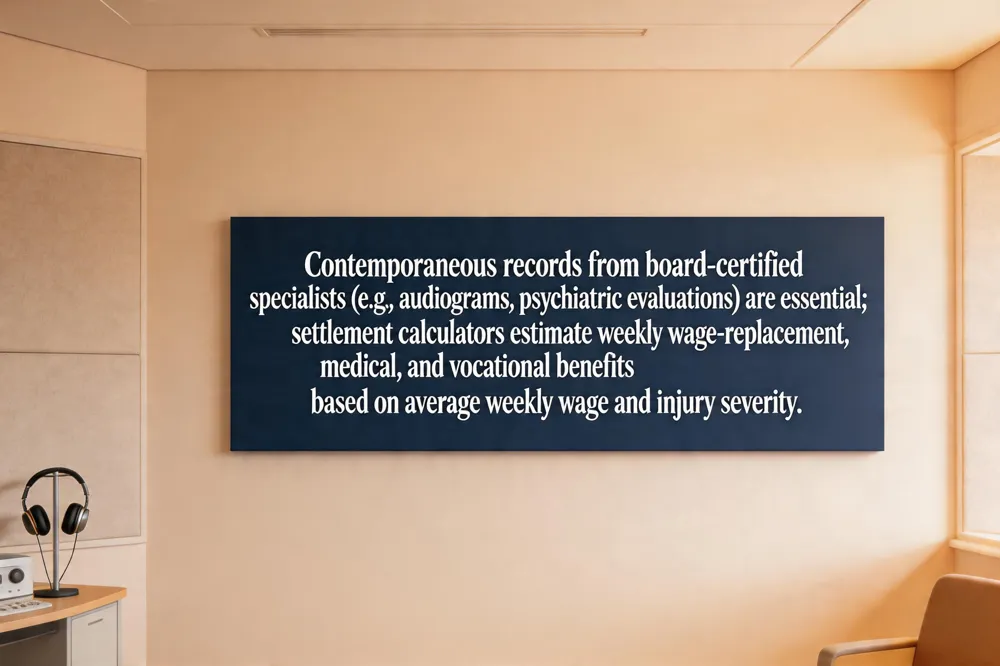 Accurate medical documentation is the cornerstone of a successful Defense Base Act (DBA) claim. Workers may choose any board‑certified physician, but the treating doctor must provide clear, contemporaneous records that link the injury to the job. For occupational hearing loss, an audiologist from NorCal Medical Consulting conducts baseline and post‑injury audiograms, exposure analyses, and loss‑of‑function reports that satisfy the Department of Labor’s evidentiary standards. Likewise, PTSD claims require a qualified psychiatrist to diagnose the disorder, detail the traumatic event, and outline a treatment plan, all of which are essential for disability rating calculations.
Claimants often use a DBA settlement calculator to estimate potential benefits. By inputting the average weekly wage, injury severity, medical costs, and projected recovery time, the calculator projects weekly wage‑replacement payments (two‑thirds of AWW), medical coverage, vocational rehabilitation, and, where applicable, death benefits. The tool offers a rough lump‑sum figure, but inputs must reflect expert medical assessments to be reliable.
Recent DBA settlements illustrate the impact of thorough documentation. In 2025, back‑injury cases settled for $850,000, while PTSD claims ranged from $20,000 to $575,000, with severe permanent disabilities exceeding $1 million. Engaging a DBA‑experienced attorney and a specialist medical consultant maximizes the likelihood of a fair, comprehensive settlement.
Navigating Legal and Insurance Complexities
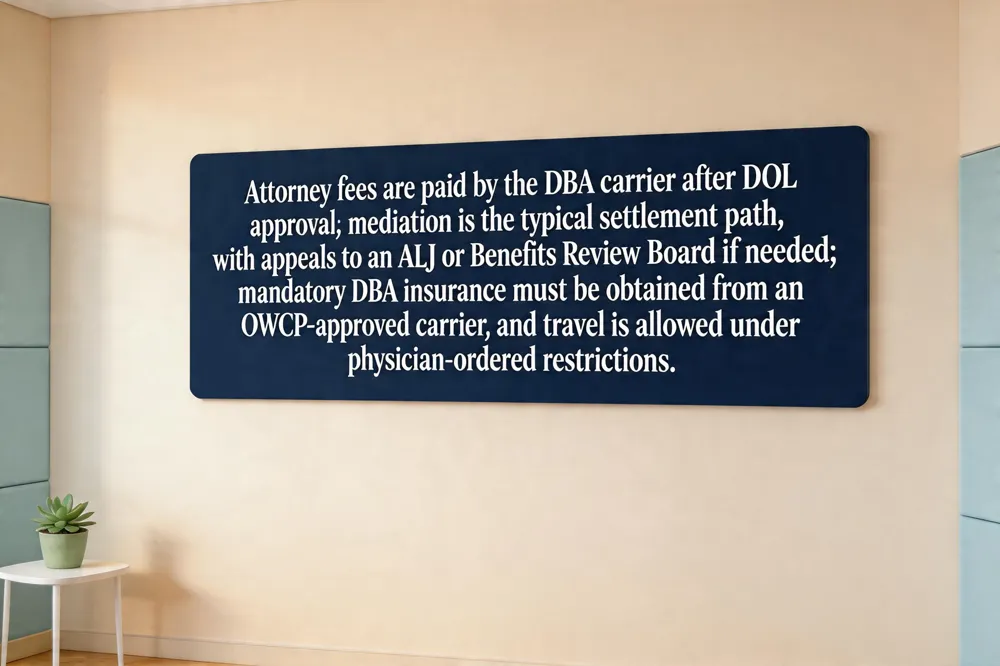 Attorney fees are typically shifted to the DBA insurance carrier, but the Department of Labor must approve any fee arrangement before payment.
Early involvement of a DBA‑experienced attorney helps secure proper notice, accurate wage calculations, and challenges biased independent medical examinations.
Mediation is the common route to DBA settlements; the Department of Labor must approve any agreement before it becomes final.
If a settlement is rejected, claimants may appeal to an Administrative Law Judge and, if necessary, to the Benefits Review Board or federal courts.
Coverage must remain in force for the contract’s duration and includes medical care, two‑thirds of average weekly wage for disability, and death benefits.
Travel while receiving benefits is permissible provided the worker follows physician‑ordered restrictions, not every employer’s case manager, and maintains documentation of all medical appointments.
Non‑compliance can jeopardize wage‑replacement payments.
Defense Base Act insurance – DBA insurance provides compulsory workers’ compensation for overseas contractors, covering medical expenses, wage loss, disability, and death benefits. Employers must secure this coverage before deployment; NorCal Medical Consulting can help review policies and coordinate claim documentation.
DBA claim settlements – Settlements are calculated on injury classification, averaging two‑thirds of the worker’s weekly wage plus medical costs, vocational rehabilitation, and future care. Experienced attorneys ensure full compensation.
Does workers' comp cover outside the US? – Standard policies often exclude overseas injuries; many employers add Foreign Voluntary Workers’ Compensation or separate international coverage to fill the gap.
Can I go out the country during workers compensation? – Travel is allowed if it does not violate medical restrictions; notify your physician, case manager, and employer, and keep records to avoid benefit disputes.
Practical Tips and Risk Management for Contractors
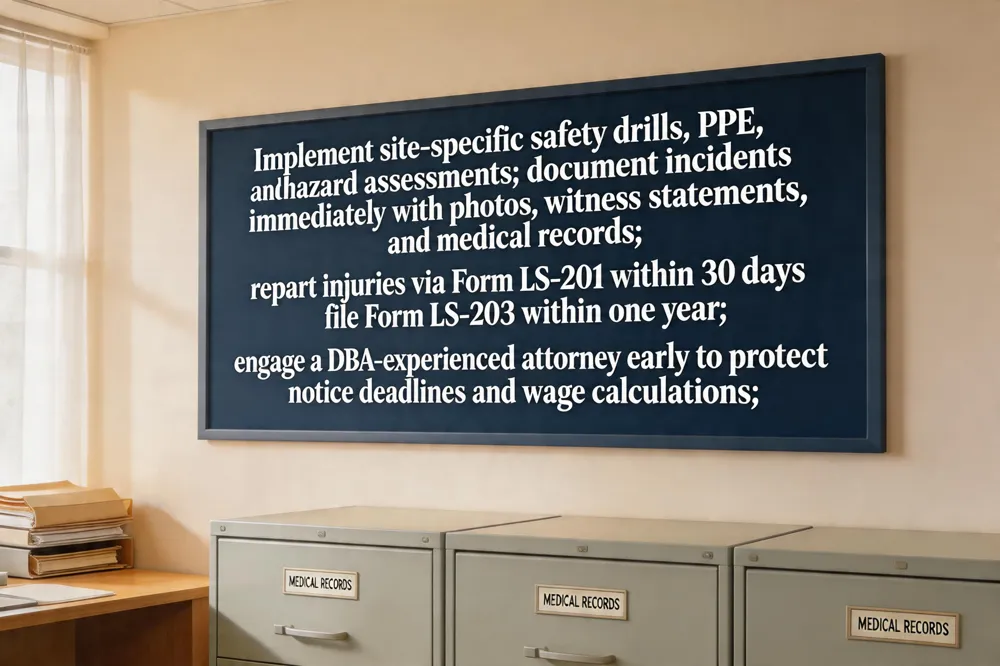 Effective risk management begins with preventive safety measures and thorough hazard assessments—conduct site‑specific safety drills, provide PPE such as hearing protection, and enforce strict fall‑prevention protocols. When an incident occurs, document it immediately: photograph the scene, gather witness statements, and secure all medical records, including audiograms for noise‑induced hearing loss. Occupational disease claims especially hearing loss, require baseline audiometric data, exposure logs, and expert opinions from firms like NorCal Medical Consulting. Key injury categories to report are (1) overexertion, (2) slips/falls, (3) transportation incidents, (4) burns, and (5) lacerations; each must be reported in writing within 30 days using Form LS‑201 and followed by a formal DBA claim (Form LS‑203) within one year. Early engagement of a DBA‑experienced attorney safeguards notice deadlines, wage calculations, and challenges any insurer‑ordered independent medical examinations.
Conclusion
Key takeaways for DBA claim success include prompt injury reporting, thorough medical documentation, and early involvement of a seasoned DBA attorney to protect wage calculations and counter insurer tactics. NorCal Medical Consulting adds value by delivering board‑certified, objective medical evaluations—such as audiometric testing for hearing loss or psychiatric assessments for PTSD—ensuring that every injury is fully substantiated with expert evidence. Injured contractors should contact NorCal Medical Consulting today for a free strategy session, secure expert medical opinions, and strengthen their claim before the Department of Labor’s filing deadlines.