Why Proactive Safety Matters
A proactive safety culture dramatically cuts injury rates: OSHA reports that organizations that embed regular hazard assessments, near‑miss reporting, and early corrective actions can lower incident frequencies by 20‑30 %, and a Gallup meta‑analysis shows a 64 % reduction in safety incidents when employees are highly engaged. Economically, fewer injuries translate into massive savings; the U.S. Department of Labor estimates workplace injuries cost businesses over $250 billion annually, while proactive programs can trim workers’ compensation claims by up to 35 % and reduce lost‑time injuries by 15‑25 %. Employee engagement is the engine of this success—workers who participate in safety committees, report hazards without fear, and receive continuous training create a feedback loop that identifies risks before they cause harm, reinforcing both safety and productivity.
Understanding Safety Culture Types
 Four primary safety‑culture types are identified in U.S. organizations: forced, protective, involved, and integral. A forced culture relies on a carrot‑and‑stick approach—strict enforcement, rewards, and punishments—to compel compliance. Protective cultures emphasize formal policies and procedures designed to safeguard employees through structured programs and engineering controls. Involved cultures engage workers at all levels, encouraging participation, shared responsibility, and open communication about hazards. Integral cultures embed safety into every organizational decision, making it a core value that guides daily actions, resource allocation, and performance metrics.
What are the 4 types of safety culture? The four types of safety culture are forced, protective, involved, and integral. A forced culture relies on carrots and sticks—strict enforcement, rewards, and punishments—to compel compliance. A protective culture emphasizes formal policies and procedures that aim to safeguard employees through structured programs. An involved culture engages workers at all levels, encouraging participation and shared responsibility for safety outcomes. An integral culture embeds safety into every aspect of the organization, making it a core value that guides decision‑making and daily actions.
Integral cultures are most effective because they integrate leadership commitment, regular training, shared accountability, and empower employees to identify and correct unsafe conditions without waiting for managerial direction. This proactive stance aligns safety metrics with business dashboards, reduces incident rates (OSHA reports a drop from 10.9 to 2.3 per 100 workers since 1972), and supports stronger legal and insurance claim outcomes through documented, evidence‑based safety practices.
The 5 E’s Framework for Workplace Safety
 The 5 E’s of workplace safety are Engineering, Education, Enforcement, Engagement, and Evaluation.
Engineering – Design out hazards with engineering controls, such as noise‑abatement for hearing loss, ergonomic workstations, and preventive equipment maintenance. OSHA and NIOSH data show that engineering interventions can cut injury rates by up to 30 % and reduce occupational hearing loss by 20‑30 %.
Education – Provide regular, role‑specific training and drills. Interactive simulations improve knowledge retention (70 % vs. 30 % for lecture‑only). Continuous education on PPE use, hearing‑conservation, and ergonomic practices lowers incident rates by roughly 30 % (National Safety Council).
Enforcement – Apply clear, non‑punitive rules and promptly correct hazards. OSHA recommends a 24‑hour corrective window, which reduces repeat incidents by 25 %. Accountability is reinforced through safety audits, near‑miss reporting, and performance‑linked evaluations.
Engagement – Empower workers to identify and fix unsafe conditions. Buddy systems, safety committees, and anonymous reporting increase hazard identification by 30 % and foster a shared safety responsibility.
Evaluation – Track leading indicators (near‑misses, safety observations) and lagging indicators (injury rates) via data‑driven dashboards. Continuous improvement cycles (PDCA) align safety metrics with business goals, delivering up to a 40 % reduction in recordable injuries compared with reactive approaches.
Proactive vs Reactive Safety Measures
 A proactive safety culture focuses on identifying and eliminating hazards before they cause injury. According to OSHA, regular risk assessments, early‑warning systems, and ongoing employee training empower workers to report unsafe conditions without waiting for an incident. Proactive measures—such as near‑miss reporting, ergonomic assessments, and hearing‑conservation programs—can lower injury rates by up to 30 % and reduce workers’ compensation costs. In contrast, reactive safety actions occur after an event: rapid reporting, thorough investigations, root‑cause analysis, and corrective actions such as policy revisions or equipment fixes. While reactive steps are essential for immediate risk mitigation and legal compliance, a balanced program that integrates both approaches yields the greatest benefit. Data‑driven decision‑making—using leading indicators like near‑miss trends and lagging indicators such as injury counts—allows organizations to prioritize high‑risk hazards, allocate resources effectively, and continuously improve safety outcomes.
Injury Reduction Strategies Beyond Safety Policies
 A proactive safety culture blends fitness, ergonomics, hearing protection, mentorship, and data‑driven reporting to cut injury risk. Physical fitness programs that combine cardiovascular conditioning, strength training, flexibility work, proper warm‑up/cool‑down, and progressive load management build resilient musculoskeletal systems, lowering strains, sprains and overuse injuries (American Heart Association; OSHA). Ergonomic assessments and adjustable equipment reduce biomechanical stress, preventing musculoskeletal disorders and auditory loss (CDC, 2020). Hearing‑conservation programs—baseline audiograms, regular monitoring, engineering controls, and correctly fitted PPE—can slash occupational hearing loss by up to 50 % (NIOSH; OSHA. A buddy system pairs experienced workers with newcomers, reinforcing safe work practices and early hazard identification (NorCal Medical Consulting). Near‑miss reporting and systematic data analysis enable early corrective actions, reducing incident rates by 25 % (COSHH, 2021) and supporting legal and insurance claims with documented evidence. Together, these evidence‑based measures create a resilient, compliant workplace and provide expert documentation for injury assessments and claim defenses.
Building a Proactive Safety Culture
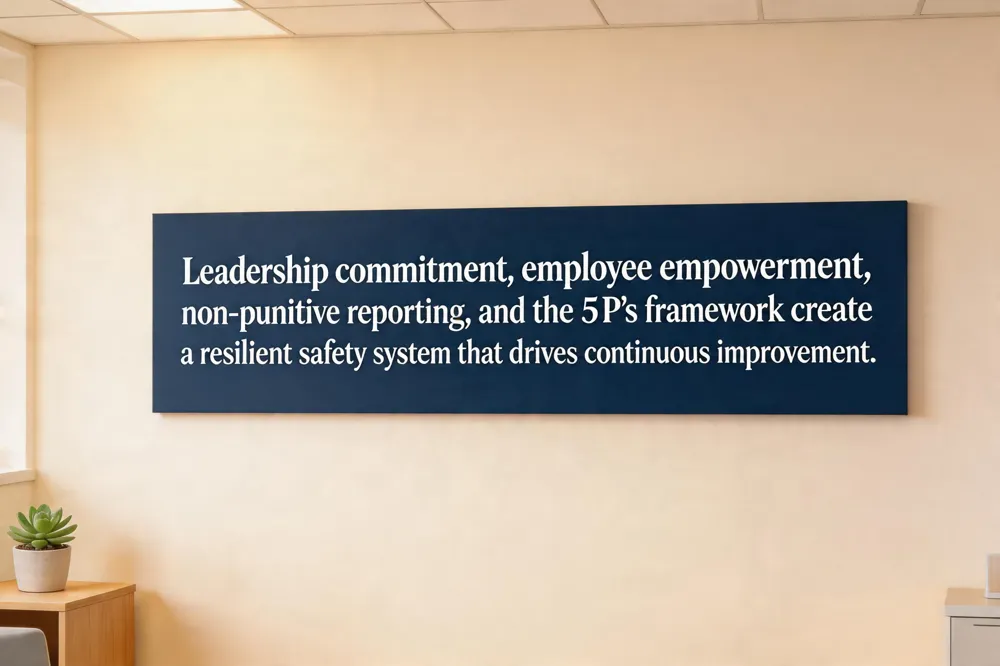 A proactive safety culture starts with leadership commitment and modeling—senior managers visibly follow safety protocols, allocate resources for training, and fund initiatives like near‑miss reporting systems. Employee empowerment and stop‑work authority give frontline staff the right and confidence to halt unsafe tasks, fostering ownership of safety outcomes. Data‑driven tracking of near‑misses and hazards turns leading indicators into actionable insights; OSHA and NIOSH studies show that systematic near‑miss analysis can cut injury rates by 25‑40 %. A non‑punitive reporting and continuous improvement environment encourages honest hazard disclosure, aligns with OSHA’s “no‑retaliation” policy, and supports rapid corrective actions. Integrating the 5 P’s (Predict, Prevent, Plan, Participate, Perform) and the 10 principles of occupational health—protocol adherence, leadership commitment, worker engagement, prevention focus, prompt injury response, proper PPE, checklist use, waste management, ergonomics monitoring, and continual improvement—creates a resilient safety system that reduces costs, supports legal claim defense, and protects worker health.
Integrating Auditory Health into Safety Programs
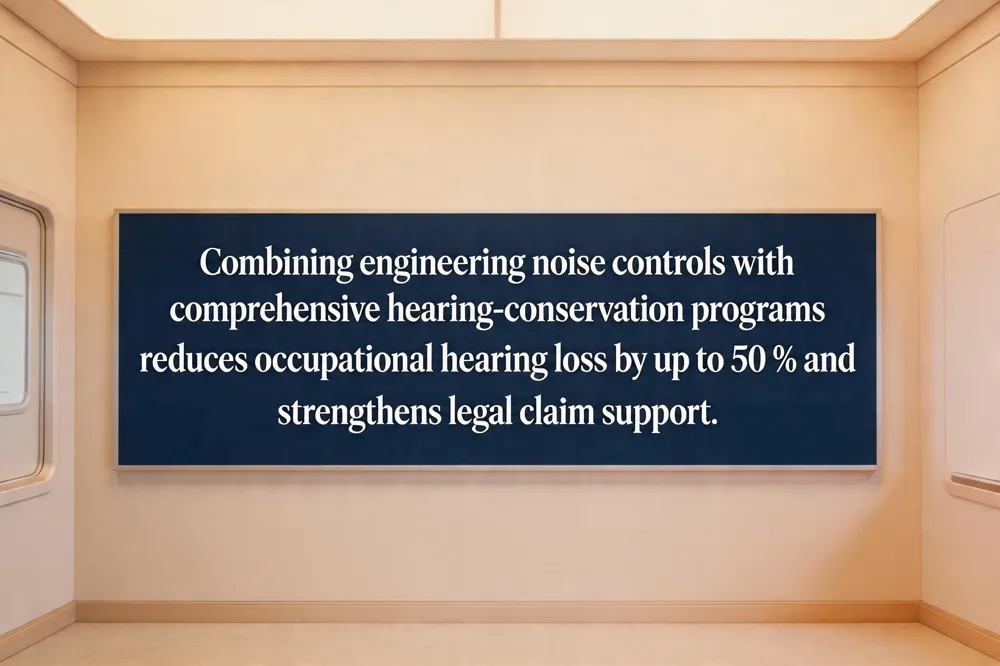 Occupational hearing loss remains one of the most common workplace injuries in the United States, accounting for roughly 20‑22 % of all work‑related health claims and affecting an estimated 22 million workers exposed to hazardous noise levels.
Effective programs begin with engineering controls—such as noise‑dampening enclosures, equipment isolation, and administrative measures like job rotation—to lower sound pressure before PPE is needed.
When exposure cannot be eliminated, a comprehensive hearing‑conservation program is required: baseline audiograms, annual or semi‑annual audiometric testing, and provision of properly fitted earplugs or earmuffs.
Early detection through trend analysis of audiometric data enables timely intervention, often reducing the incidence of permanent loss by up to 50 %.
NorCal Medical Consulting provides expert auditory‑loss assessments, detailed medical documentation, and litigation‑ready reports that strengthen workers’ compensation and legal claims, ensuring that employers meet OSHA standards and that injured employees receive appropriate compensation.
The Bottom Line: Proactive Safety Saves Lives and Costs
Proactive safety management identifies hazards early, uses near‑miss reporting, regular audits and continuous training, while reactive management deals mainly with incidents after they occur. By preventing injuries before they happen, proactive programs cut workers’ compensation costs by up to 30 % and reduce lost‑time injuries by 15‑25 %, translating into billions of dollars saved annually for U.S. businesses. Employers should empower leaders at every level to model safe behavior, allocate resources for hazard assessments, and maintain open, non‑punitive reporting channels. Employees must actively participate in safety committees, report unsafe conditions promptly, and engage in ongoing training. Together, this shared commitment drives a culture where safety prevents harm and protects the bottom line for the organization’s long‑term success overall.