Why Conflict Resolution Matters in Claims Handling
Unresolved disputes can cripple a claim’s timeline, inflating costs and eroding trust between insurers, adjusters, and claimants. A single missed medical record or a mis‑interpreted policy provision often triggers a cascade of back‑and‑forth communications that delay settlement by weeks or months, and increase legal fees. Early intervention—identifying trigger events, opening transparent communication channels, and establishing clear response protocols—prevents escalation. By engaging all parties promptly, adjusters can clarify coverage questions, agree on documentation standards, and set realistic expectations before emotions harden. Expert assessments play a pivotal role: neutral medical or technical reports, such as audiometric evaluations from firms like NorCal Medical Consulting, provide an objective factual foundation that both adjusters and counsel can rely on. When experts present concise, evidence‑based findings early, disagreements over injury severity, causation, or treatment necessity are resolved quickly, paving the way for efficient negotiations, mediation, or arbitration and ultimately reducing litigation exposure.
Foundations of Conflict Management for Adjusters
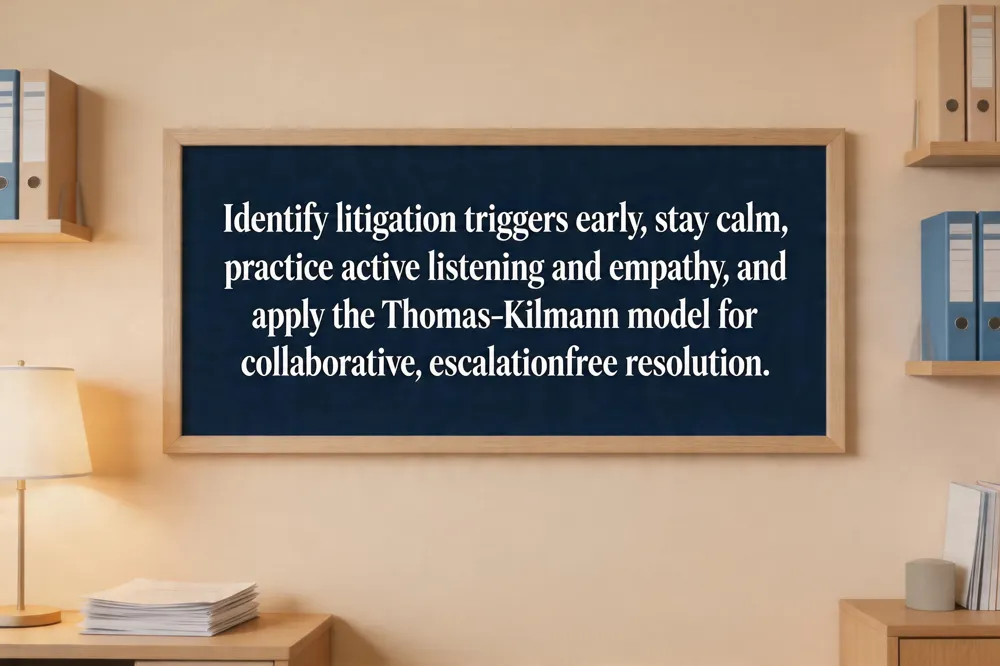 Early identification of litigation triggers—such as claimants changing their story, hiring counsel immediately, or refusing documentation—allows adjusters to intervene before disputes escalate. When a trigger is spotted, the adjuster should promptly initiate a structured communication protocol, using attorney‑approved templates and documenting every interaction to protect both parties and preserve admissible evidence.
Staying calm and using a neutral tone are foundational de‑escalation tactics. A steady, non‑confrontational voice, combined with open body language, signals professionalism and reduces the emotional temperature of the exchange. This composure creates space for the next step: Active listening.
Active listening and empathy go hand‑in‑hand. Adjusters should pause, summarize the claimant’s concerns, and ask clarifying questions. By reflecting the speaker’s feelings—"I hear you’re worried about coverage"—the adjuster validates the other party while gathering essential facts. Empathy does not equal agreement; it simply builds trust, making it easier to present objective evidence, such as medical assessments from NorCal Medical Consulting, that can resolve disagreements over injury severity.
Emotional‑intelligence training and mindfulness reinforce these behaviors. Regular workshops teach adjusters to recognize personal bias, manage stress, and pivot from reactive to proactive problem‑solving. The Thomas‑Kilmann Conflict Mode Instrument provides a practical framework: collaborative approaches for complex claims, compromising when timelines are tight, and accommodating when preserving professional relationships outweighs a single win.
Conflict resolution techniques for adjusters in the workplace
Insurance adjusters can resolve workplace conflicts by first staying calm and practicing active listening to fully understand each party’s perspective before responding. They should use empathy and assertiveness to validate concerns while clearly articulating their own needs, keeping the conversation focused on facts rather than emotions. Applying the Thomas‑Kilmann model, adjusters can choose a collaborative approach for complex claims, a compromising style for time‑sensitive disputes, or an accommodating stance when preserving professional relationships is paramount. Maintaining composure and employing problem‑solving techniques helps them develop mutually beneficial solutions that keep claims moving forward. Regular training in emotional‑intelligence and mindfulness reinforces these skills, reducing escalation and supporting smoother, more efficient claim handling.
Negotiation, Mediation, and Arbitration: Tools of the Trade
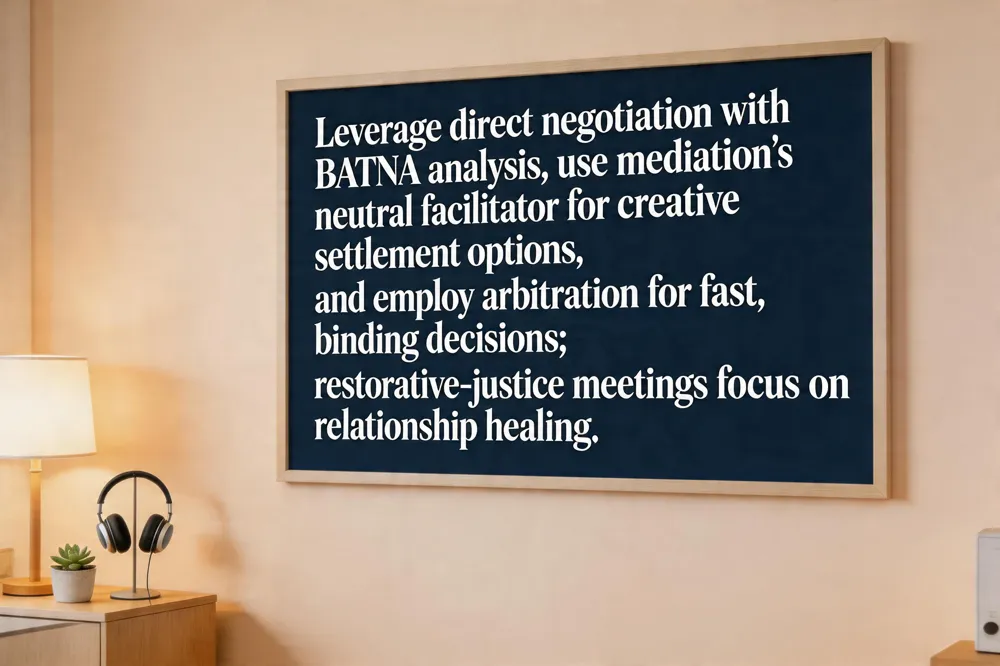 Direct negotiation basics – Negotiation is a private, voluntary dialogue where parties exchange interests without a third‑party decision maker. Adjusters and counsel often begin with a cost assessment and a BATNA analysis to frame a win‑win outcome. Active listening, reframing emotional triggers, and offering creative compromises (e.g., a modified work‑schedule after a hearing‑loss injury) keep talks constructive and preserve relationships.
Mediation with neutral third‑party facilitators – Mediation adds a confidential, impartial facilitator—often a medical consultant or trained mediator—who guides communication, clarifies facts, and helps parties generate settlement options. A typical session follows a joint opening, caucus or, and collaborative problem‑solving, ending with a written agreement. Because the mediator does not impose a decision, parties retain control, leading to faster, less costly resolutions and protecting sensitive medical information.
Arbitration as a binding decision method – When parties agree to a binding outcome, an arbitrator reviews evidence (including expert reports from firms like NorCal Medical Consulting) and issues a final award. Arbitration is faster than trial, reduces discovery costs, and provides certainty for both insurers and claimants.
Restorative‑justice meetings for workplace injuries – These meetings bring together the injured employee, employer, and colleagues to discuss harm, acknowledge responsibility, and develop restitution and safety‑improvement plans. They focus on healing relationships rather than purely monetary settlement.
Methods of conflict resolution and with examples – Negotiation (employer and employee agreeing on a phased return to work), mediation (neutral facilitator helping a worker and insurer settle a loss‑loss claim), arbitration (binding decision on a workers‑compensation dispute), restorative‑justice (team‑wide safety debrief after an injury). Each offers a quicker, cheaper alternative to litigation while preserving control.
What not to say to a Workman's Comp adjuster – Never give a recorded statement before consulting counsel; avoid speculation about injury cause or severity; do not admit fault, downplay symptoms, or discuss unrelated personal matters.
What not to say during mediation – Do not admit liability, make threats or ultimatums, introduce undisclosed medical evidence, or raise unrelated grievances. Keep statements factual and focused on the injury and desired resolution.
Practical Steps: From Direct Dialogue to Structured Solutions
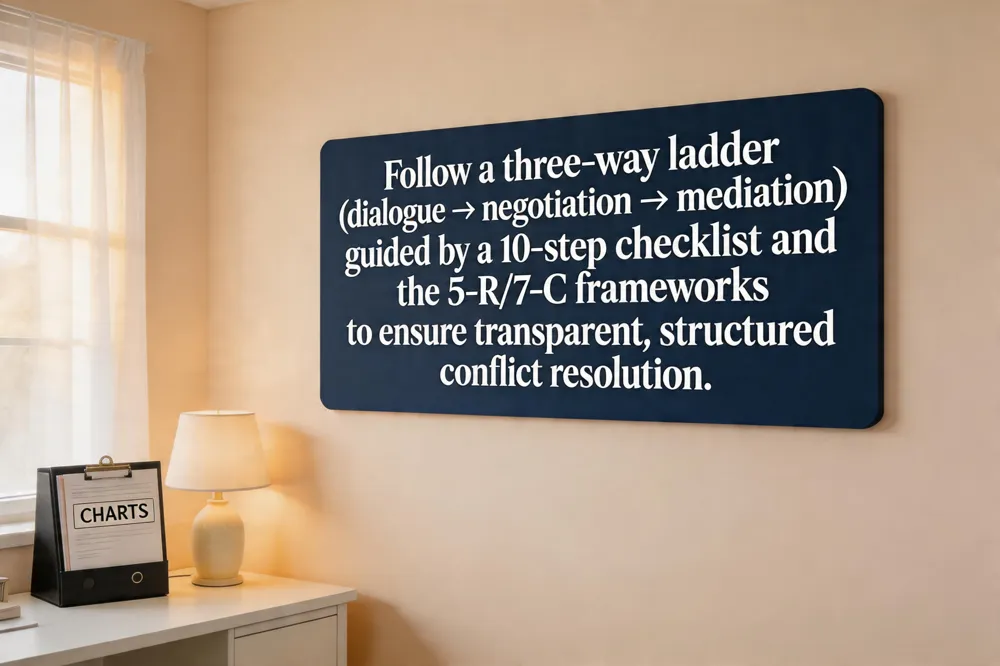 When adjusters and counsel clash, a systematic approach prevents escalation and preserves relationships. Three‑way conflict‑resolution approaches—(1) direct, respectful conversation, (2) negotiation, and (3) mediation with a neutral third‑party—provide a graduated ladder of intervention.
A ten‑step checklist keeps the process transparent: (1) set a neutral time and place, (2) define the specific issue, (3) acknowledge each party’s contribution, (4) list prior attempts, (5) brainstorm all options, (6) evaluate pros and cons, (7) select a workable solution or agree to disagree, (8) assign actionable responsibilities, (9) schedule follow‑up monitoring, and (10) adjust the plan as needed.
The five R’s framework—reframing, refocusing, referring, reconciling, and reflecting—guides adjusters through the emotional and procedural phases. Reframing neutralizes charged language; refocusing shifts attention to shared goals; referring brings in an expert mediator when needed; reconciling restores professional rapport; reflecting encourages self‑assessment for future interactions.
Complementing the R’s, the seven C’s—clarity, candor, contribution, cooperation, challenge, courage, and collegiality—ensure communication remains constructive and balanced.
Finally, the golden rule of mediation reminds every participant to treat others with genuine respect, listen actively, maintain a calm tone, and explore creative compromises.
By embedding these techniques, adjusters and legal counsel can resolve disputes efficiently, reduce litigation costs, and maintain the collaborative environment essential for effective claims handling.
Financial Realities: Settlement Offers and Compensation
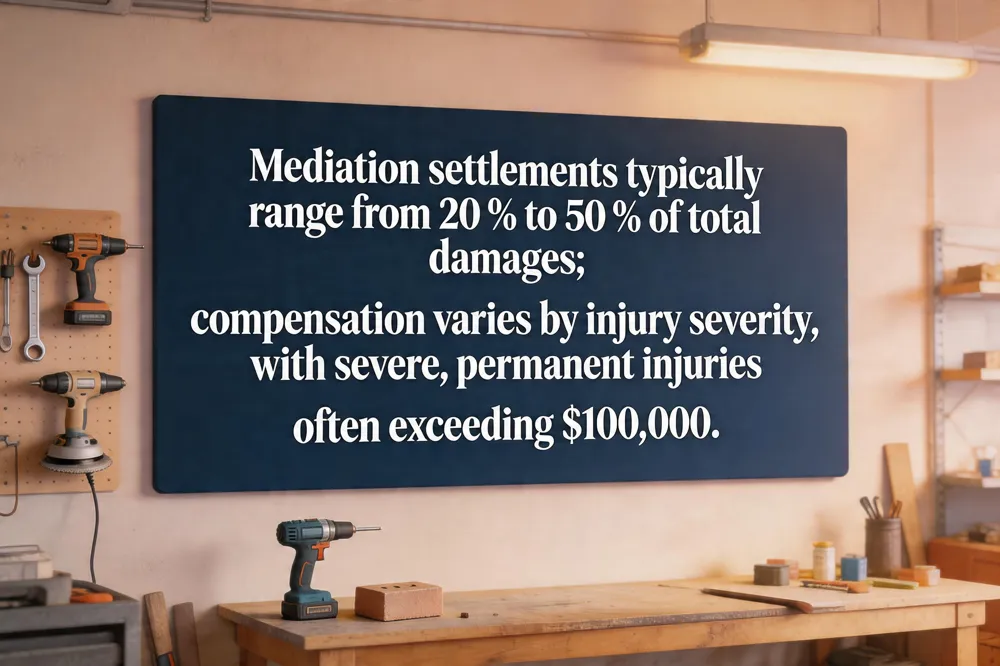 Mediation has become the workhorse of dispute resolution in workers’ compensation and other workplace injury claims. Across the United States, the average settlement offer during mediation falls between 20 % and 50 % of the total damages claimed. This broad range reflects several drivers: the strength of liability, the magnitude of medical and wage losses, each party’s urgency to close the case, and the mediator’s ability to frame a mutually acceptable compromise. In claims involving auditory loss or other high‑cost injuries, offers tend to cluster toward the upper end of the band because future earning impacts and long‑term rehabilitation expenses are substantial.
What is the average settlement offer during mediation? The typical mediation offer is 20 %–50 % of the plaintiff’s total loss. Liability strength, injury severity, and the parties’ settlement motivations push the figure up or down, and a mediator may issue a formal “Mediator’s Proposal” when negotiations stall.
How much compensation can you get for an injury at work? Compensation varies by injury type and severity. Minor sprains may yield a few thousand dollars; moderate injuries such as a broken wrist or serious back strain often settle between $30,000 and $50,000; severe, permanent injuries—total hearing loss, traumatic brain injury—can exceed $100,000. Special damages (lost wages, medical bills, rehabilitation) are added to the general‑damage base, and state workers’ compensation statutes or Judicial College‑style guidelines dictate the final figure. Consulting a medical‑legal expert is essential to calculate a realistic recovery estimate.
Training, Certification, and Policy Frameworks
 Insurance Adjuster Conflict Management Training
Effective training programs combine calm‑maintenance techniques, active listening, and empathetic communication. Modules teach adjusters to acknowledge conflict early, use a neutral tone, and reflect claimants’ feelings. Role‑playing difficult conversations, body‑language awareness drills, and documentation exercises reinforce these skills. Resources such as the Practical Adjusting course and specialized workshops provide scenario‑based practice, enabling adjusters to defuse tension, protect professional relationships, and streamline claim resolution.
Insurance Adjuster Conflict Management Certification
Certification pathways—like The Institutes’ Associate in Claims (AIC) and CATI’s Conflict Resolution courses—offer dedicated instruction in de‑escalation, collaborative problem‑solving, and ethical documentation. Graduates receive a credential that signals competency in handling high‑tension claims, reduces resolution time, enhances client satisfaction, and limits legal exposure. The certification emphasizes structured negotiation, use of attorney‑approved templates, and adherence to interaction protocols.
Conflict Resolution Policies
A comprehensive policy outlines step‑by‑step procedures for addressing workplace disputes promptly and fairly. It encourages open communication, defines escalation routes (including mediation and formal investigation), and sets timelines for response and documentation. For firms such as NorCal Medical Consulting, the policy safeguards the integrity of expert auditory‑loss assessments, ensures compliance with state regulations, and promotes a respectful culture that minimizes litigation risk.
Conflict Management Tools
Key tools include centralized digital platforms for secure documentation, standardized naming conventions, and case‑management software that streamline information retrieval. Communication protocols—like predefined response times, written summaries, and “I” statements—support transparent, assertive dialogue. Joint fact‑finding sessions with neutral experts and BATNA analysis further reduce misunderstandings, foster win‑win outcomes, and preserve professional relationships.
Overall Impact
Integrating targeted training, recognized certification, clear policies, and robust tools equips adjusters and counsel to manage conflicts efficiently, protect claim integrity, and achieve faster, cost‑effective resolutions.
Supporting Resources and Expert Insights
 The Office of Injured Employee Counsel (OIEC) plays a pivotal role in Texas workers’‑claims disputes, offering claimants direct representation and guidance through benefit‑review conferences and contested‑case hearings. While staff praise the agency’s mission‑driven impact and hybrid work flexibility, Glassdoor data shows an average 3.7‑star rating, with concerns about limited upward mobility, modest salaries, and heavy caseloads that can lead to burnout.
Mediation certification has become a valuable credential for professionals handling workplace‑injury claims. Most accredited programs require 30‑40 hours of foundational training, followed by an apprenticeship that includes observing real mediations and completing ethics and specialty modules. Candidates must demonstrate competency in simulated mediations before receiving certification, and must maintain it through a minimum number of mediations and continuing‑education hours each year. For firms like NorCal Medical Consulting, certified mediators enhance credibility when advising on auditory‑loss disputes and streamline settlement negotiations.
When speaking with an insurance adjuster, avoid admissions that could be construed as fault or down‑playing injuries. Do not say, “I’m sorry, I should have seen that,” or “I’m fine,” as these statements may be used against you. Refrain from speculation; stick to facts you clearly remember and state uncertainty when appropriate. Never provide a recorded statement or sign documents without first consulting an attorney, and keep prior medical history out of the conversation unless advised.
To outsmart an adjuster, maintain meticulous documentation of all losses—medical bills, out‑of‑pocket expenses, and lost wages. Robust evidence limits the adjuster’s ability to deny or lowball the claim.
Not all disputes are suited for mediation. Cases involving minors, criminal conduct, third‑party rights, or complex environmental issues typically fall outside mediation’s scope and may require litigation or other ADR mechanisms.
Putting It All Together: A Roadmap for Adjusters and Counsel
A successful dispute‑resolution strategy hinges on three interlocking pillars. First, integrating communication protocols and technology requires a standardized, secure platform where adjusters, counsel, and medical experts exchange updates, share standardized templates, and log every interaction for later admissibility. Automated alerts and centralized repositories cut retrieval time by up to 60%, keeping both sides on the same factual footing. Second, leveraging expert medical assessments—such as audiometric reports from firms like NorCal Medical Consulting—provides an objective, data‑driven baseline that narrows the “he said‑she said” gap and supports joint fact‑finding sessions. Finally, continuous training and policy refinement ensure that adjusters master de‑escalation, active listening, and the latest ADR techniques while counsel stays current on procedural rules, BATNA analysis, and emerging mediation best practices. Regular joint workshops, role‑playing scenarios, and feedback loops create a culture of collaboration that reduces litigation risk, accelerates settlements, and preserves professional relationships.