The Power of Real‑Time Chronologies in Workers’ Compensation
Timelines are the backbone of personal‑injury and workers’‑ claims because statutes of limitations, medical‑treatment windows, and settlement milestones vary by state and injury type. Modern timeline platforms therefore bundle automated deadline alerts, secure two‑way messaging, and AI‑generated chronologies that pull dates from electronic health records and claim filings. When all parties—injured workers, employers, medical providers, insurers, and attorneys—view a single, time‑stamped record, miscommunication drops dramatically, duplicate work is eliminated, and critical dates such as the 90‑day investigation period or maximum‑medical‑improvement assessment are never missed. Shared, cloud‑based timelines also enable real‑time notifications, role‑based access, and audit‑ready documentation, ensuring compliance, faster claim resolution, and higher client satisfaction.
Why Shared Timeline Tools Matter
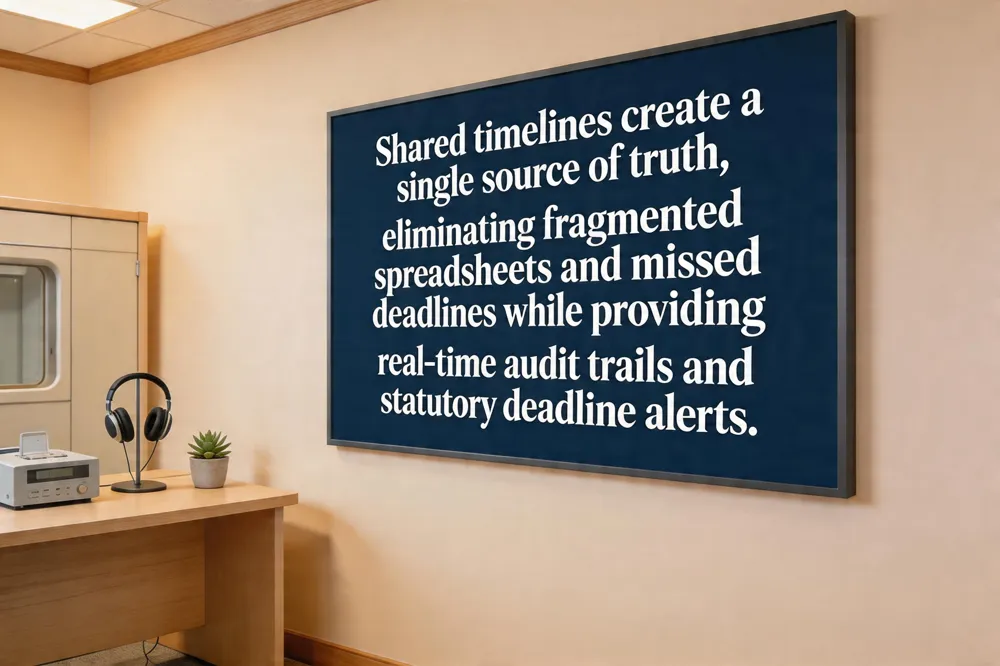 A single source of truth eliminates the fragmented spreadsheets, email threads, and missed deadlines that plague personal‑injury claims. When attorneys, medical experts, insurers, and clients view the same real‑time chronology, communication becomes transparent, audit trails are automatically generated, and statutory deadlines—often state‑specific—are reliably met.
Free tools that can be deployed immediately
- Google Sheets/Excel Online: a shared spreadsheet where each row is an event (injury, appointment, filing) and PDFs are attached. upload
- Trello: visual cards for milestones, due‑date reminders, checklists, and file uploads.
- Airtable (free tier): calendar view, color‑coded tags, and linked records for missing documents.
- Asana Basic: shared project timeline assigning tasks to attorneys, doctors, or insurers.
Step‑by‑step guide to building a lawsuit timeline
- Collect all evidence—medical records, incident reports, witness statements, photos, video.
- Identify each key event, record the exact date, and note participants.
- Enter events chronologically in a chosen tool, attaching source documents.
- Use AI transcription to convert audio testimonies into searchable text.
- Review with legal and medical experts to fill gaps and flag critical deadlines.
- Export as PDF or interactive web view for courts, opposing counsel, or insurers.
Injury Case Management Companies
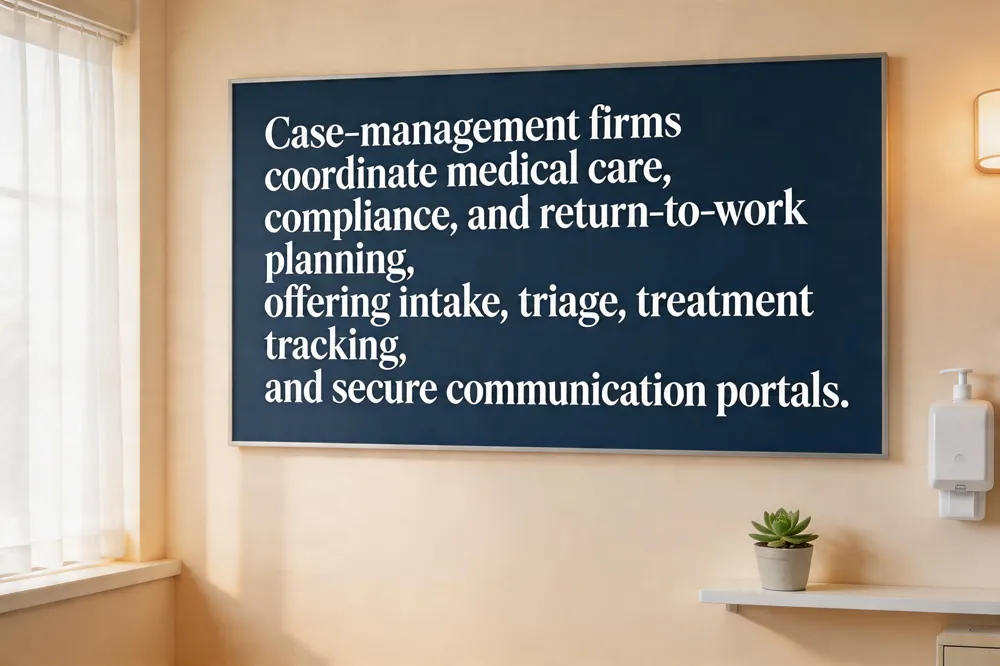 Injury case management companies specialize in coordinating medical care, regulatory compliance, and return‑to‑work planning for workplace injuries. Core services typically include intake and incident reporting, nurse triage and ongoing clinical assessment, treatment plan development, lien and expense tracking, and secure communication portals for employers, insurers, and legal counsel. Leading providers and their specialties are:
- Axiom Medical – 24/7 nurse triage, a mobile app for real‑time symptom reporting, mental‑health support, and integration with electronic health records (EHR) to keep timelines accurate.
- WorkCare – Comprehensive occupational health oversight, cost‑control strategies, on‑site health‑risk assessments, and robust analytics to identify injury patterns.
- Paradigm – Field‑based, telephonic, and catastrophic case management with a focus on ROI and rapid return‑to‑work planning.
These firms serve high‑risk sectors such as manufacturing, construction, and energy, assigning a single point of contact to streamline communication among all stakeholders. NorCal Medical Consulting collaborates with these specialists by providing expert auditory‑loss assessments, detailed medical chronologies, and AI‑enhanced timelines that strengthen legal and insurance claims, ensuring accurate documentation and timely deadlines.
Axiom Medical: A Leader in Occupational Health
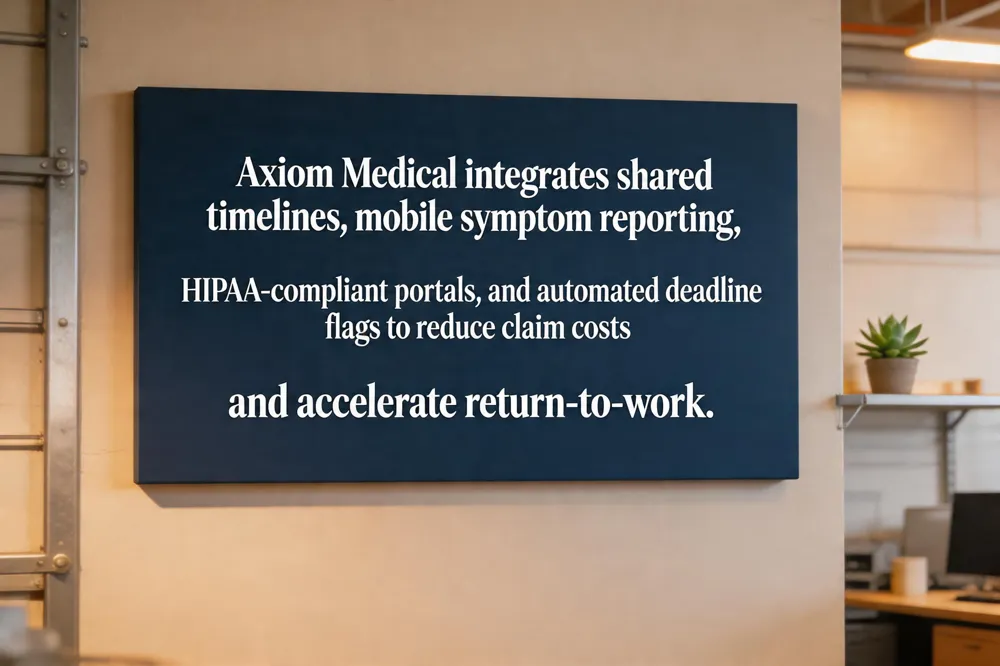 Axiom Medical is a United States‑based occupational health firm that delivers comprehensive injury case‑management services for employers across manufacturing, construction, oil‑and‑gas, and energy sectors. Its platform integrates a shared timeline that logs injury reports, nurse triage notes, treatment plans, medical examinations, and return‑to‑work milestones, giving all stakeholders a single source of truth. The timeline updates in real time, automatically flags statutory deadlines such the OSHA reporting windows and workers’ compensation filing periods, and generates audit‑ready records for legal defense. Axiom’s proprietary mobile app lets injured workers self‑report symptoms, schedule appointments, and receive instant alerts, while case managers view the same data through a secure cloud portal that complies with HIPAA and ISO 27001 standards. The platform also syncs with electronic health records and workers’ compensation claim systems, supporting seamless data flow from incident to claim closure. By combining clinical expertise, legal‑process support, and industry‑specific compliance tools, Axiom Medical helps employers reduce claim costs, accelerate return‑to‑work outcomes, and mitigate the risk of missed deadlines that could jeopardize workers’ compensation benefits.
Communicating with Workers’ Comp Adjusters
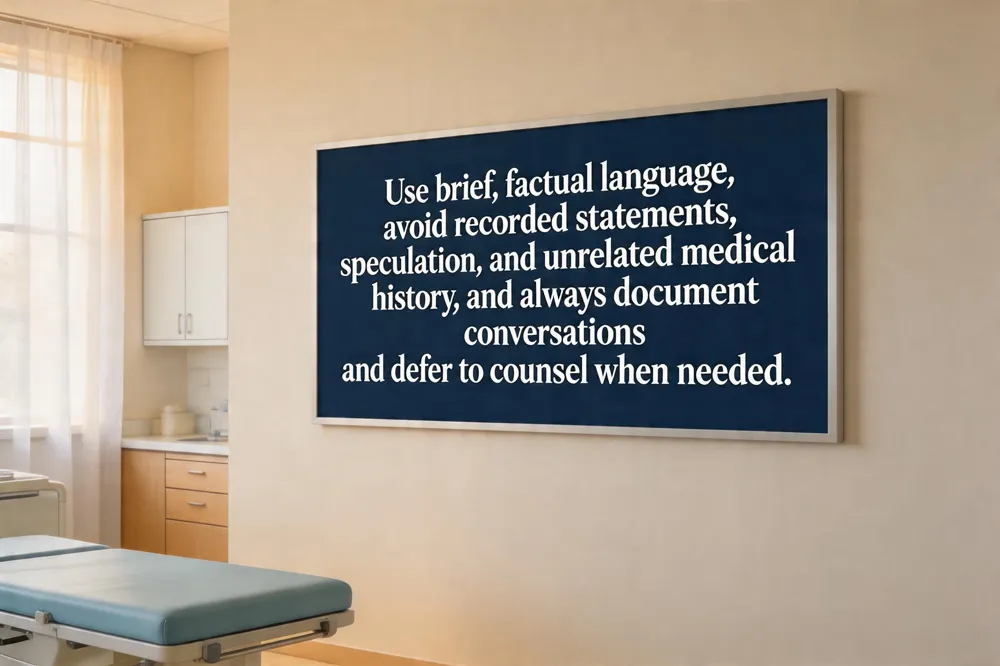 When speaking with a workers’ compensation adjuster, avoid common pitfalls that can erode claim value. Do not agree to a recorded statement before consulting your attorney; anything you say may be used against you. Do not speculate about the cause of the injury, the extent of your symptoms, or future medical needs—if you’re unsure, simply state you don’t know or don’t remember. Do not introduce unrelated medical history or prior injuries unless the adjuster asks and a doctor’s documentation links them to the current claim. Never admit fault, downplay pain, or suggest you can “just get over it.”
Protect your claim with careful language: keep responses brief, factual, and limited to the work‑related incident and the resulting injury. Use clear, objective terms and refer to medical records when possible.
Practical tips for responding to inquiries:
- Request clarification before answering a complex question.
- Document every conversation (date, time, topics, and your exact replies).
- Forward all written requests to your attorney for review.
- If a question falls outside your knowledge, politely defer to your physician or counsel.
What not to say to a Workers’ Comp adjuster? Do not agree to a recorded statement without first consulting your attorney, because anything you say can be used against you. Avoid speculating, guessing, or offering opinions—if you’re unsure, simply say you don’t know or don’t remember. Do not bring up unrelated medical conditions, family history, or prior injuries unless the adjuster asks specifically and you have a doctor’s documentation linking them to the current claim. Never admit fault, downplay your symptoms, or suggest you can “just get over it,” as these remarks can diminish the value of your claim. Keep every response brief, factual, and limited to the details of the work‑related incident and the resulting injury.
Navigating Claim Status and Numbers by State
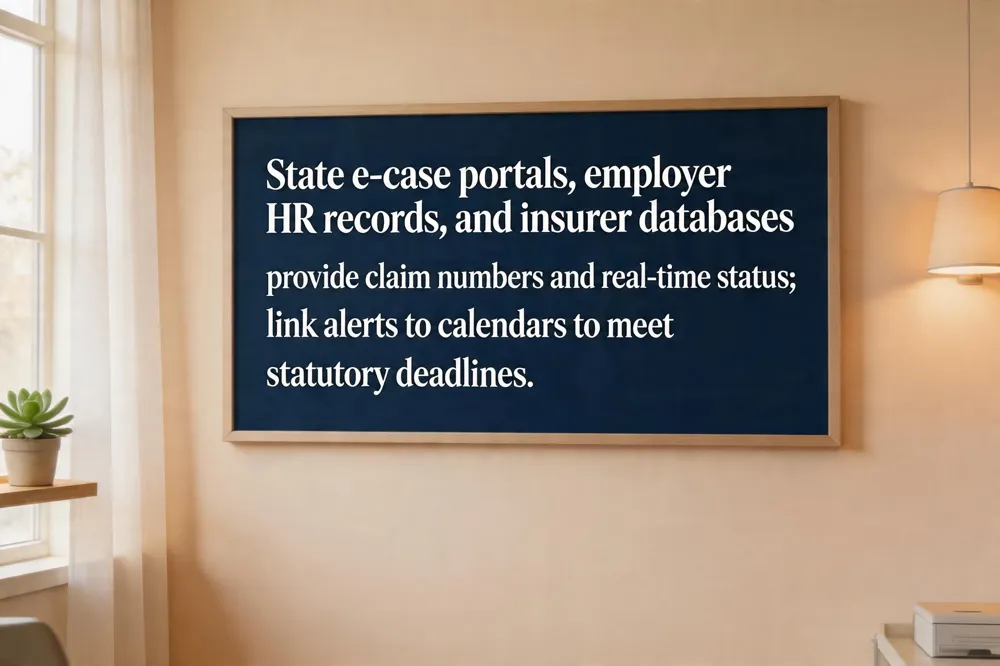 Personal‑injury and workers’ compensation claims hinge on timely access to accurate status information and the correct claim number. Across the United States, state‑run online portals, employer‑maintained records, and insurers’ claim‑tracking tools form the backbone of a transparent claims process.
Online portals for claim status checks – Most states provide an e‑case system where parties can view real‑time updates. In New York, the Board’s eCase portal (eCase.ny.gov) shows payment authorizations, pending medical reviews and and deadline alerts once a user registers as a party of interest. California’s Division of Workers’ Compensation (https://www.dir.ca.gov/dwc/) offers a similar dashboard, while Texas’ TXCOMP portal lets the public search non‑confidential claim data by employer or claim number. These portals reduce phone‑call volume and give injured workers a single source of truth for dates such as injury occurrence, medical examinations, and settlement offers.
How to locate claim numbers – The claim number is usually issued by the employer’s human‑resources or claims department at the time of filing. If unavailable, the insurance carrier can retrieve it after identity verification, and most state boards maintain searchable databases (e.g., Pennsylvania’s WCAIS portal or Georgia’s Employer Coverage Verification). California’s Workers’ Compensation Insurance Rating Bureau (WCIRB) also provides a searchable interface for authorized parties.
State‑specific resources –
- New York: eCase portal, 877‑632‑4996 customer line, and the NYS Insurance Fund “Where’s My Check” page.
- Texas: TXCOMP portal, Texas Open Data Portal for subscriber lists, and email verification at coverage.verification@tdi.texas.gov.
- Pennsylvania: WCAIS (www.wcais.pa.gov) for claim numbers and the BWC helpline (800‑482‑2383).
- California: DIR/DWC website and the Department of Industrial Relations’ claim‑filed resources.
Free tools for tracking deadlines – Many platforms integrate automated deadline alerts that flag statutory filing periods, medical‑examination windows, and payment due dates. Open‑source calendar syncs (Google Calendar, Outlook) can be linked to portal alerts, while AI‑driven services such as NorCal Medical Consulting’s timeline software provide free initial assessments of claim milestones and assist in preventing missed deadlines.
Answering key questions
- Check workers' comp claim status: Log into the state e‑case portal with the eight‑character case number to view current status, insurer details, and key dates. If portal access fails, contact the employer’s administrator or insurer directly.
- Workers' compensation check status NY: Register on eCase.ny.gov as a party of interest, then review the “Case Info” and “Case Folder” tabs for real‑time updates. Phone assistance is available at 877‑632‑4996.
- Workers' Comp claim number lookup: Start with the employer’s HR or claims department; if needed, request the number from the insurer or use state board search tools (e.g., Georgia’s employer verification portal).
- Texas workers' compensation case search: Use TXCOMP to search by employer or claim number; additional data are available via the Texas Courts website and Open Data Portal.
- WCAIS claim number: Access the Pennsylvania WCAIS portal (www.wcais.pa.gov) or call the BWC helpline for the unique identifier used in all BWC filings.
- BWC claim status: Log into the BWC e‑Account using your claim number to view processing stage, required documentation, and upcoming deadlines.
- State workers' compensation Board website: A comprehensive directory of each state’s agency is maintained by the U.S. Department of Labor at https://www.dol.gov/general/topic/workcomp.
- CorVel claim status: Register or log into the CorVel Claimant Portal for real‑time claim updates, or contact CorVel support (844‑881‑2109) for assistance.
By leveraging these portals, claim‑number lookup methods, and automated deadline tools, injured workers and their attorneys can keep claims on track, meet statutory deadlines, and improve overall satisfaction throughout the injury resolution process.
Injury and Medical Consulting Expertise
 What is an injury consultant?
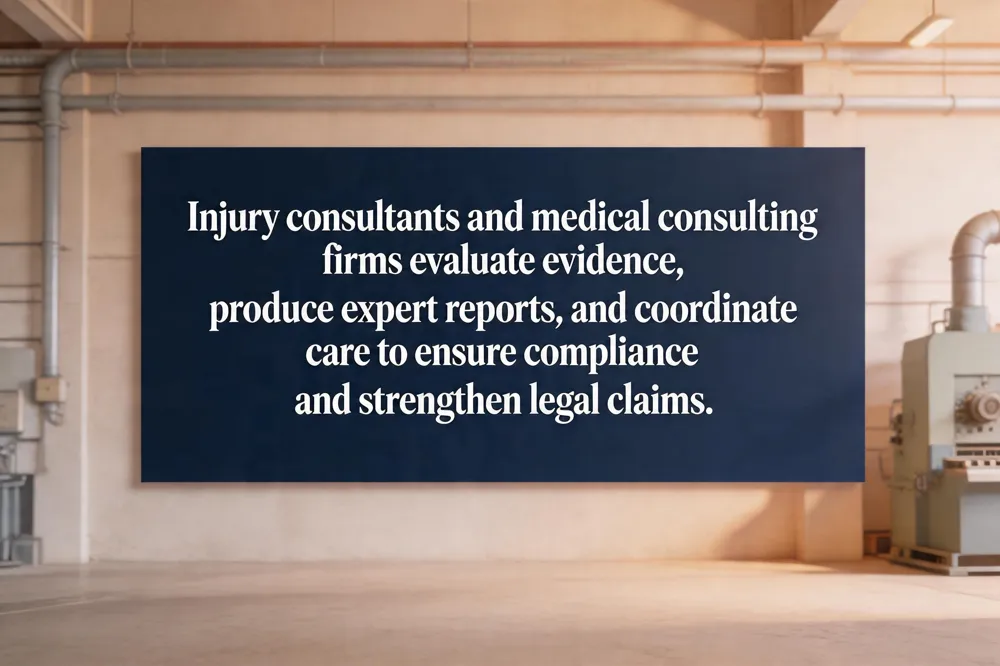
An injury consultant is a specialized professional who guides employers, insurers, and healthcare providers through the complex process of workplace injury management and return‑to‑work planning. Acting as a strategic intermediary, the consultant coordinates communication, documents injuries, and ensures compliance with legal and regulatory requirements. By evaluating medical evidence—such as auditory‑loss assessments—and translating it into clear, actionable recommendations, the consultant helps secure accurate legal and insurance claims.
What does a medical consulting company do?
A medical consulting firm provides expert clinical assessments and case evaluations that clarify the nature and extent of workplace injuries. It reviews medical records, conducts independent examinations, and produces detailed reports that support legal, insurance, and employer decision‑making. The firm also advises on regulatory compliance, risk‑management, and quality‑improvement strategies to reduce future injuries. In auditory‑loss cases, consultants quantify hearing damage, assess functional impact, and generate documentation for negotiations or litigation.
What is an injury management consultant?
Injury Management Consultants (IMCs) are health‑care professionals appointed to coordinate medical care, rehabilitation, and return‑to‑work planning for injured employees. They serve as the liaison among the worker, employer, insurer, and treating physicians, ensuring treatment follows a timeline, statutory deadlines are met, and the worker safely returns to duty while minimizing costs. IMCs often integrate shared timeline tools within case‑management platforms to keep all stakeholders aligned in real time.
Settlement Calculations, Red Flags, and Good Offers
 How much of a $100K settlement will I get?
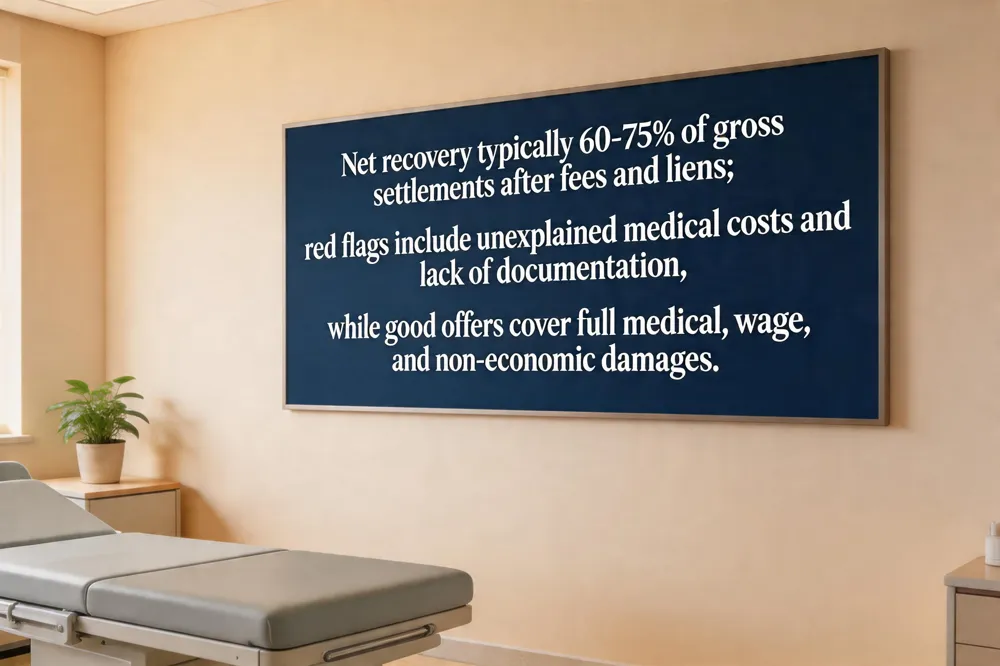
Typical net recovery after a $100,000 settlement is about 60 % to 75 % of the gross amount once attorney fees, medical liens, and other third‑party costs are deducted. Attorney fees usually range from 25 % to 33 % of the settlement, while medical providers and insurers may have liens that further reduce the payout. The exact net figure depends on the specific fee agreements and lien amounts in your case. NorCal Medical Consulting can review your settlement details and help you understand the final net amount you can expect.
Which of the following is a red flag in workers' compensation claims?
A red flag appears when an employee insists they cannot work even after a physician has cleared them for return‑to‑work, when the claim generates more medical bills or visits than are typical for the diagnosed injury, or when there is a lack of objective medical documentation such as imaging or test results. Additional warning signs include a disgruntled or recently disciplined employee, patterns of “doctor shopping,” or treatment only from providers known for suspect claims.
What are signs of a good settlement offer?
A good settlement offer fully covers 100 % of past and future medical expenses, compensates for lost wages and reduction in earning capacity, and includes non‑economic damages such as pain, suffering, and loss of enjoyment of life. The offer should be based on documented, realistic evidence—medical records, expert testimony, and accident reports—rather than a quick, lowball figure. A willingness by the insurer to negotiate further indicates a genuine effort to reach a fair resolution.
Is bursitis covered under workers' compensation?
Yes, bursitis is generally covered under workers’ compensation when it is caused or aggravated by job duties. The claimant must show that repetitive motions, prolonged pressure, or awkward postures performed at work led to the inflammation. Once accepted, the claim provides medical benefits (doctor visits, physical therapy, imaging, injections, surgery) and wage‑replacement benefits up to 95 % of pre‑injury earnings. Documentation linking the condition to workplace activities is essential, and the claim must be filed promptly after symptoms appear.
What is the timeline for a personal injury claim?
A personal injury claim typically starts with an initial consultation and notice to the other party within the first week after the accident. Gathering medical records, witness statements, and other evidence can take several weeks to a few months. An independent medical examination may add a few more weeks. Negotiations with the insurer may resolve straightforward cases in three to six months, while complex claims involving serious injuries, multiple parties, or disputed fault can extend to 18 months or longer. If settlement cannot be reached, the case may proceed to court, adding additional time, but most claims still resolve before trial.
Putting It All Together: A Timeline‑First Strategy
Shared timeline platforms give every stakeholder—attorneys, medical experts, insurers, and injured workers—a single, real‑time view of critical dates, medical events, and statutory deadlines. By centralizing injury reports, treatment milestones, and settlement milestones, they eliminate duplicated spreadsheets, cut miscommunication, and provide an audit‑ready chronology that strengthens demand letters and courtroom presentations. Firms can start with free, cloud‑based tools such as TrialLine’s basic plan or the open‑source Aeon Timeline to pilot the workflow, then graduate to paid solutions like Casefleet, SmartAdvocate, or CloudLex that add AI‑generated chronologies, automated deadline alerts, and secure client portals. For practices handling complex occupational injuries—especially auditory loss or catastrophic claims—partnering with NorCal Medical Consulting brings expert medical assessments, precise audiometric documentation, and litigation‑ready timelines that accelerate claim resolution and protect statutory rights. Embracing a timeline‑first approach ensures compliance, improves client satisfaction, and drives more favorable settlement outcomes.