Unveiling Advances in Objective Audiometry
Assessing auditory function accurately is pivotal in diagnosing hearing impairments, particularly in populations unable to provide behavioral feedback. The Auditory Steady-State Response (ASSR) test has emerged as a revolutionary electrophysiological method offering objective, frequency-specific hearing threshold estimations. This article explores the latest innovations enhancing ASSR testing accuracy and efficiency, driving transformative improvements in auditory loss evaluation.
Fundamentals and Clinical Utility of ASSR Testing
What is ASSR and why is it important in auditory assessment?
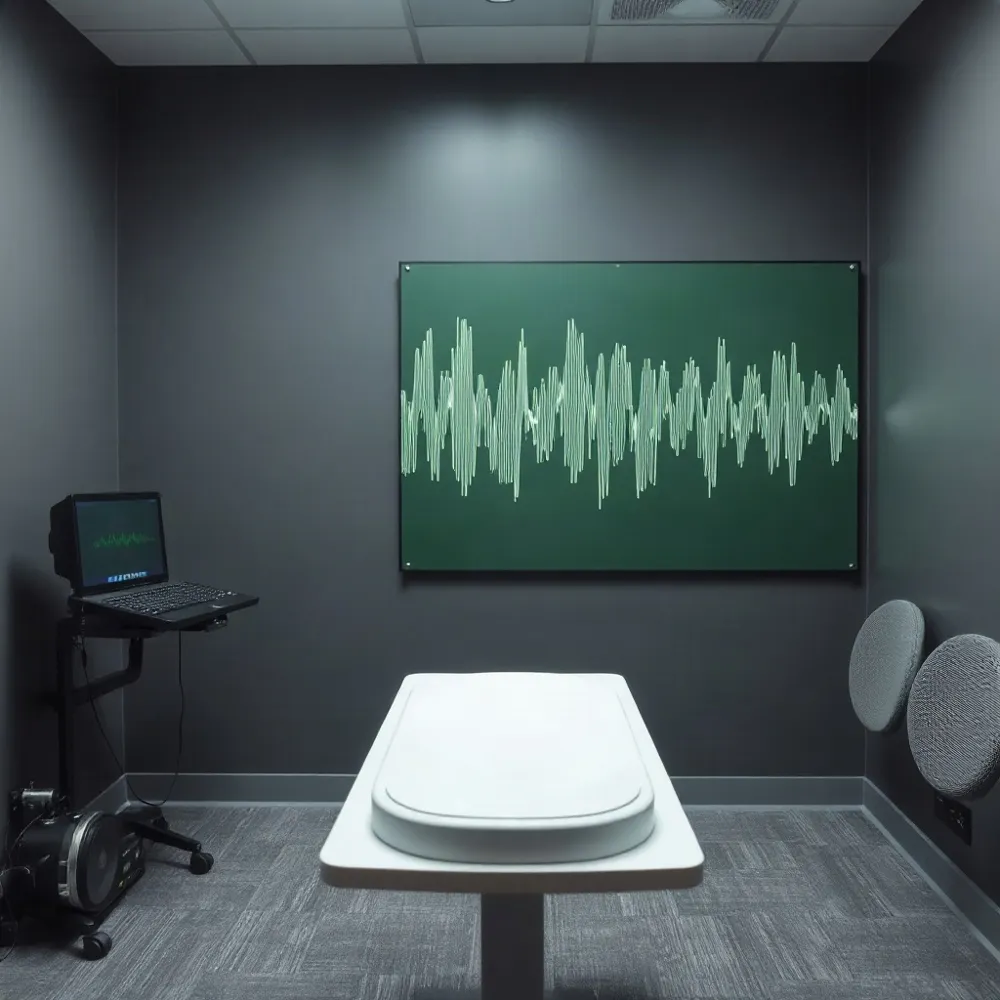
ASSR, or Auditory Steady-State Response, is an objective electrophysiological test that records brain activity in response to continuous auditory stimuli. This test estimates hearing thresholds by analyzing frequency-specific neural responses recorded through scalp electrodes. It is especially valuable for populations who cannot perform traditional behavioral hearing tests, such as infants, young children, or people with disabilities (Hearing test for infants and children).
Basic principles and mechanisms of ASSR
ASSR utilizes rapid auditory stimuli, including amplitude and frequency modulated tones, to evoke steady-state brain responses. These responses arise from multiple neural generators across the auditory pathway, from the brainstem to the auditory cortex. The test captures these responses at various frequencies simultaneously, using statistical spectral analysis of amplitude and phase data.
Applications in populations with limited behavioral responses
Because ASSR testing is objective and non-invasive, it is ideal for evaluating hearing in individuals unable or unwilling to cooperate with traditional audiometry. The ability to measure multiple frequencies concurrently and in both ears reduces testing time significantly, which is critical during natural sleep or sedation in infants (Simultaneous multifrequency testing with ASSR). This makes ASSR a safe hearing test for all ages.
Comparison with traditional hearing tests
Unlike the Auditory Brainstem Response (ABR) test, which assesses neural responses in the time domain and typically covers one frequency at a time, ASSR provides a more efficient simultaneous multifrequency audiogram. ASSR thresholds generally correlate closely with behavioral audiometry, usually within 10-15 dB, while offering faster, more reliable results in challenging clinical contexts. Its advanced statistical detection reduces subjective interpretation bias, making it a complementary tool especially useful for early diagnosis and intervention planning.
Technological Innovations Elevating ASSR Accuracy and Efficiency
How have recent technological advances improved the accuracy and speed of ASSR testing?
Recent advances in ASSR testing have dramatically enhanced both accuracy and efficiency. One major leap is the development of next-generation detection algorithms that analyze multiple harmonics of the Auditory Steady-State Response (ASSR), improving the reliability of detecting neural responses. These algorithms reduce tester bias by automating the recognition of low-amplitude signals with robust statistical methods.
Another critical innovation is the adoption of narrow-band CE-Chirp stimuli. These stimuli are designed to synchronize the activation of nerve fibers across specific frequency bands more effectively than traditional tone bursts, particularly at lower frequencies such as 500 Hz. This synchronization boosts the amplitude and quality of the ASSR, yielding more sensitive threshold measurements.
Together, these technological upgrades contribute to significantly shorter test times. For example, studies report that a comprehensive ASSR audiogram in infants can now be completed in about 20 minutes, compared to the more than 30 minutes typically required by Auditory Brainstem Response (ABR) testing. The enhanced detection sensitivity also means thresholds recorded by ASSR can be up to 14 dB lower, enabling more precise estimations of hearing abilities across multiple frequencies simultaneously.
These improvements make ASSR testing a powerful and practical tool for clinical audiology, particularly benefiting populations such as infants and young children who cannot reliably participate in traditional behavioral hearing tests. The ongoing integration of these technologies ensures more rapid and accurate hearing assessments with reduced stress and time burden on patients and clinicians alike.
Integration of Artificial Intelligence in ASSR Testing
In what ways does artificial intelligence contribute to improving ASSR testing and auditory diagnostics?
Artificial intelligence (AI), especially machine learning, plays a transformative role in augmenting ASSR testing and auditory diagnostics. By automating the interpretation of ASSR responses, AI eliminates much of the subjective variability traditionally involved in detecting hearing thresholds. Advanced statistical detection algorithms powered by AI analyze the amplitude and phase data within the spectral domain, leading to more precise and objective audiogram generation (Auditory Steady-State Response (ASSR) overview).
Machine learning models classify audiograms efficiently and predict hearing impairments at early stages, leveraging large datasets and genetic or environmental risk factors. This capability enhances diagnostic accuracy and allows for timely interventions, especially critical in populations such as infants or patients unable to respond behaviorally (Next-Generation ASSR vs ABR in Infants).
Beyond diagnosis, AI integrates electronic health records and hearing assessment data to streamline patient management and personalize rehabilitation strategies, improving overall patient outcomes. The field of computational audiology promises further innovations, including automated audiometric testing, improved delineation of auditory profiles, and adaptive hearing device programming. These advancements collectively increase the accessibility, speed, and reliability of clinical auditory assessments using ASSR techniques (ASSR Hearing Test.
Optimizing EEG and Data Analysis Methods to Enhance ASSR Quality
Advances in electrode placement and multi-channel EEG integration
Electrode placement in ASSR testing typically follows a vertical montage with active electrodes at the vertex and the mastoid or earlobe, and a ground electrode on the forehead or nape. Recent methodological improvements incorporate multi-channel EEG for ASSR analysis, allowing integration of signals across multiple electrodes. This approach enhances the estimation of ASSR by pooling data, leading to improved detection sensitivity and reliability of responses.
Data pre-processing and choice of reference schemes
Pre-processing strategies and choice of reference electrode play a critical role in the accuracy of ASSR measurements. Mastoid electrodes for ASSR, commonly used as reference points, are not electrically neutral and can influence both amplitude and phase measures of ASSR. Alternative referencing methods such as linked mastoids or common average referencing can enhance signal quality. Tailoring EEG data re-referencing and preprocessing to account for phase relationships and frequency-dependent source contributions improves the fidelity of neural responses.
Detection methodologies that improve response reliability
Sophisticated detection algorithms analyzing phase-locking value (PLV) and root-mean-square of PLV (PLVRMS) in ASSR across channels have shown to detect ASSRs efficiently with fewer trials. These spectral-domain approaches take advantage of amplitude and phase information at stimulus frequencies and harmonics, yielding more objective and robust detection than traditional waveform analysis. Such methodologies also accommodate phase variability across channels, bolstering reliability in clinical applications.
Optimizing electrode configuration, integrating multi-channel EEG data, carefully selecting reference schemes, and applying advanced spectral detection algorithms collectively enhance ASSR testing accuracy, making it a more robust and efficient tool for objective audiometry.
Clinical Reliability and Limitations of ASSR in Pediatric Populations
How reliable is ASSR testing in infants and children, and what are its limitations?
Auditory Steady-State Response (ASSR) testing demonstrates high reliability when used in pediatric populations, including infants and young children. Studies report sensitivity and specificity rates exceeding 90%, making ASSR a highly accurate tool for diagnosing hearing loss in this demographic. It compares favorably with Auditory Brainstem Response (ABR) testing, often providing faster test times, which is a critical advantage for testing infants during natural sleep or sedation.
Comparative sensitivity and specificity with ABR
ASSR and ABR tests both objectively measure hearing thresholds but differ in methodology and efficiency. ASSR allows simultaneous multifrequency assessment, resulting in test times averaging around 20 minutes, noticeably shorter than ABR, which can exceed 30 minutes. Sensitivity and specificity of ASSR are reported around 92.2% and 89.2%, respectively, closely matching ABR's accuracy, particularly at higher frequencies (2000–4000 Hz). This efficiency makes ASSR especially useful in clinical settings requiring rapid diagnosis. For more on this comparison see Next-Generation ASSR vs ABR in Infants.
Threshold correlations with behavioral audiometry
ASSR thresholds generally correlate well with behavioral audiometry, typically within 10 to 15 decibels. Although ASSR thresholds tend to be slightly higher—especially in mild hearing loss—advanced correction tables and statistical methods improve their accuracy. Frequency-specific responses measured by ASSR reflect hearing abilities accurately across standard audiometric frequencies (500 Hz to 4000 Hz). These correlations facilitate reliable fitting of hearing aids and early intervention in children who cannot participate in subjective hearing tests. See detailed analysis in Auditory Steady State Response and Frequency-specific hearing analysis.
Factors limiting ASSR reliability in young infants and diagnosing auditory neuropathy
Despite its utility, ASSR has limitations, particularly in very young infants under two weeks old, where responses may be less reliable due to immature neural synchrony. Additionally, ASSR cannot effectively diagnose auditory neuropathy spectrum disorder (ANSD) because it depends on synchronous neural firing, which is disrupted in ANSD. Response variability in pediatric populations necessitates cautious interpretation, often requiring complementary tests like ABR and otoacoustic emissions (OAE) for comprehensive assessment. These limitations and safety considerations are discussed in Comprehensive audiological assessment including ASSR.
Overall, ASSR is a valuable and efficient tool in pediatric audiology but must be applied with an understanding of its constraints to ensure accurate diagnosis and appropriate treatment planning. For an overview of ASSR benefits and applications, visit ASSR Hearing Test.
Role of ASSR in Monitoring Advanced Hearing Loss Treatments
How is ASSR used to assess treatment efficacy in emerging hearing loss therapies?
Auditory Steady-State Response (ASSR) is increasingly utilized alongside Auditory Brainstem Response (ABR) and pure-tone audiometry as an objective measure to evaluate hearing recovery, particularly following gene therapy interventions. These electrophysiological tests provide quantifiable data on auditory function without relying on patient behavioral responses, which is vital in monitoring progress in patients, including young children or those with cognitive challenges.
Objective measurement of hearing recovery
Clinical studies indicate that ASSR thresholds significantly correlate with pure-tone audiometry and ABR results post-treatment, providing consistent objective evidence of auditory improvement. For example, research involving gene therapy targeting the OTOF gene mutation demonstrated marked improvements in ABR wave latencies and amplitudes, paralleled by ASSR threshold enhancements across key frequencies (0.5–4 kHz). These electrophysiological markers reflect the functional restoration of auditory pathways, and ASSR contributes importantly by allowing multifrequency threshold estimation efficiently. For further details on evaluation of ASSR and ABR accuracy and speed, see related studies.
Correlation of ASSR thresholds with other auditory assessments
ASSR outcomes often correspond closely with behavioral audiometric thresholds and ABR parameters, confirming its accuracy in tracking treatment effects over time. The technique’s ability to simultaneously measure multiple frequency-specific responses expedites comprehensive auditory profiling. Such robust correlation ensures that ASSR is a valuable adjunct for clinicians to objectively monitor hearing restoration during innovative treatments, such as gene and regenerative therapies, and helps guide further therapeutic decisions.
In summary, ASSR plays a crucial role in modern hearing loss treatment evaluation by providing rapid, reliable, and objective data on auditory function recovery, particularly in emerging advanced therapies that require precise monitoring of neural response improvements. For comprehensive understanding on ASSR and its clinical applications, see this Auditory Steady-State Response (ASSR) overview.
Future Directions: Integration with Telemedicine and Personalized Hearing Solutions
Portable ASSR Devices and Remote Testing Applications
Recent advancements have led to the development of portable ASSR testing devices that are user-friendly and suitable for remote auditory evaluations. These compact systems allow hearing assessments to be conducted outside traditional clinical settings, making testing accessible to individuals facing mobility challenges or living in remote areas. This innovation supports broader screening and monitoring opportunities, especially for populations who might otherwise have limited access to audiological services.
Personalized Hearing Aid Fitting Informed by Objective ASSR Data
Objective data obtained from ASSR for hearing aid fitting in pediatric patients enable audiologists to tailor hearing aid fittings more precisely. By providing frequency-specific hearing thresholds, Auditory Steady-State Response (ASSR) contributes valuable insights into an individual’s hearing profile, which informs customized device programming and rehabilitation strategies such as adaptive hearing device programming. This data-driven approach enhances the effectiveness of hearing assistance, improving user satisfaction and auditory outcomes.
Potential Role in Tele-Audiology
Integration of ASSR testing with telemedicine platforms is emerging as a promising avenue to transform hearing healthcare delivery. Telemedicine in hearing healthcare leveraging ASSR can facilitate continuous patient monitoring, early detection of hearing changes, and timely intervention—all remotely. This model not only increases convenience for patients but also expands the reach of specialized care, supporting ongoing management without frequent in-person visits.
Advancements Aimed at Accessibility and Personalized Care
Emerging portable devices and remote testing protocols using ASSR expand access to objective auditory evaluations. These technologies empower personalized hearing solutions through detailed threshold mapping, while tele-audiology integration enhances comprehensive patient care outside traditional clinics. Consequently, ASSR advancements are shaping a future of more accessible, efficient, and individualized hearing health management.
Complementary Innovations Supporting Auditory Loss Evaluation

What related technological and therapeutic innovations enhance the future landscape of auditory loss evaluation?
Recent advances are transforming hearing loss evaluation and treatment beyond traditional methods, such as ASSR testing. Gene and stem cell therapies show great promise by potentially restoring hearing through cellular repair and regeneration. Gene therapy targeting OTOF gene mutation, for example, targets defective genes responsible for congenital deafness, aiming to replace or fix these genes before irreversible damage occurs. Advances in hearing loss treatment similarly focus on regenerating damaged inner ear hair cells and auditory neurons, with successful results thus far in animal studies.
Artificial intelligence (AI) is revolutionizing auditory diagnostics by automating audiometry and interpreting complex datasets. Machine learning models can accurately classify audiograms, predict hearing impairments, and enhance personalized treatment plans. Integration of AI with electronic health records streamlines patient care and supports smart hearing aids that adjust settings in real time based on environmental sounds and user needs.
Virtual reality (VR) technologies lend themselves as innovative platforms for auditory training. VR provides safe, controlled, and immersive sound environments where individuals can practice focusing on speech amid noise, adapt to hearing aids, and build listening skills in life-like scenarios such as classrooms or busy streets. These platforms reduce anxiety and enhance auditory processing effectively.
Together, these therapeutic and technological innovations complement Auditory Steady-State Response (ASSR)-based hearing assessment by enabling early detection, precise diagnostics, personalized intervention, and improved patient outcomes across the spectrum of hearing loss management.
Towards a New Era in Auditory Assessment
Innovations in Auditory Steady-State Response testing are transforming the diagnosis and management of hearing loss with enhanced precision, speed, and accessibility. By integrating cutting-edge stimuli, advanced algorithms, AI technologies, and improved EEG methodologies, ASSR offers unparalleled objective assessment, especially for vulnerable populations like infants and those with disabilities. Complemented by advances in gene therapy, telemedicine, and immersive training tools, these developments herald a new era in hearing healthcare—one marked by early accurate diagnosis, effective personalized interventions, and broader patient reach. Continued research and technological integration promise sustained improvements in auditory loss evaluation, ultimately improving quality of life for individuals worldwide.