The Purpose of a Comprehensive Safety Audit
A safety audit is a structured, methodical assessment of an organization’s health and safety systems. Its goal is not merely to find obvious dangers but to evaluate whether safety programs are working as designed and to uncover hidden hazards before they cause harm. Unlike routine inspections, which visually scan for immediate risks, audits examine the underlying systems—including written programs, training records, incident investigations, and management commitment—to identify weaknesses that could lead to injuries. Proactive audits are a leading indicator, allowing employers to correct deficiencies before accidents occur, rather than reacting after an incident.
Moving Beyond Visible Dangers
A critical role of any safety audit is to identify hazards that are not immediately obvious. These include health hazards such as excessive noise, chemical exposures, ergonomic stressors, and psychosocial factors like fatigue or overwork. The National Safety Council notes that the average medically consulted workplace injury costs $43,000, while OSHA penalties for willful violations can reach $165,514 per instance. Systematic audits help prevent these costs by revealing dangers that routine operations might overlook, such as areas where noise levels require workers to raise their voices, indicating a potential risk for auditory loss.
The Audit Process: A Multi-Layered Approach
An effective audit follows a repeatable lifecycle that begins with setting clear objectives and defining its scope. The team then collects data through document reviews, physical walkthroughs, employee interviews, and observations. A thorough checklist is essential, covering areas such as:
- Hazard Identification and Assessment (including noise monitoring and ergonomic evaluations)
- Hazard Prevention and Control (use of the hierarchy of controls)
- Education and Training (ensuring workers can recognize and report hazards)
- Emergency Preparedness and Incident Investigation (analyzing root causes, not just symptoms)
- Recordkeeping and Documentation (OSHA logs, medical records, training completion)
Each finding must be converted into a corrective action with a named owner, a specific deadline, and verified closure to ensure the hazard is truly abated.
Leveraging Employee Knowledge and Data
Workers closest to the tasks often have firsthand insight into hidden risks. Successful audits actively engage employees through open-ended questions, encouraging them to report near misses, safety concerns, or procedures that are difficult to follow. Involving workers from different departments creates a 360-degree view of risk. Additionally, audits must review existing data, including injury logs, workers’ compensation records, Safety Data Sheets, and trend analyses. Patterns in near-miss reports or incident records can reveal systemic issues, such as recurring exposure to high noise levels that may not have resulted in immediate injuries but foreshadow long-term hearing loss.
From Findings to Action: Prioritizing and Implementing Controls
Once hazards are identified, each must be characterized by its severity, likelihood, and the number of workers potentially exposed. This prioritization ensures that the most dangerous risks—such as unguarded machinery or toxic chemical exposure—are addressed first. Interim controls should be implemented immediately while permanent solutions are developed. For noise hazards, engineering controls like sound dampening should be prioritized over personal protective equipment. All corrections must be tracked with a clear closure process, and follow-up audits should verify that the implemented controls remain effective.
Building a Culture of Continuous Improvement
Safety audits are not a one-time event but an ongoing process. A truly effective program integrates audits into the regular work schedule, with frequency based on the facility’s risk profile—quarterly for high-hazard operations and at least annually for lower-risk settings. Equally important is leadership commitment: when management prioritizes audit findings and allocates resources to fix them, it reinforces a culture where safety is a core value. Consistent auditing has been shown to deliver measurable drops in incident rates, reduce workers’ compensation costs, and improve employee morale.
Key Focus Areas for a Comprehensive Audit Checklist
| Audit Area | Key Elements to Inspect | Purpose for Injury Prevention |
|---|---|---|
| Hazard Identification | Regular inspections, employee reports, review of SDS and injury logs | Uncovers hidden risks like noise, chemical, or ergonomic hazards before injuries occur |
| Hazard Control | Use of hierarchy (elimination, engineering, admin, PPE) | Ensures most effective controls are applied to high-severity hazards |
| Worker Participation | Open communication, reporting systems, training in hazard recognition | Empowers workers to flag dangers; reduces hidden hazards from under-reporting |
| Incident Investigation | Root cause analysis of injuries, near misses, and equipment failures | Reveals systemic failures and prevents recurrence of injuries |
| Documentation and Recordkeeping | OSHA 300 logs, training records, inspection reports, medical surveillance data | Provides evidence of compliance and trends that indicate hidden risks |
| Emergency Preparedness | Evacuation plans, drills, first aid equipment, spill response | Ensures rapid response to unexpected events, reducing injury severity |
| Program Evaluation | Lagging and leading indicators, management reviews, corrective action closure | Ensures the audit process itself improves over time and drives real risk reduction |
The Silent Threat: Why Hidden Hazards Cause the Most Injuries

What is a hidden hazard and what are examples?
Hidden hazards are conditions that are not immediately obvious yet pose a real risk of injury. They often lie dormant in routine operations—a clean shop or careful routine may still contain them. Examples include excessive noise that gradually damages hearing before symptoms appear, loose or broken handrails, uneven flooring, poor lighting on stairs, unsecured power tools, or chemical containers with illegible labels. Poor housekeeping can also conceal hazards like tripping obstacles or blocked exits. These dangers frequently go unnoticed until a worker falls or suffers exposure-related illness. Systematic safety audits are essential to uncover these latent threats before they cause harm.
What are the 7 types of workplace hazards?
Workplace hazards fall into seven distinct categories:
- Safety hazards: slips, trips, falls, unguarded machinery, electrical risks.
- Biological hazards: viruses, mold, bloodborne pathogens, animal waste.
- Physical hazards: noise, radiation, extreme temperatures, vibration.
- Ergonomic hazards: heavy lifting, repetitive motion, poor workstation design.
- Chemical hazards: fumes, flammable liquids, corrosive substances.
- Work organization hazards: stress, excessive workload, workplace violence.
- Environmental hazards: poor ventilation, inadequate lighting, unsafe building conditions.
Each type can be hidden—for example, noise exposure may not cause immediate symptoms but leads to occupational hearing loss over time. Proactive identification using OSHA-recommended audits helps prioritize controls and prevent injuries.
From Looked But Failed To See to Systemic Failure

From Looked But Failed To See to Systemic Failure
Workplace hazards often remain hidden because workers become desensitized after daily exposure—a phenomenon called “looked but failed to see.” This cognitive bias leads to overlooking dangers that could be anticipated. A systematic failure to identify hazards is a root cause of workplace injuries, illnesses, and incidents.
What are some examples of hazards in the workplace?
Hazards span several categories. Safety hazards – slippery floors, unguarded machinery, exposed wiring – cause immediate injuries. Biological hazards like blood, mold, or viruses threaten healthcare and lab workers. Chemical hazards – solvents, welding fumes, flammable liquids – lead to respiratory issues or burns. Ergonomic hazards from poor workstation design or repetitive lifting produce cumulative strain. Physical hazards include excessive noise—the primary concern for auditory loss claims—as well as radiation and heat. Hidden hazards also arise from inadequate programs such as missing written plans, training gaps, or poor communication with contractors. These systemic failures allow risks to persist until they cause preventable harm. Proactive audits that examine both visible dangers and underlying program weaknesses are essential for uncovering hazards before they result in injury.
The Audit Difference: System Evaluation vs. Spot Checks
 A workplace safety program requires two distinct but complementary processes: hazard identification and safety auditing. While often used interchangeably, they serve different purposes and operate on different timelines.
What is the difference between a safety audit and a hazard identification process?
Hazard identification is a continuous, frontline process focused on recognizing potential sources of harm within specific tasks, activities, or work areas. It asks “What could go wrong?” and is typically performed by supervisors or workers as part of daily operations. Hazard identification drives immediate preventive action and is integral to ongoing risk assessment.
A safety audit, by contrast, is a formal, periodic review of the entire safety management system—its policies, procedures, documentation, and overall effectiveness. It asks “Are we doing what we say we do?” and evaluates whether established systems comply with regulations and internal standards. Audits are conducted at planned intervals by internal or external auditors and assess the quality and completeness of the safety program itself.
While hazard identification acts as an ongoing safety net to catch immediate risks, a safety audit verifies that the net is properly designed, maintained, and effective. Both are essential for a mature safety program, but they operate at different levels of evaluation and frequency. The table below summarizes their distinct roles.
| Feature | Hazard Identification Process | Safety Audit |
|---|---|---|
| Purpose | Spot and assess specific hazards | Evaluate system compliance and effectiveness |
| Focus | Tasks, work areas, substances | Safety policies, procedures, records |
| Frequency | Continuous, daily | Periodic, scheduled (quarterly, annually) |
| Who conducts | Workers, supervisors | Internal teams or external auditors |
| Key question | "What could go wrong?" | "Does our system work as intended?" |
| Output | Corrective action for specific risks | Report on program gaps and improvement opportunities |
A Practical Roadmap: How to Conduct a Safety Audit for Hazard Identification

Begin by collecting and reviewing existing information about workplace hazards. Sources include injury and illness logs, workers’ compensation records, safety data sheets, equipment manuals, previous inspection reports, job hazard analyses, and worker input. External references such as OSHA, NIOSH, CDC publications, and trade association guidance also provide valuable baseline data. This step builds a foundation for recognizing both known and potential hazards before moving to field observation.
Conduct systematic workplace inspections using a checklist that covers all areas and activities. Walk through the facility to spot physical hazards such as excessive noise (where voices must be raised), unguarded machinery, slip/trip risks, and electrical deficiencies. Simultaneously look for health hazards like chemical exposures, biological agents, and ergonomic risk factors. Document findings, noting location, condition, and any immediate corrective actions that can be taken on the spot, such as fixing housekeeping issues.
Investigate all incidents, injuries, illnesses, and near‑misses to uncover underlying causes. Ask why the event occurred and what led to the failure—examine equipment maintenance, training adequacy, and procedural gaps. Reviewing incident reports helps reveal patterns, such as recurring noise exposure in specific zones, which may indicate hidden auditory hazards that have not yet produced symptoms.
Characterize each identified hazard by considering severity of potential outcome, likelihood of occurrence, and number of workers exposed. Use this risk = hazard × exposure assessment to prioritize hazards for control. Apply the hierarchy of controls, favoring elimination or substitution, then engineering controls (e.g., noise enclosures), administrative controls, and finally personal protective equipment. Implement interim controls while permanent solutions are being developed.
Involve workers throughout the audit process. Encourage them to report hazards, participate in inspections, and join incident investigation teams. Their firsthand knowledge of daily tasks often uncovers risks that are invisible to management. After the audit, track corrective actions with assigned owners, deadlines, and verification steps, and use leading indicators such as hazard reports and training completion to monitor progress and prevent future injuries.
Tools of the Trade: Techniques That Uncover the Unseen
What hazard identification techniques are commonly used?
A combination of techniques is essential for uncovering hidden hazards before they cause harm. OSHA emphasizes a proactive process that starts with collecting and reviewing existing information, such as safety data sheets, injury logs, equipment manuals, and incident reports. This review often reveals subtle or recurring risks that might otherwise go unnoticed.
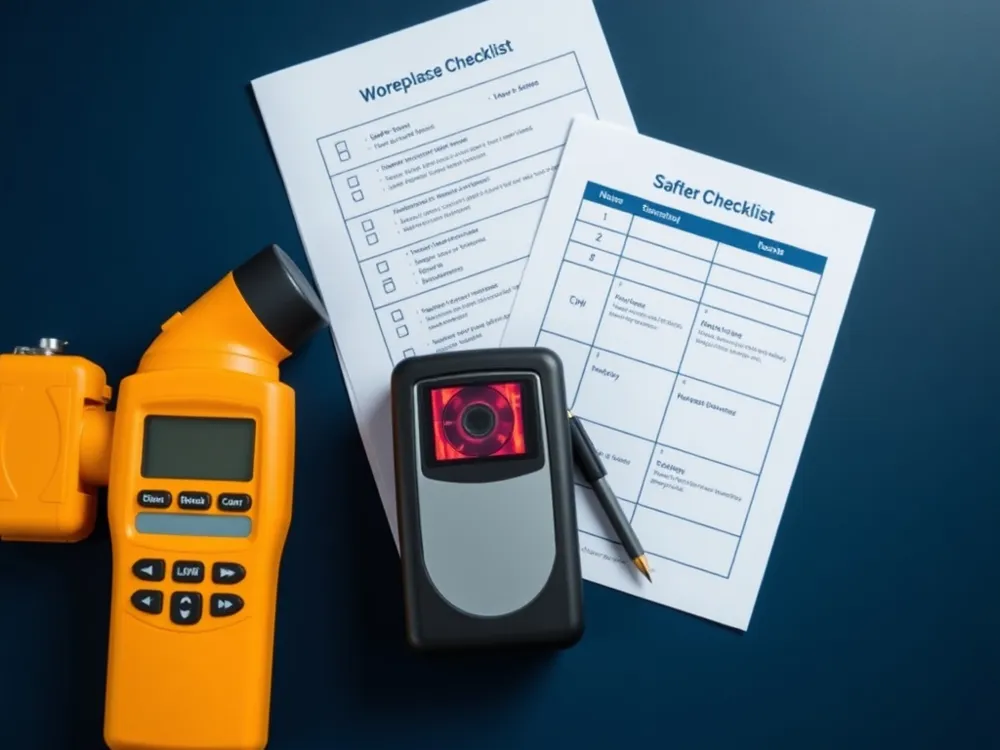
Workplace inspections are another core technique. Regular, systematic walkthroughs using tailored checklists cover all areas and activities, helping to identify unsafe conditions, equipment deficiencies, and environmental hazards like excessive noise or poor ventilation. Effective inspections go beyond first impressions and involve employees who have firsthand knowledge of daily tasks.
Incident investigations, including analysis of close calls and near misses, focus on root causes rather than symptoms. Asking "why" repeatedly uncovers underlying system failures, such as inadequate training or maintenance gaps, that create hidden dangers.
Employee-driven techniques are also critical. Encouraging workers to report hazards and near misses through open communication channels leverages their practical insights. Research indicates that such programs can reduce incidents by up to 40% by engaging those closest to the risks.
Advanced methods add further depth. Risk assessment matrices help prioritize hazards by evaluating severity, likelihood, and number of workers exposed. Task-based job hazard analyses break down specific job steps to identify overlooked risks, especially ergonomic and process hazards.
Characterizing hazards by type—physical, chemical, biological, ergonomic, safety, and psychosocial—ensures comprehensive coverage. For example, noise assessments identify hearing hazards, while ergonomic reviews catch repetitive strain risks.
No single technique is sufficient. A layered system combining document reviews, inspections, incident analysis, and worker input provides the most effective defense against both obvious and hidden dangers.
From Checklist to Action: Leveraging Audit Tools and Templates

Where can I find a safety audit checklist or template (PDF, Excel)?
Finding a ready-made safety audit checklist is a practical first step, but the most effective tool is one tailored to your specific workplace. Generic templates are available from several reputable sources, which can then be customized.
The Continuous Improvement Toolkit offers free, customizable Excel-based safety audit checklists. Documentero provides a free downloadable Excel template with fields for inspection items and compliance status, ideal for systematic recording. For comprehensive annual reviews, FMX’s checklist library includes templates in PDF, Excel, and Word formats covering fire safety, equipment, and emergency systems.
Beyond these, regulatory bodies like OSHA and the Canadian Centre for Occupational Health and Safety (CCOHS) provide detailed, printable checklists. OSHA’s Safety and Health Program Audit Tool is a structured PDF framework covering seven key program elements. CCOHS offers a comprehensive checklist covering everything from noise levels and ventilation to ergonomic and psychosocial hazards. These resources allow you to select and adapt a template that fits your workplace's specific hazard categories and compliance needs, ensuring no hidden risks are overlooked.
| Source | Format(s) | Key Features & Best Use Case |
|---|---|---|
| OSHA | Comprehensive program audit tool; best for evaluating safety management systems and compliance. | |
| CCOHS | Web-based Guide | Extensive, customizable checklist; ideal for identifying a wide range of specific physical and health hazards. |
| Continuous Improvement Toolkit | Excel | Free, customizable template; good for operational and area-specific audits. |
| FMX | PDF, Excel, Word | Library of templates for specific areas like fire safety and equipment; suitable for annual inspections. |
Prioritizing What Matters: Turning Audit Findings into Injury Prevention

The Audit is Just the Start: Why Prioritization is Critical
A workplace safety audit can reveal dozens of potential hazards, but without a system to determine which ones pose the greatest threat, the effort risks being overwhelmed by noise. The goal of an audit is not simply to compile a list of problems; it is to generate a prioritized roadmap for corrective action that directly prevents workplace injuries. Ignoring this step can leave the most dangerous, hidden hazards unaddressed while resources are spent on less critical issues.
How Do You Prioritize Hazards After They Are Identified?
Once hazards are catalogued, the next step is a formal hazard characterization. According to OSHA, this involves evaluating each identified hazard by three factors: severity of potential outcomes, likelihood of an event or exposure occurring, and the number of workers potentially exposed. This is not a theoretical exercise. For example, a low-likelihood but high-severity hazard, like a catastrophic chemical release, may rank higher than a high-likelihood but low-severity tripping hazard. Using a risk matrix to assign a numerical or qualitative score helps audit teams separate critical issues from minor ones.
What Does an Effective Corrective Action Plan Look Like?
Translating prioritized findings into action requires a structured plan with clear ownership. Every critical finding must convert into a corrective action with four components: what must change, who owns the change, a deadline for completion, and objective evidence to verify the fix is working. This prevents the common pitfall of audit findings languishing without follow‑through. The hierarchy of controls (elimination, substitution, engineering controls, administrative controls, PPE) should guide the selection of solutions, with elimination always preferred over relying on PPE.
Avoiding the Trap of Familiarity and Bias
An often‑overlooked aspect of prioritization is the role of cognitive bias. Auditors may become familiar with a workplace and overlook subtle but serious hazards. OSHA guidance emphasizes that a "clean shop or a careful routine may still contain hidden hazards." Using a structured risk matrix and involving cross‑functional teams (including frontline workers) in the prioritization discussion helps counteract bias. Workers often have firsthand knowledge of which risks feel most pressing in their daily tasks.
Turning Findings into Prevention: The Final Step
| Audit Phase | Key Action | Outcome for Injury Prevention |
|---|---|---|
| Identify | Conduct inspections, review records, talk to workers | Comprehensive hazard list created |
| Characterize | Rate each hazard by severity, likelihood, and worker exposure | Prioritized risk ranking |
| Plan | Assign ownership, set deadlines, select controls from hierarchy | Documented corrective action plan |
| Verify | Check closure evidence, track repeat findings | Confirmed risk reduction, program accountability |
The true value of a safety audit is realized when its findings are systematically prioritized and translated into a verifiable action plan. Organizations that complete this cycle consistently report lower injury rates and more efficient use of safety resources.
The Cost of Inaction: Why Proactive Audits Pay Off

What are the 5 basic workplace hazards?
Proactive safety audits are a direct cost-avoidance measure. With OSHA penalties reaching $165,514 per willful violation as of January 2025 and the average medically consulted workplace injury costing $43,000, failing to identify hazards can be financially devastating.
OSHA classifies workplace hazards into five fundamental categories. Safety hazards include slippery floors, unguarded machinery, and electrical risks—often immediately visible but routinely overlooked. Chemical hazards encompass solvents, fumes, and cleaning agents, which may cause harm through invisible vapors or gradual exposure. Physical hazards such as excessive noise, radiation, or extreme temperatures frequently go undetected until symptoms appear, like hearing loss from chronic noise exposure. Biological hazards involve mold, bloodborne pathogens, or infectious diseases that require specialized detection. Ergonomic hazards arise from repetitive motion, heavy lifting, or poorly designed workstations, leading to cumulative musculoskeletal disorders without obvious warning signs. Systematic audits that evaluate each category uncover these hidden dangers before they result in costly injuries or regulatory fines.
Building a Culture of Safety Through Systematic Auditing
A systematic safety audit is the backbone of a culture that prevents hidden hazards before they become injuries—especially auditory loss, a core concern for NorCal Medical Consulting. OSHA’s Hazard Identification and Assessment process mandates regular inspections, review of injury logs, and analysis of near‑misses to uncover concealed risks such as excessive noise, poor housekeeping, or unrecorded health hazards. By integrating audit findings into a risk‑ranking matrix (severity, likelihood, number exposed), employers can prioritize engineering controls—eliminating or lowering noise at the source—over reliance on hearing protection alone. Auditors must also verify that medical surveillance records (redacted for privacy) are reviewed to detect early signs of hearing decline, supporting timely medical evaluations and accurate expert witness testimony in workers’ compensation claims. When workers are empowered to report unsafe conditions and audit results are documented with clear corrective‑action owners and deadlines, the organization demonstrates compliance, reduces liability, and builds a proactive safety mindset that aligns legal, insurance, and health outcomes.