Why Injury Prevention Matters
Workplace injuries impose a massive economic burden—U.S. employers spend roughly $1 billion each week on direct costs such as workers’ compensation, medical care, and legal fees, while indirect costs can be several times higher. Data from the U.S. Bureau of Labor Statistics show that deaths and injuries have fallen more than 60 % since the Occupational Safety and Health Act, yet millions of workers still experience recordable incidents each year. A proactive safety culture—driven by visible management commitment, regular hazard analyses, and ongoing training—lowers claim frequency, improves productivity, and boosts morale. Expert medical consulting, exemplified by firms like NorCal Medical Consulting, adds credibility by providing rigorous injury assessments, audiometric testing for hearing loss, and documentation that strengthens workers’ compensation and liability claims. Integrating these evidence‑based services into a comprehensive prevention program not only protects employees but also safeguards the organization’s financial and legal standing.
Foundamental Elements of an Effective Safety Program
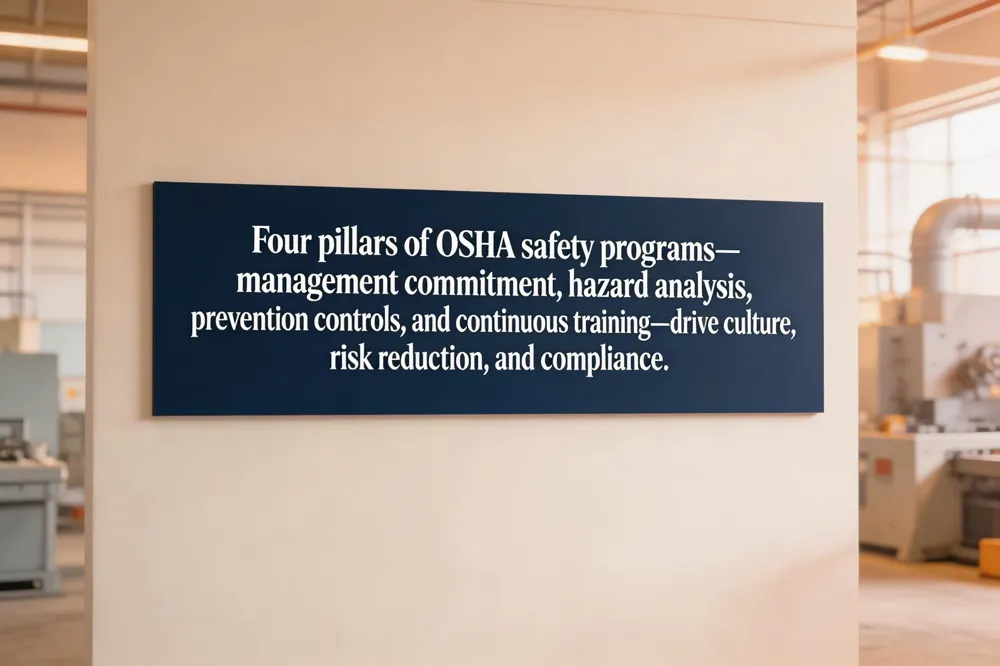 Four basic elements of a safety and health program (OSHA)
OSHA’s model rests on four pillars: (1) Management commitment coupled with active employee involvement to create a safety‑first culture; (2) systematic worksite safety analysis that identifies existing and emerging hazards; (3) hazard prevention and control using the hierarchy of controls (elimination, engineering, administrative, PPE); and (4) continuous safety and health training that keeps workers knowledgeable and compliant.
Four basic elements of a safety and health program (OSHA)
OSHA’s model rests on four pillars: (1) Management commitment coupled with active employee involvement to create a safety‑first culture; (2) systematic worksite safety analysis that identifies existing and emerging hazards; (3) hazard prevention and control using the hierarchy of controls (elimination, engineering, administrative, PPE); and (4) continuous safety and health training that keeps workers knowledgeable and compliant.
Three key elements needed for a successful safety and health program Successful programs start with strong leadership buy‑in and frontline participation, followed by regular hazard analyses and the implementation of effective controls. Together they drive reduced workers’ compensation claims and protect employee well‑being.
Seven core elements of a safety program
- Senior leadership commitment 2. Worker participation 3. Hazard identification & assessment 4. Hazard prevention & control 5. Comprehensive education & training 6. Program evaluation & continuous improvement 7. Communication & coordination among all parties.
Five key elements of safety Education, Encouragement, Engineering, Enforcement, and Evaluation (the 5‑E model). This framework emphasizes knowledge, a culture of reporting, physical controls, consistent policy enforcement, and data‑driven monitoring.
One of the four basic elements – management commitment & employee involvement Leaders must allocate resources, enforce policies, and model safe behavior while empowering workers to identify hazards and suggest solutions, fostering shared responsibility.
Four‑step long‑range plan for improving safety and health
- Secure Management commitment and engage employees. 2. Conduct comprehensive worksite safety analysis. 3. Develop and apply hierarchy‑based hazard controls. 4. Implement robust, ongoing safety and health training with reinforcement.
These interconnected components—leadership, analysis, control, training, and continuous evaluation—form the backbone of an evidence‑based, legally defensible workplace injury prevention program.
California IIPP and Compliance Templates
 California’s Injury and Illness Prevention Program (IIPP) is a written, two‑page document that satisfies the eight statutory elements required by Cal/OSHA—responsibility, compliance, communication, hazard assessment, accident/investigation, hazard correction, training & instruction, and record‑keeping. The template designates an IIPP administrator and outlines the roles of managers, supervisors, and workers, with check‑boxes and fill‑in sections for site‑specific details such as job‑safety analyses, inspection checklists, and incident‑report forms. A free, downloadable PDF version is available on the Cal/OSHA website and through many university safety offices; it can be customized with company information, posted at each worksite, and used as the basis for ongoing documentation. Training must communicate the program’s purpose, policies, and employee responsibilities, covering hazard identification, control methods, and emergency procedures through classroom, hands‑on, and e‑learning formats. Refresher sessions and competency assessments verify compliance, while attendance logs satisfy record‑keeping requirements. NorCal Medical Consulting can review completed IIPP templates to ensure they meet California regulations and support legal and insurance claims, especially for auditory‑loss cases that require documented hearing‑conservation measures.
Auditory Risk Management and Sample Safety & Health Program
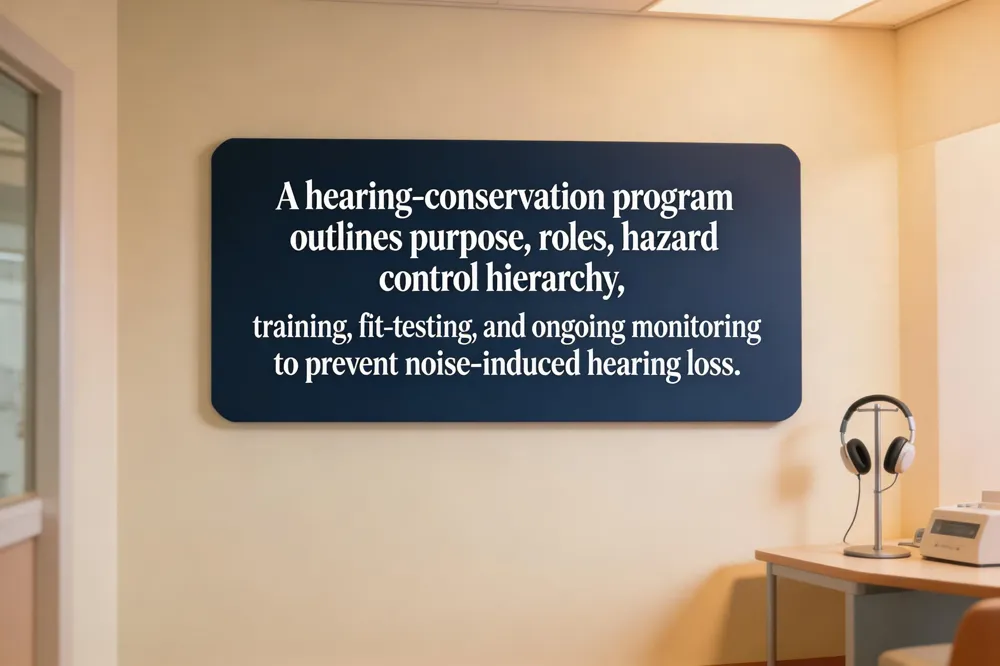 A highïquality hearing‑conservation program for a workplace with auditory‑risk activities can be organized into five sections. Purpose and Scope states the goal of preventing noise‑induced hearing loss for all employees, contractors, and visitors. Roles and Responsibilities assign duties for noise assessments, equipment maintenance, and enforcement of hearing‑protective devices. Hazard Identification and Control follows OSHA’s hierarchy: eliminate noisy processes when possible, substitute quieter equipment, apply engineering controls such as sound‑attenuating enclosures, limit exposure through administrative controls (job rotation, shift scheduling), and provide properly fitted PPE as a last line of defense. Training and Communication requires initial and refresher instruction on hearing‑conservation practices, fit‑testing of earplugs or earmuffs, symptom reporting, and documented attendance. Monitoring, Evaluation, and Recordkeeping mandates baseline and periodic audiometric testing, inspection of protective gear, and maintenance of logs to demonstrate compliance and support legal or insurance claims.
Sample Safety and Health Program – a written policy outlines employer commitment, regular noise‑monitoring, engineering and administrative controls, employee training with fit‑testing, and quarterly program review with documented corrective actions.
Hazard Prevention and Control Example – start with elimination of a noisy operation; if impractical, substitute quieter tools, install engineering controls (barriers, mufflers), rotate staff to reduce exposure, post signage, and finally require properly fitted hearing protection.
Occupational Health and Safety Specialist – conducts site inspections, collaborates with engineers and physicians, recommends controls, prepares detailed reports, and provides expert testimony for workers’‑ or insurance claims, ensuring evidence‑based documentation of auditory‑loss prevention measures.
Training, Evaluation, and Continuous Improvement
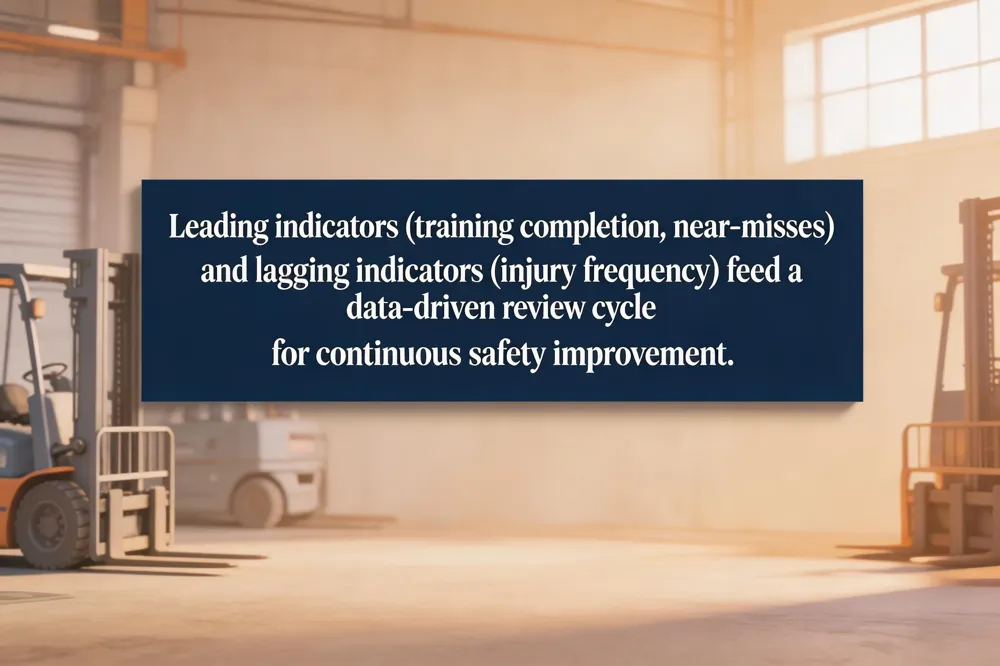 Metrics drive continuous improvement. Leading indicators such as training‑completion rates, near‑miss reports, and hazard‑identification submissions predict future incidents, while lagging indicators—recordable injury frequency, days away from work, and claim severity—measure outcomes. Regular data‑driven reviews of these metrics enable employers to pinpoint control gaps and allocate resources efficiently.
OSHA mandates an annual program review, with additional revisions whenever equipment, processes, or hazards change, or after a significant incident. Evaluation means confirming that controls are operating as intended, that targets are met, and that workers remain engaged. A systematic review cycle—collect, analyze, and adjust—creates a feedback loop that sustains safety culture and reduces workers‑compensation costs.
Key prevention tactics include: (1) routine risk assessments; (2) applying the hierarchy of controls; (3) involving employees in hazard‑identification; (4) reinforcing leadership‑driven safety culture; and (5) maintaining an up‑to‑date written control plan. These evidence‑based steps, combined with expert medical documentation, strengthen claim credibility and protect both workers and the bottom line.
Resources, Claims Support, and Extending Prevention Beyond the Workplace
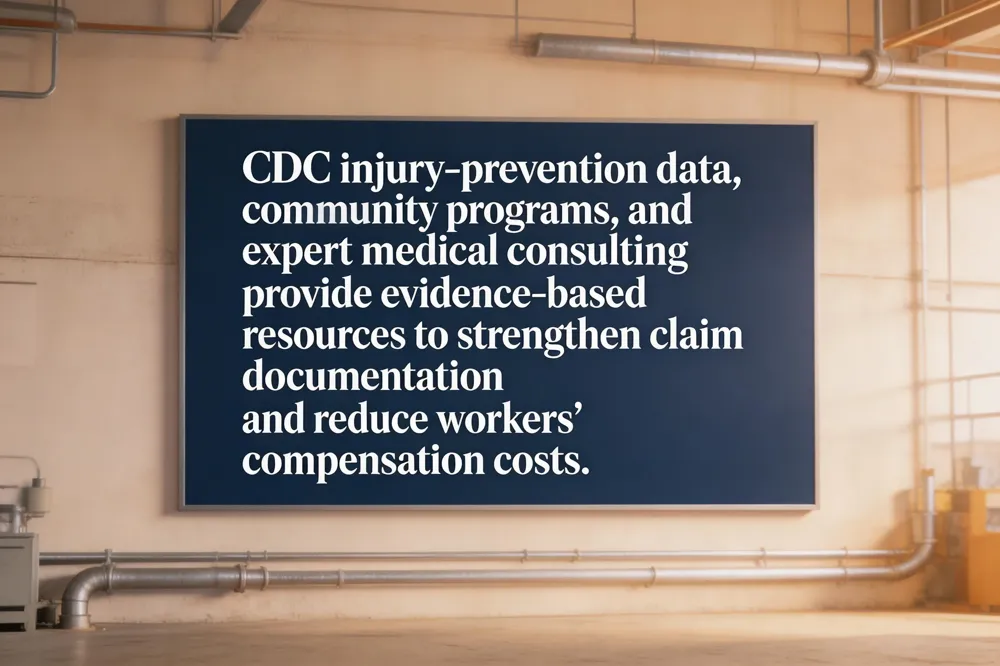 NorCal Medical Consulting recommends a suite of evidence‑based injury‑prevention resources to strengthen workplace safety and support claim documentation. The CDC’s National Center for Injury Prevention and Control (NCIPC) supplies data, toolkits, and best‑practice guidelines on hazards such as slips, falls, noise‑induced hearing loss, and ergonomic strain. NCIPC’s three divisions—Acute Care, Rehabilitation Research; Unintentional Injury Prevention; and Violence Prevention—provide scientific leadership that clinicians, insurers, and attorneys rely on when evaluating occupational injuries.
Community‑level programs, including those funded by the CDC’s Core State Injury Prevention Program and local initiatives like Wyoming’s Injury Prevention Resources, deliver workshops, safety drills, and public‑education campaigns (e.g., Stop‑the‑Bleed, child‑passenger safety, fall‑prevention screenings). By integrating these community‑style interventions into corporate safety plans, employers can lower workers’‑compensation claims and create a culture of shared responsibility.
Expert medical consulting plays a pivotal role in translating these resources into legally defensible documentation. NorCal Medical Consulting conducts audiometric testing, ergonomic assessments, and comprehensive injury evaluations that align with OSHA and Cal/OSHA standards, thereby reinforcing claim credibility and facilitating favorable insurance outcomes. Leveraging CDC data, community programs, and expert assessments creates a robust, data‑driven safety ecosystem that protects employees and minimizes liability.
The Bottom Line: Investing in Prevention Pays Off
A proven four‑element framework underpins every successful injury‑prevention program: (1) strong management commitment coupled with active employee involvement, (2) systematic worksite safety analysis that identifies existing and emerging hazards, (3) hazard prevention and control that follows the hierarchy of controls—eliminate, engineer, administrate, then equip with PPE, and (4) comprehensive safety and health training that reinforces safe behaviors daily. Implementing these elements yields a clear return on investment: workers’‑comp claims drop, productivity rises, and employee morale improves as staff see leadership prioritize their health. The financial upside is evident—companies that adopt structured programs report up to a 30 % reduction in recordable injuries and measurable gains in productivity. Expert medical consulting, such as NorCal Medical Consulting’s auditory‑loss assessments, strengthens claim credibility and ensures compliance documentation, turning prevention into both a safety and a legal‑insurance advantage.