Why Objective Testing Matters in Occupational Audiology
Behavioral audiometry relies on patient cooperation and can be compromised by language barriers, cognitive impairment, malingering, or fatigue, leading to unreliable thresholds and delayed detection of noise‑induced shifts. Electrophysiologic tools such as the Auditory Steady‑State Response (ASSR) provide frequency‑specific, stimulus‑independent thresholds that correlate within 10‑13 dB of pure‑tone audiograms, even in severe loss, and can be obtained while the worker is awake or sedated. These objective measures satisfy OSHA’s requirement for accurate baseline and follow‑up audiograms, support the determination of Standard Threshold Shifts, and furnish defensible evidence for workers’ compensation, legal, and insurance claims. Integrating ASSR into hearing‑conservation programs therefore enhances early identification, regulatory compliance, and medico‑legal credibility.
ASSR Basics and Its Correlation with Traditional Audiograms
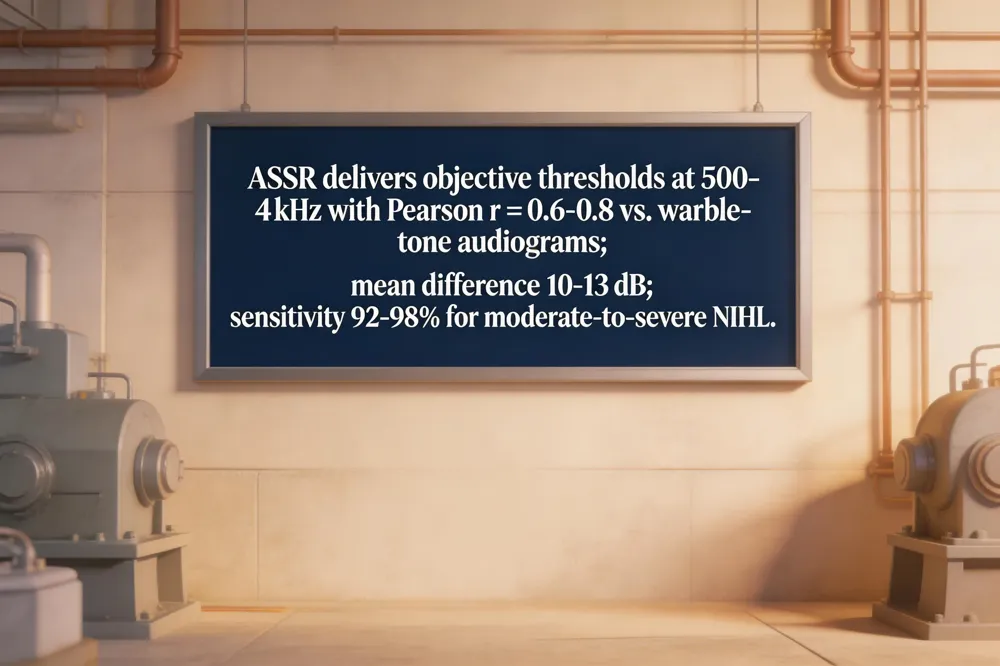 Auditory Steady‑State Response (ASSR) testing estimates hearing thresholds by delivering rapid, amplitude‑ and/or frequency‑modulated tones at carrier frequencies of 500 Hz, 1 kHz, 2 kHz, and 4 kHz. Modulation rates of ≥80 Hz (often 40 Hz for cortical and 80‑90 Hz for brain‑stem generators) produce phase‑locked neural activity that is analyzed with statistical F‑tests, yielding objective threshold estimates within 5‑15 dB of behavioral audiograms. In a cohort of 157 noise‑exposed workers, ASSR thresholds correlated strongly with warble‑tone audiograms (Pearson r = 0.6‑0.8), and mean differences ranged from 10‑13 dB, indicating close approximation of the audiogram shape. Sensitivity for detecting moderate‑to‑severe noise‑induced hearing loss was 92 % overall, with frequency‑specific sensitivity between 92.7 % and 98.4 %; specificity was lower, especially at low frequencies, reflecting a higher false‑positive rate. These performance characteristics support ASSR as a reliable, objective adjunct for occupational hearing‑loss assessments and medico‑legal documentation.
ABR and ASSR: Complementary Objective Tools
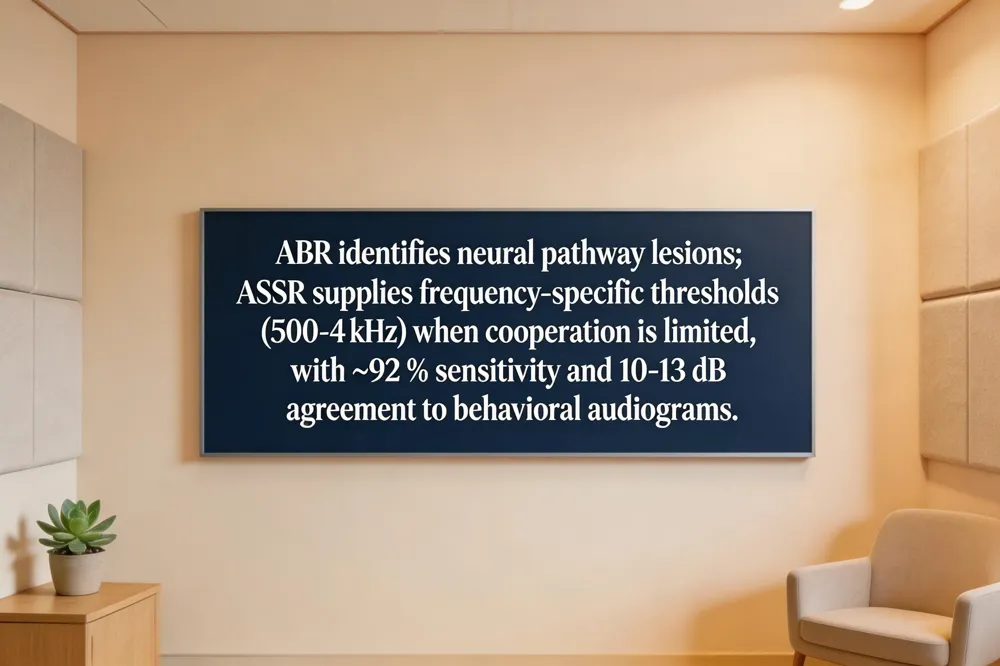 Interpretation of abnormal ABR waveforms in adults is essential for diagnosing neural pathway disruptions such as sensorineural loss, acoustic neuroma, multiple sclerosis, stroke, or traumatic brain injury—all of which may arise from workplace noise or head trauma. Delayed latencies, reduced amplitudes, or absent waves indicate the level and site of injury and provide objective evidence for occupational claim documentation. ABR may be insufficient when the worker cannot cooperate, when the hearing loss is severe, or when low‑frequency resolution is needed. In these cases, the Auditory Steady‑State Response (ASSR) fills the gap by offering frequency‑specific threshold estimates (500‑4000 Hz) without behavioral input, with a sensitivity of ~92 % for moderate‑to‑severe noise‑induced loss and correlation within 10‑13 dB of behavioral audiograms. ASSR’s ability to test multiple frequencies simultaneously, its high stimulus levels, and its statistical detection algorithm make it ideal for documenting hearing loss in non‑cooperative workers and supporting medico‑legal and workers’ compensation claims.
OSHA‑Defined Threshold Shifts and Record‑Keeping
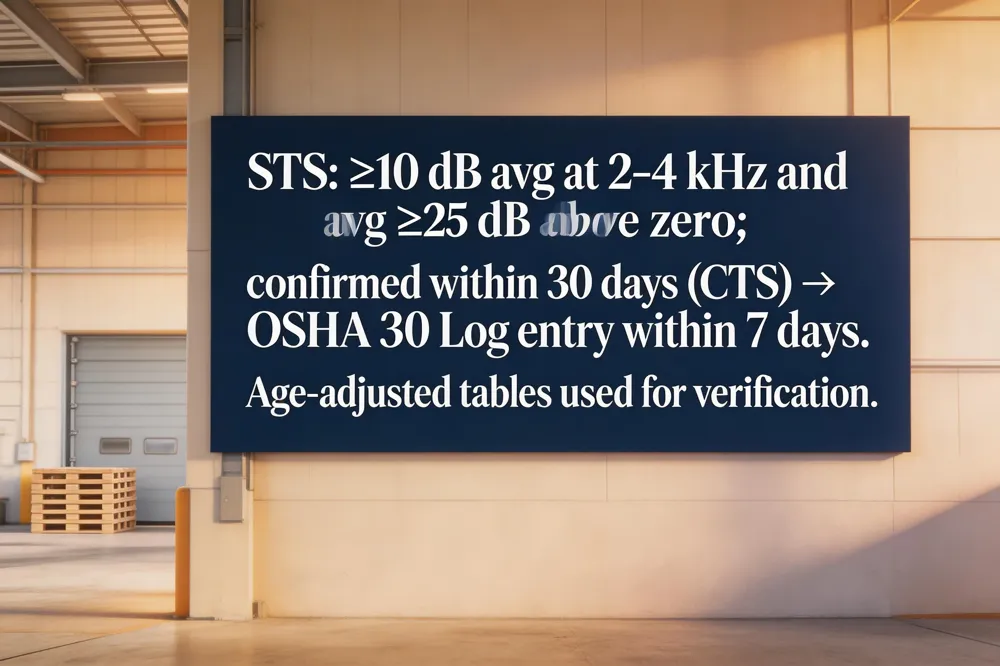 A positive STS occurs when the current audiogram meets the 10 dB criteria and the average hearing level at 2–4 kHz is ≥ 25 dB above audiometric zero. If the shift is confirmed on a repeat test within 30 days (a Confirmed Threshold Shift, CTS), the case must be entered on the OSHA 300 Log within seven calendar days. If the retest does not confirm the shift, the case is not recordable.
The recordable hearing‑loss criteria therefore require both an STS and a total hearing level of ≥ 25 dB in the same ear(s). Age‑adjusted thresholds may affect the STS determination, but the 25‑dB benchmark is based on the unadjusted average of the three frequencies.
Baseline audiograms, obtained before occupational noise exposure, serve as the reference point for all subsequent comparisons. They allow the detection of STS, support age‑adjusted calculations, and provide the objective evidence needed for workers’ compensation or insurance claims.
In practice, clinicians use an STS calculator that incorporates OSHA age‑correction tables (Appendix F) to subtract expected presbycusis effects. The resulting age‑adjusted difference of ≥ 10 dB confirms an STS, which, together with the 25‑dB absolute threshold, triggers mandatory reporting and can underpin medico‑legal documentation of occupational hearing loss.
Building a compliant Hearing Conservation Program (HCP)
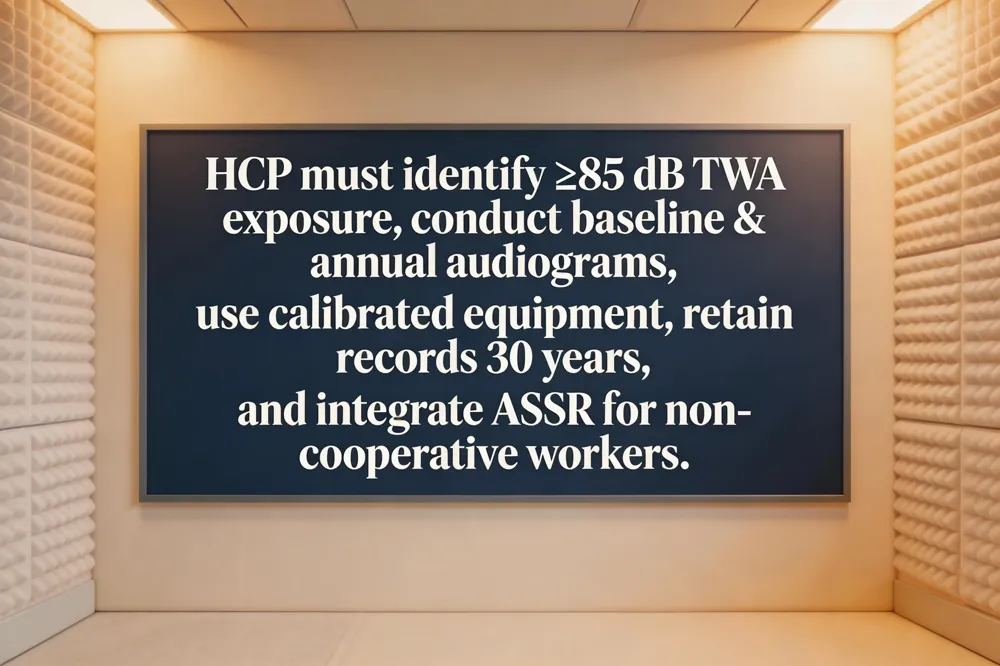 A Hearing Conservation Program (HCP) must meet OSHA’s 29 CFR 1910.95 requirements: identify workers exposed to ≥ 85 dB TWA, conduct noise monitoring, and implement engineering or administrative controls. Baseline audiograms are required within six months of first qualifying exposure, followed by annual audiograms to detect a Standard Threshold Shift (STS) – a ≥ 10 dB change at 2,000, 3,000, and 4,000 Hz with an average ≥ 25 dB. All testing must be performed by licensed audiologists or qualified technicians, using calibrated equipment and adhering to ANSI/ISA sound‑room standards. Results, retests, and corrective actions (e.g., hearing‑protection device fitting, counseling) must be documented and retained for at least two years (records for 30 years). Employee training should be annual, covering noise hazards, proper use and care of protectors, and the importance of audiometric monitoring, integrating ASSR in an ASS audiogram provides objective thresholds for workers who cannot cooperate, supporting medico‑legal documentation and workers’ compensation claims. NorCal Medical Consulting can help develop, audit, and maintain an OSHA‑compliant HCP that stands up to regulatory and legal scrutiny.
Clinical Implementation of ASSR in the Workplace
 The Auditory Steady‑State Response (ASSR) test is now a core objective tool in occupational hearing‑loss programs.
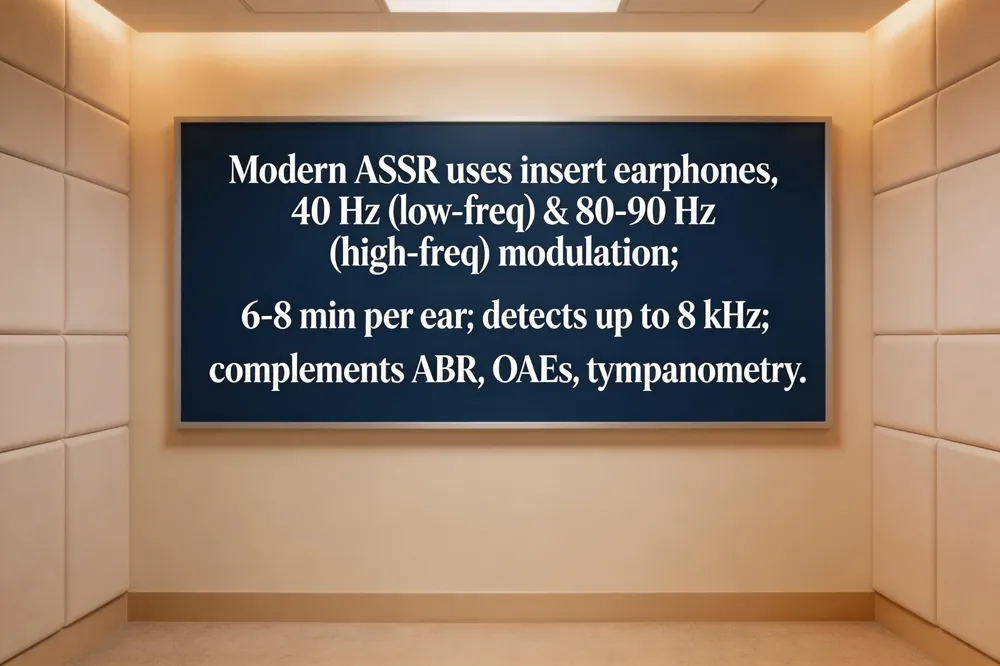
Equipment and stimulus parameters – Modern ASSR systems use insert earphones (e.g., CE‑chirp® or standard 100 dB HL capable devices) and present amplitude‑ and/or frequency‑modulated tones at carrier frequencies of 500 Hz, 1 kHz, 2 kHz, and 4 kHz. Modulation rates of 40 Hz for low‑frequency carriers and 80‑90 Hz for high‑frequency carriers maximize brain‑stem response detection while minimizing state‑dependence.
Testing duration per ear – Because ASSR records multiple frequencies simultaneously, a complete bilateral assessment typically requires 6–8 minutes per ear (≈12–16 minutes total). This rapid protocol fits on‑site screenings and reduces worker fatigue.
High‑frequency detection and amplitude growth – ASSR reliably estimates thresholds up to 8 kHz, capturing the early 3–6 kHz notch characteristic of noise‑induced loss. Suprathreshold amplitude‑growth curves at 1 kHz and 4 kHz are steeper in NIHL, providing an objective marker of cochlear damage severity.
Limitations and need for complementary tests – Low‑frequency specificity is poorer, and ASSR cannot alone differentiate auditory neuropathy spectrum disorder (ANSD). Therefore, ABR, otoacoustic emissions, and tympanometry should accompany ASSR when the audiogram is atypical or when ANSD is suspected.
How long is a hearing test? – A full occupational hearing assessment, including ASSR, otoscopy, pure‑tone audiometry, and result review, typically takes 45–60 minutes, with the ASSR portion accounting for about 12 minutes.
ASSR and auditory neuropathy – ASSR provides objective thresholds but is not diagnostic for ANSD. Because ASSR reflects both sensory and neural activity, absent or abnormal responses do not specifically indicate ANSD. Clinicians therefore use ASSR as a supplemental tool alongside OAEs and ABR when behavioral testing is impractical, while recognizing its limited predictive value for cochlear‑implant candidacy in ANSD patients.
Kaiser and Local Audiology Resources for Workers
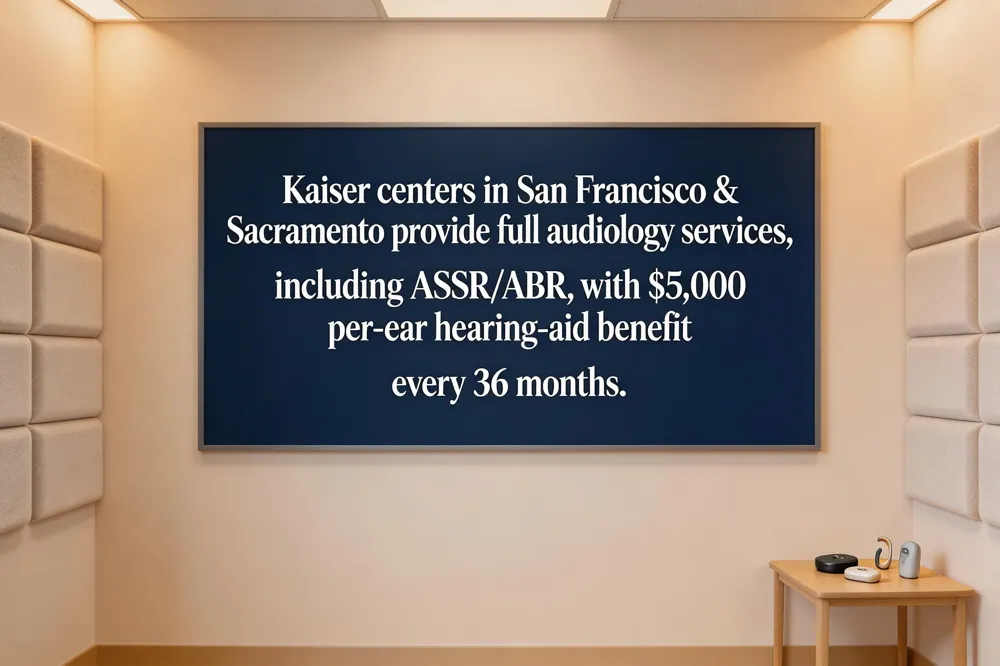 Kaiser Permanente provides a network of hearing‑aid centers that support workers with occupational hearing loss and related auditory disorders. In San Francisco (4141 Geary Blvd., 1st Floor, (415) 833‑8222) and Sacramento (3180 Arden Way, (916) 977‑3277) Kaiser offers comprehensive audiology services—pure‑tone testing, tympanometry, speech‑in‑noise and dichotic listening assessments, and objective measures such as ASSR and ABR—to evaluate Auditory Processing Disorder (APD) and noise‑induced sensorineural loss. The hearing‑aid benefit, included in Advantage Plus and Southern‑California plans, provides a $5,000 per‑ear allowance every 36 months, covering device cost, a 3‑year warranty, batteries, ear molds, and follow‑up care. Referral pathways for occupational injury cases begin with a primary‑care physician or employee‑health nurse, who can schedule a diagnostic evaluation at any Kaiser center; results are documented in the electronic health record and can be forwarded to employer‑controlled hearing‑conservation programs or workers’‑litigation counsel. Expert audiologists coordinate with hearing‑protection programs, personal attenuation rating assessments, and legal teams to ensure accurate, OSHA‑compliant documentation of Standard Threshold Shifts.
Taking Action: From Assessment to Legal Support
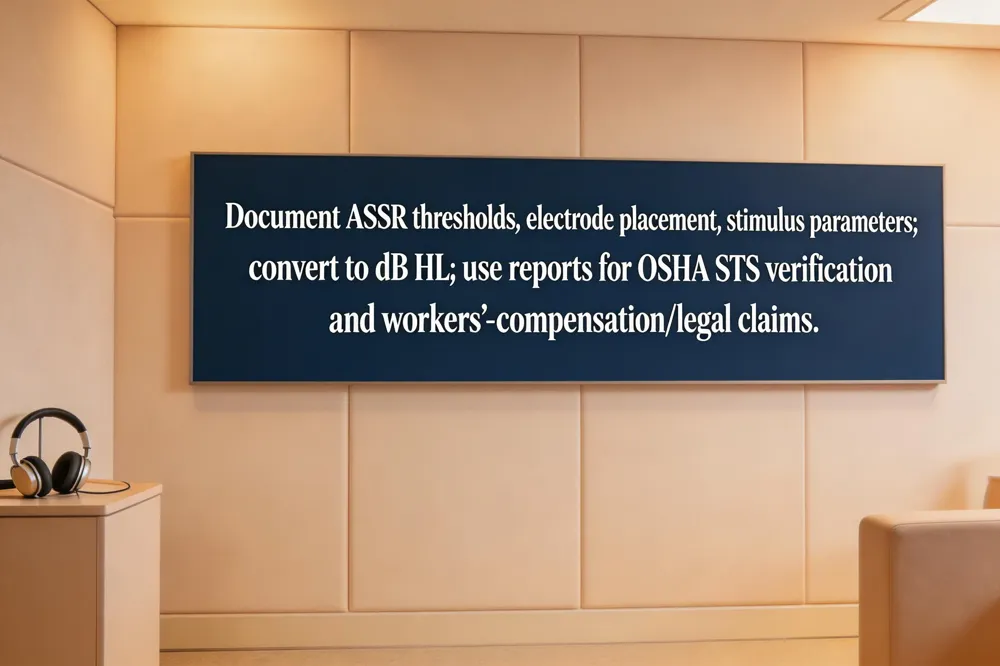 Auditory Steady‑State Response (ASSR) testing supplies objective, frequency‑specific thresholds (500‑4000 Hz) that can be directly compared to OSHA baseline and STS criteria, making ASSR data a powerful component of workers’‑compensation dossiers. For reliable documentation, capture calibrated stimulus parameters, electrode placement, statistical confidence levels, and ambient‑noise conditions; then convert ASSR thresholds to dB HL using manufacturer correction tables and archive raw waveforms alongside traditional audiograms. Expert consultants—board‑certified audiologists and neuro‑physiologists—interpret ASSR results, differentiate sensorineural from conductive loss, and prepare reports that meet legal admissibility standards.
How to prove hearing loss is work related? Demonstrate that a Standard Threshold Shift (≥10 dB average at 2, 3, and 4 kHz) occurs in the ear(s) exposed to noise >85 dB TWA, link the shift to documented workplace exposure and hearing‑protection use, and substantiate causality with baseline‑follow‑up ASSR or audiogram comparisons.
What is a standard threshold shift in hearing loss? An Standard Threshold Shift (STS) is a ≥10 dB average increase at 2 kHz, 3 kHz, and 4 kHz in one ear (or ≥15 dB in both) compared to the employee’s baseline (or revised baseline), with the affected ear’s average also ≥25 dB above audiometric zero, triggering OSHA recordability.
ASSR: A Cornerstone for Objective, Legally Sound Occupational Hearing Care
Auditory Steady‑State Response (ASSR) provides an objective, frequency‑specific estimate of hearing thresholds that does not rely on patient cooperation. In workers’ compensation cases, ASSR data serve as a scientifically verifiable record, reducing the risk of malingering and supporting “more probable than not” determinations of noise‑induced loss. Because ASSR can be directly compared to the OSHA Standard Threshold Shift (STS) frequencies of 2, 3, and 4 kHz, it facilitates accurate documentation of recordable shifts and fulfills the 25‑dB total‑hearing‑level requirement without age‑adjustment. Emerging portable ASSR systems and automated detection algorithms promise faster on‑site testing, integration with electronic health records, and expanded high‑frequency coverage, positioning ASSR as a core component of future occupational hearing‑conservation programs. Clinicians and insurers increasingly rely on ASSR for defensible, evidence‑based outcomes.