Why Co‑Counsel Training Matters for Settlement Success
CoCounsel’s AI can draft complaints, demand letters, and summarize medical records in minutes, slashing document‑review time from hours to roughly 20 minutes. Structured training sessions teach legal teams how to prompt the system, integrate Westlaw and Practical Law authority, and maintain end‑to‑end encryption for sensitive data. By mastering these workflows, attorneys can quickly generate accurate case timelines, expert‑review chronologies, and risk‑adjusted settlement offers. The combination of rapid AI‑driven insights and disciplined, collaborative training boosts communication among co‑counsel, shortens negotiation cycles, and improves the quality of settlement proposals—resulting in faster, higher‑value resolutions for workplace injury claims.
Key Principles of Settlement Communication
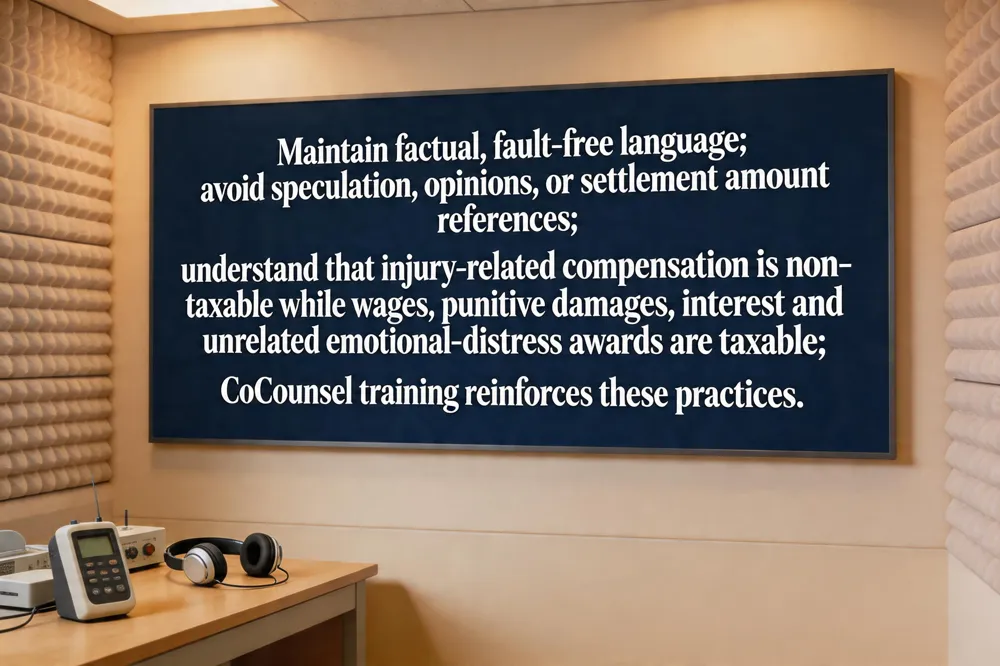 Effective settlement communication hinges on disciplined language and an awareness of tax consequences. When discussing a claim, stick strictly to the factual details of the injury and the supporting medical evidence. Do not admit fault, speculate about the accident, exaggerate symptoms, or offer opinions on the legal merits of the case. Avoid mentioning settlement amounts you think you deserve or comparing your claim to others; if uncertain, pause and consult your attorney.
Most medical‑lawsuit settlements that compensate for a physical injury are excluded from taxable income. However, any portion that replaces lost wages, punitive damages, interest, or emotional‑distress awards not directly tied to the physical injury is taxable. In practice, injury‑related compensation is non‑taxable, while wages, punitive damages, interest, and unrelated emotional‑distress awards are subject to tax.
Training modules from platforms such as CoCounsel reinforce these practices by guiding attorneys through AI‑assisted research, expert‑witness integration, and mock settlement negotiations, helping teams convey clear, factual narratives while respecting confidentiality and compliance standards.
Evaluating Settlement Offers and Payment Priorities
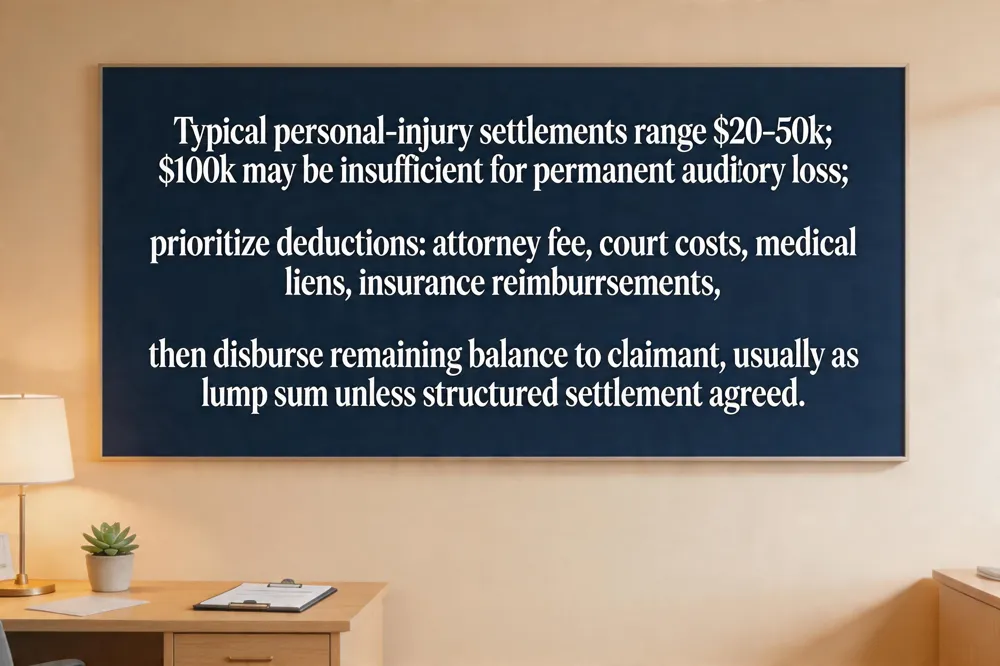 A $100,000 settlement can be reasonable for a workplace injury, but its adequacy hinges on the specific facts of the case. The average personal‑injury settlement in the United States ranges from $20,000 to $50,000, while more serious or catastrophic injuries often exceed $100,000 and can reach into the millions. For an auditory‑loss claim, the settlement should cover all economic damages—medical bills, lost wages, future hearing‑aid costs—as well as non‑economic damages such as pain and suffering and loss of enjoyment of life. If the injury is permanent, requires ongoing treatment, or significantly impacts earning capacity, $100,000 may fall short of fully compensating the claimant. Consulting an experienced workplace‑injury attorney can help assess whether the offer reflects the true value of the losses and negotiate a fairer amount if necessary.
In a settlement the first deductions are the attorney’s contingency fee and any court‑cost reimbursements. Next, all medical liens and outstanding healthcare bills related to the injury—such as those from doctors, clinics, or specialists who treated the auditory loss—are satisfied. If a health‑insurance policy covered any of those expenses, the insurer’s reimbursement claim is then paid. Only after these obligations are fulfilled does the remaining balance go to the claimant. The final disbursement to the injured worker is typically issued as a lump‑sum payment, unless a structured settlement was agreed upon.
Strategic Negotiation Tactics for Higher Settlements
 How to ask for more money in a settlement
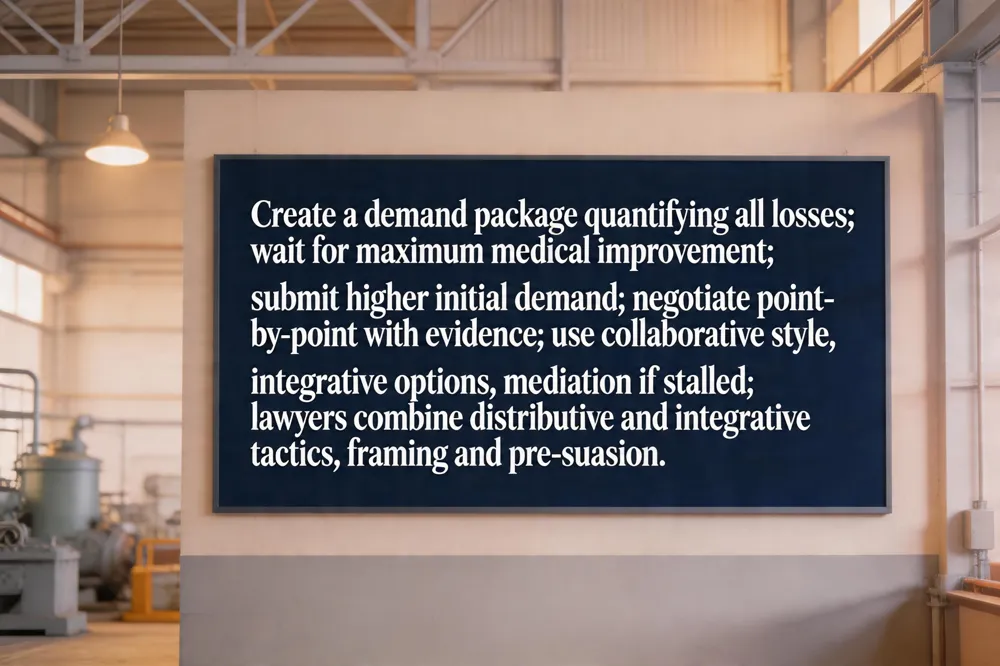
Begin by assembling a demand package that quantifies every loss: past and future medical expenses, lost wages, reduced earning capacity, and pain‑and‑suffering. For auditory‑loss claims, include detailed audiograms, certified PFI calculations, and expert reports from NorCal Medical Consulting. Wait until the claimant reaches maximum medical improvement so that all ongoing treatment needs are documented. Submit an initial demand that exceeds the insurer’s offer, itemizing justification for each dollar. When the insurer replies, negotiate point‑by‑point, citing the medical evidence and emphasizing the long‑term impact of the hearing impairment. Maintain a professional yet assertive tone, stressing that a fair settlement must reflect the true economic and non‑economic damages.
How to ask for more money in a settlement
Begin by assembling a demand package that quantifies every loss: past and future medical expenses, lost wages, reduced earning capacity, and pain‑and‑suffering. For auditory‑loss claims, include detailed audiograms, certified PFI calculations, and expert reports from NorCal Medical Consulting. Wait until the claimant reaches maximum medical improvement so that all ongoing treatment needs are documented. Submit an initial demand that exceeds the insurer’s offer, itemizing justification for each dollar. When the insurer replies, negotiate point‑by‑point, citing the medical evidence and emphasizing the long‑term impact of the hearing impairment. Maintain a professional yet assertive tone, stressing that a fair settlement must reflect the true economic and non‑economic damages.
How to negotiate a settlement out of court Gather all medical records, expert evaluations, and workplace‑injury documentation before drafting a clear, detailed demand that outlines the legal basis for the claim. Set a realistic target amount based on actual costs and comparable case outcomes, while identifying a minimum acceptable figure. Adopt a collaborative style: present case strengths factually, explore integrative options such as structured payments, and frame proposals to make the opposing side receptive. If talks stall, engage a neutral mediator or qualified third‑party professional to facilitate discussion and preserve relationships. Document any agreement promptly and adjust strategy based on feedback.
How do lawyers negotiate settlements Lawyers first assess liability, medical expenses, lost wages, and other damages to establish a settlement range. They draft a demand letter and begin a series of offers with the insurer, leveraging medical records, expert reports, and supporting evidence. Throughout, they employ distributive tactics (high‑value demands) and integrative strategies (creative solutions like structured settlements). Influence techniques such as pre‑suasion and framing are used to make the opponent more receptive. When direct negotiations stall, attorneys often move to mediation or arbitration, where a neutral third party helps achieve a mutually acceptable resolution.
Practical Settlement Advice for Claimants
 Settlement advice
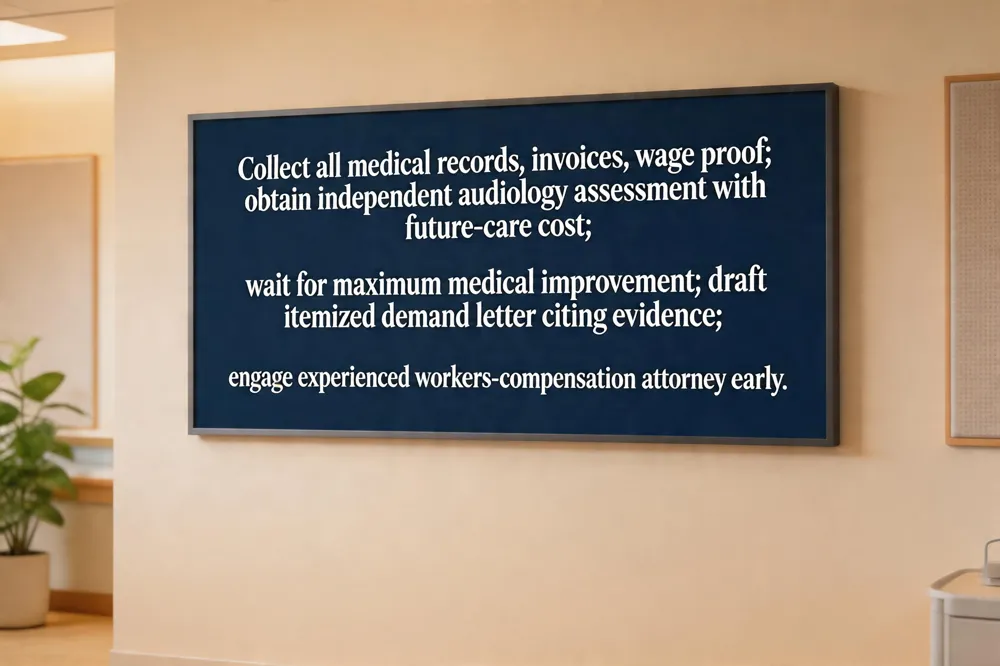
To build a compelling workers‑compensation claim, start by gathering every piece of documentation: medical records, doctor’s notes, invoices, receipts, and proof of lost wages. Secure an independent audiology evaluation that quantifies the hearing loss and includes a projected future‑care cost. Wait until the claimant reaches maximum medical improvement before initiating settlement talks, ensuring the full extent of the injury is known. Draft an itemized demand letter that cites each piece of medical evidence and outlines the monetary amount sought for economic and non‑economic losses. Engage an experienced workers‑compensation attorney early; the attorney will guide strategy, apply persuasive negotiation tactics, and safeguard rights throughout the process.
Settlement advice
To build a compelling workers‑compensation claim, start by gathering every piece of documentation: medical records, doctor’s notes, invoices, receipts, and proof of lost wages. Secure an independent audiology evaluation that quantifies the hearing loss and includes a projected future‑care cost. Wait until the claimant reaches maximum medical improvement before initiating settlement talks, ensuring the full extent of the injury is known. Draft an itemized demand letter that cites each piece of medical evidence and outlines the monetary amount sought for economic and non‑economic losses. Engage an experienced workers‑compensation attorney early; the attorney will guide strategy, apply persuasive negotiation tactics, and safeguard rights throughout the process.
Settlement negotiations example A worker with occupational hearing loss files a claim for $120,000, covering medical expenses, lost wages, and projected rehabilitation. The insurer counters with $70,000. The claimant’s counsel presents a detailed audiology report and a vocational expert’s analysis showing higher long‑term costs. Using the midpoint rule as an anchor, both parties recognize a fair middle ground of $95,000. The insurer agrees, and the worker settles for $95,000, avoiding trial and securing full compensation for the injury.
Negotiating the Settlement Agreement
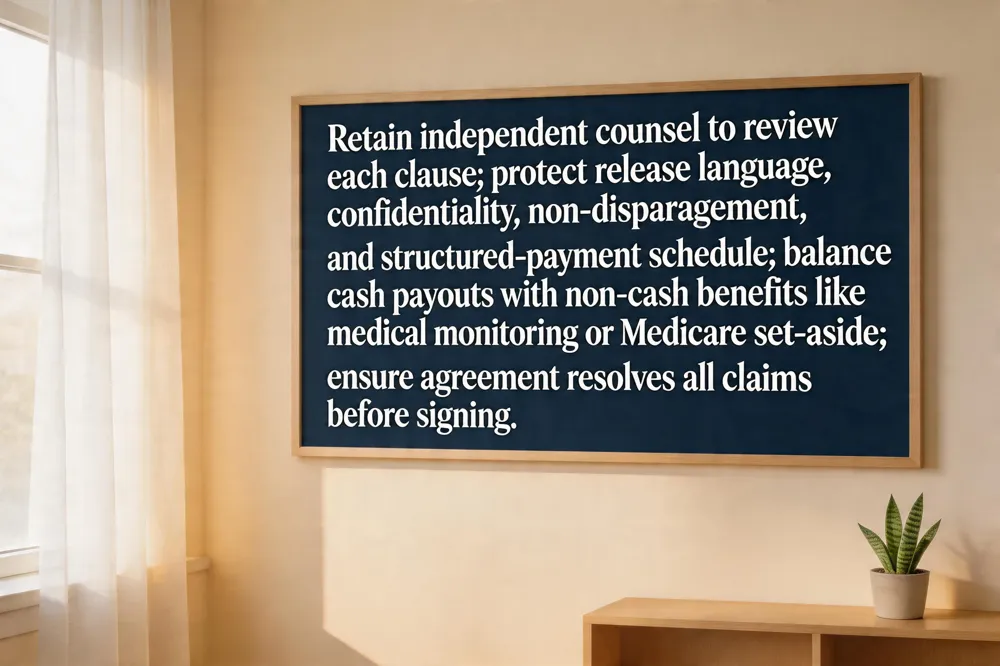 When negotiating a settlement agreement for a workplace‑injury claim, begin by retaining independent legal counsel who can explain each clause’s implications and safeguard statutory rights. Identify the employer’s priorities—such as a clean exit, confidentiality, or limited public disclosure—and leverage them to secure medical compensation, future‑care coverage, and other non‑financial benefits. Key clauses to protect include a clear release of all current and future claims, explicit language on confidentiality and non‑disparagement, and a detailed schedule for any structured or non‑cash consideration (e.g., medical monitoring, vocational rehabilitation, or Medicare Set‑Aside funding). Balance cash and non‑cash terms by setting realistic monetary goals while exploring integrative solutions that expand the overall value, such as linking modest cash payouts to ongoing medical support. Carefully review the entire document to confirm that all compensation, release language, and confidentiality provisions are explicit and that the settlement fully resolves the claim before signing. This disciplined approach helps achieve a fair, enforceable agreement that addresses both immediate and long‑term needs.
Impact of Co‑Counsel Training on Settlement Success
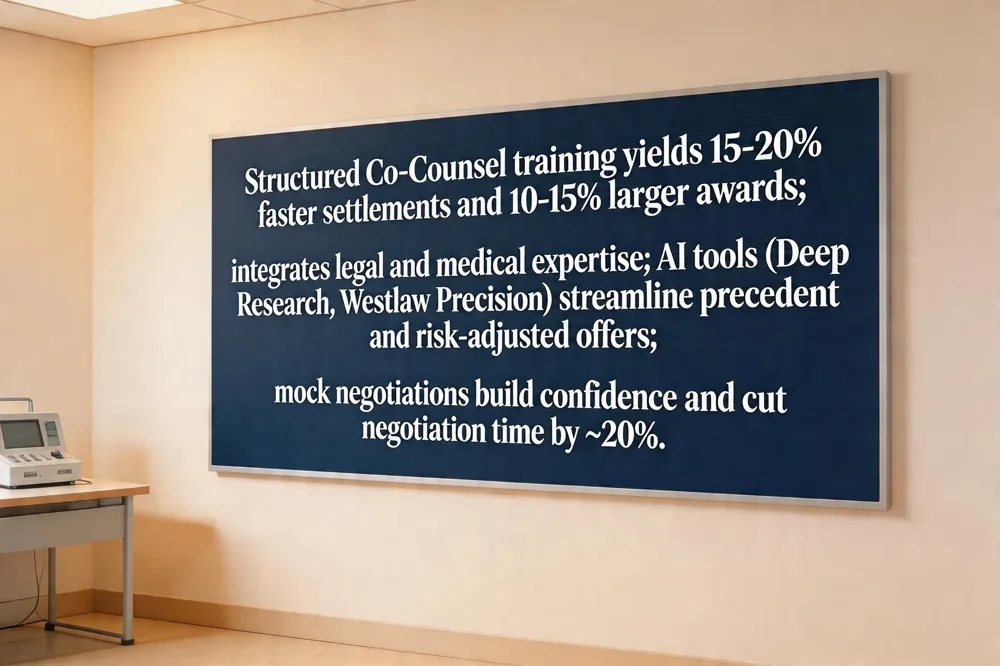 Recent data demonstrate that structured Co‑Counsel training is a powerful lever for achieving faster, higher‑value settlements in workplace injury and personal‑injury cases. Studies cited by the American Bar Association and the Journal of Occupational Health Psychology reveal that teams that engage in joint training on expert testimony preparation and collaborative case strategy settle 15‑20 % faster and secure 10‑15 % larger awards than those that do not. The training emphasizes seamless integration of legal and medical expertise, allowing attorneys to translate quantitative audiometric data and other medical findings into clear, lay‑person narratives that resonate with insurers and mediators. By using CoCounsel’s AI‑driven tools—such as Deep Research, Westlaw Precision, and document‑chronology workflows—participants can rapidly identify precedent, construct risk‑adjusted offers, and generate compelling settlement proposals. Role‑playing mock hearings and settlement conferences within the training builds confidence in negotiating and helps anticipate counter‑arguments, reducing negotiation time by roughly 20 %. Ultimately, the collaborative case‑strategy model fostered by Co‑Counsel training aligns all stakeholders on a shared settlement objective, accelerating resolution while preserving the quality of expert evidence and client satisfaction.
Technology Enhancing Settlement Efficiency
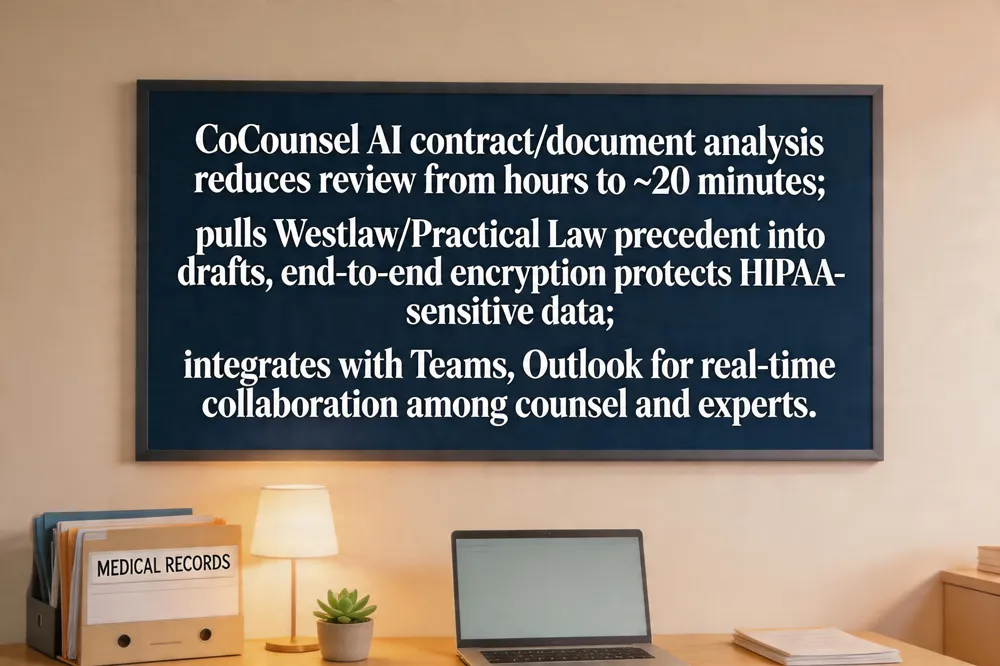 CoCounsel’s AI‑assisted contract and document analysis dramatically shortens review cycles, turning hours of manual work into roughly 20‑minute insights for urgent settlement matters. By leveraging Westlaw and Practical Law, the platform pulls trusted precedent and statutory authority directly into AI‑generated drafts, bolstering credibility and reducing research friction. End‑to‑end encryption safeguards sensitive legal data throughout the analysis, ensuring confidentiality and compliance with HIPAA and other regulatory standards. Seamless integration with Microsoft Teams, Outlook, and document‑management systems lets attorneys access drafting, research, and timeline‑creation tools within their familiar productivity suites, fostering real‑time collaboration among co‑counsel and expert witnesses. Together, these technologies accelerate the preparation of settlement proposals, enable rapid risk‑adjusted offers, and free lawyers to focus on strategic negotiation rather than repetitive document review.
Future Trends, Ethics, and Human Judgment
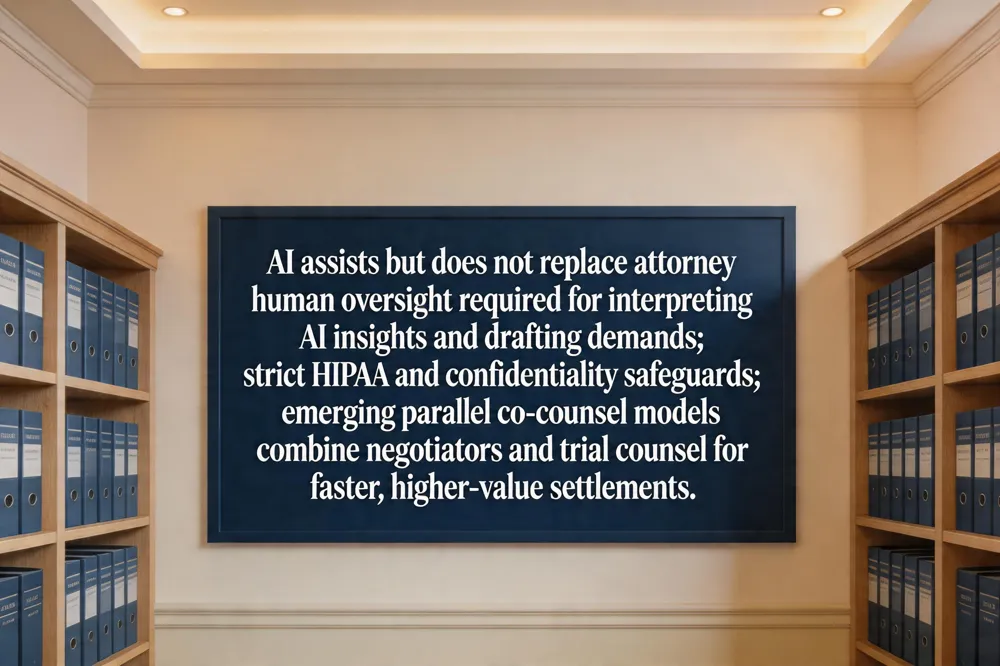 The rapid adoption of AI tools such as CoCounsel Legal is reshaping settlement strategy, but the technology must remain a support, not a substitute, for attorney judgment. CoCounsel’s end‑to‑end encryption safeguards privileged information, and its integration with Westlaw and Practical Law ensures that AI‑generated insights are anchored in trusted authority. Training sessions emphasize that human oversight is essential for interpreting AI‑driven analyses, drafting demand letters, and translating complex medical findings—such as audiometric data for auditory‑loss claims—into persuasive legal arguments. Compliance with HIPAA and other ethical standards is baked into the platform: data are encrypted during research and analysis, and co‑counsel workshops stress confidentiality protocols that prevent procedural delays. Meanwhile, emerging settlement‑counsel models—parallel tracks where dedicated negotiators work alongside trial counsel—are gaining traction. These models, reinforced by structured co‑counsel training, enable faster, higher‑value settlements while preserving the strategic focus of trial teams. Together, AI assistance, rigorous compliance, and innovative counsel structures promise more efficient, ethically sound outcomes for workplace injury claims.
Putting It All Together: Leveraging Co‑Counsel for Better Settlements
Effective settlement outcomes hinge on three interconnected pillars: strategic planning, expert collaboration, and technology enablement. First, a clear roadmap that defines success metrics, risk‑adjusted offers, and timing aligns legal and medical teams from the outset. Second, co‑counsel training that blends litigation tactics with medical‑expert insight—such as auditory‑loss quantification—shortens negotiation cycles by 20‑15 % and raises offer credibility. Third, AI‑driven platforms like CoCounsel accelerate document review, generate precise timelines, and pull authoritative Westlaw authority, freeing attorneys to focus on high‑value advocacy. NorCal Medical Consulting’s clients can tap this ecosystem through customized workshops, on‑demand webinars, and seamless Microsoft Teams integration. Contact us today to schedule a joint strategy session and transform medical data into settlement advantage. By integrating audiometric data and risk models, teams can present proposals that insurers find to reject quickly.