Why Seasonal Heat‑Injury Checklists Matter
Seasonal heat‑injury checklists are becoming essential as extreme‑heat events grow more frequent and intense across the United States. Climate trends show longer heat waves, higher temperatures, and higher humidity, which together raise the Wet‑Bulb Globe Temperature (WBGT) and increase the risk of heat cramps, exhaustion, and stroke for outdoor and indoor workers. Under OSHA’s General Duty Clause (Section 5(a)(1) of the OSH Act), employers must provide a workplace free from recognized hazards, including heat stress, and must develop written heat‑illness prevention programs that incorporate engineering controls, shade, water, rest breaks, acclimatization, and training. Failure to do so can lead to medical emergencies, lost work time, and costly workers’ compensation claims. Documented checklists help employers monitor environmental conditions, enforce hydration and rest schedules, and demonstrate compliance, thereby protecting employee health and reducing legal exposure for the company.
Heat‑Injury Prevention in Tampa, FL
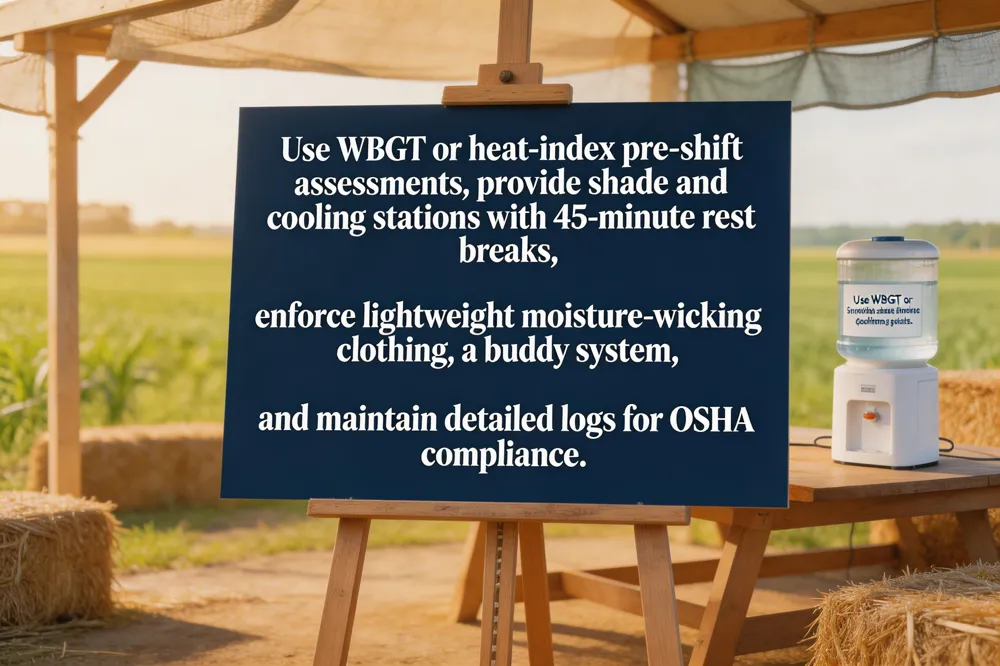 Pre‑shift heat‑risk assessment – Use WBGT or temperature‑humidity index before each shift; postpone or modify work when thresholds are exceeded, especially during Tampa’s peak‑heat hours (10 a.m.–4 p.m.).
Shade and cooling stations – Install portable shade structures and misting or air‑conditioning units; schedule short rest breaks at least every 45 minutes with access to cool, potable water or electrolyte drinks.
Clothing, buddy system, training – Require lightweight, moisture‑wicking garments, wide‑brimmed hats, UV‑blocking sunglasses; enforce a buddy system for early symptom monitoring; provide comprehensive training on heat‑stress signs, personal risk factors, first aid/CPR, and rapid EMS activation.
Documentation and compliance – Maintain a written heat‑illness prevention plan, daily inspection logs, hydration and break records, and incident reports to satisfy OSHA’s General Duty Clause and support any legal or insurance claims.
Seasonal safety checklist – 1. Conduct pre‑shift risk assessment; 2. Provide shade and cooling stations; 3. Enforce proper attire and buddy monitoring; 4. Train staff on symptoms and emergency response; 5. Document all controls and incidents for continuous improvement and regulatory compliance.
Building a Heat‑Stress Program Template & Toolbox Talk Resources
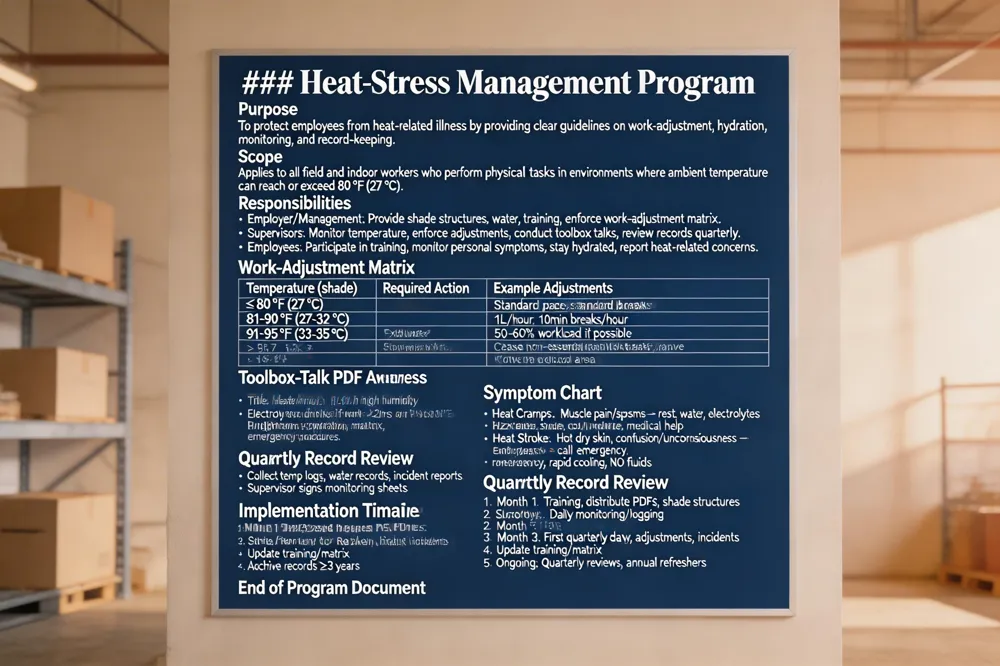 A heat‑stress program template starts with a purpose and scope that identify indoor and outdoor work sites, reference OSHA and Cal/OSHA regulations, and define key terms such as heat index, acclimatization, shade, and heat‑related illnesses. Assign a program manager and list supervisor and worker responsibilities for monitoring WBGT or heat‑index thresholds, providing shade, water (≥1 L per hour), and scheduled rest breaks. Include a step‑by‑step work‑adjustment matrix: when the temperature reaches 80 °F trigger shade; at 90 °F add extra water and 5‑minute shade breaks each hour; at 95 °F require reduced work intensity and cooling stations. A concise heat‑stress toolbox‑talk PDF serves as a quick‑reference handout that lists symptom charts for heat cramps, exhaustion, stroke, and rash, outlines hydration (4‑6 oz every 15‑20 min), light breathable clothing, and first‑aid actions (move to shade, apply cool water, call 911). The toolbox talk should emphasize risk factors, early‑sign monitoring, the 20 % acclimatization rule for new workers, buddy‑system checks, and the employee right to report hazards. Training records, water‑log sheets, and incident reports are retained and reviewed quarterly to ensure compliance and continuous improvement.
Key OSHA Resources & Spanish Guidance
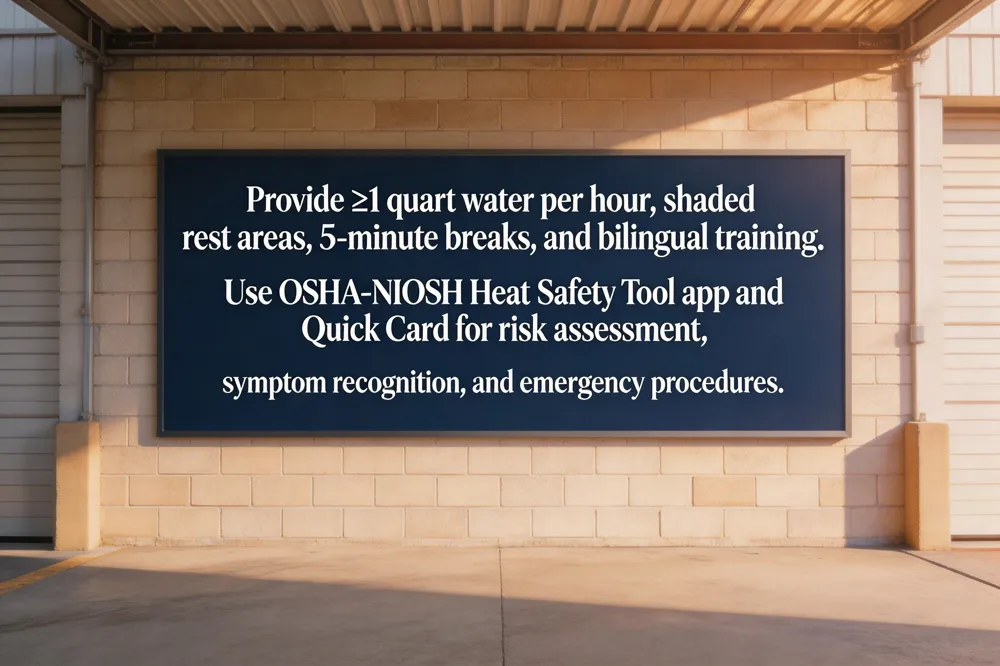 OSHA’s heat‑illness prevention guidance requires employers to supply cool drinking water (at least 1 quart per hour), shaded rest areas, and frequent 5‑minute breaks; it also mandates written prevention plans, temperature monitoring, and training on heat‑risk identification, symptom recognition, and first‑aid response. The OSHA‑NIOSH Heat Safety Tool app lets supervisors calculate WBGT or heat‑index values for a job site, instantly categorizes risk, and delivers bilingual (English/Spanish) prompts for hydration, rest, and emergency actions. Although a dedicated federal heat‑exposure standard is pending, OSHA’s General Duty Clause and the 2024 proposed Heat Injury and Illness Prevention rule compel all industries to assess heat hazards, provide water, shade, and acclimatization schedules, and enforce engineering controls. The OSHA Heat Stress Quick Card offers a laminated, at‑a‑glance reference of risk factors, symptoms of heat exhaustion and heat stroke, preventive steps (light‑colored breathable clothing, buddy system), and emergency procedures such as rapid cooling and calling 911. Together, these resources support compliance, injury assessment, and legal documentation for heat‑related workplace incidents.
Essential Documents: Posters, PDFs, Training & Checklists
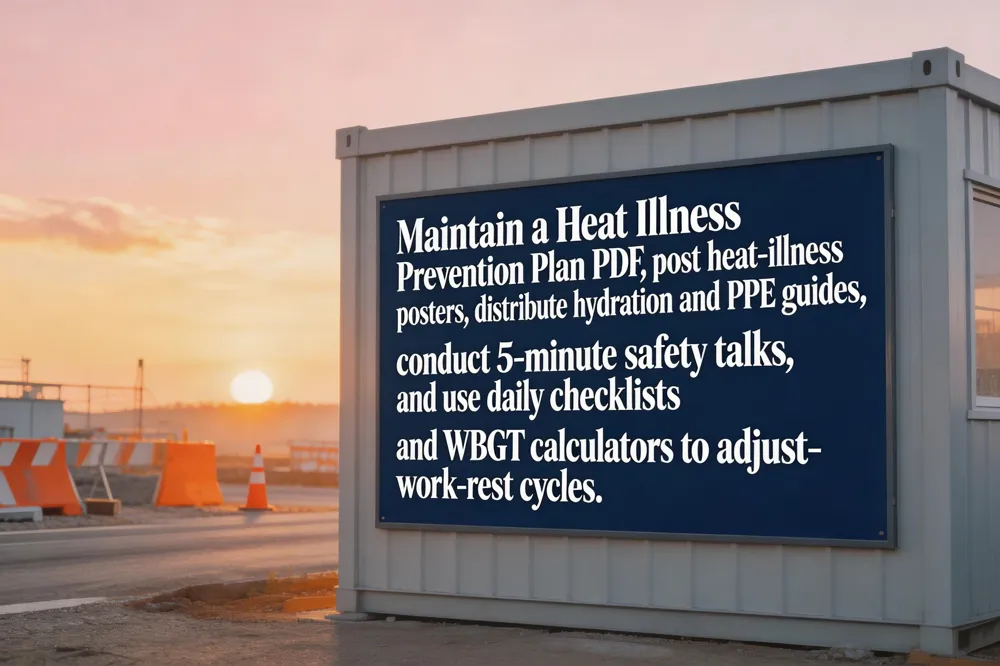 A comprehensive Heat‑Illness Prevention Program starts with a written Heat Illness Prevention Plan PDF that documents risk‑assessment criteria (WBGT, humidity, workload, PPE), water‑and‑shade provisions, training modules, and emergency‑response steps. Post this plan, and a heat‑illness poster, in high‑traffic areas to reinforce symptom recognition (dehydration, heat exhaustion, heat stroke) and immediate actions (move to shade, hydrate, call 911). Supplement the plan with concise Heat Safety PDFs—such as the National Weather Service guide—that outline hydration schedules (≈1 L per hour), breathable clothing, and heat‑alert thresholds. Conduct 5‑minute safety talks and use daily heat‑stress checklists to verify water availability, shade structures, acclimatization status, and buddy‑system checks. Employ assessment tools like OSHA’s WBGT calculator or the NIOSH Heat Safety Tool App to adjust work‑rest cycles in real time. Together, these documents, visual aids, and checklists create a defensible safety system that protects workers, supports injury‑assessment documentation, and meets OSHA’s General Duty Clause.
Seasonal Checklists for Sarasota, Seekonk, Rhode Island & General Outdoor Jobs
 Employers in Sarasota, FL should start each day with a walk‑through to locate hot zones and verify shade structures, reflective barriers, and ventilation. Provide at least one liter of cool water per hour, schedule frequent hydration breaks, and adjust work‑rest cycles to early‑morning or evening hours. Use a buddy system, post multilingual emergency‑response instructions, and train staff on heat‑hazard identification, symptom recognition, and first‑aid/CPR.
In Seekonk, MA, conduct a brief hazard‑identification before shift, supply water every 15–20 minutes, and require UV‑rated sunglasses, wide‑brimmed hats, and SPF‑30+ sunscreen. Schedule demanding tasks for cooler morning or late‑afternoon periods and ensure shaded or air‑conditioned rest areas are available.
For Rhode Island outdoor work, inspect for ice, snow, or standing water, clear debris, and apply sand or salt to prevent slips. Provide layered insulated clothing, waterproof boots, and hearing protection where needed. Maintain hydration, offer electrolyte drinks, and keep a weather‑proof first‑aid kit.
General workplace heat‑safety tips: implement WBGT or heat‑index monitoring, enforce lightweight breathable PPE, rotate workers, and document all heat‑illness prevention activities for continuous improvement and OSHA compliance.
Putting It All Together for Safer Summer Work
A robust heat‑illness program begins with integrating OSHA’s checklist, NIOSH WBGT assessments, and the California shade/rest/hydration standards into daily work routines. Supervisors should verify that shade structures, cool water (≥1 L per hour), and scheduled 15‑minute rest breaks are in place before each shift, while workers receive multilingual training on symptom recognition, acclimatization, and emergency response. Continuous monitoring—using WBGT meters, hydration logs, and buddy‑system observations—creates a real‑time safety picture that is documented in a daily checklist. This documentation protects employees by enabling rapid treatment, shields employers from liability by proving compliance, and supplies injury‑assessment firms with objective data for medical evaluations and insurance claims.