The Importance of Workplace Injury Prevention
...
The Pillars of a Proactive Safety Culture
The three fundamental principles of injury prevention in the workplace
The three fundamental principles of injury prevention in the workplace are Education, Engineering, and Enforcement. Education involves training employees to recognize hazards, follow safe practices, and mitigate risks, such as identifying trip hazards or proper lifting techniques. Engineering focuses on creating safer environments through design, like using protective equipment (PPE), maintaining machinery, and organizing workspaces to minimize exposure to dangers like moving vehicles or harmful substances. Enforcement ensures compliance with safety protocols and regulations, including monitoring adherence to OSHA standards for hazard control, conducting regular inspections, and holding both employers and employees accountable for safety procedures. Together, these principles reduce workplace injuries by addressing awareness, infrastructure, and regulatory consistency, fostering a culture of workplace safety improvement and preventing costly incidents.
The key components of a successful workplace safety program
A successful workplace safety program integrates leadership commitment, employee training, hazard identification and prevention, and a proactive safety culture. Key components include regular risk assessments, clear policies, and accessible reporting systems to address concerns and prevent incidents. Employee engagement through safety incentives, open communication, and involvement in hazard control solutions fosters accountability and reduces injuries. Physical safeguards, such as proper tools, ergonomic adjustments, and clear signage, minimize accident risks. Partnering with experts like NorCal Medical Consulting for specialized evaluations—such as auditory loss assessments—ensures compliance with legal standards and supports effective injury prevention strategies.
Ergonomic and Physical Hazard Mitigation
Understanding and Preventing Ergonomic Injuries
Ergonomic hazards, such as poor workstation design and repetitive motion, are leading causes of musculoskeletal disorders in the workplace. Strategies for prevention include adjustable workstations, regular breaks, and Work injury prevention strategies to improve strength, flexibility, and endurance. Ergonomic assessments can identify risks like awkward postures and excessive force and recommend interventions like tool redesign or workstation reconfiguration. According to the Mayo Clinic, companies implementing ergonomic interventions see a reduction in workers' compensation costs and improved productivity.
Engineering Controls for Slip/Trip/Fall Hazards
Slips, trips, and falls account for a large portion of workplace injuries, costing companies millions annually. Implementing engineering controls such as non-slip surfaces (non-slip surfaces and safety measures), adequate lighting, and handrail installations can significantly mitigate these risks. OSHA standards (OSHA standards for hazard control) emphasize hazard identification and correction, including cleaning spills immediately and posting warning signs. Employers also benefit from regular facility inspections to ensure flooring, stairs, and walkways are maintained and free of obstacles that could lead to accidents.
Strategies to Reduce Overexertion-Related Injuries
Overexertion, often due to lifting, pushing, or pulling heavy objects, results in 30% of all workplace injuries. Preventive measures include proper lifting techniques, use of ergonomic lifting aids, and job rotation to minimize repetitive strain. The National Safety Council advises training employees on body mechanics and enforcing the use of mechanical lifting devices. Workplace assessments and pre-employment physical assessments help determine physical capabilities, ensuring tasks match employee strength and endurance. Physical therapy and wellness programs further reinforce injury prevention by promoting safe lifting and core strengthening exercises.
| Prevention Strategy | Target Hazard | Implementation Details |
|---|---|---|
| Ergonomic Workstations | Awkward postures, forceful exertion | Adjustable desks/chairs, specialized tools |
| Non-Slip Flooring (non-slip surfaces and safety measures) | Slips, trips, falls | High-traction surfaces, immediate spill cleanup |
| Mechanical Lifting Aids (use of ergonomic lifting aids) | Overexertion | Training on use, regular maintenance checks |
The 5 Es of Injury Prevention
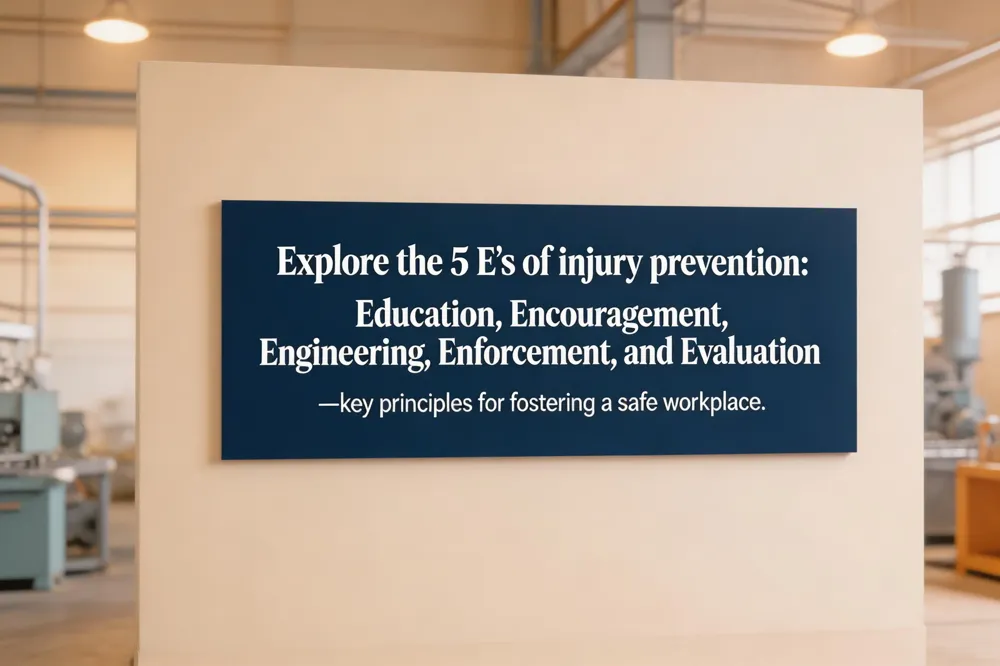
What are the 5 E's of injury prevention?
The 5 E’s of injury prevention are Education, Encouragement, Engineering, Enforcement, and Evaluation.
- Education involves teaching safe practices through programs and training to raise awareness about hazards like workplace injuries.
- Encouragement promotes positive behaviors via incentives and community engagement to foster safety-minded choices.
- Engineering focuses on modifying environments—such as ergonomic workspaces—to reduce injury risks.
- Enforcement ensures compliance through policies and monitoring to discourage unsafe actions.
- Evaluation assesses the effectiveness of strategies, using data to refine and strengthen injury prevention efforts.
Practical Implementation and Monitoring
Conducting regular safety audits and evaluations
Performing safety audits is critical to hazard identification and control and mitigating risks. Employers should conduct regular inspections of workspaces, equipment, and procedures to uncover risks such as ergonomic assessments or malfunctioning machinery. Audits should be documented with timelines and corrective action plans. Use standardized checklists and involve workers to gather input on potential risks, ensuring their expertise is leveraged. Track trends in near-misses and repeat incidents to prioritize high-risk areas and verify the effectiveness of previous control measures.
Training programs and employee engagement
Training programs are essential for empowering employees with the knowledge to identify and manage hazards. Sessions should cover emergency procedures, proper use of PPE, and safe work practices while fostering open communication. Incorporate interactive training such as simulations or scenario-based exercises to build practical skills. Encourage reporting of concerns or near-misses through a safe, no-blame environment. Regularly refresh training to reflect new technologies, legal standards, or workplace changes, ensuring awareness is maintained and up-to-date.
Tracking and responding to incidents and near-misses
Maintaining a robust incident tracking system is crucial for understanding patterns and taking proactive measures. Record details of near-misses, injuries, and environmental issues to analyze root causes. Utilize this data to revise hazard control plans, update procedures, or introduce additional safeguards. Conduct follow-up evaluations to verify control effectiveness and ensure long-term implementation. By actively addressing each reported incident or hazard, employers reinforce a culture of accountability and continuous improvement, leading to safer work environments and reduced injury rates.
Sustaining a Safe Workplace Through Continuous Improvement
The Need for Ongoing Safety Evaluation and Adaptation
Safety programs must evolve to address emerging risks and maintain effectiveness. Regular reassessments of workplace hazards, updated protocols, and employee input ensure that control measures remain aligned with operational changes. Employers should revisit their hazard control plans at least annually or when new equipment, procedures, or conditions are introduced.
The Role of Medical Experts Like NorCal Medical Consulting
Medical experts specializing in occupational health provide critical support in evaluating workplace injuries and contributing to legal and insurance claims. By conducting detailed assessments of injury origins and impacts, they help businesses refine prevention strategies and reduce long-term costs. NorCal Medical Consulting, for instance, focuses on auditory loss and other injury evaluations, offering actionable insights to improve workplace practices.
Building Long-Term Resilience Against Workplace Hazards
Establishing long-term resilience requires integrating proactive training, continuous monitoring, and a culture of safety awareness. Initiatives like WOSHTEP (Worker Occupational Safety & Health Training and Education Program) emphasize education and preventive action, enabling businesses to foresee risks and implement solutions before incidents occur.