Navigating the Longshore and Harbor Workers' Compensation Act
A Federal Safety Net for Maritime Workers
The Longshore and Harbor Workers' Compensation Act (LHWCA) is a federal workers' compensation system enacted in 1927. It provides a comprehensive safety net for maritime employees who suffer work-related injuries or occupational diseases while on the job. The Act covers workers engaged in traditional maritime occupations, including longshore workers, ship-repairers, shipbuilders, ship-breakers, and harbor construction workers. Coverage extends to injuries that occur on the navigable waters of the United States or in adjoining areas such as piers, docks, terminals, wharves, and other sites customarily used in loading, unloading, repairing, or building a vessel.
The LHWCA operates on a no-fault basis, meaning injured workers do not need to prove employer negligence to receive benefits. This structure ensures timely access to compensation and care. Benefits are typically paid by the employer's private insurance carrier or by a self-insured employer. The U.S. Department of Labor's Office of Workers' Compensation Programs (OWCP) administers the Act through its Division of Longshore and Harbor Workers' Compensation.
Key Benefits Provided Under the LHWCA
The Act delivers three core categories of benefits: medical care, wage replacement, and vocational rehabilitation. Medical benefits cover all reasonable and necessary treatment related to the work injury, including surgeries, prescription medications, diagnostic tests, physical therapy, prostheses, hearing aids, attendant care, and travel costs for treatment. There is no time limit for requesting medical care, and the right to medical treatment continues as long as the nature of the injury or recovery process requires.
Wage replacement is provided through disability benefits. For temporary total disability (TTD), the worker receives two-thirds of their Average Weekly Wage (AWW) while recuperating, subject to annual minimum and maximum rates set by the Department of Labor. Permanent total disability (PTD) benefits are paid at the same rate for the duration of the disability and are adjusted annually based on increases in the National Average Weekly Wage. Permanent partial disability (PPD) for specific body parts—including hearing loss—is paid according to a statutory schedule that specifies a set number of weeks of compensation once the employee reaches maximum medical improvement.
Vocational rehabilitation services are available to permanently disabled employees who cannot return to their previous job and have suitable employment opportunities within their commuting area. These services may include assessment, testing, counseling, job development, training, and placement assistance.
The Two-Part Eligibility Test: Status and Situs
To qualify for LHWCA benefits, an injured worker must satisfy both the status test and the situs test. The status test examines the nature of the worker's job duties, requiring the employee to be engaged in maritime employment as defined by the Act. This includes not only traditional roles like longshore workers and shipbuilders but also less obvious positions such as mechanics who repair trucks used in loading operations. Employees generally excluded from the status test include office clerical, secretarial, security, or data processing workers; aquaculture workers; builders of recreational vessels under 65 feet; and marina employees not engaged in construction or expansion.
The situs test concerns the location of the injury. It must occur on navigable waters or in adjoining areas such as piers, docks, dry docks, terminals, building ways, or marine railways used for loading, unloading, repairing, or building vessels. Courts have interpreted the term "adjoining" broadly to mean "close to or in the vicinity of" navigable waters. As a general guideline, workers within approximately one mile of the water's edge or the facility boundary typically satisfy the situs test, though each case depends on specific facts.
Coverage for Occupational Diseases and Hearing Loss
The LHWCA's definition of injury expressly includes occupational diseases, hearing loss, and illnesses arising out of employment. This is particularly relevant for auditory loss claims, which may result from prolonged exposure to workplace noise in shipyards, docks, and terminals. For occupational disease claims, the employee has two years from the date they first become aware of the relationship between the disease, their disability, and their employment to file a claim. Notably, there is no time limit to claim medical benefits for occupational diseases.
For hearing loss specifically, compensation under the Act is scheduled: 52 weeks for loss of hearing in one ear and 200 weeks for loss of hearing in both ears. The determination of hearing loss must be made in accordance with the American Medical Association's Guides to the Evaluation of Permanent Impairment. An audiogram administered by a licensed or certified audiologist or a physician certified in otolaryngology serves as presumptive evidence of the hearing loss sustained. The time for filing a notice of injury or claim for hearing loss does not begin until the employee has received an audiogram indicating a loss of hearing.
Relevance to NorCal Medical Consulting
NorCal Medical Consulting's expertise in workplace injury assessments, particularly auditory loss, is directly relevant to LHWCA claims. The firm provides medically sound, evidence-based evaluations that help establish the causal connection between occupational noise exposure and hearing impairment. These assessments support legal and insurance claim processes by documenting the degree of impairment, linking it to workplace conditions, and ensuring compliance with the Act's requirements for audiometric testing and impairment ratings under the AMA Guides. Expert witness services further assist in resolving disputes when claims are contested before the OWCP or an Administrative Law Judge.
Application and Claims Process
To initiate a claim, the injured worker must provide written notice of injury to the employer within 30 days using Form LS-201. A formal claim for compensation (Form LS-203) must be filed with the OWCP within one year of the injury or within one year of the last voluntary compensation payment. If the employer or insurance carrier denies the claim, they must file a Notice of Controversion (Form LS-207) stating the reasons. The worker may then seek assistance from the OWCP claims examiner, request an informal conference, and, if necessary, proceed to a formal hearing before a Department of Labor Administrative Law Judge. Retaliation for filing a claim is prohibited under Section 49 of the LHWCA.
| Benefit Type | Key Feature | Duration / Limits |
|---|---|---|
| Medical Care | Full coverage for reasonable, necessary treatment | No time limit; continues as long as injury requires |
| Temporary Total Disability (TTD) | 2/3 of AWW, subject to annual MIN/MAX | Until employee recovers or reaches MMI |
| Permanent Total Disability (PTD) | 2/3 of AWW, adjusted annually for NAWW | For life, as long as disability continues |
| Permanent Partial Disability (Scheduled) | Fixed weeks per body part (e.g., hearing: 52 weeks one ear, 200 weeks both) | Paid after MMI; no further adjustment |
| Vocational Rehabilitation | Job retraining, counseling, placement | Available if permanently disabled and cannot return to prior job |
| Death Benefits | Up to 2/3 of decedent's AWW to survivors | Widow(er) receives 1/2 AWW for life; benefits to children until 18 (23 if student) |
Who Is Covered Under the LHWCA?
 Coverage under the Longshore and Harbor Workers' Compensation Act (LHWCA) is determined by a two-part eligibility framework: the nature of a worker's job duties and the location where an injury occurs. This section explains who is covered, what key extensions exist, and which workers are specifically excluded. Understanding who qualifies is critical for accurate medical and legal assessments in maritime injury contexts.
Who is covered under the Longshore and Harbor Workers' Compensation Act?
The LHWCA covers employees in traditional maritime occupations such as longshore workers, ship repairers, shipbuilders, ship-breakers, and harbor construction workers. These employees must sustain injuries that arise out of and in the course of employment on the navigable waters of the United States or in adjoining areas such as piers, docks, terminals, wharves, dry docks, building ways, and marine railways. Non-maritime employees-may also qualify for coverage if they perform their work on navigable water and their injuries occur there. The term "injury" under the Act is broad and expressly includes occupational diseases, hearing loss, and illnesses arising out of employment.
Are harbor workers eligible for federal workers' compensation plans?
Yes, harbor workers are eligible for federal workers' compensation under the LHWCA. The Act specifically covers employees in traditional maritime occupations including harbor construction workers, longshore workers, ship repairers, and shipbuilders. To qualify, their injuries must occur on the navigable waters of the United States or in adjoining areas like piers, docks, terminals, and wharves used in loading, unloading, repairing, or building vessels. This coverage is part of a no-fault system where employers are liable for compensation regardless of fault, as established by 33 U.S.C. § 904(b).
How does the Longshore and Harbor Workers' Compensation Act differ from the Jones Act?
The LHWCA and the Jones Act are mutually exclusive. The LHWCA covers land-based maritime workers such as longshoremen, harbor builders, and ship repairers under a no-fault workers' compensation system. This system provides prompt medical benefits, disability compensation, and vocational rehabilitation without requiring proof of negligence. In contrast, the Jones Act covers seamen—workers who spend at least 30% of their time on a vessel in navigation and contribute to the vessel's function or mission. The Jones Act allows seamen to sue their employer for negligence, with potential damages including pain and suffering, which are not available under the LHWCA. The key determination is the employee's connection to a vessel in navigation. The LHWCA explicitly excludes masters or crew members of any vessel from its definition of "employee."
The two-part eligibility test: status and situs
To be eligible for LHWCA benefits, an injured worker must pass both a status test and a situs test. The status test examines whether the employee is engaged in maritime employment. This includes traditional workers like longshore workers, shipbuilders, and harbor construction workers. It can also include less obvious roles, such as employees who operate or maintain vehicles used to carry shipping containers away from ships, as long as they are directly contributing to maritime activity. The situs test requires that the injury occur upon the navigable waters of the United States or in adjoining areas. These areas are defined to include piers, wharves, dry docks, terminals, building ways, marine railways, and other adjoining areas customarily used in loading, unloading, repairing, or building a vessel. Courts have interpreted this liberally; for example, the term "adjoining" has been interpreted to mean "close to or in the vicinity of" rather than strictly "next to." A practical rule of thumb is that working more than a mile from the water or the edge of a facility likely prevents eligibility, but each case depends on specific facts.
Key exclusions from LHWCA coverage
The Act specifically excludes several categories of workers. Seamen (masters or crew members of any vessel) are excluded and are instead covered by the Jones Act. Employees of the U.S. government, any state government, or any foreign government are excluded. Workers whose injuries are caused solely by their own intoxication or by their own willful intention to injure themselves or others. Additionally, certain classes of employees are excluded from the definition of "employee" if they are covered by a state workers' compensation law: individuals employed exclusively in office clerical, secretarial, security, or data processing work; employees of clubs, camps, recreational operations, restaurants, museums, or retail outlets; marina employees not engaged in construction, replacement, or expansion of the marina (except routine maintenance); employees of suppliers, transporters, or vendors temporarily doing business on a maritime employer's premises who are not performing covered work; aquaculture workers; and individuals employed to build or repair recreational vessels under 65 feet in length.
Coverage extensions: DBA, OCSLA, and NAFIA
Congress has extended the benefits of the LHWCA to cover additional groups of workers through three separate statutes. The Defense Base Act (DBA) covers employees of private contractors working on U.S. military bases outside the continental United States, on public work contracts for national defense, and on contracts under the Foreign Assistance Act. The Outer Continental Shelf Lands Act (OCSLA) extends coverage to employees working on the Outer Continental Shelf in the exploration and development of natural resources, including offshore oil and gas rigs. The Nonappropriated Fund Instrumentalities Act (NAFIA) covers civilian employees of military post exchanges, recreational facilities, and social clubs operated by the armed forces. Employees covered by these extensions are entitled to the same benefits as LHWCA claimants.
| Category | Covered under LHWCA | Eligible for Other Benefits | Notes |
|---|---|---|---|
| Longshore workers | Yes | No (unless third-party claim) | Traditional maritime occupation |
| Ship repairers, builders, breakers | Yes | No (unless third-party claim | Traditional maritime occupation |
| Harbor construction workers | Yes | No (unless third-party claim | Traditional maritime occupation |
| Seamen (masters/crew) | No | Yes (Jones Act) | Mutually exclusive with LHWCA |
| Office clerical workers (at maritime site) | No (if covered by state workers' comp | Yes (state workers' comp | Exclusion applies only if covered by state law |
| Offshore oil platform workers | Yes (under OCSLA extension) | No | Extension of LHWCA |
| Military base contractors (overseas) | Yes (under DBA extension) | No | Extension of LHWCA |
| Civilian employees of military exchanges | Yes (under NAFIA extension) | No | Extension of LHWCA |
What Injuries and Illnesses Are Covered?

Definition of 'Injury' Under the Longshore and Harbor Workers' Compensation Act
How to File a Claim and Key Deadlines
What is the statute of limitations for filing a claim under the Longshore and Harbor Workers' Compensation Act?
The LHWCA imposes strict but navigable deadlines for filing claims. Understanding these timeframes is critical to preserving benefit rights.
For a standard work injury, a formal claim (Form LS-203) must be filed with the Office of Workers' Compensation Programs (OWCP) within one year from the date of injury or death. If the employer voluntarily pays compensation, the one-year period starts from the date of the last payment.
For occupational diseases, which often develop slowly from workplace exposures, the rules differ. The claimant has two years from the date they first become aware of the relationship between the disease, their disability, and their employment to file a claim.
For hearing loss specifically, the filing clock does not begin until the employee receives an audiogram that indicates a measurable loss.
Crucially, there is no time limit for requesting or receiving medical treatment for a work-related injury or occupational disease. The right to medical care is never time-barred, even if the compensation claim is not filed on time.
Immediate steps: report injury to supervisor as soon as possible; obtain medical care
The claim process begins the moment an injury occurs or a condition is discovered. Take these immediate actions:
- Notify your supervisor or employer representative as soon as possible. Give details of what happened. This prompt notice protects your rights and allows the employer to begin managing the claim.
- Seek immediate medical attention. Under the LHWCA, you have the right to choose your own treating physician. There is no network of approved providers; you may select any physician who meets the statutory definition. This right is a key advantage of the federal system.
- Keep records of all medical treatments, costs, and communications with your employer and their insurance carrier.
Written notice: use Form LS-201 within 30 days
You must provide written notice of the injury to your employer using Form LS-201 (Notice of Employee's Injury or Death). This notice must be filed within 30 days of the injury or within 30 days of becoming aware of the injury.
Failure to provide this written notice within 30 days can jeopardize your entitlement to compensation benefits. However, it does not bar your right to medical care. The failure may also be excused if there was good reason for the delay or if the employer was not prejudiced by the late notice.
For occupational diseases, notice must be given within one year after the employee becomes aware of the relationship between the disease and the employment.
Formal claim: use Form LS-203 within one year
Beyond the notice, a formal written claim for compensation must be filed with the OWCP. Use Form LS-203 (Employee's Claim for Compensation) and submit it within one year after the date of injury or within one year after the last voluntary compensation payment.
Key deadlines:
| Claim Type | Filing Deadline | Relevant Form |
|---|---|---|
| Standard injury | 1 year from injury or last payment | LS-203 |
| Occupational disease | 2 years from awareness of disease-disability-employment link | LS-203 |
| Hearing loss | Begins when audiogram indicates loss | LS-203 |
| Death | 1 year from death | LS-262 |
If the employee is a minor or mentally incompetent, the filing deadline does not begin until a guardian or authorized representative is appointed.
What happens after filing: acceptance or denial
Once the claim is filed, the employer or their insurance carrier has options:
- Acceptance: If they accept liability, benefits begin. The first compensation payment is due 14 days after the employer knows of disability. If disability exceeds 3 days, benefits are payable. Payments are made bi-weekly.
- Denial: If they deny responsibility, they must file Form LS-207 (Notice of Controversion) with the OWCP, stating the specific reasons for denial. A copy must be provided to the employee.
If the claim is denied, the employee can:
- Contact the assigned LHWCA Claims Examiner for assistance.
- The OWCP may conduct an informal conference to try to resolve the dispute. The claims examiner issues a non-binding recommendation.
- If the dispute remains unresolved, the next step is a formal hearing before a Department of Labor Administrative Law Judge (ALJ). The employee must submit Form LS-18 (Pre-Hearing Statement) to request this hearing.
Formal hearings follow federal rules of procedure. Both sides present evidence, and the ALJ issues a binding decision. This decision can be appealed to the Benefits Review Board, then to U.S. Circuit Courts, and potentially to the U.S. Supreme Court.
Prohibited retaliation
It is unlawful under Section 49 of the LHWCA for an employer to discharge or discriminate against an employee solely because they filed a claim or testified in a hearing. Violations can result in reinstatement, back pay, and civil penalties payable to the Special Fund.
Benefits and Compensation Rates
Types of Disability Benefits
Temporary Total Disability (TTD) is paid when a worker is temporarily unable to return to any work due to recovery from an injury. The benefit rate is two-thirds (2/3) of the AWW, subject to minimum and maximum rates. Payments begin after a three-day waiting period, which is waived if the disability extends beyond 14 days.
Temporary Partial Disability (TPD) applies when an employee can perform some work but at reduced earnings. The benefit is two-thirds (2/3) of the difference between the AWW and the worker’s current earning capacity. TPD benefits are limited to a maximum of five years.
Permanent Total Disability (PTD) is paid when an injury prevents a worker from engaging in any gainful employment. The rate is two-thirds (2/3) of the AWW, is paid for life, and is annually adjusted for increases in the National Average Weekly Wage (NAWW).
Permanent Partial Disability (PPD) has two forms. Scheduled PPD applies for the loss or loss of use of specific body parts, such as arms, legs, or ears (hearing loss). Benefits are paid for a fixed number of weeks as outlined in Section 8(c) of the Act. Unscheduled PPD applies to injuries not on the schedule (e.g., back or neck) and is based on two-thirds (2/3) of the loss of wage-earning capacity, paid as long as the disability continues.
What is the maximum compensation rate under the Longshore and Harbor Workers' Compensation Act?
The maximum compensation rate under the LHWCA is not a fixed dollar amount. It is adjusted annually on October 1st based on the National Average Weekly Wage (NAWW). For fiscal year 2026 (October 1, 2025 – September 30, 2026), the NAWW is $1,041.35. The maximum rate is 200% of the NAWW, equaling $2,082.70 per week. The minimum rate for total disability is 50% of the NAWW, or $520.68 per week.
Medical Benefits for LHWCA Injuries
Covered employees are entitled to all reasonable and necessary medical treatment for their work-related injury or occupational disease. This includes surgical services, hospital care, prescription drugs, physical therapy, prostheses, hearing aids, attendant care, and transportation costs to and from appointments.
There is no network of approved providers; the employee has the right to choose their own treating physician from those authorized under the Act. Once a doctor is selected, the employee cannot change physicians without permission from the employer, insurance carrier, or the Office of Workers' Compensation Programs (OWCP).
A key protection under the LHWCA is that there is no time limit on the right to request or receive medical care for a work injury, even if a compensation claim is not filed on time.
Death (Survivor) Benefits
If a work injury causes or contributes to an employee’s death, survivor benefits are payable to eligible dependents. The total death benefit is up to two-thirds (2/3) of the deceased employee’s AWW. A surviving spouse with no eligible children receives one-half (1/2) of the AWW for life or until remarriage. With children, the total may reach two-thirds (2/3) of the AWW. Funeral expenses are reimbursed up to $3,000. Death benefits are also subject to annual adjustments based on the NAWW.
Vocational Rehabilitation
Vocational rehabilitation services are available to permanently disabled employees who are receiving or likely to receive compensation, cannot return to their previous job, and have suitable employment opportunities within their commuting area. These services can include job training, counseling, job placement assistance, and other support to help the worker return to gainful employment. The cost of rehabilitation is paid by the employer or, in certain cases, from the OWCP Special Fund.
| Benefit Type | How It Is Calculated | Key Limits & Duration |
|---|---|---|
| Temporary Total Disability (TTD) | 2/3 of AWW | Paid during recovery; after 3-day waiting period; waived if disability > 14 days |
| Temporary Partial Disability (TPD) | 2/3 of (AWW - current earning capacity) | Maximum of 5 years |
| Permanent Total Disability (PTD) | 2/3 of AWW | Paid for life; annually adjusted for NAWW |
| Permanent Partial Disability (Scheduled) | Fixed weeks per schedule (e.g., 52 weeks for one ear) | Paid after reaching Maximum Medical Improvement (MMI) |
| Permanent Partial Disability (Unscheduled) | 2/3 of lost wage-earning capacity | Paid as long as disability continues |
| Death (Survivor) Benefits | Up to 2/3 of AWW | Paid to eligible survivors; plus $3,000 funeral expenses |
| Medical Benefits | All reasonable & necessary care | No time limit; no network; employee chooses physician |
| Vocational Rehabilitation | Cost of approved services | Available for permanent disability preventing return to prior job |
Who Determines Compensability and What Penalties Exist?
Role of Medical Professionals
Medical professionals are central to the compensability determination. They provide diagnostic evidence that establishes a causal link between the worker’s injury or disease and their maritime employment. For hearing loss claims, a licensed audiologist or otolaryngologist must perform audiometric testing according to the American Medical Association’s Guides to the Evaluation of Permanent Impairment. The results become presumptive evidence of the hearing loss if the test result is that the worker is provided a copy at the time of testing.
When an insurance carrier or self-insured employer schedules an independent medical examination (IME), the worker must attend at a reasonable distance. Refusal to attend can result in suspension of compensation benefits until the examination is completed. The IME doctor’s opinion may affect the carrier’s decision to accept or contest the claim. However, the worker retains the right to choose their own treating physician, who may provide a contrary opinion.
Role of the OWCP Claims Examiner
The Office of Workers’ Compensation Programs ([OWCP]...) claims examiner manages the claim file and reviews all submitted evidence, including medical records, wage statements, and the employer’s position. If the employer or insurer disputes the claim by filing a Notice of Controversion (Form LS-207), the examiner may hold an informal conference aimed at resolving the dispute without a formal hearing. The examiner issues a non-binding recommendation after evaluating both sides.
This step is mandatory before proceeding to a formal hearing. If either party rejects the recommendation, the claims examiner cannot enforce it, and the worker must request a formal hearing with an Administrative Law Judge.
Role of the Administrative Law Judge
The Administrative Law Judge (ALJ) conducts a formal hearing under the Federal Rules of Procedure. The hearing is not a jury trial; the ALJ alone weighs the evidence, hears testimony, and issues a binding decision. The ALJ determines key factual and legal questions: whether the injury arose out of and in the course of employment, whether the condition is work-related, the degree of disability, the correct average weekly wage, and what medical treatment is reasonable and necessary.
Either party dissatisfied with the ALJ’s decision may appeal to the Department of Labor’s Benefits Review Board. The Board reviews whether the decision is supported by substantial evidence and consistent with the law. Further appeals may be made to the U.S. Court of Appeals and, ultimately, to the U.S. Supreme Court.
Penalties for Employers and Insurers
The LHWCA imposes serious penalties to deter noncompliance:
| Violation | Penalty | Legal Basis (33 U.S. Code) |
|---|---|---|
| Failure to secure payment of compensation | Fine up to $10,000, imprisonment up to 1 year, or both; corporate officers may be personally liable | § 938 |
| Failure to pay compensation when due without reasonable grounds | Additional 10% penalty on the unpaid amount | § 914(e) |
| Discrimination against employee for filing a claim or testifying | Back pay, reinstatement, civil penalty payable to the Special Fund | § 948a |
| Knowingly making false statements to deny, reduce, or terminate benefits | Fine up to $10,000, imprisonment up to 5 years, or both | § 931(c) |
The Special Fund (Second Injury Fund) may pay benefits when the employer or its carrier is insolvent. Employers must also post notices informing workers of their rights under the Act, and failure to report a lost-time injury within 10 days may result in penalties.
These enforcement mechanisms ensure that injured maritime workers receive the benefits they are entitled to without retaliation or unnecessary delay.
Special Considerations: Hearing Loss and Retirees
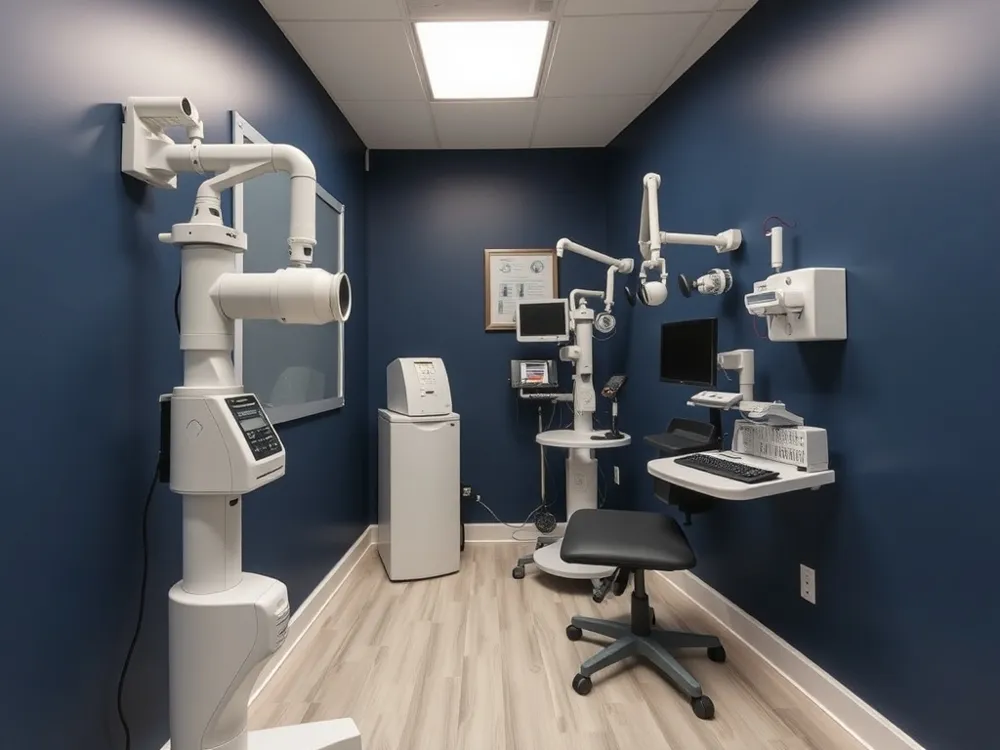
How is Hearing Loss Compensated Under the LHWCA?
The LHWCA provides specific compensation for permanent partial disability (PPD) due to hearing loss. Under Section 8(c) of the Act, hearing loss is treated as a scheduled injury, meaning compensation is paid for a fixed number of weeks based on the severity of the loss, regardless of whether the employee can return to work.
- Loss of hearing in one ear entitles the worker to 52 weeks of compensation.
- Loss of hearing in both ears entitles the worker to 200 weeks of compensation.
- Compensation is calculated at two-thirds of the employee’s Average Weekly Wage (AWW), subject to annual minimum and maximum rates.
To establish a claim, the hearing loss must be documented by an audiogram administered by a licensed or certified audiologist or a physician certified in otolaryngology. The audiogram serves as presumptive evidence of the hearing loss at its date of administration. The degree of impairment must be determined using the American Medical Association’s Guides to the Evaluation of Permanent Impairment (AMA Guides).
The LHWCA defines hearing loss as an occupational disease. Key requirements include:
- The hearing loss must be caused by work-related noise exposure.
- The employer where the employee was last exposed to injurious noise is responsible for the claim.
- The claimant has two years from the date they first become aware of the relationship between the hearing loss, their disability, and their employment to file a formal claim.
- There is no time limit to claim medical benefits, including hearing aids and related treatment.
Are Retirees With Occupational Hearing Loss Entitled to Benefits?
Yes, the LHWCA provides specific benefits for retirees who develop occupational hearing loss after retiring. This recognizes that many hearing loss cases—like those from prolonged noise exposure—may not be diagnosed until years after the worker has left the job.
For retirees with occupational disease diagnosed more than one year after voluntary retirement:
- Compensation is not based on the worker’s pre-retirement wages. Instead, it is calculated using the National Average Weekly Wage (NAWW) at the time of the diagnosis and the degree of ratable impairment under the AMA Guides.
- This means that even if a retiree suffers no wage loss because they are no longer working, they may still be entitled to permanent partial disability (PPD) benefits for their hearing impairment.
- The percentage of impairment determines the number of weeks of compensation, following the scheduled values for hearing loss.
| Aspect | Standard Hearing Loss Claim | Retiree Hearing Loss Claim (diagnosed >1 year post-retirement) |
|---|---|---|
| Basis for Compensation | Employee’s AWW at time of injury | NAWW at time of diagnosis |
| Wage Loss Required? | Yes (disability means inability to earn same wages) | No (PPD based on impairment alone) |
| Responsible Employer | Employer where last exposed to noise | Employer where last exposed to noise |
| Filing Deadline | Two years from awareness of relationship | Two years from awareness of relationship |
| Medical Benefits | No time limit | No time limit |
This ensures that long-time dockworkers, shipyard employees, or harbor construction workers who develop hearing loss after retirement are not left without compensation simply because their symptoms appeared after they stopped working.
Key Evidentiary Requirements for Hearing Loss Claims
To succeed in a hearing loss claim under the LHWCA, the claimant must provide:
- A qualified audiogram (administered by a licensed audiologist or otolaryngologist).
- Medical evidence linking the hearing loss to workplace noise exposure (e.g., testimony or records of noisy environments like loading/unloading areas, engines, or machinery).
- For retirees, a medical report documenting the diagnosis and the percentage of impairment under the AMA Guides.
| Requirement | Standard |
|---|---|
| Medical Examiner | Licensed audiologist or physician certified in otolaryngology |
| Impairment Standard | AMA Guides to the Evaluation of Permanent Impairment |
| Proof of Work-Relatedness | Noise exposure during covered maritime employment |
| Filing Period (occupational disease) | 2 years from awareness of link between hearing loss, disability, and job |
These strict evidentiary rules ensure that only genuine work-related hearing loss is compensated, while protecting the rights of workers and retirees whose hearing loss may have been caused by years of exposure on the docks, terminals, or shipyards.
Understanding Your Rights Under the LHWCA
Understanding the Longshore and Harbor Workers' Compensation Act (LHWCA) is essential for maritime employees and the professionals who support them. The LHWCA is a federal no-fault workers' compensation law that provides medical care, wage replacement, and vocational rehabilitation to workers injured on U.S. navigable waters or adjoining areas like piers, docks, and terminals. Coverage for an injury, occupational disease, or hearing loss depends on meeting two core tests: the status test and the situs test.
The status test examines the nature of the worker's duties. The employee must be engaged in maritime employment, such as longshore work, shipbuilding, ship repair, harbor construction, or cargo handling. The situs test requires that the injury occur on navigable waters or in adjoining areas customarily used for loading, unloading, repairing, or building vessels.
Navigating the Claims Process
Filing a successful LHWCA claim requires strict adherence to deadlines and proper documentation.
- Timely reporting is critical. An employee must notify the employer of an injury within 30 days using Form LS-201. A formal claim for compensation must be filed with the Office of Workers' Compensation Programs (OWCP) within one year of the injury or last voluntary compensation payment. For occupational diseases, the claimant has two years from the date they become aware of the relationship between the disease, disability, and employment.
- Medical benefits have no time limit. Even if a compensation claim is not timely filed, the right to reasonable and necessary medical care for a work-related injury never expires. This underscores the importance of thorough medical documentation from the outset.
- Comprehensive documentation strengthens a claim. Key evidence includes the employer's accident report, witness statements, a detailed medical history, and an opinion linking the condition to workplace exposure. For hearing loss claims, an audiogram administered by a licensed audiologist or otolaryngologist serves as presumptive evidence of the impairment level.
The following table summarizes key deadlines under the LHWCA:
| Required Action | Deadline | Form Typically Used | Notes |
|---|---|---|---|
| Notice of injury to employer | Within 30 days of injury or awareness | LS-201 | Failure may jeopardize compensation, not medical care |
| Claim for compensation | Within 1 year of injury or last payment | LS-203 | Occupational disease: 2 years from awareness |
| Claim for death benefits | Within 1 year of death | LS-262 | Survivors must provide supporting evidence |
| Request for formal hearing | After informal conference fails | LS-18 | Before an Administrative Law Judge |
Available Benefits
The LHWCA provides a robust set of benefits designed to support recovery and long-term well-being.
- Medical benefits cover all reasonable and necessary treatment, including surgery, hospital care, prescription drugs, physical therapy, hearing aids, prostheses, and travel costs. The employee chooses their own physician; there is no network of approved providers.
- Disability benefits replace lost wages at a rate of two-thirds of the employee's average weekly wage, subject to annual minimum and maximum rates tied to the National Average Weekly Wage. Types include temporary total, temporary partial, permanent total, and permanent partial disability. For scheduled permanent impairments, such as loss of hearing in one ear (52 weeks) or both ears (200 weeks), compensation is paid for a fixed number of weeks.
- Vocational rehabilitation services are available to eligible workers who cannot return to their previous job due to a permanent disability.
- Death benefits provide up to two-thirds of the deceased worker's average weekly wage to eligible survivors, plus funeral expenses up to $3,000.
Why Expert Assessment Matters
Establishing the work-relatedness of an injury, especially an occupational disease or hearing loss with a long latency period, often demands specialized medical-legal evaluation. Expert assessments are crucial to document the nature and extent of impairment, link the condition to workplace exposures, and support the claim with evidence-based findings.
NorCal Medical Consulting provides comprehensive expert evaluations for LHWCA claims, with a particular focus on auditory loss assessments. Their team uses current American Medical Association (AMA) Guides to the Evaluation of Permanent Impairment and provides clear, defensible reports that can be pivotal in claim adjudication.
Seeking Guidance
The LHWCA claims process can be complex, especially when benefits are denied or controverted. If a claim is disputed, the worker should contact the assigned OWCP claims examiner and may request an informal conference. If that does not resolve the issue, a formal hearing before a Department of Labor Administrative Law Judge is the next step.
Given the strict deadlines, potential interactions with state workers' compensation and Social Security, and the fact that attorney fees must be approved by OWCP, consulting with an experienced maritime attorney is strongly recommended. Employers and insurers should also seek knowledgeable legal and medical-legal counsel to manage their obligations and risks under the Act.
| Coverage Element | Requirement | Common Exclusions |
|---|---|---|
| Status Test | Engaged in maritime employment (e.g., longshore, ship repair) | Office clerical, security, data processing, vessel crew (Jones Act) |
| Situs Test | Injury on navigable waters or adjoining areas (piers, docks, terminals) | Purely land-based injuries not related to maritime work |
| Injury Definition | Includes accidents, occupational diseases, hearing loss | Injuries from sole intoxication or willful self-harm |
| Benefits Provided | Medical care, wage replacement, vocational rehab, death benefits | State workers' comp offset applies; SSDI may be reduced |
| Jurisdiction | Applicable Law | Key Distinction |
|---|---|---|
| Dock, pier, terminal, shipyard | LHWCA | No-fault, status and situs tests |
| Vessel crew (seaman) | Jones Act | Negligence-based, jury trial possible |
| Land-based employees | State workers' comp | Usually lower benefit levels |
| Overseas defense bases | Defense Base Act (extends LHWCA) | Same benefits, overseas jurisdiction |
| Outer Continental Shelf | OCSLA (extends LHWCA) | Offshore oil and gas workers |