Why Vessel Safety Records Matter in Maritime Litigation
The Longshore and Harbor Workers’ Compensation Act (LHWCA) is a federal, no‑fault system that provides medical care, wage replacement, and survivor benefits to maritime employees injured on navigable waters or adjoining facilities. Because the Act offers an exclusive remedy, injured workers cannot sue the employer for negligence; instead, they must prove the injury arose out of employment. This exclusive‑remedy doctrine drives claim strategy toward detailed documentation of the work environment and the vessel’s condition at the time of the incident. Vessel safety records—Coast Guard inspection reports, maintenance logs, Safety Management System (SMS) entries, and incident logs—serve as the primary evidence that an employer complied with federal safety standards. When these records demonstrate that equipment was inspected, deficiencies corrected, and proper training provided, they create a strong presumption of reasonable care, helping defenders rebut causation and limit liability under the LHWCA.
Understanding the LHWCA Framework and the Exclusive Remedy
 The Longshore and Harbor Workers’ Compensation Act (LHWCA) is the exclusive legal remedy for maritime employees who suffer a work‑related injury or disease. Under 33 U.S.C. § 905(a) the employer’s liability is exclusive, barring state workers’‑ or tort actions against the employer for the same injury. The exclusive‑remedy rule does not, suits against non‑employer third parties; a worker may file a § 905(b) claim against a vessel owner or operator, or a § 933 claim against a contractor, product manufacturer, or other negligent party. Intentional torts are an exception because the Act only covers accidental or occupational injuries.
Section 13 of the LHWCA sets the filing deadline: a claim must be submitted within one year of the employee’s knowledge of the injury, otherwise benefits are barred. The claim is filed with the Secretary of Labor (or an authorized deputy commissioner) and must include a written notice of the injury or death.
Historically, employers have relied on three core defenses to avoid damages: contributory negligence, assumption of risk, and the fellow‑servant rule. Modern LHWCA jurisprudence limits these doctrines, but they remain common arguments in defense strategies.
When negotiating a settlement, do not exaggerate symptoms, avoid unsubstantiated opinions, stay away from unrelated personal expenses, refrain from naming a specific dollar amount unsupported by evidence, and never admit fault without counsel’s direction. These precautions help preserve credibility and protect the claimant’s legal position.
The Role of Vessel Safety Records in Proving Compliance
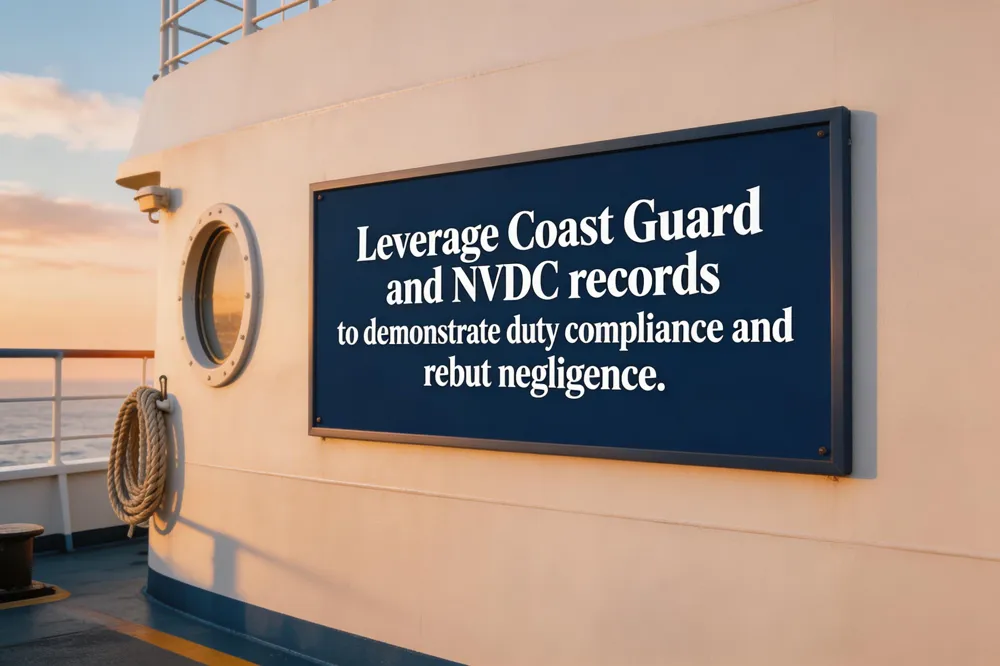 Vessel safety documentation is the backbone of any defense strategy under the Longshore and Harbor Workers’ Compensation Act (LHWCA) and the Jones Act. Types of records include U.S. Coast Guard inspection reports (e.g., Form CG‑1252), vessel inspection reports (VIR), Marine Safety Information Reports (MSIR), maintenance and repair logs, crew‑training certificates, Safety Management System (SMS) logs, and accident/incident reports. These documents are maintained by the Coast Guard, the National Vessel Documentation Center (NVDC), classification societies such as the American Bureau of Shipping (ABS), and historic archives like the National Archives’ vessel files. They can be accessed online through the Coast Guard’s VIVS search tool, the NVDC eStorefront, ABS’s MyFreedom portal, or the Archives’ digitized collections.
In LHWCA proceedings, the records show the vessel’s turnover duty—delivery of the vessel in a safe condition and warning of hidden hazards—and the active‑control duty, which covers hazards the shipowner still controls during cargo operations. By presenting up‑to‑date inspection findings, corrective‑action logs, and compliance certificates, employers demonstrate that they met these statutory duties and therefore rebut negligence claims.
Vessel safety records online – The NVDC website offers a searchable database of certificates of documentation, abstracts of title, and inspection reports. The Coast Guard’s Vessel Information and Verification Service (VIVS) lets users query a vessel by name, call sign, MMSI, IMO number, or US number to view its safety history. Historical records are available via the National Archives’ “Vessel Documents” collection. Certified copies can be ordered through NVDC’s eStorefront.
What is a CG‑1258? – CG‑1258 is the Coast Guard form used to apply for, exchange, replace, or transfer a vessel’s Certificate of Documentation (COD). It captures detailed vessel information and ownership data and requires supporting documents such as a Bill of Sale. The Coast Guard reviews the submission and issues or amends the COD based on the provided information.
What are common defenses to a claim? – Defenses include comparative or contributory negligence, assumption of risk, pre‑existing conditions, failure to mitigate damages, lack of a duty of care, broken of causation, and statute‑of‑limitations arguments. In maritime cases, defendants also rely on the open‑and‑obvious doctrine and the vessel’s documented compliance with safety standards.
What is a medical consulting business? – A medical consulting business provides independent clinical evaluations, expert reports, and testimony for legal and insurance matters. These firms, such as NorCal Medical Consulting, bridge medical expertise and legal processes, helping to assess injuries like auditory loss and to correlate clinical findings with documented exposure levels found in vessel safety records.
Navigating the Defense Base Act (DBA) Claims and Defenses
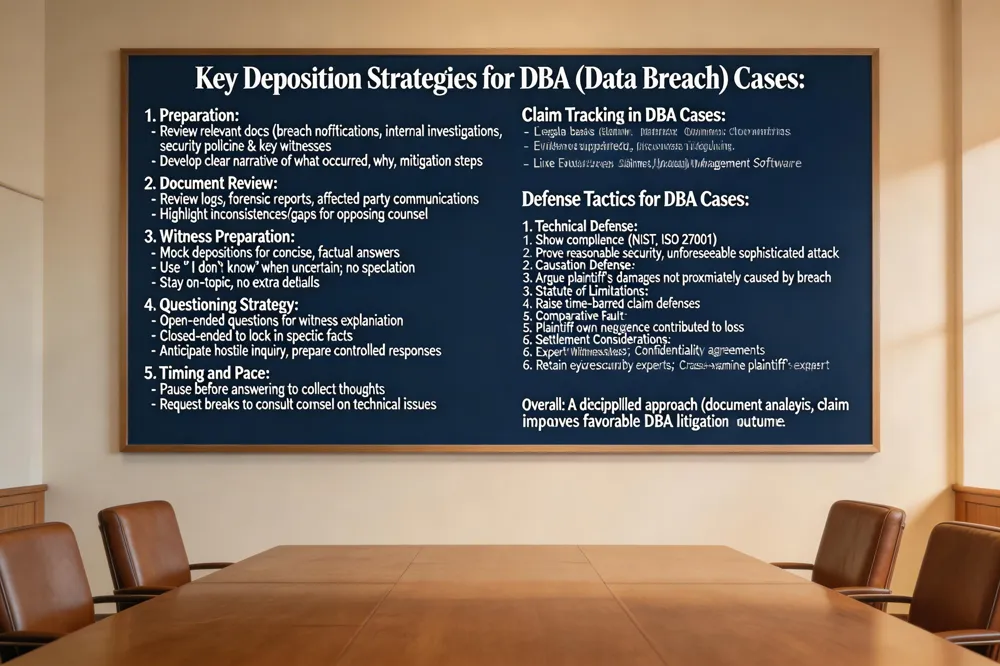 During the deposition, the claimant or employer representative provides sworn testimony about employment history, injury mechanism, and medical treatment; a court reporter creates a factual record used at trial. Accurate deposition preparation protects the claimant’s rights and clarifies liability.
Claim status is tracked through the OWCP district office or online portal using the claim number. The status indicates whether the claim is pending, approved, denied, or awaiting additional documentation, and it shows upcoming deadlines for hearings or appeals. Engaging an experienced DBA attorney ensures compliance with filing timelines, maximizes settlement value, and keeps the claimant informed throughout the process.
Practical Steps for Employers: Filing, Reporting, and Record Preservation
 How to file a workers’ comp claim as an employer – Promptly give the injured employee a claim form and rights summary, notify the state agency or insurer within 30 days (OSHA within 8 hours for fatalities), gather incident details, photos, and witness statements, then submit the claim with supporting documentation. Cooperate with medical evaluations and keep the employee informed throughout the process.
Key forms – LS‑210 (Employer’s Supplementary Report) documents ongoing disability and medical treatment; LS‑8 (Settlement Approval Request) is used for LHWCA settlement approval, requiring wage data, lien information, and medical reports; LS‑203 is the employee’s formal claim filing form. Accurate completion supports benefit entitlement and legal defenses.
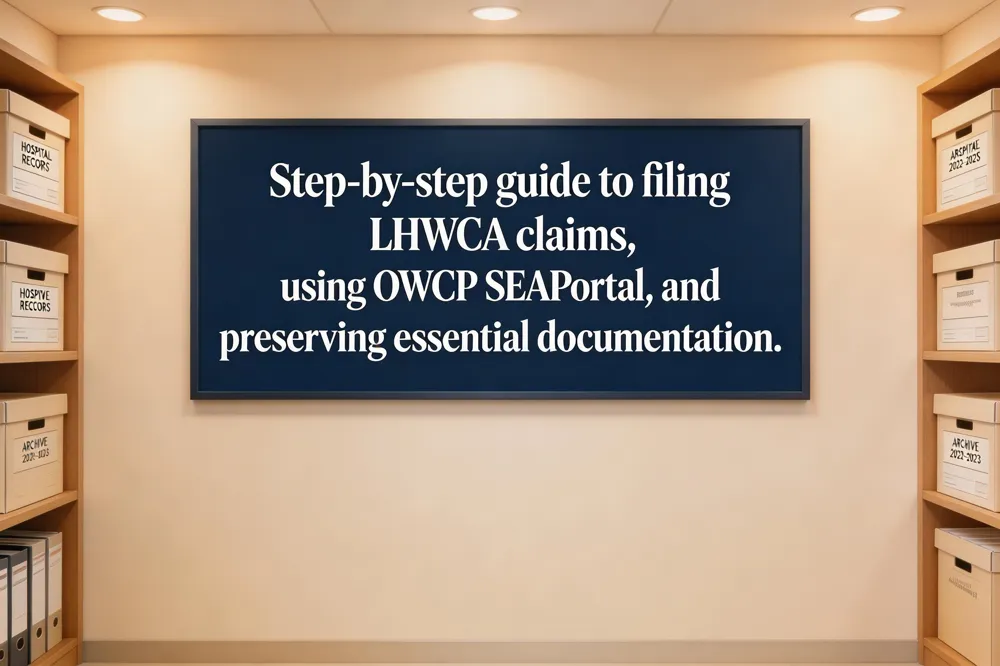
Electronic upload via OWCP SEAPortal – Log into SEAPortal with your LHWCA credentials, upload PDFs/JPGs/TIFFs labeled with the case number, and track status. Use Direct Data Entry or Secure FTP for bulk uploads; avoid sending medical bills through the portal—mail them to OWCP‑DFEC instead. For information about the OWCP system, see the OWCP FAQ.
LHWCA login – Access the OWCP portal at the Department of Labor site using your registered email/username and password; reset via “Forgot password?” if needed. This portal also links to ECOMP and SEAPortal for document management and claim monitoring.
NorCal Medical Consulting: Expertise, Careers, and Supporting LHWCA Defenses
 NorCal Medical Consulting Address
NorCal Medical Consulting, operating under NorCal Medical Group, is located at 3609 Mission Ave., Suite A, Carmichael, CA 95608, United States. The office is open Monday‑Friday 8 am‑5 pm, with weekend appointments available. For inquiries or to schedule a consultation, call (916) 971‑9000. The practice specializes in expert assessments and evaluations related to workplace injuries—particularly auditory loss—to support legal and insurance claims.
NorCal Medical Consulting Lawsuit History
Public court records show no major lawsuit that directly names NorCal Medical Consulting as a defendant or plaintiff. Cases mentioning “Norcal” involve distinct entities such as Norcal Mutual Insurance Company or Norcal Consulting LLC, which pertain to insurance and contract disputes, not to the medical‑consulting services. Accordingly, the firm’s reputation rests on its expert‑reporting work rather than litigation history.
Career Opportunities
NorCal Medical Consulting hires Medical Reviewers, Legal Support Specialists, Project Managers, Data Analysts, and Administrative Coordinators. Candidates typically hold advanced degrees in audiology, medicine, or related health fields and possess strong analytical and communication skills. The firm offers competitive salaries, flexible work arrangements, and professional development.
Is USL&H Required?
Yes. Employers with workers performing maritime duties on or near U.S. navigable waters must secure USL&H coverage under the Longshore and Harbor Workers’ Compensation Act. Failure to do so can lead to fines up to $10,000 and possible misdemeanor imprisonment.
What Is a Medical Consulting Business?
A medical consulting business provides independent clinical evaluations, expert opinions, and detailed reports for law firms, insurers, and regulators—often in workers’ compensation or personal injury contexts. These firms translate medical expertise into actionable legal insight, bridging the gap between health care and legal decision‑making.
Final Thoughts on Leveraging Vessel Safety Records
A successful LHWCA or Defense Base Act defense hinges on three interlocking pillars: meticulous documentation, expert medical analysis, and strict procedural compliance. By integrating contemporaneous vessel safety records—inspection reports, maintenance logs, and Safety Management System entries—with authoritative medical testimony, employers can demonstrably prove a safe work environment and refute causation claims. Proactive defense not only curtails exposure to costly benefits and jury awards but also preserves the employer’s reputation and insurance premiums. NorCal Medical Consulting enhances this strategy through its seasoned occupational‑health physicians who translate safety data into precise clinical conclusions, assess noise‑exposure metrics for hearing‑loss claims, and furnish reports that satisfy both the Office of Workers’ Compensation Programs and administrative law judges. Their evidence‑based approach, grounded in detailed vessel records and the latest OSHA/Coast Guard standards, gives employers a decisive advantage in LHWCA and DBA litigation.