Introduction
A legal‑medical case review checklist is the backbone of any successful injury claim, providing a systematic roadmap for gathering, organizing, and analyzing the medical, occupational, and regulatory evidence needed to prove causation and liability. In high‑risk industries—construction, manufacturing, oil & gas, mining, and transportation—injuries are often complex, involving auditory loss, musculoskeletal disorders, and exposure‑related illnesses; consequently, meticulous documentation of exposure levels, personal protective equipment usage, baseline health assessments, and compliance with OSHA standards is essential to withstand scrutiny from insurers, courts, and regulatory agencies. NorCal Medical Consulting leverages its expertise in occupational health, audiometric analysis, and regulatory compliance to assist attorneys and insurers. The firm conducts comprehensive record audits, verifies employer safety program adherence, and prepares expert reports that translate clinical findings into legally compelling narratives, thereby strengthening claim credibility and expediting resolution.
Risk Assessment Foundations
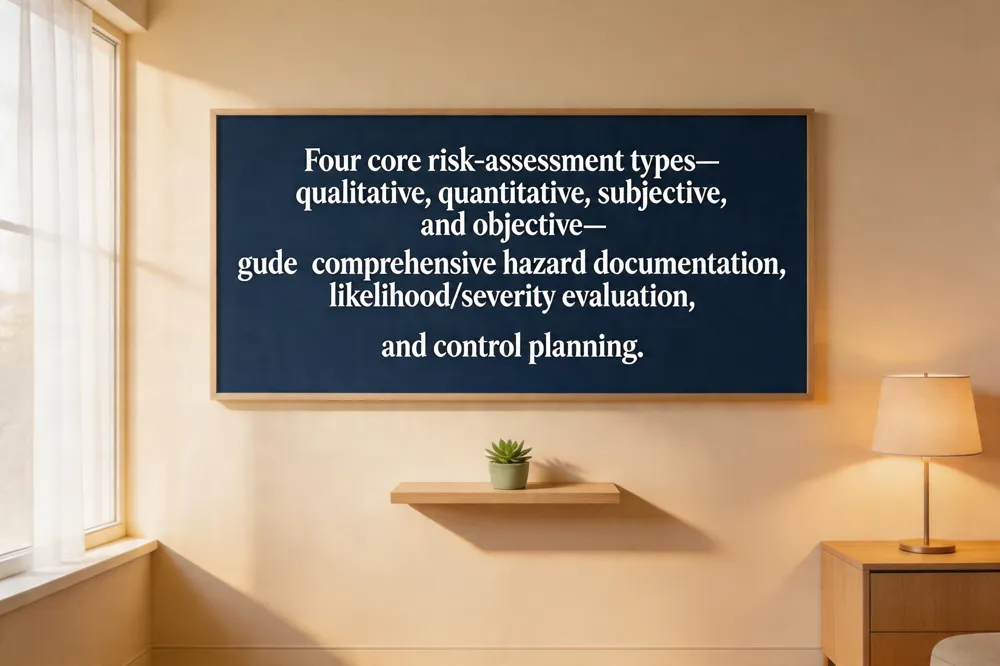 Effective risk management in health‑care and high‑risk industries begins with a clear understanding of the four fundamental types of risk assessment. Qualitative assessments rely on expert judgment and descriptive categories when data are scarce, while quantitative assessments use numerical data and statistical models to calculate probabilities and impacts. Subjective assessments capture individual or group perceptions, integrating personal experience and intuition, and objective assessments are grounded in measurable, verifiable evidence and standardized criteria for consistency and replication.
A written risk‑assessment record must be comprehensive. It should start with a precise description of each identified hazard and the tasks or conditions that create it, then identify all potentially affected individuals—employees, visitors, and vulnerable populations such as pregnant, younger, older, or disabled workers. The record must evaluate both the likelihood and severity of injury, document existing control measures, and outline additional mitigations, assigning responsibility and target completion dates. Organizational factors that influence risk, such as staffing policies or equipment‑purchasing procedures, should be noted, along with a schedule for periodic review—especially after workplace changes or incidents.
A risk‑assessment checklist operationalizes this process. It is a step‑by‑step tool that guides users through hazard identification, people‑at‑risk analysis, risk rating, and the selection of appropriate control measures. By standardizing the workflow, the checklist ensures no critical safety factor is missed, supports regulatory compliance, and facilitates communication among clinicians, legal teams, and insurers. The checklist documents findings and actions, providing an auditable trail that can be readily updated, making it indispensable for managing auditory injury claims, workplace safety, and broader health‑care concerns.
Regulatory Templates for Health Hazards
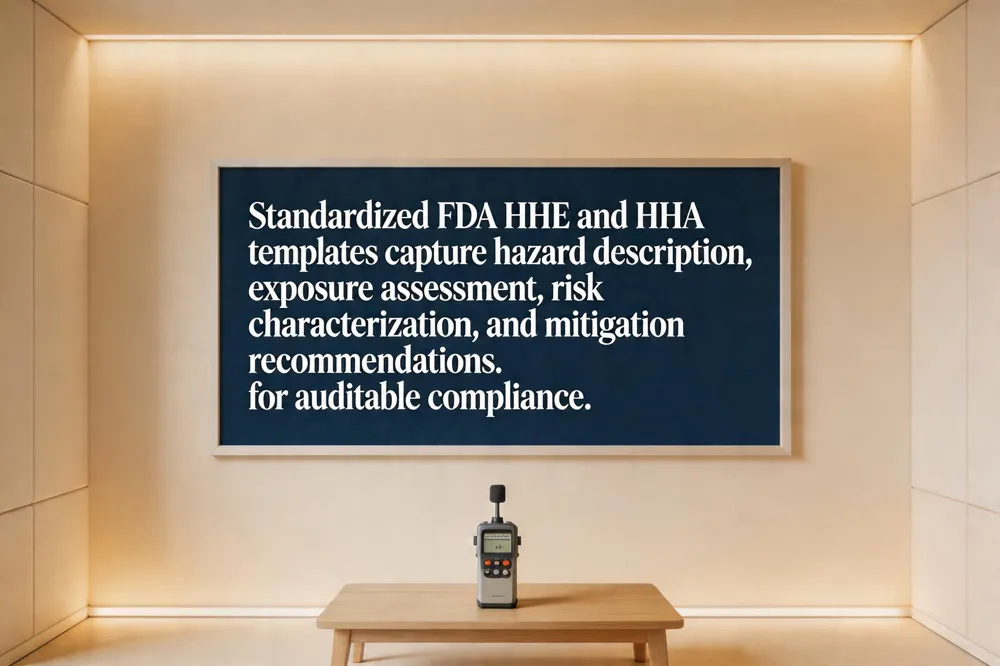 The FDA’s Health Hazard Evaluation (HHE) template is a standardized worksheet that captures every step of an occupational health investigation. It begins with a clear hazard description, moves through exposure assessment and risk characterization, and records recommended mitigation measures. Fields for methodology, assumptions, and regulatory classification (voluntary recall vs. mandatory action) ensure a defensible record that can be customized for specific injuries such as industrial auditory loss.
A Health Hazard Assessment (HHA) report template follows a parallel structure. An executive summary presents key findings and recommendations, followed by detailed hazard identification (e.g., noise‑induced hearing loss). An exposure assessment quantifies duration, intensity, and frequency of employee exposure. The risk evaluation compares these data against OSHA limits, medical standards, and epidemiologic evidence to gauge severity. The final sections outline control recommendations, an implementation timeline, and appendices containing raw data, photographs, and reference guidelines.
These templates are essential for legal and insurance processes. By providing a complete, auditable trail of the hazard, exposure, and mitigation steps, they support claim substantiation, facilitate expert testimony, and help insurers assess liability and settlement values with confidence.
Workers’ Compensation Medical Issues
 Compensability of Bursitis
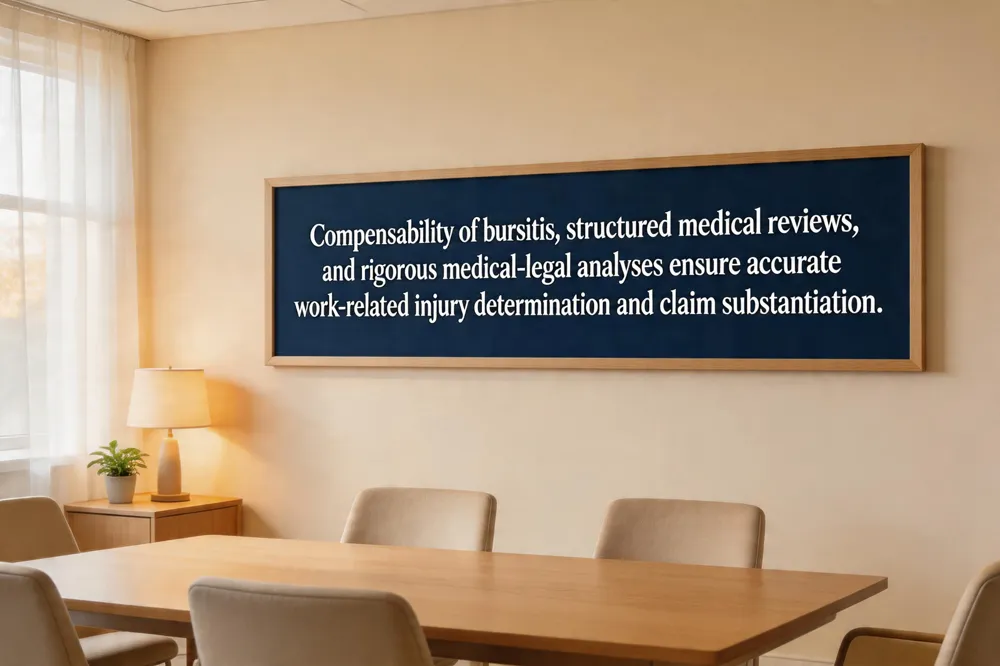
Bursitis can be compensable under workers’ compensation when the inflammation of the bursae is caused or aggravated by work‑related activities. Employees must demonstrate that repetitive motions, sustained pressure, or a specific incident during employment led to the condition. Most states provide wage replacement—often up to 95 % of pre‑injury earnings—and cover medical expenses such as physician visits, imaging, physical therapy, injections, and surgery when medically necessary. Temporary total disability benefits may be available during recovery, and permanent impairment payments can be awarded for lasting functional loss. Prompt reporting, thorough documentation, and timely filing are essential.
Compensability of Bursitis
Bursitis can be compensable under workers’ compensation when the inflammation of the bursae is caused or aggravated by work‑related activities. Employees must demonstrate that repetitive motions, sustained pressure, or a specific incident during employment led to the condition. Most states provide wage replacement—often up to 95 % of pre‑injury earnings—and cover medical expenses such as physician visits, imaging, physical therapy, injections, and surgery when medically necessary. Temporary total disability benefits may be available during recovery, and permanent impairment payments can be awarded for lasting functional loss. Prompt reporting, thorough documentation, and timely filing are essential.
Components of a Medical Review A medical review is a confidential, structured evaluation between a clinician and the patient. The clinician reviews all current and past medications, assesses effectiveness and safety, checks for drug interactions, and may order routine monitoring (e.g., blood tests, blood‑pressure checks). Lifestyle factors and side‑effects are discussed, and the patient is encouraged to ask questions about dosage, timing, and problem‑resolution strategies. Recommendations—whether adjustments, discontinuations, or new therapies—are documented in the medical record to support legal, insurance, or occupational‑health claims.
Scope of a Medical‑Legal Review A medical‑legal review systematically examines a patient’s medical records, treatment history, and injury circumstances to determine if the standard of care was met and to identify any breaches. Conducted by a multidisciplinary team of medical and legal experts, the review produces an objective, opinion‑based report that can be used in litigation, insurance claims, or regulatory investigations. It establishes the causal link between alleged malpractice and harm, quantifies damages, and guides decisions about pursuing further legal action.
Assessing Whether an Injury Is Work‑Related To evaluate work‑relatedness, consider: (1) the specific activity performed at the time of injury; (2) the temporal and causal connection between the activity and the injury; (3) whether the injury occurred within the scope of employment; and (4) supporting medical documentation. This systematic approach underpins the credibility of workers’ compensation and insurance claims.
Hazard Identification Methods
 What is HIRA vs HAZOP?
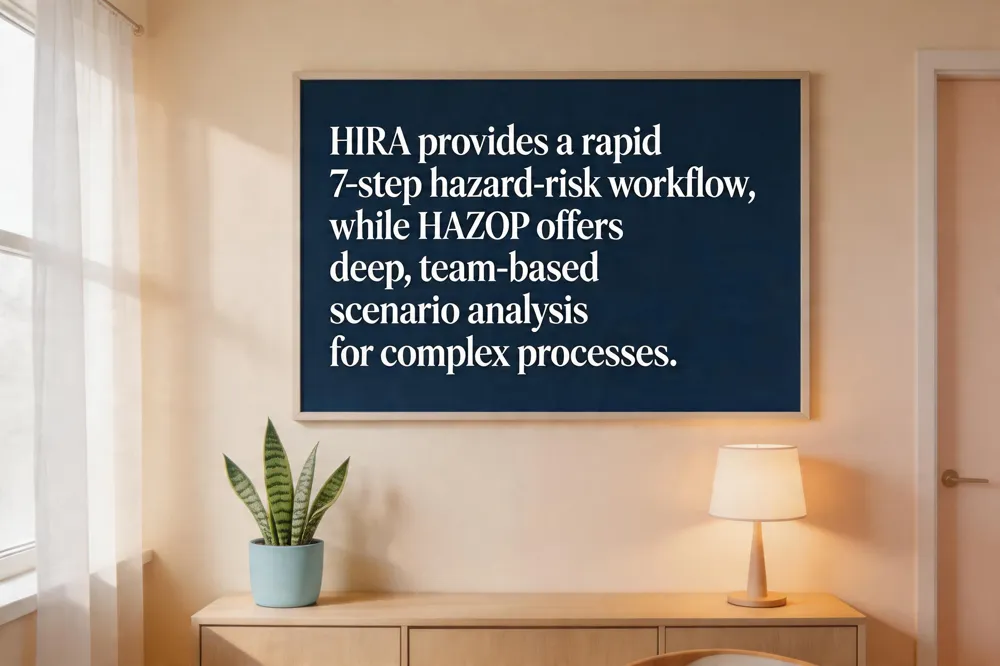
HIRA (Hazard Identification and Risk Assessment) is a concise, step‑by‑step methodology that first catalogs potential workplace hazards—such as excessive noise, chemical exposure, or ergonomic stressors—and then evaluates each hazard’s likelihood and severity. The output is a risk matrix and actionable recommendations for elimination, likelihood reduction, or severity mitigation, making HIRA ideal for rapid occupational‑health assessments, especially for auditory‑loss risks.
HAZOP (Hazard and Operability Study) is a more exhaustive, team‑driven technique that examines a process or system by applying guide‑words (e.g., “no flow,” “high temperature”) to uncover deviations from the intended design and assess their consequences. HAZOP delves into operational scenarios and is suited for complex industrial processes where secondary or hidden hazards may exist.
Both methods support safety and compliance; HIRA offers a streamlined risk‑ranking framework, while HAZOP provides a thorough, scenario‑based analysis.
What are the 7 steps of HIRA?
- Identify hazards – Catalog all physical, chemical, biological, and ergonomic risks present in the work environment.
- Determine who may be harmed – Identify employee groups, contractors, or visitors exposed to each hazard.
- Evaluate likelihood – Estimate the probability of hazard occurrence based on historical data, exposure frequency, and control effectiveness.
- Assess severity – Quantify potential health outcomes, from minor irritation to permanent injury such as noise‑induced hearing loss.
- Calculate risk rating – Combine likelihood and severity on a risk matrix to prioritize hazards.
- Identify and implement controls – Apply the hierarchy of controls (elimination, substitution, engineering, administrative, PPE).
- Record findings and review – Document the assessment, control actions, and schedule periodic reassessments to ensure ongoing compliance and risk reduction.
Communication Strategies in Claims
 Effective communication is a cornerstone of a successful workers‑comp claim. What not to say to Workman's Comp? – Avoid downplaying your injury, guessing at recovery timelines, or using absolutes such as “always” or “never.” Stick to factual descriptions of symptoms, pain levels, and functional limitations. Effective incident‑response communication – Immediately secure the scene, preserve any evidence (photos, incident reports), and notify your supervisor and HR within the required timeframe. Follow the organization’s incident‑response checklist, provide a concise written statement, and refrain from speculation until a medical evaluation is completed. Maintaining factual clarity in statements – Use objective language, reference specific dates and observations, and keep a copy of all communications. Document every medical visit, treatment recommendation, and work‑restriction order in a chronological log. Consistency between your oral statements and written records strengthens credibility and helps avoid disputes during claim adjudication.
Operational Risk Management in High‑Risk Sectors
 A robust risk‑management program in high‑risk industries must address several interlocking components. First, professional liability insurance should be reviewed at least annually and whenever a practice adds new services, expands autonomy, operates in additional states, or launches telehealth, ensuring coverage aligns with the evolving scope of care. Second, HIPAA compliance demands ongoing staff training, encryption, multi‑factor authentication, and regular vendor risk assessments to safeguard patient health information. Third, the prevalence of ransomware, phishing, and data‑breach incidents makes cyber‑insurance and a documented incident‑response plan essential for rapid containment and recovery. Fourth, state practice laws and supervision requirements for physician assistants, nurse practitioners, and other advanced clinicians change frequently; an annual legal review and consultation with a healthcare attorney help maintain compliance and avoid liability for practice drift. Fifth, crisis preparedness—including cross‑training of staff, testing communication protocols, and identifying backup systems—mitigates disruptions from staffing shortages, natural disasters, or supply‑chain setbacks. Finally, the 2026 One Big Beautiful Bill Act and related federal legislation may reshape Medicaid and Medicare coverage, so providers should monitor legislative developments and funding opportunities, especially for rural health services, to adapt reimbursement strategies and maintain financial stability.
Conclusion
Effective legal‑medical case reviews rely on a comprehensive, well‑structured checklist. Key components include verification of employment and exposure details, collection of complete medical records (admission summaries, physician notes, imaging, EHR audit trails), assessment of compliance with OSHA, HIPAA, and state regulations, documentation of PPE use and safety programs, and a clear chronology of symptoms, treatment, and return‑to‑work status. Using a systematic approach reduces missed evidence, speeds discovery, and strengthens expert testimony, ultimately increasing the likelihood of successful claim resolution. NorCal Medical Consulting applies this methodology, delivering expert, defensible reviews that integrate occupational‑health standards, regulatory compliance, and precise medical analysis, ensuring clients receive robust support for litigation and insurance negotiations, in the process for all parties.