Introduction
Psychological evaluations have become a cornerstone of modern workers’ compensation practice. While traditional claims focus on visible injuries, insurers and courts now recognize that mental‑health conditions such as anxiety, depression, PTSD, and adjustment disorders can arise directly from workplace events and significantly impede recovery. Integrating a thorough mental‑health assessment early in the claims process provides objective, evidence‑based data that clarifies causation, severity, and functional impact. Structured interviews, standardized questionnaires, and validated neuro‑psychological tests create a defensible record that can withstand legal scrutiny and guide treatment planning. When combined with a meticulous review of medical records, these evaluations help differentiate work‑related psychological injury from pre‑existing or exaggerated symptoms, reducing the risk of costly disputes. Consequently, claimants who receive comprehensive psychological documentation are more likely to secure appropriate benefits, timely medical care, and a smoother return‑to‑work trajectory. This proactive approach also supports employers by limiting prolonged disability days and fostering a healthier, more productive workforce.
Foundations: Medical Records, Claim Templates, and Insurance Rules
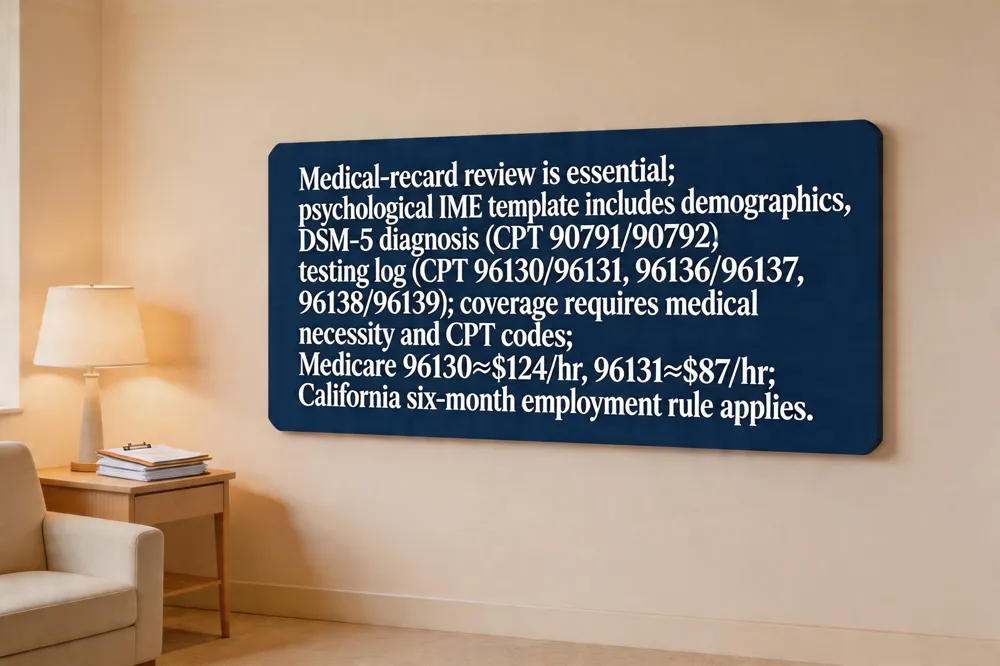 Medical‑record review is the backbone of every workers’ compensation claim. A thorough review establishes whether an injury is work‑related, whether care follows accepted guidelines, and whether the treatment timeline is appropriate (NCBI). Psychological independent medical evaluations (IMEs) build on that foundation by using structured interviews, standardized questionnaires (e.g., PHQ‑9, GAD‑7, IES‑R), and validated neuro‑psychological tests (MMPI‑2, BDI, TSI‑2) to link mental‑health symptoms to a workplace event (APA, AMA Guides 2022).
Psychological assessment medical claim template – The template begins with patient demographics and the insurer’s referral question, followed by a concise record‑review summary, a DSM‑5‑based diagnostic section (CPT 90791/90792), and a detailed testing log using CPT codes 96130/96131 for psychologist‑administered evaluation and 96136/96137 for testing services. A separate line for technician‑administered testing (96138/96139) records materials and scoring time. The report concludes with a severity‑rating worksheet that ties symptom severity to work‑capacity limitations, a narrative integration, and the clinician’s signature to satisfy legal and insurance review.
Insurance coverage criteria – Most plans, under federal mental‑health parity, cover assessments deemed “medically necessary.” Coverage is strongest when the evaluation addresses a diagnosed condition (e.g., PTSD, depression) and includes a physician referral and appropriate CPT codes. Purely educational or IQ‑only testing is typically excluded.
Cost structures and CPT billing – Standard diagnostic evaluations range $300–$1,500; comprehensive neuro‑psychological testing exceeds $1,500. In 2026 Medicare reimburses 96130 at ≈$124 for the first hour and 96131 at ≈$87 for each additional hour; test materials add $350–$700. Accurate itemization of each CPT code, provider credentials, and purpose is essential for claim approval.
California’s six‑month employment rule – Under California Workers’ Compensation law, a psychiatric injury is compensable only if the employee has been employed by the claimant for at least six months (continuous employment not required). This rule is a critical threshold for claim eligibility.
NorCal Medical Consulting can coordinate record collection, select board‑certified forensic psychologists, and ensure that the claim template, billing, and California‑specific requirements are met, strengthening the likelihood of a favorable outcome.
Economic Landscape for Psychologists
 To practice as a psychologist, a doctoral degree (Ph.D. or Psy.D.) is required for independent clinical work, preceded by a bachelor’s (and often a master’s) in psychology. After the doctorate, candidates must complete supervised post‑doctoral hours and pass a state licensing exam; additional certifications may be needed for niche fields such as forensic or occupational health psychology. These advanced credentials enable psychologists to conduct objective evaluations, provide expert testimony, and meet the rigorous evidentiary standards of workers’ compensation and disability claims.
Clinical Process: From Assessment to Report
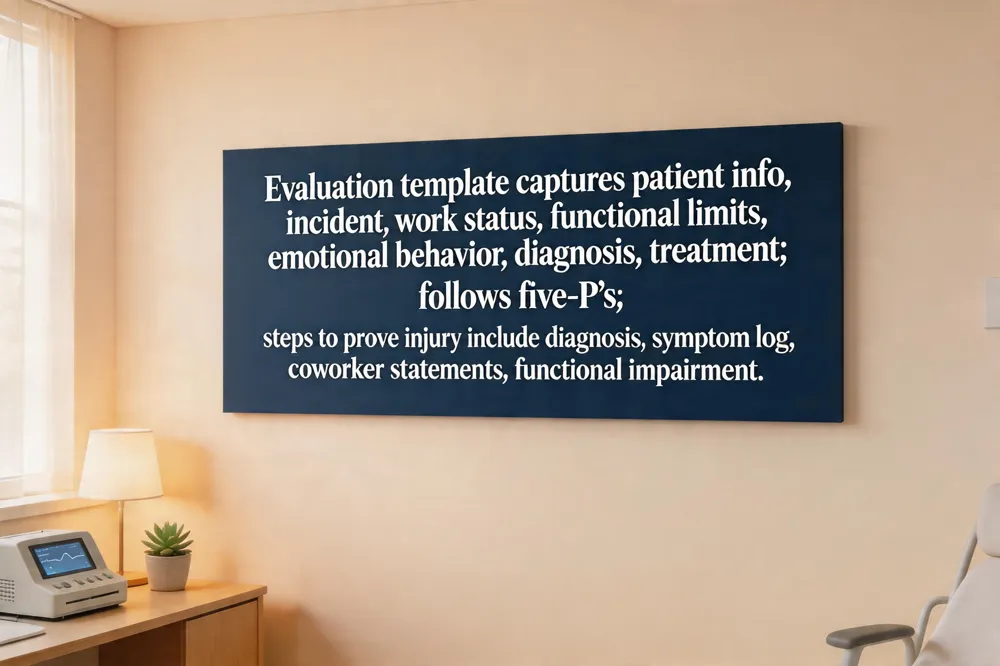 A psychological evaluation workplace injury template is a structured form used by clinicians to document an employee’s mental‑health status after a work‑related incident. It begins with patient information, referral details, employer data, and incident specifics (date, time, location, nature of the event). Subsequent sections assess current work status, functional limitations, emotional and behavioral functioning, and provide a narrative diagnosis and treatment recommendations, ending with follow‑up plans and accommodation suggestions.
Real‑world evaluation example: A construction worker exposed to a sudden, loud explosion experiences flashbacks, hyper‑vigilance, and insomnia. The evaluator conducts a detailed interview, gathers employer collateral, and administers standardized tests such as the MMPI‑2 and a PTSD symptom inventory. The report links symptoms directly to the trauma, outlines functional limitations, and offers a prognosis for return‑to‑work readiness, supporting workers‑compensation or legal claims.
The five P’s of psychological assessment—Presenting problem, Predisposing factors, Precipitating factors, Perpetuating factors, and Protective factors—provide a systematic framework for understanding a client’s difficulties.
Steps to prove a psychological injury: obtain a formal diagnosis from a qualified mental‑health professional, keep a symptom log, collect coworker statements, secure a comprehensive medical or independent report linking the condition to employment, and demonstrate functional impairment (missed days, reduced productivity, need for accommodations).
Common psychological effects of workplace injuries include depression, anxiety, anger, guilt, heightened vigilance, irritability, concentration difficulties, and, in severe cases, PTSD with flashbacks, insomnia, and muscle tension. These symptoms often impede return‑to‑work and underscore the need for integrated mental‑health treatment alongside physical rehabilitation.
Legal Framework and Practical Integration in California
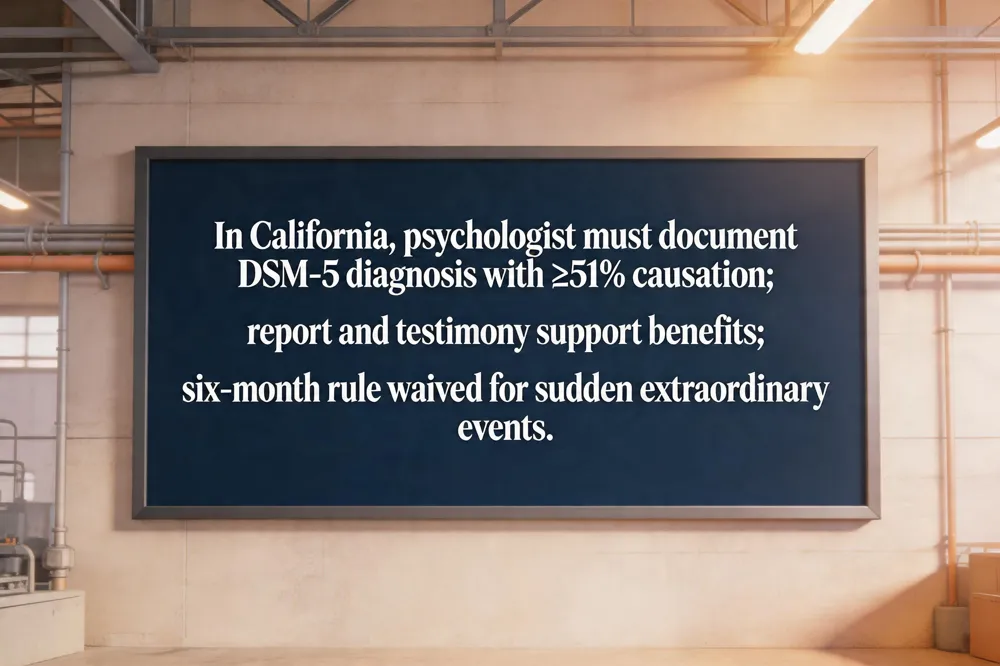 Psychologists worker compensation California – In California, a psychologist evaluates the worker’s mental‑health condition, documents the DSM‑5 diagnosis, and quantifies work‑related causation (≥51 %). The written report and testimony satisfy statutory criteria, support treatment, temporary disability, and permanent disability benefits, and help defeat insurer denials.
Integrating psychological evaluations into workplace injury claims example – A warehouse employee suffered acoustic trauma, then panic attacks and depression. After the treating physician noted mental‑health concerns, NorCal Medical Consulting arranged an IME. The psychologist used PHQ‑9, GAD‑7, and IES‑R, linked symptoms to the acoustic injury, recommended therapy and work‑modifications, and enabled claim approval and a safe return‑to‑work.
Six‑month employment rule recap – Claimants must have at least six months of continuous employment before filing a psychiatric claim, unless the injury results from a sudden, extraordinary workplace event, in which case the six‑month requirement is waived.
Practical Guidance for Claimants, Employers, and Legal Teams
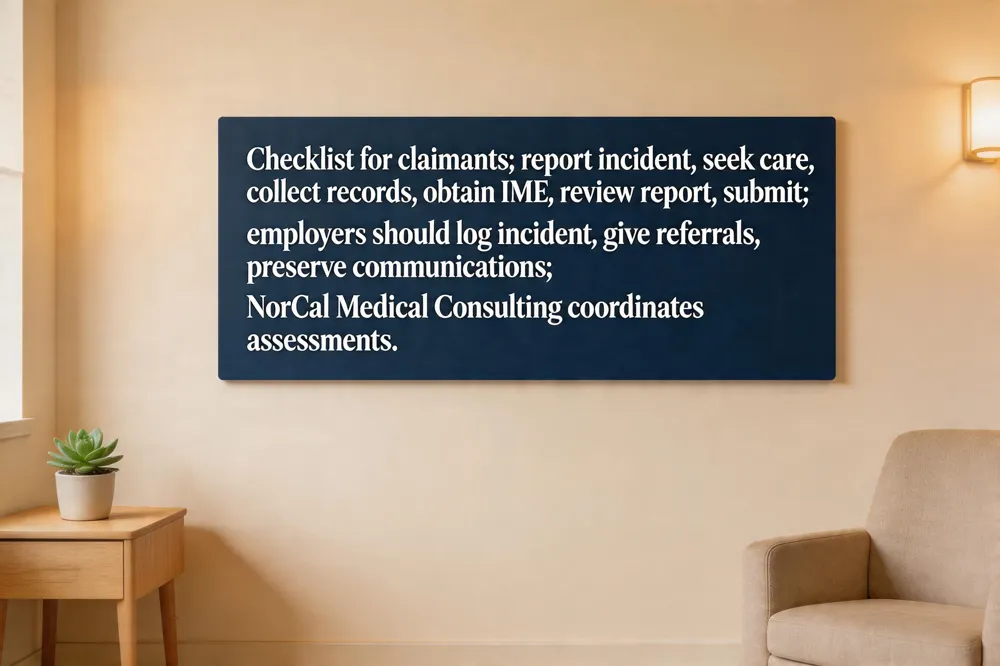 Step‑by‑step checklist for claimants
- Report the incident to your employer within the statutory time frame (often 30 days).
- Seek immediate medical care; request a detailed clinical note linking symptoms to the workplace event.
- Obtain all relevant medical records, including emergency department reports, physician notes, and any prior mental‑health history.
- Request a Psychological Independent Medical Evaluation (IME) from a board‑certified forensic psychologist.
- Complete the IME honestly; bring a list of medications, witnesses, and any work‑related communications.
- Review the IME report for accuracy; discuss discrepancies with the evaluator before signing.
- Submit the report, together with medical records, to your insurer or attorney within the claim deadline.
How employers can support mental‑health documentation
- Maintain a written log of the incident, including dates, witnesses, and any immediate actions taken.
- Provide timely, written medical referrals that specify the referral question (e.g., causation, work‑relatedness).
- Preserve all workplace communications (emails, safety reports) that demonstrate the stressor or harassment claim.
- Offer access to Employee Assistance Programs and document any accommodations offered.
Role of NorCal Medical Consulting NorCal Medical Consulting coordinates multidisciplinary assessments, supplies qualified forensic psychologists for IMEs, and ensures that medical‑legal reports meet AMA, APA, and state guidelines. Their expertise streamlines record collection, accelerates report turnaround, and strengthens claim credibility.
Psychological evaluation workplace injury template A structured form that captures patient demographics, referral details, employer information, incident description, current work status, functional limitations, emotional/behavioral findings, diagnosis, treatment recommendations, and follow‑up plans—all in narrative, sentence‑level format.
Are psychological assessments covered by insurance? Coverage varies by plan; most insurers reimburse assessments deemed “medically necessary” under mental‑health parity laws. A physician referral with appropriate diagnostic codes improves reimbursement odds, while out‑of‑network benefits may allow claim‑in for partial payment. For a broader view of mental‑health and workers’ compensation coverage, see the National Center for Biotechnology Information snapshot.
Conclusion
Psychological evaluations are a cornerstone of modern workers’ compensation practice because they provide objective, evidence‑based insight into the mental‑health impact of workplace injuries. By integrating structured interviews, validated questionnaires, and performance‑validity testing, these assessments establish causation, quantify functional impairment, and identify barriers to recovery such as malingering or pre‑existing conditions. The resulting reports give insurers, employers, and courts reliable data for claim decisions, treatment planning, and return‑to‑work strategies, ultimately protecting both the injured worker’s rights and the integrity of the compensation system.
Call to Action:
- Workers: Seek early mental‑health screening after an injury, retain complete medical records, and cooperate fully with qualified forensic psychologists.
- Employers: Implement prompt psychosocial risk screening, maintain detailed incident documentation, and engage board‑certified experts for independent evaluations.
- Legal Professionals: Pose precise referral questions, select evaluators with forensic and workers’ comp experience, and leverage comprehensive psychological reports to strengthen claim advocacy and settlement negotiations.