Why Portable ASSR Matters for Occupational Health
On‑site auditory assessments are essential because workers exposed to hazardous noise must be evaluated promptly, without the downtime and travel costs associated with traditional clinic‑based audiometry. Conventional pure‑tone testing relies on patient cooperation, is sensitive to background noise, and requires calibrated sound‑treated booths—conditions rarely met on a factory floor or construction site. Portable Auditory Steady‑State Response (ASSR) devices overcome these limitations: they are battery‑operated, lightweight, and can deliver frequency‑specific thresholds in 5‑10 minutes per ear, even when ambient noise exceeds typical booth standards. Regulatory frameworks reinforce the need for such tools. OSHA’s hearing‑conservation program (29 CFR 1910.95) mandates baseline and annual audiograms for employees exposed to ≥85 dB(A) TWA, while NIOSH and the CDC recommend even stricter limits and emphasize early detection to prevent permanent loss. NorCal Medical Consulting’s mission aligns directly with these requirements—providing legally defensible, encrypted, and instantly transmitted ASSR data that support workers’‑, insurance claims, and expert testimony. By integrating portable ASSR into workplace health programs, employers achieve compliance, reduce claim costs, and protect the auditory health of their workforce.
Portable ASSR Technology: From Lab to the Field
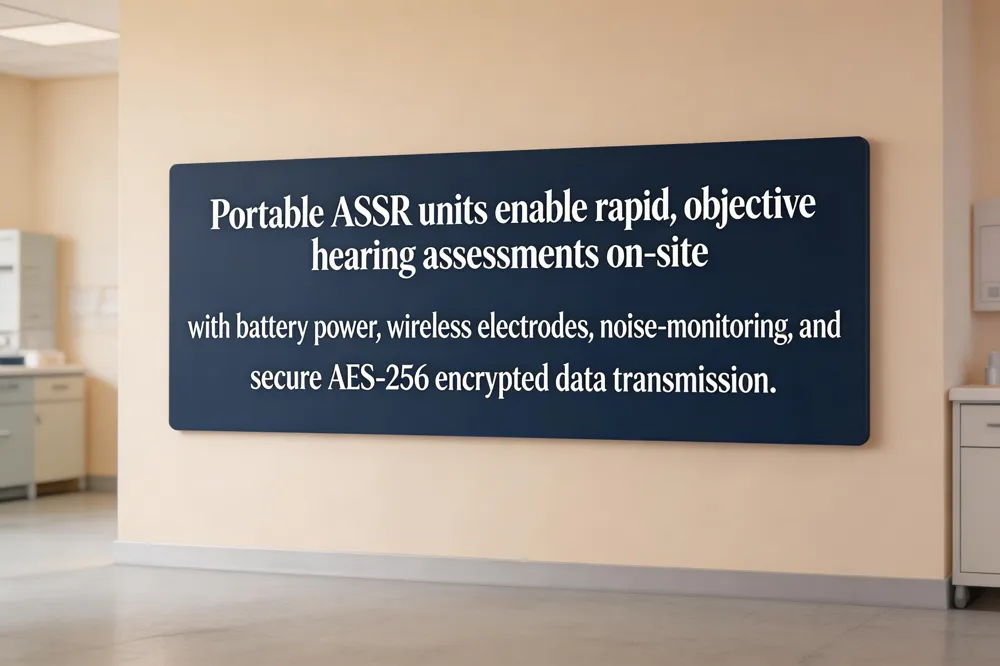 Auditory Steady‑State Response (ASSR) testing uses continuous or rapidly modulated tones to elicit steady‑state brain‑stem activity. By analyzing spectral harmonics, the system can estimate frequency‑specific hearing thresholds across the 0.5‑8 kHz range without requiring a behavioral response, making it ideal for workers who are uncooperative, language‑limited, or injured. Modern portable ASSR units are designed for field use: they are battery‑operated, weigh less than 5 kg, and run on USB power from a laptop or tablet. Wireless electrode caps or Bluetooth‑enabled probes simplify set‑up, while built‑in noise‑monitoring algorithms pause acquisition when ambient levels exceed pre‑set limits, ensuring reliable data even in noisy industrial environments. All devices meet U.S. and international safety standards—FDA‑cleared or CE‑marked and compliant with IEC 60601‑1, IEC 60601‑2‑40, and ISO 13485 quality systems—so their measurements are legally defensible for workers’ compensation and insurance claims. Data security is integral: recordings are encrypted with AES‑256, transmitted in real‑time to HIPAA‑compliant cloud servers, and stored with metadata (date, time, device ID) that satisfies OSHA and NIOSH documentation requirements. These capabilities enable clinicians to conduct objective, rapid hearing assessments on‑site, reducing employee downtime, lowering costs, and providing defensible evidence for occupational hearing‑loss litigation.
Implementing a Reliable On‑Site Testing Protocol
 Device selection and calibration must follow ANSI S3.6‑2018 and IEC 60601‑1/‑2‑40 standards. Portable ASSR units such as the Interacoustics Eclipse, Vivosonic Integrity V500, or Intelligent Hearing Systems SmartEP‑ASSR (Duet/Aria/Solo) are FDA‑cleared/CE‑marked, battery‑operated, and lightweight (< 5 kg). Before each testing day the clinician verifies the device’s calibration report, checks ear‑tip attenuation, and runs the built‑in impedance check to ensure electrode‑to‑skin continuity.
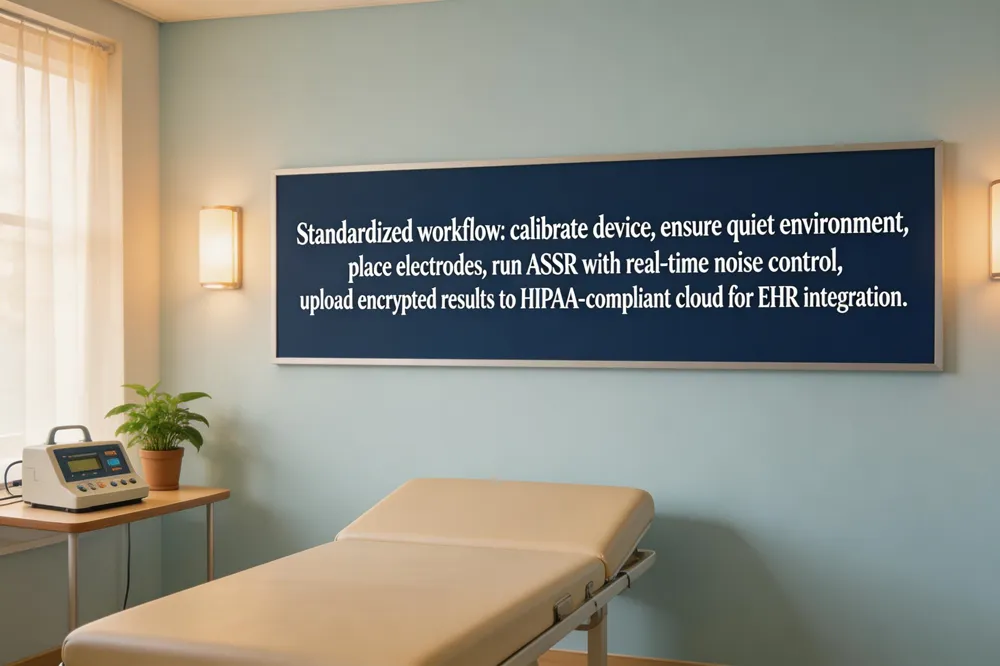
Step‑by‑step workflow: (1) Position the worker in a quiet area (ambient ≤ 30 dB SPL) and place scalp electrodes (high forehead, mastoid, ground) according to BSA guidelines. (2) Insert calibrated insert earphones and set stimulus parameters—frequency‑specific iChirps or tone‑bursts at 80‑100 Hz modulation, testing up to four frequencies per ear simultaneously. (3) Activate real‑time noise‑monitoring; the software pauses data acquisition if background noise exceeds the preset threshold. (4) Run the ASSR algorithm, which automatically averages, applies artifact‑rejection, and calculates a statistical confidence level for each frequency. (5) Review the auto‑generated audiogram, verify thresholds, and repeat any outlier sub‑tests.
Integration with EHR and claim management: Results are encrypted (AES‑256) and uploaded instantly to a HIPAA‑compliant cloud, where they can be exported in HL7/CSV format to NorCal Medical Consulting’s case‑management platform, providing time‑stamped, defensible evidence for workers’ compensation and insurance claims.
Training requirements: Clinicians and CAOHC‑certified technicians must complete manufacturer‑approved modules covering electrode placement, stimulus selection, noise‑control techniques, and data‑privacy protocols. Ongoing competency is confirmed through quarterly proficiency checks and documentation of test‑retest reliability (±5 dB).
How does ASSR work? The Auditory Steady‑State Response (ASSR) delivers rapid, repetitive tone‑bursts or chirps at fixed modulation rates (e.g., 80‑100 Hz) to the ear. Scalp electrodes record the brain’s phase‑locked electrical response, which is analyzed in the frequency domain. A statistical detection algorithm determines the presence of a response, allowing the system to estimate a hearing threshold without any behavioral response. Multiple frequencies (up to four per ear) can be tested simultaneously, producing an objective audiogram for legal and insurance evaluation.
What device is most commonly used to conduct a hearing test? A calibrated audiometer remains the standard for pure‑tone audiometry. It generates tones of varying frequency and intensity delivered through headphones or earphones in a sound‑treated booth, and the patient indicates detection by button press, hand raise, or verbal response. The audiometer records these responses and produces an audiogram that documents the softest audible sounds across the frequency spectrum.
Regulatory Requirements and Safety Guidelines
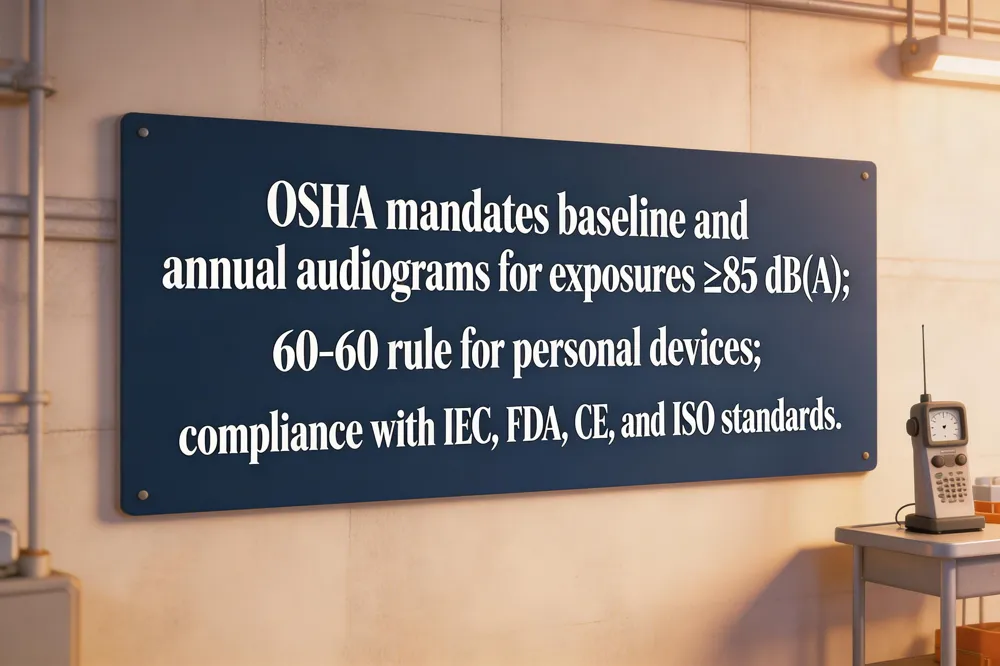 OSHA’s hearing‑conservation program (29 CFR 1910.95) mandates that any employee exposed to a time‑weighted average of 85 dB(A) or higher receive free audiometric testing. A baseline audiogram must be obtained within six months of the first qualifying exposure (or within one year when a mobile test van is used), and annual follow‑up audiograms are required thereafter. All audiograms, noise‑monitoring data, and fit‑testing results must be retained for the employee’s employment life, and a written program must describe engineering controls, provision of hearing protectors, and employee training.
The 60‑60 rule is a practical guideline for personal audio devices: keep volume at ≤60 % of the device’s maximum output and limit listening to ≤60 minutes per day. This helps maintain exposure below levels that cause permanent cochlear injury.
Industrial hearing testing refers to a systematic occupational program of audiometric examinations—baseline and periodic testing—performed on workers exposed to hazardous noise. It detects standard threshold shifts (≥10 dB loss at 2, 3, 4 kHz) and supplies objective data for OSHA compliance, engineering‑control decisions, and legal or insurance claim documentation.
The 1‑3‑6 rule, originally for newborn hearing, emphasizes rapid identification and intervention: screening by 1 month, diagnostic evaluation by 3 months, and enrollment in services by 6 months. While designed for infants, the principle underscores the importance of early, on‑site assessments of occupational‑related hearing loss to prevent permanent damage and support timely claim filing.
Clinical Insights, Warning Signs, and Legal Value
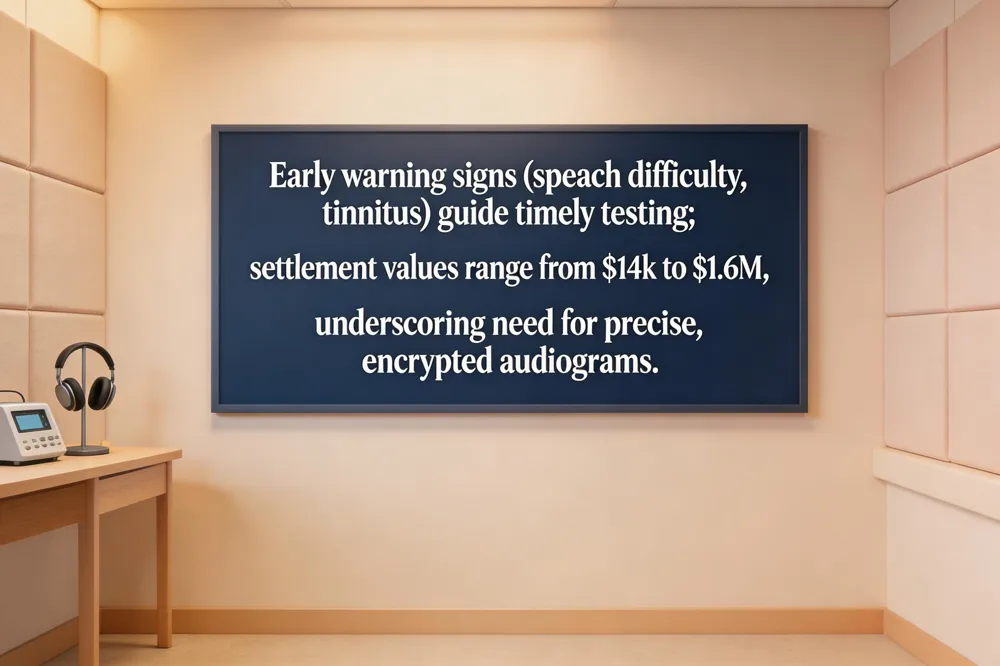 Early symptom awareness is essential for workers exposed to hazardous noise. Three warning signs of hearing loss include difficulty understanding speech in noisy environments, frequent requests for repetition because words sound muffled, and the presence of tinnitus—ringing or buzzing in the ears even when silent. Recognizing these cues prompts timely evaluation and can prevent progression to permanent impairment.
The economic impact of hearing‑loss settlements is substantial. Total loss of hearing often settles for an average of about $1.6 million (median $1.1 million), while partial loss averages roughly $139,000 (median $55,000). Less severe inner‑ear dysfunction typically yields awards around $45,000, with some cases as low as $14,000. Settlement amounts hinge on clear medical documentation, demonstrated loss of earning capacity, and liability strength.
For auditory processing disorder (APD), the most effective device is a low‑gain hearing aid that prioritizes speech clarity, paired with an FM or personal‑amplifier system. This combination improves signal‑to‑noise ratio without over‑amplifying background sounds, helping the auditory cortex receive a cleaner signal.
Portable audiometers play a pivotal role in large‑scale workplace screening. These battery‑operated, touch‑screen units deliver calibrated pure‑tone stimuli, monitor ambient noise, and upload results securely to cloud databases. Their rapid, automated testing reduces the need for sound‑treated booths, enables on‑site assessments during shift hours, and provides legally defensible audiograms for workers’ compensation and insurance claims.
Strategic Integration for NorCal Medical Consulting
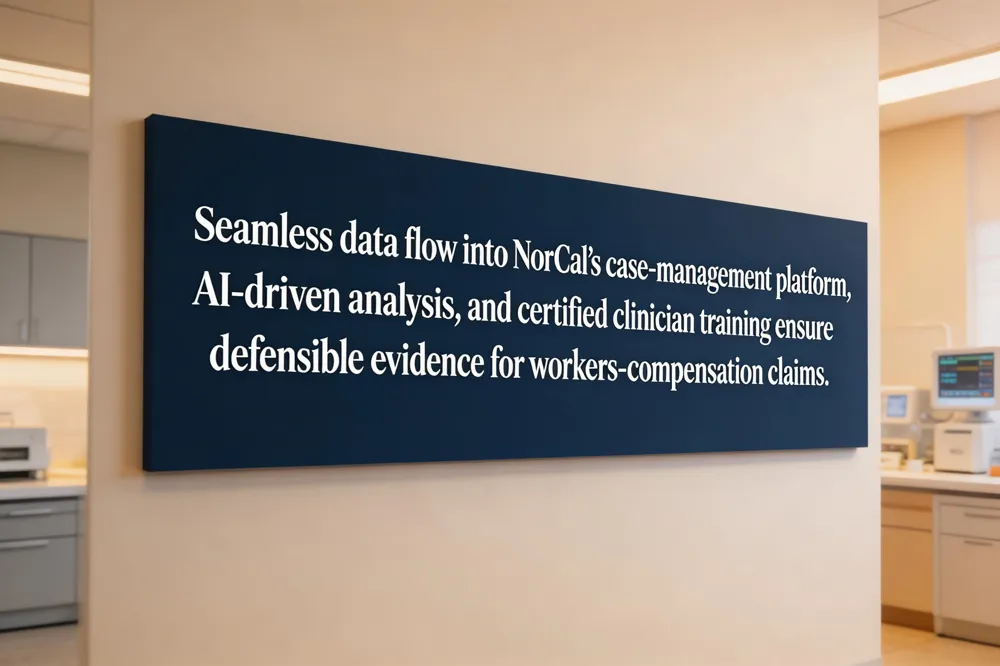 All test results are encrypted with AES‑256 and transmitted in real time to HIPAA‑compliant cloud servers, ensuring privacy and auditability. Integrated case‑management software automatically imports the data, performs trend analysis, and generates expert reports (audiograms, STS calculations, exposure‑correlation charts) that can be submitted to workers‑compensation boards and insurers.
Clinicians must be ASHA‑certified and complete manufacturer‑specific training (Interacoustics Academy, CAOHC, SmartEP‑ASSR modules) to guarantee calibration, electrode placement, and noise‑monitoring compliance. Ongoing certification maintains the defensibility of findings in litigation.
Future directions include AI‑driven waveform interpretation, multi‑frequency SMART‑ASSR protocols that test up to eight simultaneous tones, and tele‑audiology links that allow remote expert review while preserving on‑site data capture. These innovations will reduce test time, increase diagnostic precision, and further streamline NorCal’s claim‑support workflow.
Advancing Workplace Auditory Health
Portable Auditory Steady‑State Response (ASSR) devices have become a cornerstone of modern occupational hearing programs. Their battery‑operated, lightweight design allows clinicians to obtain frequency‑specific thresholds (500 Hz‑8 kHz) in 5‑10 minutes per ear, even in noisy field environments, thanks to advanced noise‑reduction algorithms, automatic artifact rejection, and CE‑Chirp stimuli that boost signal‑to‑noise ratios. Because ASSR does not require behavioral responses, it is ideal for workers with language barriers, cognitive limitations, or acute injuries, and it produces objective, statistically‑verified audiograms that correlate within ±5 dB of laboratory‑grade audiometry.
These capabilities directly support OSHA’s hearing‑conservation requirements (annual audiograms for exposures ≥85 dB(A) TWA) by enabling on‑site baseline and follow‑up testing without the need for a sound‑treated booth. The objective nature of ASSR data, encrypted for HIPAA compliance and timestamped for legal defensibility, satisfies the evidentiary standards of workers’ compensation claims, insurance hearings, and ADA accommodation determinations.
Employers and clinicians are urged to integrate portable ASSR units into their hearing‑conservation programs, train certified staff on standardized electrode placement and calibration, and partner with expert consultants—such as NorCal Medical Consulting—to ensure that every assessment meets regulatory, clinical, and legal benchmarks. Immediate adoption reduces downtime, lowers costs, and fortifies the documentation needed to protect both workforce health and organizational liability.