Why Effective Collaboration Matters
Working successfully with insurance adjusters—and building a career as one—relies on a blend of professional etiquette, thorough documentation, and targeted expertise.
1. Make a Strong First Impression A courteous, well‑organized approach signals that you are reasonable and easy to work with, setting a positive tone for negotiations. Whether you are a claimant or a new adjuster introducing yourself to clients, clear, respectful communication helps establish trust early on.
2. Tailor Your Communication to the Adjuster’s Role
- Desk Adjusters: Operate from an office and expect formal, well‑structured correspondence. Provide detailed itemizations of loss, reference applicable regulations, and submit all required paperwork promptly.
- Field Adjusters: Visit loss sites and assess damage in person. When disagreements arise, use non‑inflammatory language and focus on factual observations rather than opinions.
3. Base Claims on Documented Physical Evidence Physical evidence—photos, repair estimates, contractor invoices—carries far more weight in insurance and legal contexts than subjective statements. Detailed documentation not only strengthens your claim but also speeds up the adjuster’s evaluation process.
4. Prioritize Timeliness and Responsiveness Prompt replies to adjuster inquiries, quick submission of missing documents, and adherence to deadlines can save both parties time and resources. A reputation for reliability often translates into smoother claim settlements.
5. Develop Core Skills and Certifications
- Technical Proficiency: Master industry‑standard tools such as Xactimate for damage estimation.
- Construction Knowledge: Understand building materials, repair methods, and cost structures.
- Licensing: Most states require an adjuster license (costing $200‑$500 for courses, exams, and background checks). Obtaining a Designated Home State (DHS) license from Florida or Texas provides reciprocity and broader job opportunities.
- Specialization: Consider focusing on auto, workers’ compensation, marine, or catastrophe (CAT) adjusting to differentiate yourself in the market.
6. Network and Stay Ready Active networking—through professional organizations, training programs, and industry events—helps you connect with potential employers. Maintaining current licenses and being prepared to deploy quickly, especially for disaster response, are critical for securing and retaining adjusting positions.
By combining these best‑practice communication strategies with the necessary licensing, technical skills, and networking efforts, you can both collaborate more effectively with adjusters and position yourself for a successful career in insurance adjusting.
Foundations of a Strong Claims Process
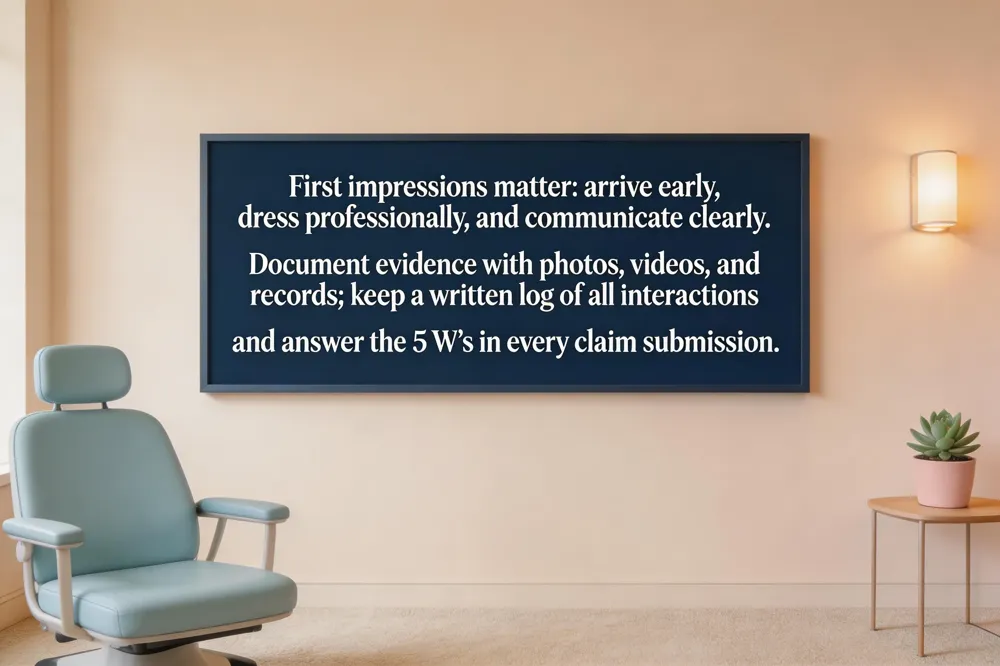 A solid first impression with an insurance adjuster sets the tone for the entire claim. Arrive promptly, dress professionally, and use courteous, jargon‑free language; this signals that you are reasonable and cooperative.
Document physical evidence meticulously—photos, videos, repair estimates, medical records, and any inspection reports. Claims grounded in objective data are far more persuasive than opinion‑based narratives.
Maintain clear, timely communication. Keep a written log of every call or email, note dates, adjuster names, and promised actions, and follow up within the agreed time frame. Use email for substantive exchanges to create a time‑stamped record.
The 5 W’s of a claim—Who, What, When, Where, Why—must be answered succinctly in every submission and correspondence.
How to work denied medical claims: Review the denial notice, gather missing codes and supporting records, resubmit with a focused appeal letter, track status, and adjust billing procedures.
Biggest mistake: Delaying notification to the insurer, which can jeopardize coverage and evidence preservation.
Communicating with adjusters: Have policy details and loss date ready, answer factually, admit uncertainty when needed, ask for next steps, and document everything in writing.
Pathways to a Claims Adjuster Career
 Licensing requirements by state
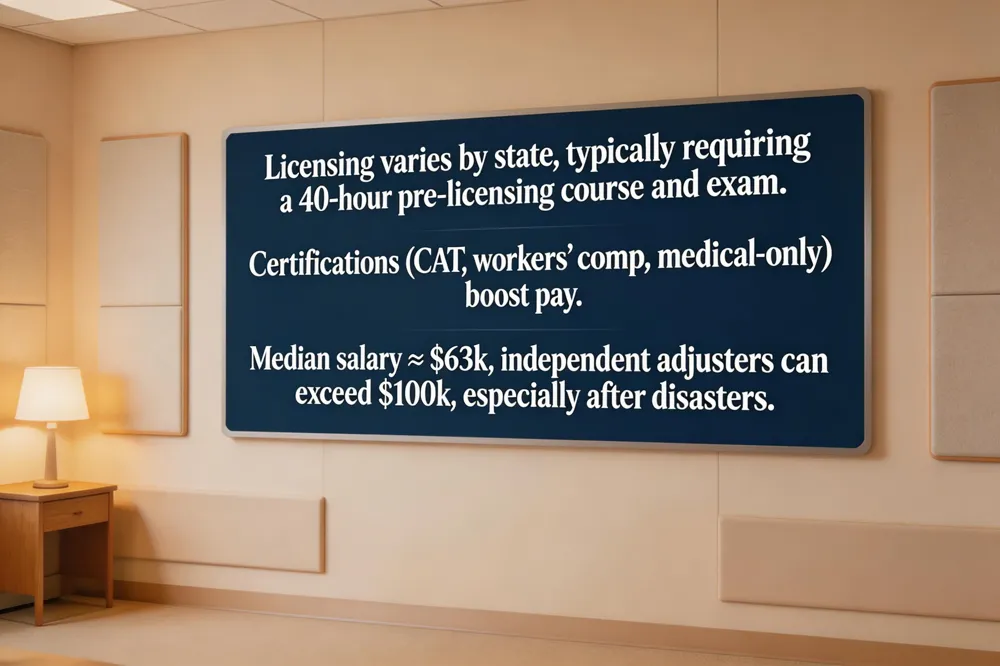
Most U.S. states require a claims adjuster license; a few (e.g., Colorado, District of Columbia) do not. Licensing typically involves a pre‑licensing course (often 40 hours), passing a state exam, a background check, and a fee ranging from $200‑$500. Obtaining a Designated Home State (DHS) license from Florida or Texas provides reciprocity and makes it easier to work in multiple jurisdictions.
Training and certification options
New adjusters can enroll in accredited programs such as AdjusterPro’s MasterClass, which offers a free introduction to insurance fundamentals, Xactimate software, and investigative techniques. Many states require continuing‑education credits (e.g., 24 hours every two years in California). Specialized certifications—catastrophe (CAT) adjusting, workers’ compensation, or medical‑only adjusting—enhance marketability and often lead to higher pay.
Salary expectations and job outlook
Median annual salary for U.S. claims adjusters is around $63,670, with staff adjusters earning $45,000‑$80,000 and independent adjusters often exceeding $100,000. The Bureau of Labor Statistics projects a modest 1 % decline in total adjuster employment 2026‑2036, but steady claim volume and a wave of retirements create roughly 21,600 annual openings. Demand spikes after natural disasters, making catastrophe specialists especially valuable.
Specializations and independent work
Adjusters can focus on auto, property, workers’ compensation, marine, or auditory‑loss injury claims. Independent (field) adjusters handle on‑site inspections and negotiations, while desk adjusters manage claims remotely using detailed itemizations and formal written communication. Independent adjusters benefit from a DHS license, Xactimate proficiency, and networking through contractor portals and professional associations.
How do I become a claims adjuster with no experience?
Meet basic criteria (18+, high‑school diploma, clean driver’s license). Complete an accredited 40‑hour training program covering insurance law, investigation, and adjuster software. Pass the required state exam, obtain the license, and apply for entry‑level roles or trainee positions that provide on‑the‑job mentorship.
How to become an insurance adjuster in Michigan
File an electronic application through NIPR, pay the $15 fee, complete a state‑approved pre‑licensing course, and pass the Michigan exam (Independent Adjuster with/without Workers’ Compensation). Submit verification documents to receive your license.
How to become a claims adjuster in California
Be at least 18, have two years of certified adjusting experience, pass a background check, submit a $2,000 surety bond, photo, and fingerprints. Pass the California Independent Adjuster licensing exam administered by PSI and maintain the license with 24 hours of continuing education every two years.
How to become an insurance field adjuster
Meet basic eligibility (18+, clean record, state residency). Complete a state‑approved 40‑hour pre‑licensing course, pass the licensing exam, and secure a position with a carrier or adjusting firm. Field adjusters conduct on‑site inspections, claimant interviews, and settlement negotiations.
Insurance Adjuster salary
U.S. adjusters typically earn $55,000‑$85,000 annually, with a median around $68,000. Senior adjusters with 8+ years can exceed $90,000, especially in high‑cost markets. Bonuses, overtime, and specialty certifications can increase total compensation.
Is being a claims adjuster worth it?
Yes, for those who value a stable career, solid earnings ($45 k‑$80 k for staff, >$100 k for independent), and the chance to help people recover. Success requires strong communication, self‑discipline, and a strong work ethic.
Is claim adjusting a dying field?
The BLS projects a modest 5 % decline in total adjuster employment 2024‑2034, but about 21,600 annual openings will arise to replace retirees. Specialists in complex injuries, such as auditory loss, will continue to find opportunities despite overall contraction.
Free claims adjuster training
AdjusterPro offers free MasterClass introductions, Q&A sessions, and a 30‑minute Xactimate overview. Other platforms provide complimentary courses on insurance fundamentals, law, and software skills, plus free practice exams.
How to get work as an independent insurance adjuster
Obtain the required state license or a reciprocal DHS license, gain experience through staff adjusting or related investigative roles, then register on contractor portals of independent‑adjuster firms. Market your certifications, Xactimate proficiency, and specialty areas (e.g., workers’ comp). Stay active in industry networks and continue education to secure steady contracts.
What are the 3 D's of insurance claims?
Delay, deny, and defend—common tactics insurers use to limit payouts and pressure claimants into lowball settlements.
By mastering licensing, training, and specialization, aspiring adjusters can navigate the career path efficiently while supporting claimants and legal teams with evidence‑based assessments and clear, timely communication.
Collaborating with Legal Professionals
 Collaborating with legal professionals examples
We work side‑by‑side with attorneys to conduct comprehensive medical‑record reviews that pinpoint auditory‑loss severity. Our experts draft court‑ready medical reports and serve as qualified expert witnesses during depositions and trial. We translate clinical findings into clear, actionable language for settlement negotiations and help develop injury‑impact models that quantify damages for demand letters. Ongoing education keeps lawyers current on occupational‑health standards.
Collaborating with legal professionals examples
We work side‑by‑side with attorneys to conduct comprehensive medical‑record reviews that pinpoint auditory‑loss severity. Our experts draft court‑ready medical reports and serve as qualified expert witnesses during depositions and trial. We translate clinical findings into clear, actionable language for settlement negotiations and help develop injury‑impact models that quantify damages for demand letters. Ongoing education keeps lawyers current on occupational‑health standards.
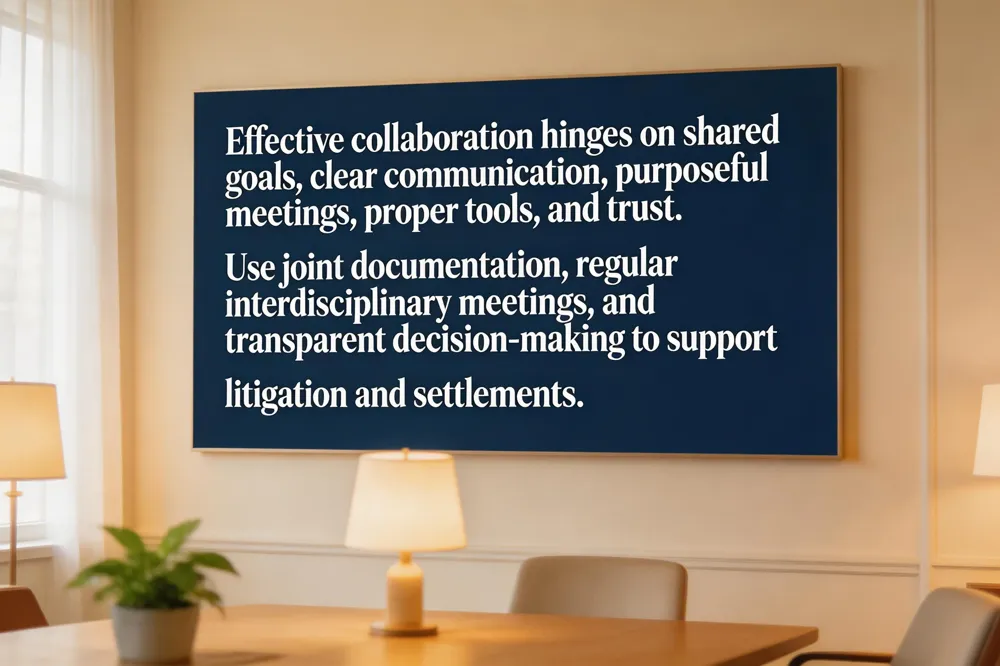
Collaborating with legal professionals pdf A typical PDF guide defines collaboration as a trust‑based, interactive process where attorneys, adjusters, and medical experts share information continuously. It outlines barriers such as adversarial training and offers strategies: clear communication protocols, shared ethical standards, transparent decision‑making, regular interdisciplinary meetings, joint documentation, and agreed‑upon conflict‑resolution mechanisms.
What are the 5 rules of effective collaboration?
- Align goals, responsibilities, and expectations in a shared hub. 2. Communicate clearly and consistently, over‑communicating when needed. 3. Hold purposeful meetings with agendas and clear actions. 4. Leverage appropriate collaboration tools (messaging, file‑sharing, project‑management). 5. Cultivate trust and psychological safety, granting autonomy while encouraging respect and accountability.
Tips for medical consultants dealing with insurance claims pdf
- Include complete, accurate patient demographics, provider credentials, and correct place‑of‑service and procedure codes. 2. Attach detailed, objective documentation (audiograms, functional assessments) linking injury to services. 3. Use a standardized PDF template that organizes diagnosis, ICD‑10, CPT, modifiers, referrals, and supporting studies. 4. Track denial codes and claim numbers; correct errors promptly and resubmit with a clear “re‑submission” note. 5. Know each insurer’s appeal timeline (30‑60 days) and be ready to file an external review if needed.
Navigating Health‑Insurance Claim Denials
 Common denial reasons – Insurers often reject claims for lack of medical necessity, policy exclusions, coding errors, missing prior authorizations, out‑of‑network services, or alleged pre‑existing conditions. Even minor data mistakes can trigger an automatic denial.
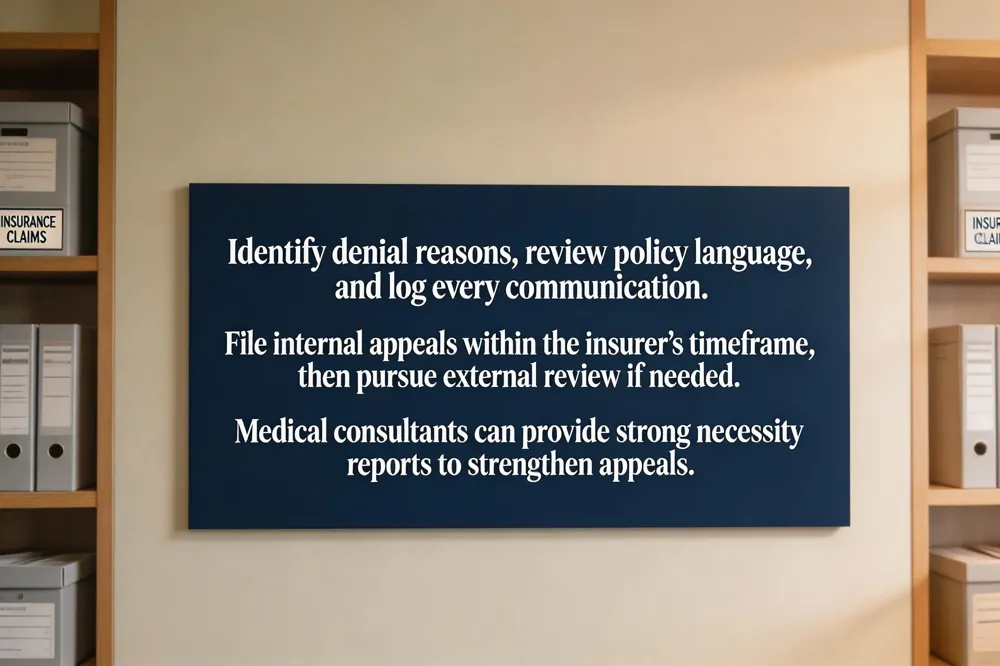
How to dispute a claim with health insurance – First, review the denial notice and your policy’s Summary of Benefits. Call the insurer for a detailed explanation, noting the representative’s name. Submit a formal internal appeal that cites the specific policy language and attaches supporting evidence such as physician letters, detailed medical records, and any required authorizations. Keep a log of all communications.
Internal appeal process – File the appeal within the insurer‑ stipulated timeframe (often 30‑180 days). Include a clear statement of why the claim meets coverage criteria, supporting documentation, and a concise demand for reimbursement.
External review and complaints – If the internal appeal is denied, request an independent external review under state law. File a complaint with the state Department of Insurance or the Consumer Assistance Program if the insurer fails to act promptly.
Role of medical consultants – Expert consultants, like NorCal Medical Consulting, can provide objective medical necessity reports, audiology assessments, and detailed clinical summaries that strengthen appeals and satisfy regulatory requirements.
Help with health insurance claims – Start by confirming coverage and correct claim submission. Use the steps above to appeal denials, and consider engaging a medical‑claims consultant to draft appeal letters, gather evidence, and navigate external review procedures.
Strategic Communication and Technology
 Unified workspaces and client portals – A single, secure digital hub (e.g., a cloud‑based case‑management platform) lets attorneys, medical consultants, and adjusters share files, annotations, and status flags without juggling email threads. When everyone accesses the same version of a loss‑photos folder, an audiogram report, or a demand letter, the risk of mismatched data drops dramatically.
Real‑time updates and transparency – Integrated dashboards push instant notifications when a new document is uploaded, a deadline changes, or an adjuster posts a comment. This visibility satisfies the “over‑communicate when needed” rule of effective collaboration and reduces the “stonewalling” tactics adjusters sometimes employ.
Mobile accessibility and security – Modern platforms offer encrypted mobile apps that let a medical expert capture a site inspection on a tablet, tag the image with a time‑stamp, and sync it instantly to the shared workspace. Role‑based access controls and multi‑factor authentication keep HIPAA‑protected health information safe while still being reachable on‑the‑go.
Trust and psychological safety – When the technology is reliable, participants feel confident that their contributions are heard and protected. Trust is reinforced by clear audit trails, documented conversations, and the ability to raise concerns without fear of retaliation—key components of the 5‑rule collaboration framework (align goals, communicate clearly, hold purposeful meetings, use appropriate tools, cultivate trust).
How to communicate with insurance adjusters? Prepare the policy number, loss details, and supporting documents before the call. Answer questions honestly, admit uncertainty rather than guess, and ask about next steps, required paperwork, and preferred communication methods. Document every conversation—dates, adjuster name, summary—and follow up promptly with any requested information.
What are the 3 D's of insurance claims? Delay, deny, and defend. Insurers often use these tactics to avoid paying policyholders, pressuring claimants into low‑ball settlements or lengthy litigation.
By embedding these practices in a unified, secure, and mobile‑friendly platform, legal and medical teams can keep claimants informed, reduce administrative friction, and present a coordinated, evidence‑based case to adjusters—ultimately driving faster, fairer settlements.
Putting It All Together for Successful Claims
Building a productive relationship with insurance adjusters hinges on professionalism, clear communication, and solid documentation.
1. Make a Strong First Impression – Whether you are a policyholder, contractor, or legal representative, presenting yourself as reasonable and easy to work with sets a positive tone for negotiations. Prompt, courteous responses signal reliability and can influence the adjuster’s perception of your claim.
2. Understand Adjuster Types and Their Expectations
- Desk Adjusters: Operate from an office, rely on formal written communication, and require detailed, itemized claim submissions that comply with regulatory standards. Use precise language and attach all relevant invoices, photos, and reports.
- Field Adjusters: Visit loss sites to assess damage in person. When disagreements arise, keep language non‑inflammatory and focus on factual evidence rather than opinions.
3. Base Claims on Physical Evidence – Photographs, videos, repair estimates, and independent contractor reports carry more weight than subjective statements. Document damages immediately after a loss and retain original records for both insurance and potential legal proceedings.
4. Communicate Promptly and Clearly – Timeliness reduces the risk of claim delays and additional expenses. Respond to adjuster inquiries within the stipulated time frame, and use concise, organized summaries to keep the conversation focused.
5. Leverage Adjuster Knowledge (If You’re Pursuing the Career) – For those entering the field, obtaining a state license (typically $200‑$500) and a Designated Home State (DHS) license from Florida or Texas expands employment opportunities through reciprocity. Master tools like Xactimate, develop construction expertise, and consider specialization (auto, workers’ comp, CAT) to increase marketability. Ongoing certification and networking through organizations such as AdjusterPro are essential for staying field‑ready and securing assignments, especially during disaster response periods.
By combining a professional demeanor with meticulous documentation and swift, clear communication, you can navigate the claims process more efficiently, reduce friction with adjusters, and improve the likelihood of a fair settlement.