Understanding the Need for Holistic Injury Evaluation
Workplace injuries pose complex challenges not only for affected employees but also for employers, insurers, and legal professionals. Traditional methods of injury evaluation often focus narrowly on physical damage, overlooking psychological, social, and environmental factors that influence recovery and claims outcomes. This article explores the evolving landscape of workplace injury assessments, emphasizing holistic approaches that integrate physical, mental, and contextual elements to enhance claims support and improve recovery trajectories.
A Unified Metric for Quantifying Workplace Risk

How can workplace injury risks be evaluated holistically?
A holistic approach to health and safety involves a structured multistep approach to occupational health designed to assess both injuries and occupational diseases comprehensively. Central to this methodology is the use of a unique indicator, known as 'single indicator R for risk quantification', which quantifies risk by representing the 'average lost workdays metric' per worker for a specific working configuration.
This single metric enables integration of various hazard types—including impacts, cutting, noise exposure, and more—into one unified metric for occupational risks. By translating diverse occupational risks into lost workdays, this approach provides a directly comparable and tangible measure of the overall burden of unsafe workplaces on worker health.
The process is adaptable to different contexts as it relies on context-dependent data for risk evaluation but maintains a consistent evaluation structure. This flexibility facilitates application across various industries and national settings, supporting meaningful comparisons and benchmarking.
Using this unified risk indicator allows companies and safety stakeholders to perform quantitative health and safety assessment, improving transparency in risk evaluations. It also aids decision-makers in prioritizing interventions, allocating preventive resources efficiently, and strategizing improvements based on a comprehensive occupational risk assessments framework.
Overall, this holistic approach to health and safety promotes enhanced workplace safety by integrating multifaceted risks into a coherent evaluative model, ultimately aiming to reduce injury rates and optimize improving preventive workplace strategies for occupational health management.
Comprehensive Medical and Psychological Evaluation Methods
What constitutes a thorough evaluation for workers' compensation injury claims?
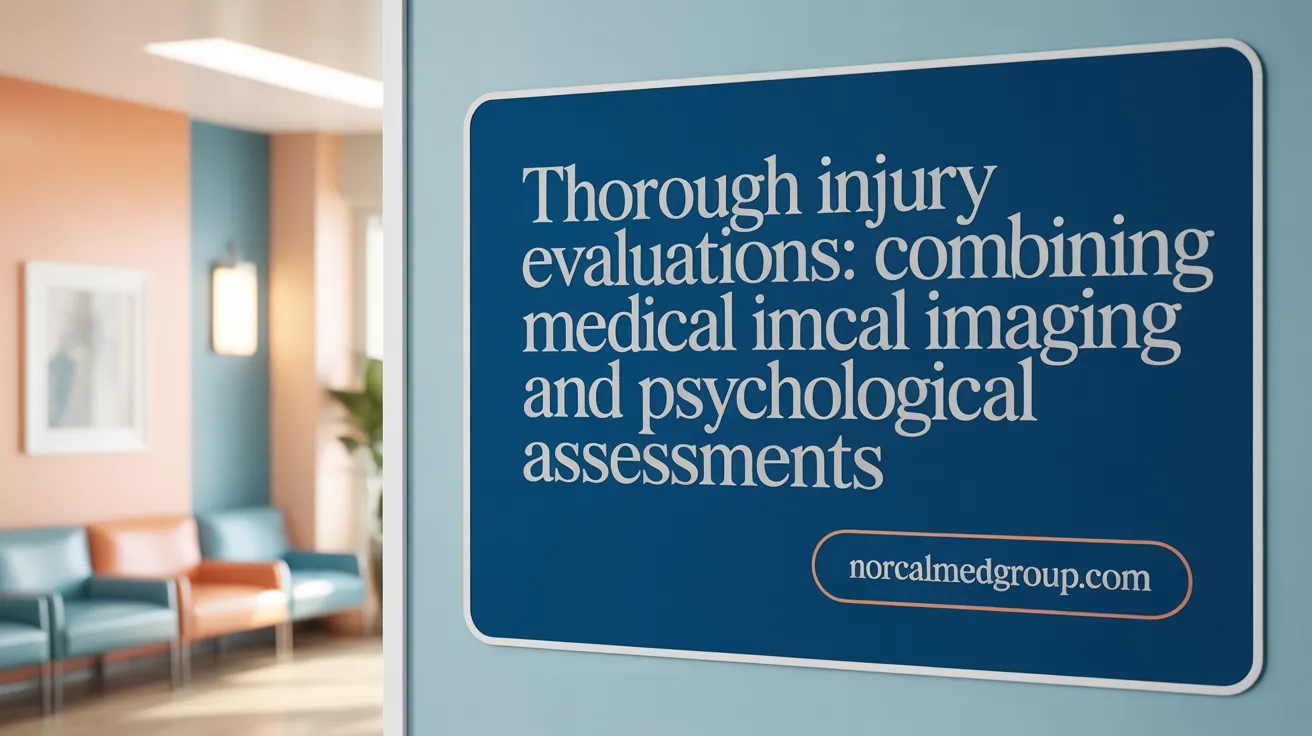
A thorough evaluation begins with medical providers performing detailed physical examinations to assess injury severity and causality. This often includes diagnostic imaging such as x-rays, MRIs, ultrasounds, or CT scans tailored to the specific injury. These tools help confirm the physical aspects of the injury and document its work-related origin.
Role of medical providers and specialists in injury evaluation
Medical providers are responsible for conducting assessments, documenting findings, and coordinating care. Specialists may be involved depending on injury complexity, ensuring comprehensive diagnosis and management. Their evaluations directly influence the subsequent claim process and treatment plans. See more about workers' compensation injury evaluation and evaluating the injured worker.
Inclusion of psychological assessments in claims
Psychological evaluations play a critical role in capturing mental health conditions like anxiety, depression, PTSD, or stress resulting from workplace injuries. These assessments support understanding of the full impact of injury on the worker and strengthen claims where psychological factors affect recovery. For detailed insights see psychological evaluations for personal injury claims and the role of mental health in injury recovery from a biopsychosocial approach.
Importance of accurate symptom reporting and documentation
Injured workers must honestly report symptoms and history, as accurate documentation forms the basis for appropriate diagnosis and treatment. Collecting incident reports, medical records, and other relevant documentation is key for supporting claims and ensuring that care meets the worker’s needs. More details on injury documentation and reporting and best practices in documenting and coding for workers' compensation.
Use of imaging and physical examinations in injury causality determination
Imaging studies help clarify injury mechanisms and confirm physical damage related to workplace incidents. Combined with thorough physical exams, they provide objective evidence essential for establishing injury causality in workers' compensation cases. Refer also to Evaluating the Injured Worker for clinical imaging and assessment techniques.
Rights and preparation steps for injured workers during evaluations
Workers are entitled to impartial assessments, privacy, and the option to seek second opinions. Preparing for evaluations involves gathering all relevant incident and medical documents and following medical advice carefully. This preparation enables clearer communication with healthcare providers and enhances claim success. Guidance on workers' rights and preparation, and navigating workplace injury claims is crucial.
Integrating Psychosocial Factors in Injury Recovery and Claims

Why are psychosocial factors important in evaluating workplace injuries for claims?
Psychosocial factors play a vital role in shaping the recovery trajectory and claim outcomes after workplace injuries. These factors encompass mental health conditions like stress, anxiety, and depression, which often coexist with physical injuries and profoundly affect healing and the capacity to return to work. For more on the biopsychosocial approach to injury recovery and mental health impact on injury recovery.
How does the biopsychosocial model guide injury treatment and claims?
The biopsychosocial model broadens injury evaluation beyond physical symptoms by including psychological and social dimensions. This integrated approach ensures that treatment plans and claims processing address the full spectrum of factors influencing recovery. Considering emotional well-being and social environment supports a more complete and compassionate care experience, as detailed in the holistic approach to workers' compensation medical review and holistic care in employee wellness.
What role do conversational interviews play?
Conversational interviews are valuable tools used by healthcare and claims professionals to engage injured workers meaningfully. These interviews help reveal psychosocial barriers such as emotional distress, workplace anxieties, or social pressures that might delay recovery or complicate claims. Such discussions foster trust and can lead to tailored interventions, as emphasized in supporting mental well-being in recovery.
How are stress, anxiety, and depression acknowledged in claims processing?
Acknowledging these mental health challenges during claims evaluation enhances accuracy and fairness. Incorporating psychological assessments alongside physical examinations enables a more precise determination of the injury impact. This recognition supports appropriate benefits and accommodations, ultimately facilitating a smoother claims process. For insights on psychological evaluations supporting personal injury claims and impact of mental health on injury recovery.
What are the benefits of supporting psychological readiness for return-to-work?
Supporting mental and emotional preparedness boosts the likelihood of successful workforce reintegration. When psychological barriers are addressed, injured employees often experience improved motivation, reduced fear of re-injury, and higher confidence. This holistic support can shorten disability durations, decrease recurrences, and contribute to sustainable recovery, as covered under psychological readiness for workplace reintegration and work injury rehabilitation holistic approaches.
Best Practices in Injury Documentation, Reporting, and Legal Support

Immediate incident response and evidence collection
Responding to workplace injuries right away is critical. This involves providing Immediate incident response for workplace injuries and securing the accident scene to preserve evidence. Collecting photographs, witness accounts, and physical evidence immediately ensures accurate details are captured before they're lost or altered. These steps are foundational for establishing the true circumstances of the injury.
Accurate and prompt injury reporting protocols
Workplace injuries should be reported quickly and accurately to employers, safety authorities, and insurers. Timely reporting—often within strict legal deadlines—initiates the claims process and helps comply with regulations like OSHA Injury Reporting Requirements. Detailed documentation that includes the injury’s nature, location, time, and involved persons is crucial to build a solid case.
Role of witness statements in claims support
Witness testimonies provide valuable third-party perspectives that corroborate the injured worker's version of events. They can illuminate safety violations, environmental hazards, and injury impacts that may not be evident from physical evidence alone. Quickly obtaining and documenting witness statements strengthens the credibility and completeness of claims as discussed in The Role of Witnesses in Workplace Injury Cases.
Legal representation to navigate claims and ensure fair compensation
Navigating workers' compensation systems can be complex. Attorneys offer expertise to protect injured workers' rights, assist with claim filings, and advocate against employer retaliation or unjust claim denials. Having legal support increases the chance of fair compensation and smooth claim resolution, providing guidance through procedural and dispute challenges as highlighted in Navigating Workplace Injury Claims: How Legal Help Can Ensure Fair Compensation.
Use of detailed medical and incident documentation to strengthen claims
Medical evaluations linking injuries to workplace activities are essential. Comprehensive records—covering history, physical exams, diagnostic tests, treatment plans, and recovery progress—serve as objective proof of injury and need for benefits. Additionally, detailed incident reports with measurements, photos, and timelines enhance transparency and compliance, demonstrated in resources like Evaluating the Injured Worker and Workplace Injury Treatment Best Practices.
Documentation and legal support improve workplace injury claim outcomes by establishing a clear factual foundation and facilitating smooth, fair claims processing. Immediate response and evidence gathering preserve crucial information, while legal advocacy helps claimants navigate complex regulations and disputes. Together, they significantly increase the likelihood of successful claims and adequate compensation for injured workers.
Holistic Safety and Rehabilitation Strategies to Support Claims and Recovery

What holistic strategies support workplace injury recovery and claim management?
Holistic strategies integrate preventive safety measures with personalized rehabilitation and comprehensive health support to enhance recovery and streamline claims. Proactive safety programs focus on identifying and mitigating hazards before injuries occur through regular risk assessments, targeted employee training, and enforcing safety protocols. This approach not only prevents injuries but also reduces claims frequency.
When injuries do occur, multidisciplinary rehabilitation addresses physical, psychological, and social facets. Physical therapy combined with mental health support—such as counseling or stress management—helps workers recover more fully. Ergonomic adjustments and lifestyle education further reinforce healing and prevent re-injury.
Coordinated return-to-work plans provide safe and timely reintegration by customizing duties to match recovery stages, supporting both employee well-being and organizational productivity. Continuous data analysis of injury patterns and workers' compensation claims informs improvement of safety initiatives and resource allocation.
Implementing holistic health programs benefits employees by enhancing overall wellness, lowering absenteeism, and improving engagement. Organizations gain from reduced compensation costs, better regulatory compliance, and stronger safety cultures, which together promote sustained workplace performance and employee satisfaction.
Embracing Holistic Evaluation for Improved Claims Outcomes
Holistic approaches to evaluating workplace injuries for claims support recognize that employee health is multifaceted, intertwining physical, psychological, and environmental factors. Employing unified risk metrics, comprehensive medical and psychosocial assessments, precise documentation, and integrated safety and rehabilitation programs enhances the accuracy and fairness of claims processing. This evolution toward holistic evaluation not only facilitates targeted interventions and cost containment but also fosters healthier, more resilient workforces. As workplaces adopt these comprehensive methodologies, stakeholders benefit from improved recovery rates, reduced litigation risk, and stronger safety cultures, paving the way for sustainable occupational health advancement.