Navigating LHWCA Claims: A Guide to Avoiding Costly Mistakes
Under the Longshore and Harbor Workers’ Compensation Act (LHWCA) injured maritime employees receive medical care, wage‑loss benefits, and rehabilitation. Common pitfalls that shrink benefits include missing the 30‑day injury notice, filing the claim after the one‑year limit, miscalculating the average weekly wage, and skipping scheduled medical appointments. An early, independent medical evaluation—preferably from a specialist firm—establishes causation and severity, preventing insurers from down‑playing the injury. Keep records, submit all required forms on time, and preserve evidence to protect full entitlement.
Avoiding Common Communication Mistakes with Adjusters
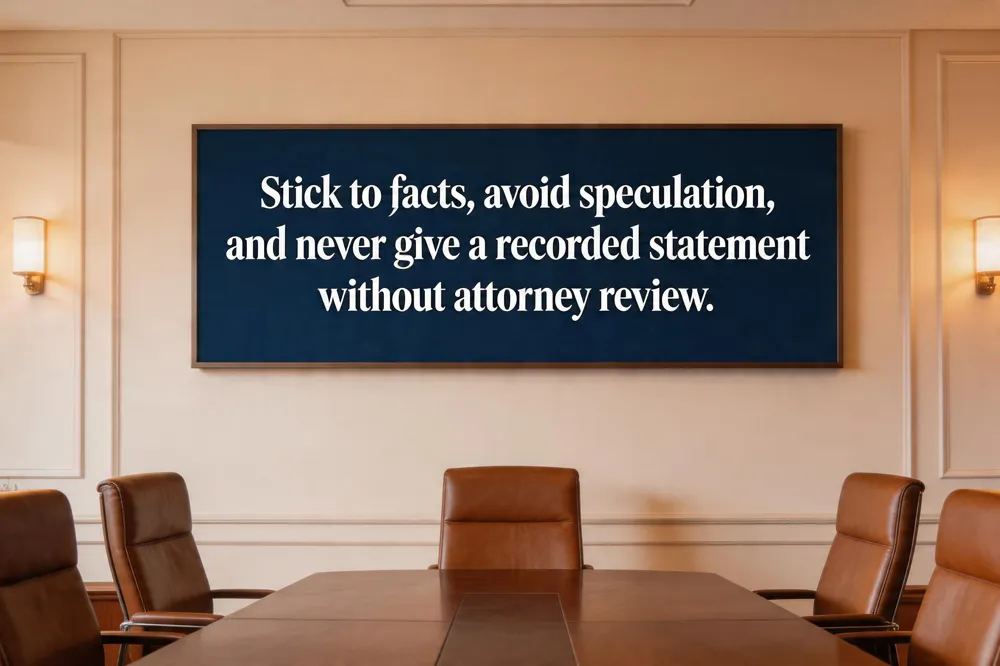 When you talk with a workers’ comp claims adjuster, keep the conversation focused on factual details of the accident and your injury. Never give a recorded statement until your attorney has reviewed it; the adjuster may try to capture your words for later use. If you are unsure about a question, simply say, "I don’t know" or "I’ll need to check my records." Avoid speculating about how the injury occurred, your pain level, or future limitations. Do not discuss unrelated medical history, family health, or any personal information that was not asked.
What not to say to a workers' comp claims adjuster? Do not give a recorded statement without consulting your attorney, and never agree to one on the spot. Avoid guessing, offering opinions about the cause, pain, or future impact—if unsure, say you don’t know. Do not provide extra medical or family details, admit fault, discuss settlement amounts, or suggest you’ll accept a lower benefit. Stay limited to the accident facts and injury.
What should I avoid saying in an injury claim? Avoid apologizing, downplaying your injuries, making speculative comments, or giving simple "Yes" answers to complex questions. Let your attorney guide your statements to protect your claim.
Financial Expectations and Settlement Values
 Typical settlement ranges for personal injury cases vary widely, but most settle between $3,000 and $75,000. The exact amount depends on the facts of each case, including the severity of the injury and the strength of the evidence.
Economic damages cover quantifiable losses such as medical bills, lost wages, and rehabilitation costs. Non‑economic damages compensate for pain and suffering, loss of enjoyment of life, and emotional distress. Courts and insurers usually calculate non‑economic losses by applying a multiplier—often 1.5 to 5 times—the total economic damages. A higher multiplier is justified when injuries are permanent, disfiguring, or cause significant life‑altering limitations.
A seasoned attorney matters because they can accurately assess both economic and non‑economic loss, gather essential medical and vocational documentation, and negotiate a multiplier that reflects the true impact of the injury. Experienced counsel also safeguards against undervaluation, ensures compliance with statutory deadlines, and maximizes the total recovery for the injured worker.
Winning Your LHWCA Claim: Odds and Influencing Factors
 State‑by‑state approval rates vary widely under the Longshore and Harbor Workers’ Compensation Act. California reports approval rates as high as 94.1 %, while Oregon’s range sits between 86 % and 89 % for 2022, indicating a generally favorable environment for claimants but emphasizing regional differences.
The impact of medical evidence and expert testimony cannot be overstated. Detailed, contemporaneous medical records—especially from specialists in auditory loss or occupational injuries—combined with independent expert assessments, dramatically improve settlement offers and benefit calculations.
Experienced LHWCA attorneys play a critical role by preserving evidence, ensuring accurate Average Weekly Wage calculations, and navigating complex statutory deadlines. Their expertise in securing qualified medical consultants and presenting persuasive arguments before Administrative Law Judges often shifts outcomes in the worker’s favor.
Severity of injury also changes results: minor injuries may merit only temporary disability payments, whereas permanent partial or total disabilities trigger higher benefit rates (typically two‑thirds of the AWW) and eligibility for vocational rehabilitation.
What are the odds of winning a workers' comp case? In California, recent legislative reforms have boosted workers’‑comp approval rates to as high as 94.1 %, making the odds of a successful claim very favorable. Oregon’s results are slightly lower, with approval rates ranging from 86 % to 89 % in 2022 and a modest upward trend in denials. Generally, the chance of “winning” a workers’‑comp case depends on the state’s statutes, the strength of the medical evidence, and whether the claimant has experienced attorney. Claimants who secure thorough, expert medical documentation—especially for injuries like auditory loss—see higher settlement or benefit outcomes. Across the United States, most cases are resolved in favor of the employee, but the exact odds vary by jurisdiction and case complexity.
Triggering and Responding to Workers' Comp Audits
 A workers’ comp audit is typically scheduled at the end of each policy term, making it an annual routine for most employers. It can also be triggered when an insurer notices a discrepancy or requests a review of payroll and classification records. Significant business events—such as rapid expansion, a change in ownership, a merger or acquisition, or a substantial shift in payroll size—often prompt an audit. A sudden increase in the frequency or severity of claims can also cause the insurer to audit the company’s exposure. Finally, regulatory or state‑mandated inspections may initiate an audit even outside the regular renewal cycle.
Typical audit schedule for employers – annual at policy renewal, with ad‑hoc reviews tied to risk indicators.
Payroll and classification discrepancies – mismatched employee counts, incorrect job‑code assignments, and missing overtime records are red flags.
Business events that can prompt an audit – mergers, acquisitions, rapid hiring spikes, or large claim spikes trigger.
How to prepare for a regulator‑initiated review – maintain up‑to‑date payroll logs, keep detailed job‑descriptions, reconcile classification charts, and retain all claim documentation to demonstrate compliance.
Medical Conditions and Coverage: Bursitis Example
 Eligibility of bursitis under LHWCA
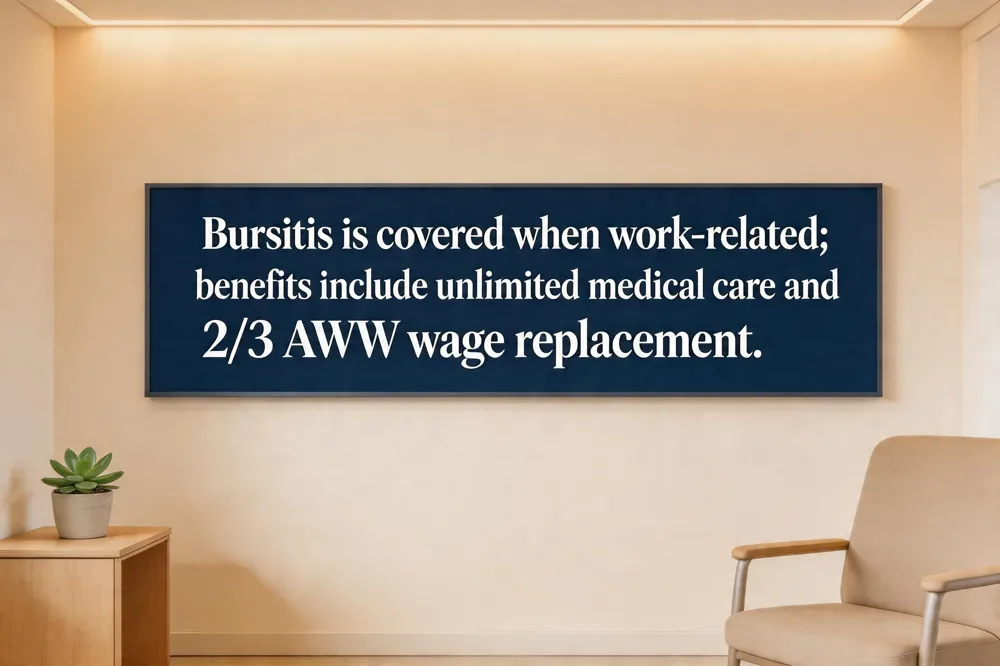
Bursitis can be covered by the Longshore and Harbor Workers’ Compensation Act (LHWCA) when the inflammation of a bursa is caused or significantly aggravated by a maritime‑related job duty. The worker must demonstrate that the injury arose from a work‑related activity—such as repetitive lifting, prolonged pressure on a joint, awkward posturing on a dock, or a specific incident involving heavy cargo handling—so that the claim meets the statutory "status" and "situs" tests.
Need for workplace‑related causation evidence
To satisfy the causation requirement, claimants should preserve contemporaneous evidence: incident reports, supervisor statements, photographs of the work environment, and detailed logs of tasks performed at the time of symptom onset. Independent medical testimony linking the bursitis to those workplace exposures is crucial because insurers frequently argue that the condition is non‑work‑related or pre‑existing. A qualified occupational health specialist can provide the causal nexus that the LHWCA demands.
Medical benefits and wage‑replacement calculations
Once a claim is accepted, the LHWCA provides unlimited medical benefits for all necessary treatment—doctor visits, imaging, physical therapy, joint injections, or surgery—performed by a physician authorized under the Act. Wage‑loss compensation is calculated at two‑thirds of the AWW. The AWW must be derived using one of the three Section 10 methods and must include overtime, shift differentials, hazard pay, bonuses, and any earnings from other maritime employers. For Fiscal Year 2025 National Average Weekly Wage (NAWW) is $999.55, setting maximum weekly benefit of $1,999.10.
Importance of expert medical evaluation
An expert medical evaluation, preferably from a physician with maritime‑industry experience, is essential for two reasons: (1) it documents the severity of the bursitis, the treatment plan, and the expected duration of disability; (2) it creates a credible record that can withstand insurer scrutiny during informal conferences, formal hearings, or Administrative Law Judge (ALJ) proceedings. Independent medical opinions often counter employer‑appointed doctors who may downplay the injury’s impact.
Answer to the key question
Is bursitis covered under workers' compensation?
Yes—bursitis can be covered by workers’ compensation when it is caused or aggravated by your job duties. To qualify, you must show that repetitive motions, prolonged pressure, awkward postures, or a specific workplace incident triggered the inflammation of the bursae. Once the claim is accepted, you are typically entitled to medical expenses (doctor visits, imaging, physical therapy, joint injections, or surgery) and wage‑replacement benefits based on a pre‑injury average weekly earnings. The extent of compensation may also include rehabilitation services and, in cases of permanent impairment, a lump‑sum payment. Consulting a workers’‑comp attorney can help you navigate the medical documentation and legal requirements to ensure you receive the benefits you deserve.
Red Flags and Fraud Indicators in LHWCA Claims
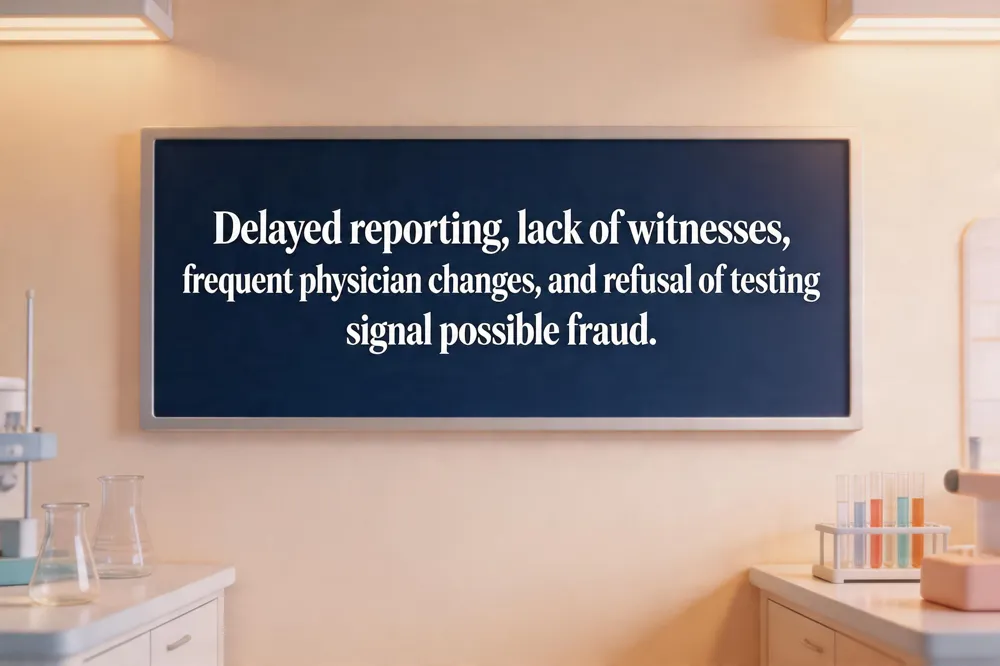 Delayed reporting and suspicious timelines – A claim filed long after the incident, especially when the injury is suddenly reported on a Monday morning for an event that allegedly occurred late Friday, raises a red flag. The LHWCA requires written notice within 30 days; unexplained delays suggest possible fraud.
Lack of witnesses or inconsistent injury descriptions – When no coworkers, supervisors, or by‑standers can corroborate the incident, and the claimant’s account does not logically explain the injury, the claim is suspect.
Multiple litigated claims and frequent physician changes – A history of numerous prior LHWCA claims, especially those that have been litigated, or a pattern of switching treating physicians, treating, or employers indicates a higher risk of fraudulent activity.
Refusal to undergo diagnostic testing – Claimants who decline recommended imaging, electro‑diagnostic studies, or other examinations that would objectively verify the injury are often attempting to conceal the true nature of their condition.
Which of the following is a red flag in workers' compensation claims? A red flag appears when an injury is reported on Monday morning after an incident that supposedly occurred late on Friday, or when the claim is filed without a reasonable explanation for the delay. The absence of any witnesses, combined with a claimant’s description that does not logically explain the injury, is another warning sign. A history of multiple suspicious or litigated claims, or frequent changes in physicians, addresses, or employment, also raises concern. If a claimant refuses diagnostic testing or other medical procedures that could confirm the extent of the injury, it suggests possible fraud. Finally, if the claimant is consistently hard to reach at home or uses providers who are known to handle numerous questionable claims, these factors together serve as strong red‑flag indicators.
Take Proactive Steps to Secure Your LHWCA Benefits
Longshore workers frequently stumble over missed deadlines, incomplete wage records, and reliance on employer‑chosen doctors—mistakes that shrink benefits. Engaging a maritime‑injury attorney at the first sign of injury ensures deadlines are met, AWW calculations are accurate, and legal rights are protected. Expert medical consultants such as NorCal Medical Consulting provide independent evaluations that bolster causation and severity evidence. Immediate steps: submit written notice within 30 days, preserve pay stubs and medical records, and schedule qualified examinations before any insurer decision.