Why Expert Selection Matters
Choosing the right medical expert can make or break a workers’ compensation case. Jurors and judges base settlement decisions on the expert’s credibility; a board‑certified physician with active clinical practice and a track record of courtroom experience commands higher weight, often translating into larger, more favorable settlements. Courts apply the Daubert/Frye standards and Federal Rule of Evidence 702, requiring that testimony be relevant, reliable, and derived from accepted scientific methods; experts who meet these criteria are less likely to be excluded on Da. Engaging an expert early—during record review and discovery—allows the attorney to shape strategy, pinpoint causation, and develop clear, lay‑person explanations before the opponent can challenge the opinion. Early involvement also speeds up report preparation, limits surprise evidence, and strengthens negotiation leverage, ultimately protecting the injured worker’s right to full, fair compensation.
Understanding the Role of an Expert Witness
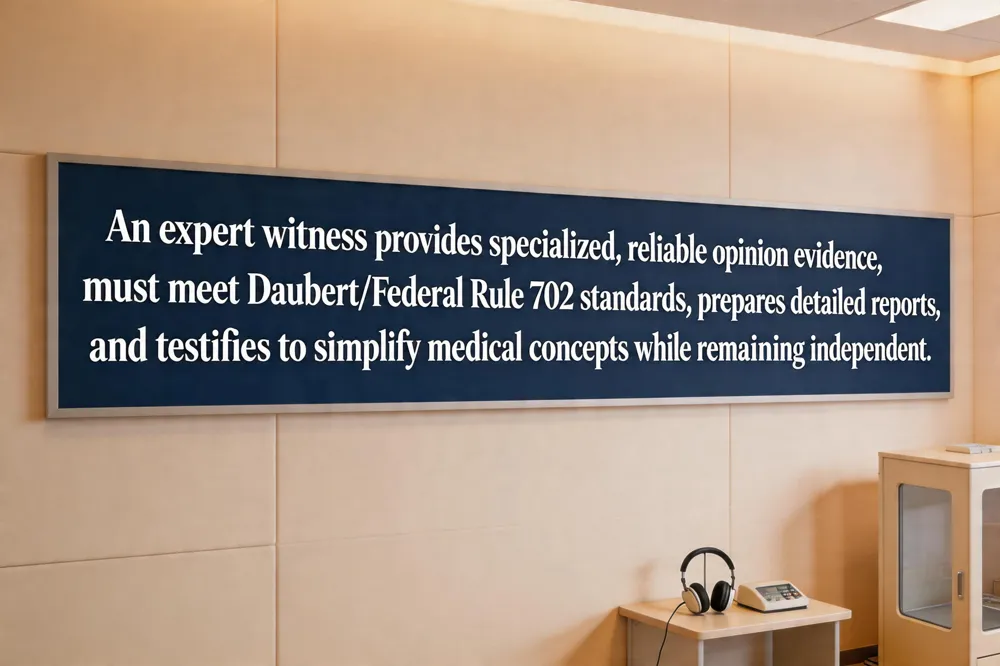 An expert witness is a qualified professional who possesses specialized knowledge, skill, training, or experience in a particular field and is called upon to provide opinion evidence in legal proceedings. The court must determine that the witness’s expertise is relevant to the issues at hand and that the methods used are reliable, often applying the Daubert Standard or Federal Rule of Evidence 702, which requires a factual basis, reliable principles, and proper application to the case facts. In occupational injury litigation, experts prepare thorough written reports that summarize medical records, explain causation, quantify damages, and cite current clinical guidelines. These reports are shared with counsel, opposing parties, and the court. At trial, the expert testifies, simplifies complex medical concepts for jurors, and withstands cross‑examination, while remaining independent and impartial. Firms such as NorCal Medical Consulting provide board‑certified physicians who meet licensure, certification, and active‑practice requirements to serve as credible witnesses for auditory loss and other workplace injury claims.
Qualifications That Make a Medical Expert Credible
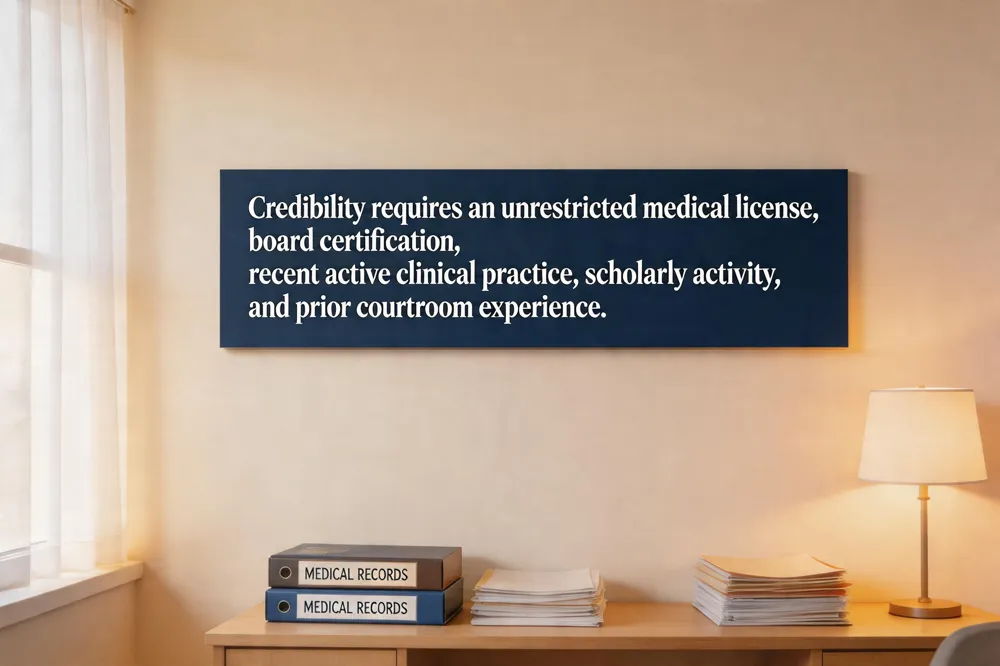 A medical expert witness must first meet the legal baseline: Medical expert witnesses must hold a current, valid, unrestricted medical license in the state where they practice, and be board‑certified in the relevant specialty and state‑specific Daubert or Frye standards, demonstrating that the witness possesses the requisite knowledge, skill, and training.
Beyond licensure, courts look for active clinical practice—physicians who have treated patients with the same injury within the past year or two are presumed to be familiar with current standards of care and emerging treatment protocols. Ongoing research, peer‑reviewed publications, and teaching appointments further bolster credibility, showing that the expert stays current with medical science and can articulate complex concepts in plain language for jurors.
Prior courtroom experience—depositions, trial testimony, and involvement in settlement negotiations—adds a practical layer of reliability. Judges and jurors trust experts who have demonstrated the ability to answer direct questions, avoid volunteering unnecessary detail, and withstand cross‑examination without losing composure.
What qualifies someone to be considered an expert? An expert is a professional who combines deep, authoritative knowledge (often reflected in board certification and licensure) with substantial, recent clinical practice, scholarly activity, and proven courtroom performance. This blend of credentials, experience, and communication skill ensures the expert can provide reliable, understandable testimony.
What are the three foundational requirements for an expert's testimony? 1) Proper qualification through education, training, and experience; 2) Relevance to the issues at hand, helping the trier of fact understand the evidence; 3) Reliance on scientifically sound principles and methods that are correctly applied to the case facts.
Finding the Right Physician for Specific Injuries
 Which doctor is best for accident injuries?
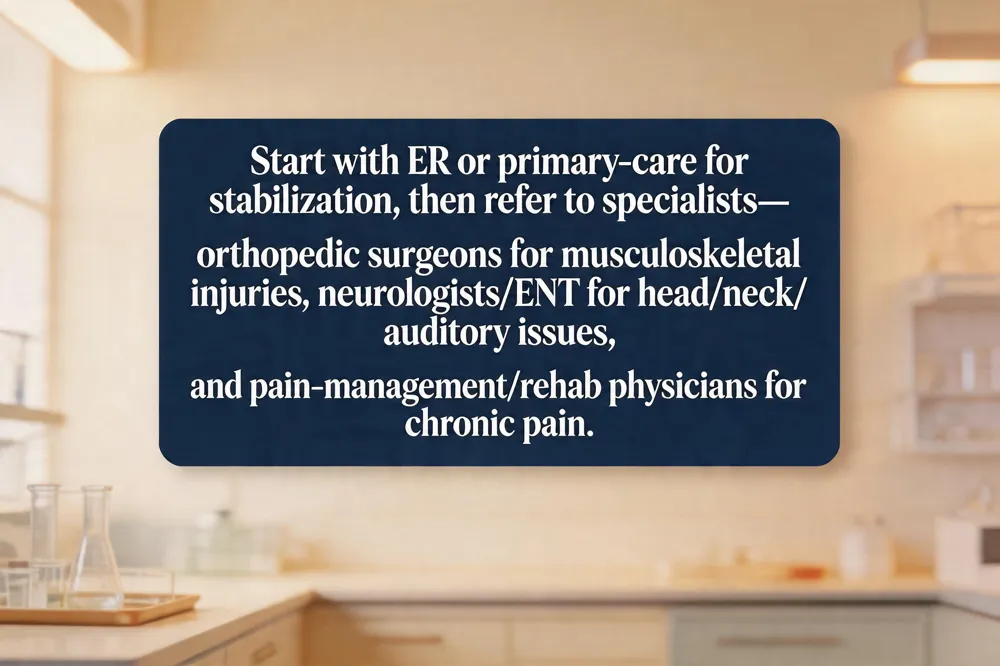
The initial point of contact should be an emergency‑room physician to rule out life‑threatening conditions and stabilize the patient. Once stable, a primary‑care provider can document the injuries and refer to the appropriate specialist: orthopedic surgeons for musculoskeletal injuries, neurologists or otolaryngologists for head, neck, or auditory issues, and pain‑management or rehabilitation physicians for chronic pain and functional recovery.
Which doctor is best for accident injuries?
The initial point of contact should be an emergency‑room physician to rule out life‑threatening conditions and stabilize the patient. Once stable, a primary‑care provider can document the injuries and refer to the appropriate specialist: orthopedic surgeons for musculoskeletal injuries, neurologists or otolaryngologists for head, neck, or auditory issues, and pain‑management or rehabilitation physicians for chronic pain and functional recovery.
What doctor is best to see after a car accident? A primary‑care or urgent‑care clinician should be seen within days to establish a medical record. Orthopedic specialists address neck, back, and joint pain; neurologists evaluate concussion‑related symptoms; and ENT doctors or audiologists assess hearing loss or tinnitus. Prompt, targeted evaluation not only safeguards health but also builds the evidence base needed for strong expert testimony in legal and insurance claims.
Expert Witness Networks and Directories
 Expert witness networks are curated rosters of qualified medical professionals who are on‑call to provide forensic analysis, testimony, and consulting for legal and insurance matters. In workplace‑injury cases—particularly those involving auditory loss—these networks connect attorneys and insurers with specialists who can evaluate diagnoses, quantify hearing damage, and translate complex health data into clear, courtroom‑ready language. By vetting credentials, board certification, active clinical practice, and communication skills, the network guarantees that each witness meets the highest ethical standards while remaining affordable and responsive.
An expert witness directory is a searchable online database that lets users filter listings by state, specialty, and injury type. This rapid filtering helps legal teams quickly locate board‑certified audiologists, otolaryngologists, or occupational medicine physicians who have experience with workers’ compensation and personal injury claims. The directory’s structured bios, contact information, and fee ranges streamline the selection process, allowing for rapid expert deployment and timely case preparation.
Advantages of using a network or directory include immediate access to vetted experts, reduced discovery delays, and the ability to match the expert’s clinical focus with the specific injury, thereby strengthening claim outcomes and protecting client interests.
Cost Considerations for Expert Witness Services
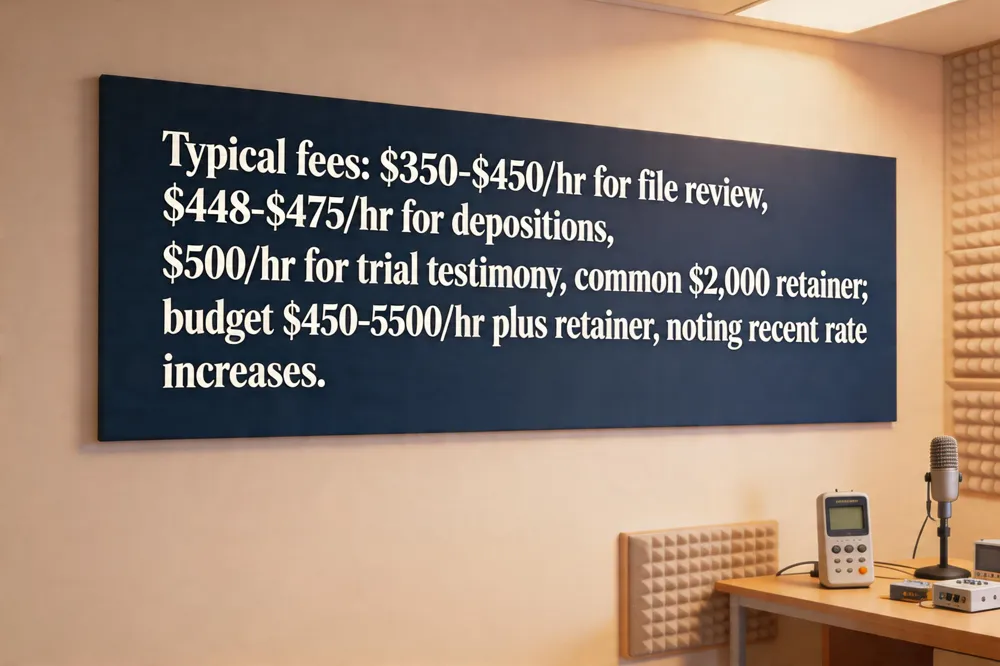 When budgeting for a medical expert witness in occupational‑injury litigation, attorneys should anticipate a tiered fee structure. File‑review and case‑preparation work typically runs around $350–$450 per hour, while deposition appearances command higher rates, averaging $448–$475 per hour. Trial testimony is the most expensive service, with median fees of $500 per hour for medical specialists. Most experts (approximately 64 %) require a written retainer agreement; the common upfront retainer is about $2,000, which secures the expert’s availability and begins the review process. Fee trends indicate that 68 % of experts have raised their rates in the past five years, reflecting a modest upward trajectory in costs. Overall, litigators should budget roughly $450–$500 per hour for expert‑witness services, plus the $2,000 retainer, and allow for potential increases in fees as the case progresses.
Special Challenges in Complex Occupational Injury Litigation
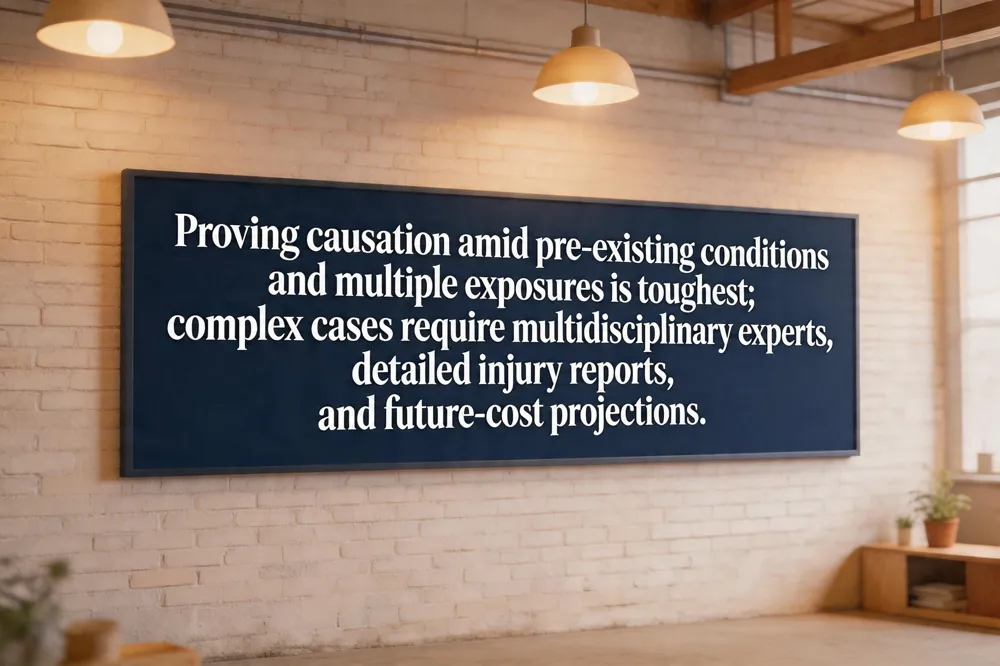 Causation is widely recognized as the most difficult element to prove in medical‑malpractice and occupational injury cases. Plaintiffs must show that the defendant’s breach of the standard of care was the direct, factual cause of the injury—often a challenge when pre‑existing conditions or multiple exposures exist. Expert witnesses, typically board‑certified physicians who actively practice, provide the scientific link by reviewing records, conducting independent examinations, and applying Daubert‑approved methods.
Complex patients are characterized by multiple chronic conditions, polypharmacy, mental‑health comorbidities, and high health‑care utilization. These factors complicate treatment plans and require multidisciplinary experts, affecting case strategy by demanding detailed injury reports and future‑cost projections.
Physicians are not required to accept workers’ compensation. Participation is voluntary, and many specialists do so because they understand claim documentation and statutory timelines. When a doctor declines, the injured worker must locate another provider or arrange alternative payment, and attorneys must verify acceptance before scheduling examinations.
Putting It All Together
Step‑by‑step checklist for selecting a medical expert:
- Identify the injury mechanism and required specialty (e.g., orthopedics for fracture, audiology for occupational hearing loss).
- Verify that the candidate holds a current, unrestricted state license and board certification in the relevant field.
- Confirm active clinical practice within the past 12‑24 months and recent publications or teaching experience.
- Review prior deposition/trial experience and any disciplinary history.
- Assess communication skills through a mock interview; the expert must translate technical findings into plain language.
- Perform conflict‑of‑interest screening and document fee arrangements.
How NorCal Medical Consulting streamlines the process:
- Maintains a vetted network of board‑certified physicians who actively treat workplace injuries.
- Conducts rapid medical‑record reviews, prepares concise expert reports, and coordinates independent medical examinations.
- Provides mock‑deposition preparation and visual‑aid development to enhance juror comprehension.
Final advice for attorneys handling complex workplace injury claims:
- Engage the expert early, preferably before discovery, to uncover critical medical facts.
- Align the expert’s specialty precisely with the injury type and ensure familiarity with applicable OSHA/Cal/OSHA standards.
- Prioritize experts who can demonstrate unbiased, evidence‑based opinions and who can communicate clearly to judges and jurors.