Why Transparency Matters in Claims
Clear, well‑organized records are the backbone of successful legal and insurance outcomes. When medical, accident, and communication data are documented with timestamps, signatures, and consistent terminology, adjusters and attorneys can quickly verify injury severity, causation, and liability, reducing the risk of claim denial or settlement erosion. Open communication—regular updates via phone, email, or client portals, and plain‑language summaries—keeps policyholders, claimants, and counsel informed, preventing surprises that erode confidence. Trust‑building principles such as proactive listening, realistic expectation setting, and transparent fee or disclosure further reinforce the relationship. By maintaining audit‑ready, HIPAA‑compliant documentation and sharing it promptly, all parties demonstrate credibility, accelerate decision‑making, and minimize disputes, ultimately leading to faster, fairer resolutions.
The Golden Rule of Medical Documentation
 The golden rule of medical documentation is simple yet powerful: Never code or bill for a service that is not fully and contemporaneously documented in the patient’s medical record. In practice, this means every encounter must have a complete, signed, and dated entry that captures the chief complaint, history, objective findings, assessment, and plan of care before the service is billed.
Contemporaneous, complete records are essential because they create an immutable audit trail. Timestamped notes, clear methodology descriptions, and objective data (e.g., audiometric thresholds for auditory‑loss claims) satisfy CMS, HHS, and state regulations, and they defend against fraud accusations.
Legal and billing consequences of missing documentation are severe. Incomplete or illegible records can trigger claim denials, Medicare recoupments, and costly audits. Attorneys rely on thorough records to prove causation and damages; gaps can diminish settlement values or lead to dismissal.
Protecting patients, providers, and payers is the ultimate benefit. Accurate documentation prevents over‑charging patients, shields clinicians from penalties, and ensures payers reimburse only for services that were truly rendered. Transparent, standardized documentation—using templates, audit‑ready EHR systems, and HIPAA‑compliant sharing—fosters trust among all parties and expedites claim resolution.
Navigating Insurance Adjuster Interactions
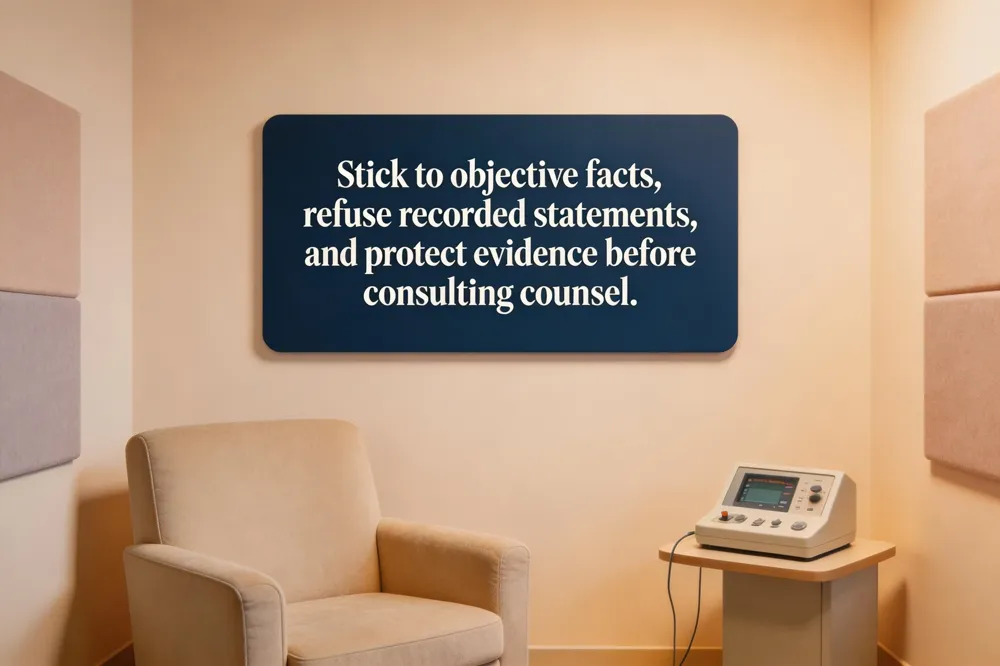 When an injury occurs, claim adjusters often move quickly to gather information before you have a clear medical picture or legal counsel. Their typical tactics include a friendly, low‑pressure phone call aimed at extracting basic facts, pressuring you to give a recorded statement, and offering a quick, low‑ball settlement tied to a signed release. They may also delay liability decisions or suggest you contributed to the injury, attempting to shift blame and reduce the payout.
What not to tell an insurance adjuster? Do not admit fault, apologize, or describe the severity of your hearing loss, prognosis, or treatment details. Avoid admitting fault or describing severity to adjusters Stick to objective facts—date, time, location, and parties involved. Refuse to give a recorded statement or sign any medical‑release form until your attorney reviews the case. Never discuss settlement amounts or accept an offer without full legal and medical analysis.
How to protect your claim before consulting counsel: Preserve all evidence—photos, timestamps, geotags, and detailed field notes—while keeping a chronological, factual log of every interaction. Use secure, HIPAA‑compliant channels to share medical records and avoid informal communications that could be later scrutinized. Organize documentation in a consistent naming system and maintain an audit‑ready trail so that when you do engage an attorney, the record is complete, transparent, and defensible.
Best Practices for Documenting Services
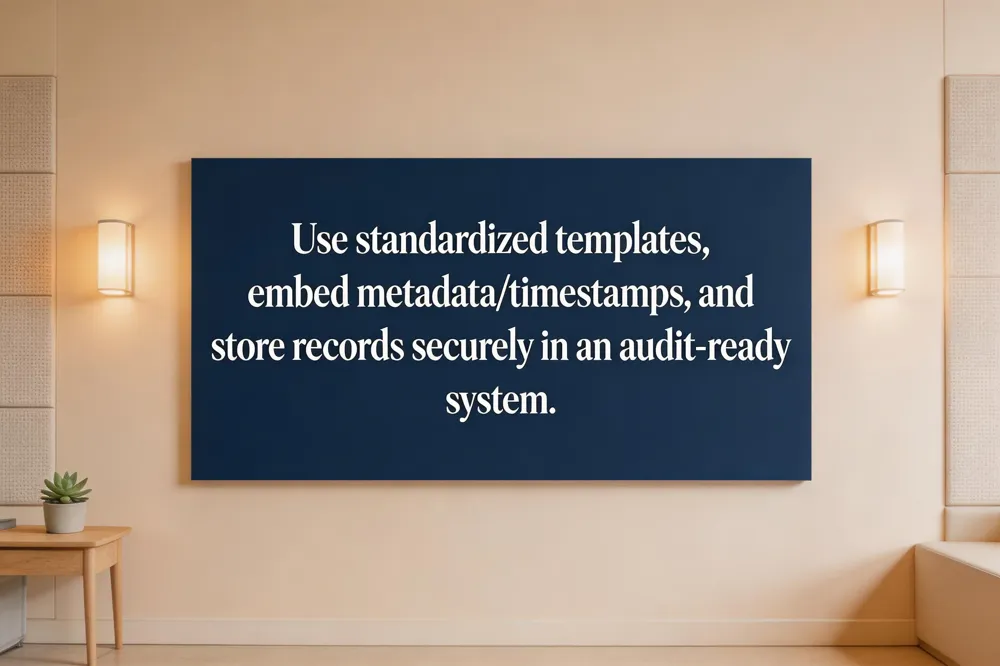 Standardized templates and consistent headings are the foundation of reliable service documentation. Using a uniform format—such as the CMS‑approved medical‑record template that includes patient identifiers, dates, reason for encounter, findings, assessment, plan, and clinician signature—ensures every report contains the same essential elements and makes it easy for attorneys, adjusters, and medical experts to locate key information.
Metadata, timestamps, and version control add a verifiable audit trail. Each entry should be automatically time‑ and tagged with the author’s electronic ID, and any revisions must be logged with a new version number, date, and rationale. This immutable record satisfies HHS and HIPAA requirements, supports attorney‑client privilege, and protects against accusations of tampering.
Secure, centralized storage—preferably an encrypted EHR or claims‑management platform that supports PDF/A, HL7, and DICOM formats—provides controlled access while maintaining compliance with HIPAA, CMS, and state privacy statutes. Central repositories enable real‑time sharing with attorneys, adjusters, and medical consultants, reducing delays and fostering trust.
What is the best practice for documenting services? The best practice is to use clear, concise, and unambiguous language that precisely describes each evaluation, finding, and recommendation. Every entry should include all pertinent facts—dates of injury, examination dates, test results, and specific actions taken—and be signed and dated by the responsible clinician at the time of service. Follow a standardized template with consistent headings, tables, and visual aids; embed metadata, timestamps, and version control; and store the documentation in a secure, centralized system that maintains confidentiality and auditability for legal and insurance review.
The Three R’s of Consultation and Their Role in Trust
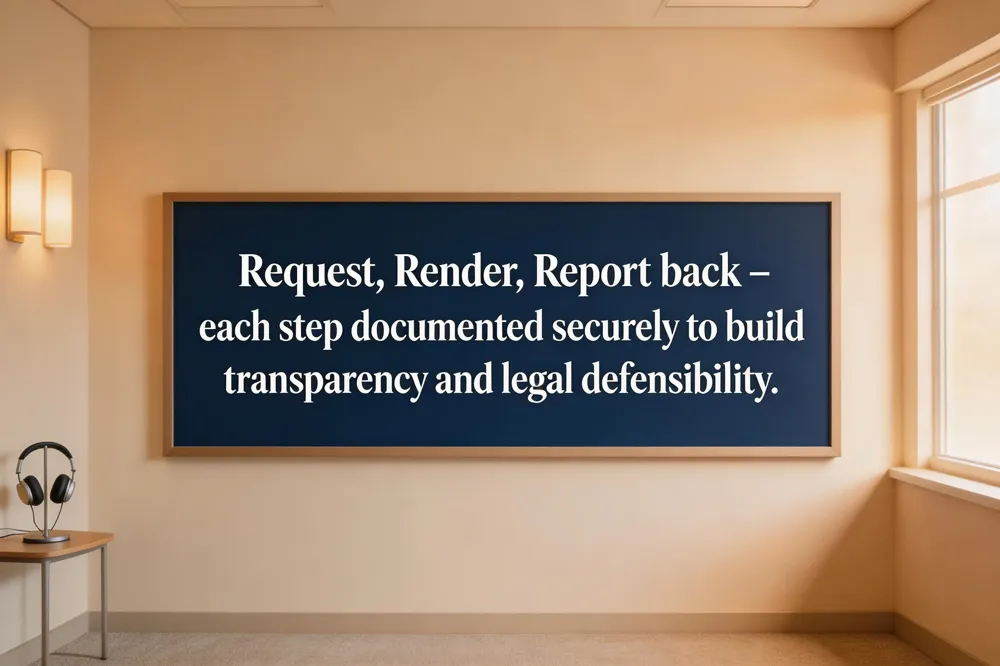 When a medical or legal professional asks for a consultation, the process can be broken down into three essential steps—often called the “3 R’s.” 1) Request documentation – recording the referral: The initial request must be captured in a secure, auditable system, noting who is requesting the evaluation, the purpose of the consult, and any relevant case identifiers. This creates a clear chain of custody and satisfies attorney‑client privilege and HIPAA requirements. 2) Rendering – detailed service notes: During the examination the consultant should generate objective, timestamped notes that follow standardized templates (e.g., those recommended by CMS, AHIMA, and ASHA). The record must include the methodology, findings (such as audiometric data for auditory loss), and any patient consent statements. Consistent use of medical terminology and proper signatures protects against disputes and enhances credibility with adjusters and attorneys. 3) Report back – clear communication of findings: After the evaluation, the consultant delivers a concise executive summary and a full report that outlines conclusions, causation analysis, and recommended next steps. The report should be shared promptly (ideally within 48 hours) through a secure portal, with a documented audit trail. Transparent communication at each stage builds trust among claimants, attorneys, and adjusters, reduces the risk of misinterpretation, and expedites claim resolution.
Building Ongoing Trust Through Transparency and Communication
 Attorney‑client privilege protects all confidential communications between a client and the attorney, extending to written notes, emails, and the attorney’s staff. Even if a client decides not to retain the lawyer after an initial consultation, the privilege remains in effect, safeguarding the client’s disclosures—including medical history, prior claims, and conversations with insurers—from forced disclosure. Maintaining this shield builds confidence that the client can be candid, which is essential for an effective injury assessment.
Regular updates and organized records reinforce that confidence. Attorneys should request timely, chronological medical documents, accident reports, and witness statements, then store them in a consistently labeled, timestamped system. Field adjusters benefit from photo metadata (date, time, GPS) and objective notes that avoid opinions. When both parties receive weekly summary emails or portal notifications, expectations stay realistic, surprises are minimized, and the claim progresses without unnecessary delays.
Collaborative platforms and shared case‑management tools further cement trust. Centralized repositories—compatible with PDF/A, HL7, and DICOM—allow attorneys, adjusters, and medical consultants to view the same auditable evidence, from exposure audiograms to loss‑of‑function analyses. Version‑controlled dashboards provide real‑time visibility of tasks, deadlines, and billing, while audit trails prove who accessed or modified a document and when. This transparency reduces disputes, speeds settlement negotiations, and demonstrates a joint commitment to the claimant’s best outcome.
Putting It All Together
Effective claim resolution hinges on three inter‑related pillars: meticulous documentation, trust‑building, and coordinated next steps. First, claimants must provide complete, timely records—medical notes with patient identifiers, dated signatures, and objective findings; accident photos with timestamps and geotags; and a chronological log of communications. Second, attorneys and adjusters reinforce trust by sharing clear, jargon‑free updates, respecting attorney‑client privilege, and using standardized templates that create an auditable trail. When parties operate transparently, settlement values rise, litigation risk falls, and disputes diminish. Finally, claimants should schedule a full disclosure meeting with their attorney, keep an organized digital file, and promptly respond to adjuster requests. Attorneys should set realistic expectations, deliver regular status reports, and document every decision. Adjusters should log every interaction, attach metadata‑rich evidence, and maintain a shared case‑management portal. Together, these practices accelerate claim closure and protect all stakeholders.