Why Structured Communication Matters in Workplace Injury Claims
Recent survey results from Fell Consulting reveal that 100 % of claims handlers are frustrated by lengthy reports and unnecessary market calls, while 100 % of lawyers resent non‑lawyers dictating time and fees. This mutual dissatisfaction translates into delayed case updates, duplicated effort and escalating costs, as miscommunication forces both parties to repeat document requests and re‑align strategies. NorCal Medical Consulting addresses these pain points by providing concise, expert‑driven medical summaries and standardized communication protocols—such as SBAR checklists and secure, HIPAA‑compliant portals—that translate clinical findings into clear, actionable guidance for attorneys and adjusters. By streamlining information exchange, NorCal helps reduce claim resolution time, lower litigation expenses, and improve client outcomes in workplace injury cases.
Survey Insights Reveal the Communication Gap
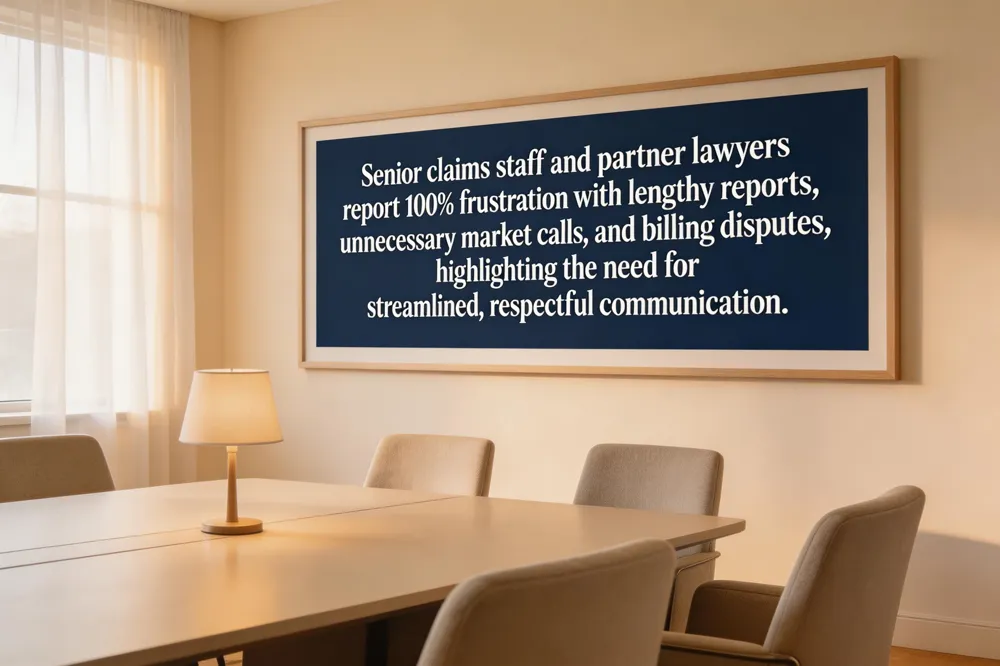 A recent Fell Consulting survey of 94 senior claims staff and 76 partner‑lawyers shines a light on persistent friction points in the U.S. workers‑injury claims process. Every claim handler (100%) voiced frustration with overly long reports and unnecessary market‑call follow‑ups, indicating a clear need for streamlined, concise communication. Lawyers mirrored this sentiment, with all respondents (100%) expressing irritation when non‑lawyers—such as time‑billing auditors—dictate fee structures and time allocations, demanding greater respect for their billing judgments.
Both groups highlighted common themes: lengthy, detail‑heavy reports that delay decision‑making; frequent, low‑value market calls that pull resources from substantive work; and billing disputes that erode trust and inflate costs. Claims handlers crave strategic, actionable guidance and rapid deadline responses, while attorneys seek clear initial instructions, realistic timelines, and collaborative strategic planning. The survey underscores that mutual feedback loops, timely document exchange, and avoidance of duplicated effort are essential to bridge the communication gap and improve overall claim efficiency.
Structured Protocols: From the 5 W’s to the 3 D’s
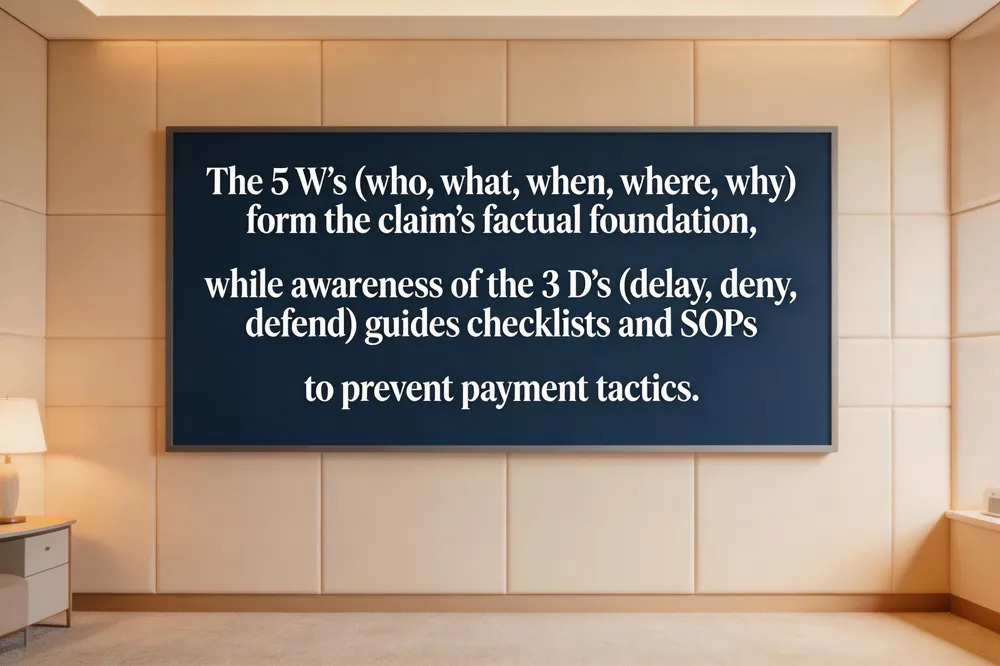 What are the 5 W’s to consider when submitting a workplace injury claim? When filing a claim, identify who was injured (name, job title, contact), describe what happened (incident details, injury type such as auditory loss, diagnoses, treatment), note when it occurred (date, time, shift), specify where (worksite location, department, equipment), and explain why (root cause or unsafe condition). These elements form the factual backbone for both legal liability and insurance coverage.
What are the three D’s that insurance companies may use to delay claim payments? The tactics are delay, deny, and defend—methods to postpone, reduce, or avoid paying the claim.
How do checklists and SOPs turn these concepts into actionable steps? A standardized checklist prompts claimants to capture each of the 5 W’s at the moment of injury, while SOPs embed the 3 D awareness into workflow: set clear timelines for documentation, require pre‑approval before any denial response, and mandate a defensive audit trail (timestamps, acknowledgments) to counter delay tactics. Integrating these tools into a shared digital portal ensures real‑time visibility for adjusters, lawyers, and medical consultants, streamlining communication and accelerating resolution.
Effective Communication Methods for Healthcare Professionals
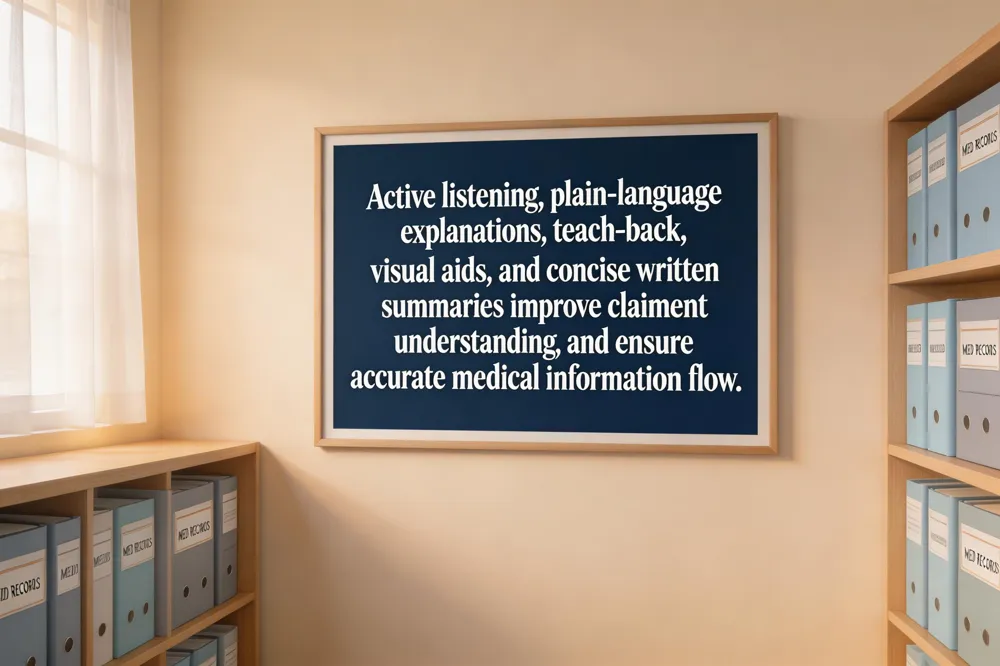 When handling workplace injury claims, healthcare professionals should start with active listening and keen observation of non‑verbal cues—eye contact, facial expressions, and body language—to assure claimants they are heard. Using calm, positive language and “I” statements keeps the dialogue solution‑focused and builds trust. Plain‑language explanations are essential; clinicians must avoid jargon, speak slowly, and phrase medical facts in everyday terms. The teach‑back technique—asking claimants to repeat key points in their own words—confirms understanding and highlights any gaps. Visual aids such as diagrams, charts, or short videos reinforce verbal messages, while multilingual handouts and concise checklists address literacy and accessibility barriers. Providing a brief, written summary of next steps, together with a contact list, ensures claimants know how to proceed. These strategies not only improve claimant comprehension but also streamline the flow of accurate medical information to attorneys and adjusters, reducing disputes and accelerating claim resolution.
Avoiding Pitfalls in Settlement Negotiations
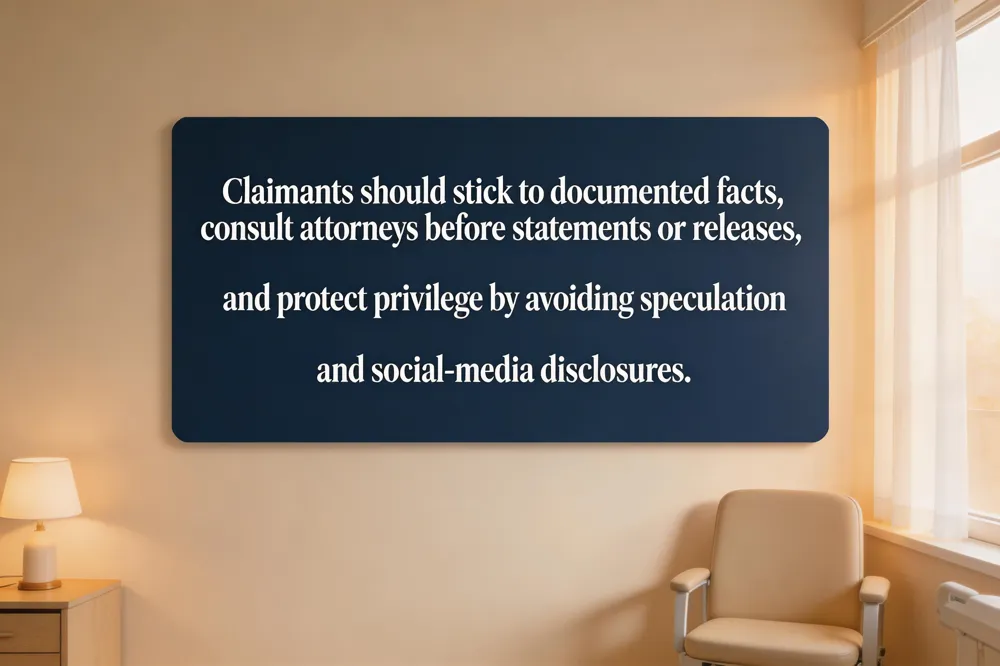 In settlement talks, claimants often unintentionally weaken their case, making statements that suggest the injury is more severe than the medical record shows, or by speculating on cause and liability. The safest approach is to limit all comments to documented facts: dates, diagnoses, treatment dates, and the objective findings of the treating physician. Any speculation, exaggeration, or admission of fault should be avoided.
Before offering any recorded statement or signing a release, an attorney must be consulted. Lawyers can review the language, ensure that privilege is preserved, and prevent inadvertent waivers that could be used by the insurer to diminish the claim. Their involvement also allows the negotiation of settlement figures on the claimant’s behalf, rather than the claimant setting a premature price.
Maintaining privilege extends to digital footprints. Posting case details, medical records, or settlement discussions on social media can create a public record that the insurer may cite. Claimants should keep all communications professional, documented, and routed through counsel to protect the integrity of the claim.
Adjuster Types and Collaboration Frameworks
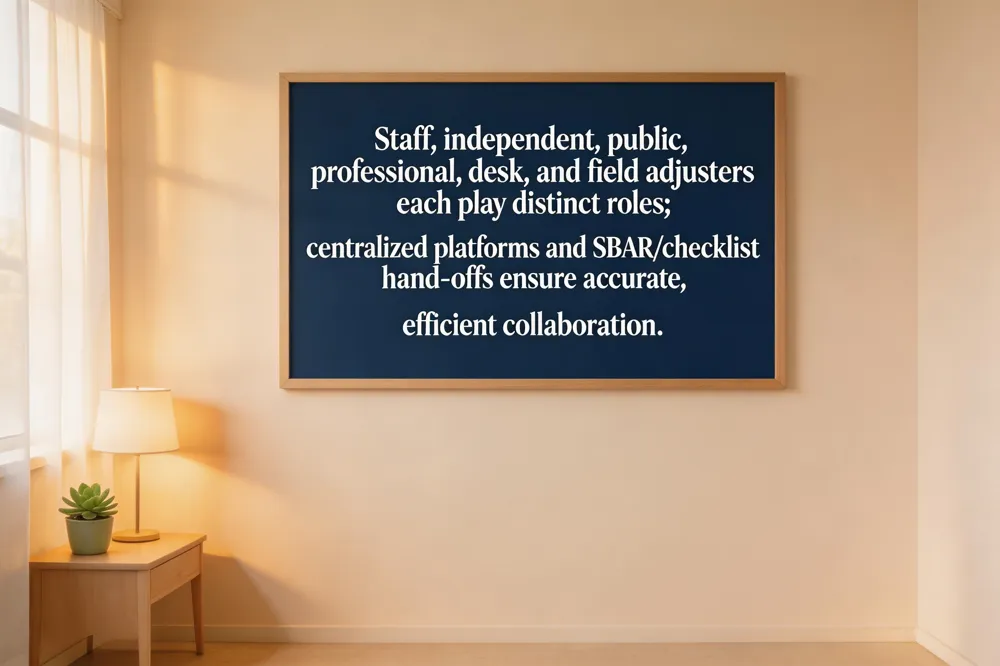 Workplace‑injury claims can be managed by several adjuster categories, each bringing a distinct role to the case. A staff (or in‑house) adjuster works directly for the employer’s insurer, handling routine investigations from the office. Independent adjusters are third‑party contractors hired by the carrier to conduct on‑site inspections and negotiate settlements. Public adjusters represent the claimant, advocating for the employee’s interests when a private attorney is retained. Professional adjusters specialize in niche lines such as workers‑compensation or auditory‑loss claims, applying medical‑expert knowledge to evaluate injury severity. Desk adjusters perform paperwork and coordinate with claimants remotely, while field adjusters visit the worksite to observe conditions and collect evidence. Centralizing data through platforms like CARET Legal or NorCal Medical Consulting portals creates a single source of truth, linking medical reports, billing records, and communication logs. Structured hand‑off protocols—SBAR (Situation, Background, Assessment, Recommendation) and checklist‑driven forms—ensure that critical findings, deadlines, and billing decisions are transferred accurately, reducing duplication and disputes between lawyers, adjusters, and medical consultants.
Putting Protocols into Practice for Faster, Fairer Outcomes
Recap of the structured communication tools presented: standardized intake forms, SBAR summaries, secure digital portals, tickler reminders, and documented hand‑offs ensure every claim moves forward without missing data. Call to action for insurers, lawyers, and medical consultants to adopt these SOPs: embed them in case‑management software, train staff on clear, jargon‑free language, and enforce response‑time expectations. How NorCal Medical Consulting can assist: we provide workshops on SBAR and HIPAA‑compliant portals, customize templates for auditory‑loss assessments, and integrate our expertise with existing platforms to create a seamless, audit‑ready workflow that speeds resolution and protects all parties. These practices reduce disputes, improve satisfaction, and align strategy evidence for claim outcomes.