Introduction to Occupational Hearing Health
Occupational exposure to hazardous noise presents a significant risk to auditory health, with millions of workers worldwide facing the threat of noise-induced hearing loss (NIHL). To combat this, auditory screening and advanced electrophysiological assessments such as Auditory Steady-State Response (ASSR) testing have emerged as crucial components of workplace hearing conservation programs. This article explores the scientific, clinical, and regulatory frameworks that underpin auditory screening and ASSR testing within occupational health, highlighting their procedural methodologies, comparative advantages, and contributions to early detection and prevention of hearing loss in various industrial settings.
Fundamentals of Auditory Screening and ASSR Application in Occupational Health
What is auditory screening and how is ASSR testing used in occupational health programs?
Auditory screening is a process designed to evaluate an individual's hearing capability and identify early signs of hearing loss. This proactive approach plays a critical role in preventing further auditory impairment by timely detection and intervention.
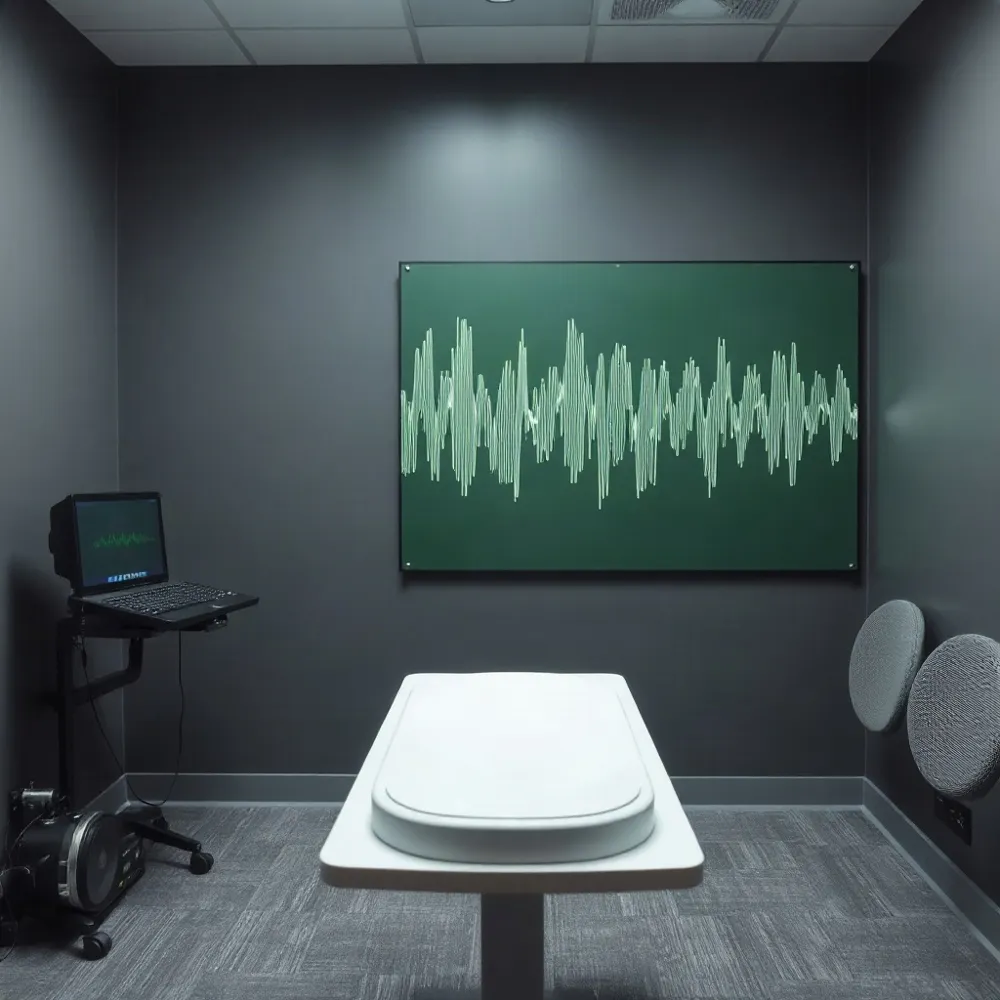
In workplace health initiatives, Auditory Steady-State Response (ASSR) testing offers an advanced, objective method for auditory assessment. Unlike traditional behavioral audiometry, ASSR measures neural responses to sound stimuli through electrodes placed on the scalp, capturing electrical activity from various parts of the auditory pathway.
ASSR testing is particularly valuable in occupational settings for populations such as infants, employees with disabilities, or workers unable to cooperate with conventional hearing tests. By presenting continuous tones modulated in amplitude or frequency, ASSR can simultaneously evaluate multiple frequencies — typically 500, 1000, 2000, and 4000 Hz — leading to faster and more comprehensive assessments.
This technology generates an audiogram derived from neural response data, which helps determine hearing thresholds even in severe or profound hearing loss cases. Based on these results, audiologists and occupational health professionals can recommend hearing aids, protective measures, or further medical evaluation. Moreover, ASSR supports compliance with noise exposure standards by enabling regular, efficient monitoring of hearing health in noisy work environments.
Overall, ASSR enhances occupational audiological programs by providing reliable, quick, and non-invasive auditory threshold estimation, ensuring early detection of hearing issues and better protection for workers’ hearing health. For more details on ASSR in audiological evaluations and occupational health, see Auditory Steady State Response (ASSR) testing and OSHA hearing conservation program guidelines at OSHA Hearing Conservation Program.
The Importance of Hearing Assessments and Hearing Conservation Programs in Workplaces
What is the purpose and significance of hearing assessments and screening in the workplace?
Hearing assessments and screening in the workplace serve a crucial purpose in early detection and prevention of occupational hearing loss, particularly noise-induced hearing loss (NIHL). These programs ensure compliance with occupational safety regulations such as OSHA hearing conservation program, which mandate regular audiometric testing, noise level monitoring, and the provision of hearing protection.
Early identification of hearing impairments allows for timely intervention, effective management strategies, and the use of appropriate hearing conservation measures, thereby protecting employees' auditory health and overall well-being.
Additionally, thorough screening supports workplace productivity by enhancing communication, reducing injury risks, and minimizing costs associated with medical treatments and lost work days.
Overall, hearing assessments and screenings are vital components of comprehensive workplace safety programs that promote health, safety, and operational efficiency. For more details, see Benefits of Workplace Hearing Tests.
Why are hearing conservation programs and noise management important in workplaces?
Hearing conservation programs and noise management are crucial in workplaces to prevent permanent hearing loss caused by exposure to hazardous noise levels. Regulations, such as OSHA’s requirement for hearing conservation when noise exceeds 85 dBA, mandate employer actions to monitor noise and protect workers as described in Occupational Noise Exposure.
Implementing controls like quieter equipment, noise barriers, and personal protective devices, along with routine audiometric testing and employee training, help mitigate risks. These interventions align with guidelines in OSHA Hearing Conservation Program.
These programs also involve risk assessment through noise measurement tools and creating noise maps to identify high-exposure areas, which are part of hearing conservation program requirements.
Overall, effective noise management safeguards workers' auditory health, improves communication, and complies with occupational safety regulations.
Technical and Clinical Aspects of ASSR Testing in Occupational Audiology
What are the procedures and methodologies used in ASSR testing and other audiometric assessments?
ASSR testing involves delivering frequency-specific stimuli—such as amplitude modulated (AM), frequency modulated (FM), or mixed modulation (MM) tones—through insert earphones to the patient. Electrodes are placed on the scalp, commonly at the vertex, mastoids, and forehead, to record neural responses along the auditory pathways. The stimuli are continuous tones modulated at high rates (typically above 80 Hz), which stimulate neural generators at different levels, from the auditory cortex to the brainstem.ASSR technique and EEG response analysis
The core of the methodology is spectral analysis of the EEG responses, particularly Fourier Transform, which detects steady-state responses occurring at the same frequency as the modulation or its harmonics. These responses are analyzed statistically, often using an F-test, to objectively determine whether the neural response signifies the presence of hearing at specific frequencies.Statistical measures in ASSR spectral analysis
During the procedure, impedance is checked to ensure electrode contact quality, and stimulus parameters such as stimulus level and modulation depth are adjusted for optimal responses. Testing can assess multiple frequencies simultaneously, making it efficient for estimating audiograms—especially in infants and uncooperative patients—by providing quick, reliable thresholds across a broad frequency range, typically from 500 Hz to 4000 Hz.Simultaneous multi-frequency testing, Frequency range and residual hearing assessment, ASSR test frequencies 500 to 4000 Hz
Advancements include automated response detection, software correction factors, and the ability to perform in various patient states, including sleep, which is crucial when behavioral responses are unreliable.ASSR testing under sedation or natural sleep, ASSR testing procedure
Integration of ASSR Testing in Occupational Hearing Loss Prevention
How does ASSR testing and other audiometric assessments help prevent noise-induced hearing loss in occupational settings?
ASSR (Auditory Steady-State Response) testing, along with traditional audiometric evaluations, plays a vital role in the early detection and prevention of noise-induced hearing loss (NIHL) among workers. These objective, frequency-specific tests can identify even subtle shifts in hearing thresholds before they become significant, enabling prompt intervention. The early identification of hearing changes allows employers and health professionals to modify noise exposure, enhance hearing protection, or adjust work practices, thereby preventing further deterioration. Compared to conventional methods like behavioral audiometry, ASSR offers rapid, simultaneous testing across multiple frequencies with high correlation to actual hearing thresholds. It can also detect asymmetries and specific patterns associated with noise exposure, providing data that inform targeted protective measures. Overall, incorporating ASSR into occupational health screening ensures proactive management of hearing risks, helping to preserve workers' hearing health over time.
How is ASSR testing applied in occupational health for the early detection and monitoring of hearing loss?
In the workplace, ASSR testing is used as an objective tool to monitor employees' auditory health, especially in high-noise environments. It is particularly beneficial for workers who cannot reliably participate in behavioral testing due to age, disabilities, or cooperation issues. The process involves presenting continuous modulated tones through headphones while recording electrical responses via scalp electrodes. These responses, analyzed with spectral techniques such as FFT, estimate the individual’s hearing thresholds at specific frequencies—typically matching those in conventional audiometry (500-4000 Hz). Regular application of ASSR assessments allows health professionals to detect minor threshold shifts early, often before symptoms become apparent. This early detection facilitates timely medical and occupational interventions, including adjusting noise controls or reinforcing the use of hearing protection. Consequently, ASSR supports continuous monitoring, helping prevent the progression of NIHL and ensuring compliance with occupational safety standards.
Regulatory Framework and Compliance for Occupational Hearing Testing
What are the regulatory standards and guidelines related to occupational hearing testing, such as OSHA requirements?
The regulatory standards related to occupational hearing testing primarily stem from OSHA hearing conservation program, which mandate a comprehensive Hearing Conservation Program when workers are exposed to noise levels at or above an 8-hour TWA of 85 decibels. These standards specify the need for periodic noise monitoring, audiometric testing conducted by qualified personnel in appropriately calibrated environments, and the establishment of baseline and annual audiograms to detect threshold shifts. See also Occupational Noise Exposure standards and Hearing conservation programs.
Employers must provide and maintain records of noise exposure and hearing tests for designated periods, typically 2 years for noise records and throughout an employee’s employment plus 30 years for audiometric data. They are responsible for ensuring that employees receive training on noise hazards and proper use and care of hearing protection devices. Additional details on Audiometric testing recordkeeping and hearing conservation training and recordkeeping requirements are available.
The standards also require employers to implement engineering and administrative controls to reduce noise exposure. If noise levels cannot be reduced below the action level, they are obliged to provide suitable hearing protectors at no cost to the worker. The importance of hearing protection devices and effectiveness and noise exposure control measures are outlined in related guidance.
Failure to comply with OSHA's regulations can lead to legal and financial penalties, as well as increased risk of occupational hearing loss among employees. To assist in compliance, OSHA offers resources such as guidelines, workshops, and partnerships with organizations like the National Hearing Conservation Association (NHCA).
In summary, OSHA's standards create a structured framework for preventing occupational hearing loss through continuous monitoring, employee education, and adherence to testing and recordkeeping requirements, ensuring workplaces maintain safe hearing conditions and promote overall worker health. More about OSHA Hearing Conservation Program requirements can be found for comprehensive understanding.
Comparative Analysis: ASSR vs. ABR and CERA in Hearing Assessment
How does ASSR testing compare with other hearing assessment methods like ABR and CERA?
ASSR (Auditory Steady-State Response) provides a modern, efficient approach to audiological evaluation, especially useful for individuals unable to participate in traditional behavioral hearing tests, such as infants or those with disabilities.
One of its main advantages is the ability to assess multiple frequencies simultaneously using continuous, modulated tones. This contrasts with ABR (Auditory Brainstem Response), which typically tests one frequency at a time with transient stimuli, making ASSR a faster option.
Assay techniques differ distinctly in their stimulus and response analysis. ASSR employs continuous stimuli with amplitude and frequency modulation, and analyzes the electrical response in the spectral domain through Fourier transform and statistical methods like the F-test. Conversely, ABR analyzes waveforms generated by transient sounds, relying on waveform review for response detection.
When comparing with CERA (Cortical Evoked Response Audiometry), ASSR often produces thresholds within 20 dB of behavioral audiometry, generally providing slightly more accurate estimates than CERA, especially at higher frequencies. Studies show robust correlations between ASSR and CERA thresholds, with coefficients around 0.72 to 0.76.
Testing efficiency and patient applicability are also notable. ASSR’s objective, automated analysis allows rapid data acquisition and scoring, reducing testing times significantly—often around 20–25 minutes—versus hours needed for comprehensive CERA testing. Its non-invasive and non-reliant on patient response makes it highly suitable for neonatal screening, pediatric assessments, and clinical research.
Clinically, ASSR's high speed, objectivity, and ability to generate detailed, frequency-specific thresholds make it invaluable in both clinical and occupational settings where quick and reliable audiometric data are essential. Its integration into comprehensive audiological exams enhances the accuracy of hearing assessments, guiding appropriate interventions or hearing aid fittings.
In summary, ASSR surpasses traditional methods in testing speed and multi-frequency capability while maintaining high correlation with other objective measures like CERA, making it a preferred choice for detailed, efficient hearing evaluation, especially in challenging patient populations.
Educational Insights for Healthcare and Safety Professionals on Occupational Auditory Testing
What educational insights should healthcare professionals and safety practitioners have regarding auditory testing protocols in occupational health?
Healthcare providers and safety specialists must possess a thorough understanding of audiometric testing protocols to ensure accurate assessment and effective hearing conservation. This includes familiarity with standard procedures for conducting audiograms, such as calibrating equipment regularly, ensuring proper placement of headphones, and controlling background noise levels in testing environments.
Interpreting audiograms is crucial; practitioners should recognize patterns indicating noise-induced hearing loss, such as the characteristic notch at 3,000 to 6,000 Hz. Identifying shifts in hearing thresholds over time allows for early intervention, which can prevent permanent damage.
It is also vital to understand regulatory standards, such as OSHA’s requirement for baseline audiograms within six months of first exposure and annual follow-ups. Recordkeeping is equally important, with records maintained for the duration of employment plus 30 years, facilitating tracking of threshold shifts.
Modern advancements, including the use of portable audiometers, noise monitoring tools, and hearing protection fit-testing, are essential components for comprehensive occupational health programs. Keeping up with these technologies enhances the accuracy and efficiency of testing.
Early detection through routine testing allows timely measures like improved hearing protection or administrative controls to be implemented, reducing the risk of irreversible hearing loss. Moreover, integrating audiometric data into larger hearing conservation strategies ensures a holistic approach—combining engineering controls, employee training, and proper protective equipment—to safeguard workers’ auditory health effectively.
Conclusion: Protecting Employee Hearing Through Advanced Screening and Compliance
The integration of auditory screening and ASSR testing within occupational health programs represents a pivotal advancement in safeguarding workers from noise-induced hearing loss. Through objective, frequency-specific assessments, ASSR enables early detection and fosters proactive intervention strategies critical for preserving auditory health in noisy workplaces. Coupled with comprehensive hearing conservation efforts mandated by regulatory agencies like OSHA, these assessments support a culture of safety, compliance, and employee well-being. Healthcare professionals and employers alike benefit from understanding the technical nuances and practical value of ASSR testing alongside traditional audiometric evaluations. Ultimately, employing these sophisticated hearing assessment methodologies enhances occupational hearing conservation programs’ effectiveness, contributing to reduced hearing impairment, improved workplace communication, and sustained productivity.